Within Bulgarian Folklore
Why Do Bulgarians Wear Martenitsa Charms?
Martenitsa charms turn the uncertainty of March into a shared ritual of health, luck and seasonal renewal.
On this page
- Baba Marta and March weather
- Red and white as protection and renewal
- Modern martenitsa gifts, schools and public life
Page outline Jump by section
Introduction
On 1 March, Bulgaria turns red and white. Bracelets, tassels, woollen figures and woven threads appear on jackets, wrists, schoolbags, office desks and even trees. These small charms, known as martenitsi, are exchanged on the day of Baba Marta, a folkloric figure whose arrival signals the uncertain transition from winter to spring. The custom is one of Bulgaria’s most recognisable living traditions, combining wishes for health, luck and renewal with a vivid seasonal story about weather, nature and human relationships. The practice remains so important that Bulgaria joined Romania, Moldova and North Macedonia in securing UNESCO recognition for the wider family of March 1 traditions in 2017.[UNESCO Intangible Cultural Heritage]ich.unesco.orgUNESCO Intangible Cultural HeritageCultural practices associated to the 1st of MarchThe main practice consists of making, offering and we…

What makes the tradition distinctive in Bulgaria is the presence of Baba Marta herself. Rather than marking spring with a simple calendar date, the custom imagines March as a powerful, unpredictable grandmother whose moods determine whether winter lingers or warmer days finally arrive.[wikipedia.org]WikipediaBaba MartaBaba Marta
Why Do Bulgarians Wear Martenitsa Charms?
At the simplest level, a martenitsa is a gift. Friends, relatives, classmates and colleagues exchange red-and-white charms while wishing one another health, happiness and a good spring. Traditionally, people do not buy one for themselves; the charm gains meaning through being given by someone who cares about the recipient.[tu-varna.bg]fs.tu-varna.bgTechnical University Varna1st of March – Baba Marta DayOn this day local people give each other a special amulet called Martenitsa (a sma…
Historically, the charm was more than a seasonal decoration. Ethnographic and folklore sources describe it as a protective amulet intended to guard people, homes, animals and crops during a vulnerable period of the year. March was traditionally seen as unpredictable: cold weather could suddenly return, livestock were emerging from winter, and communities depended on the success of the coming agricultural season. The martenitsa offered symbolic protection against illness, misfortune and harmful forces while welcoming the return of life and growth.[bntnews.bg]bntnews.bgBNT NewsThe Bulgarian tradition of Martenitsa on March 1Mar 1, 2026 — They were believed to protect people from diseases and evil forces…
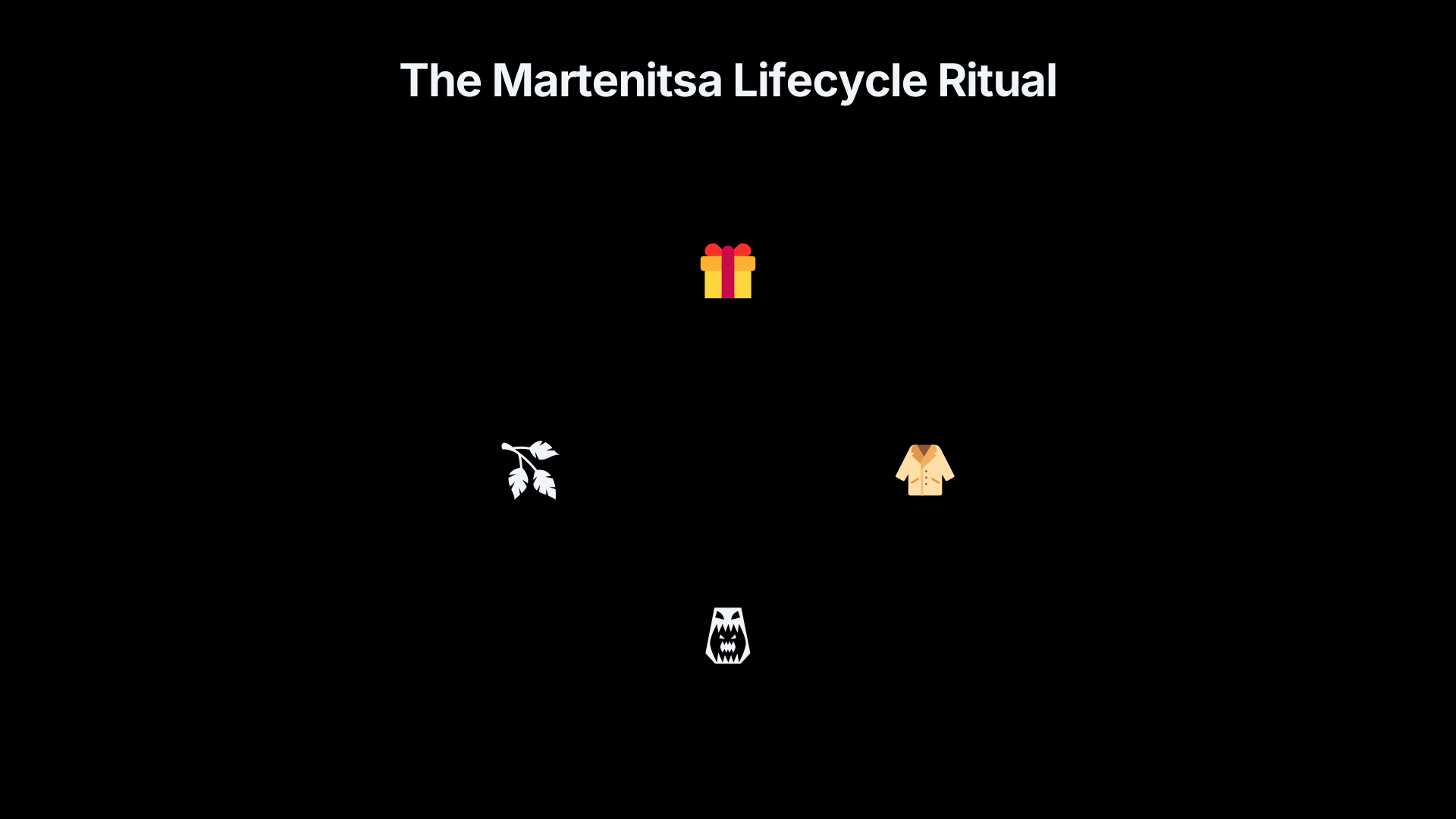
The charm is usually worn until a recognised sign of spring appears. Depending on local custom, that may be the first stork, the first swallow or the sight of a blossoming tree. The martenitsa is then removed and often tied to a branch, linking the wearer’s good wishes with the renewal of nature itself.[unesco.org]ich.unesco.orgUNESCO Intangible Cultural HeritageCultural practices associated to the 1st of MarchThe main practice consists of making, offering and we…
Baba Marta and March Weather
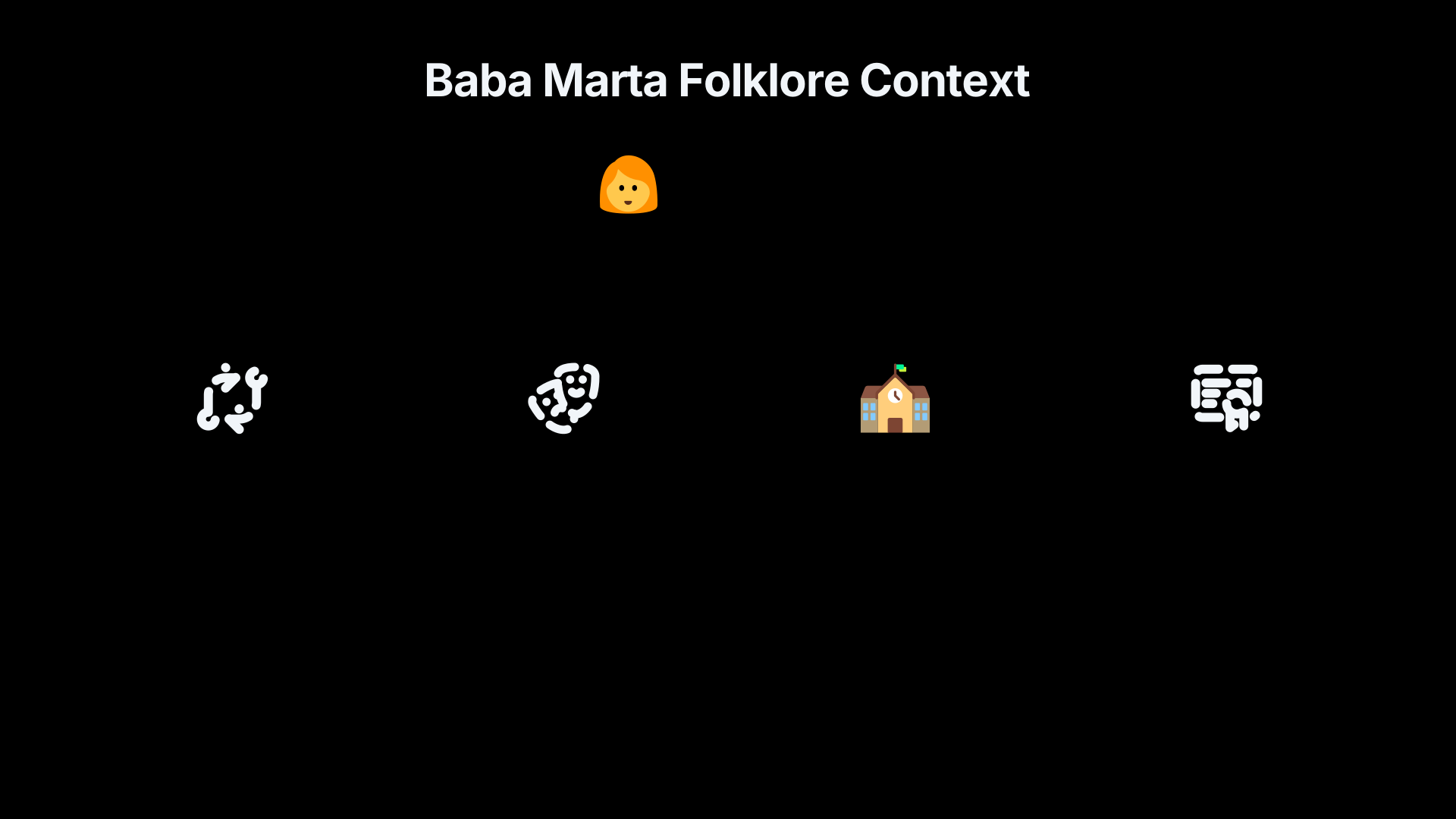
Baba Marta, literally “Grandmother March”, occupies a special place in Bulgarian folk imagination. She is not a goddess in the classical mythological sense but a folkloric personification of the month of March and its famously changeable weather. Stories describe her as temperamental, emotional and difficult to predict. When she is cheerful, the sun shines and spring advances. When she is irritated, cold winds, rain or even snow may suddenly return.[wikipedia.org]WikipediaBaba MartaBaba Marta
This character helped rural communities make sense of the unstable weather that often marks the beginning of spring in the Balkans. Folklore transformed climatic uncertainty into a memorable personality. Instead of speaking about meteorology, people spoke about Baba Marta’s mood.
Traditional customs sought to keep her happy. Folklore accounts describe households displaying red textiles, woven threads or brightly coloured fabrics in the hope that Baba Marta would smile and allow warmer weather to arrive. Older stories portray people rising early on 1 March or maintaining cheerful behaviour so as not to offend the grandmother of spring.[BNT News]bntnews.bgBNT NewsThe Bulgarian tradition of Martenitsa on March 1Mar 1, 2026 — They were believed to protect people from diseases and evil forces…
The tradition therefore works as a cultural mechanism for managing uncertainty. A difficult season becomes a shared social drama in which communities participate together through gifts, greetings and symbolic actions.
Red and White as Protection and Renewal
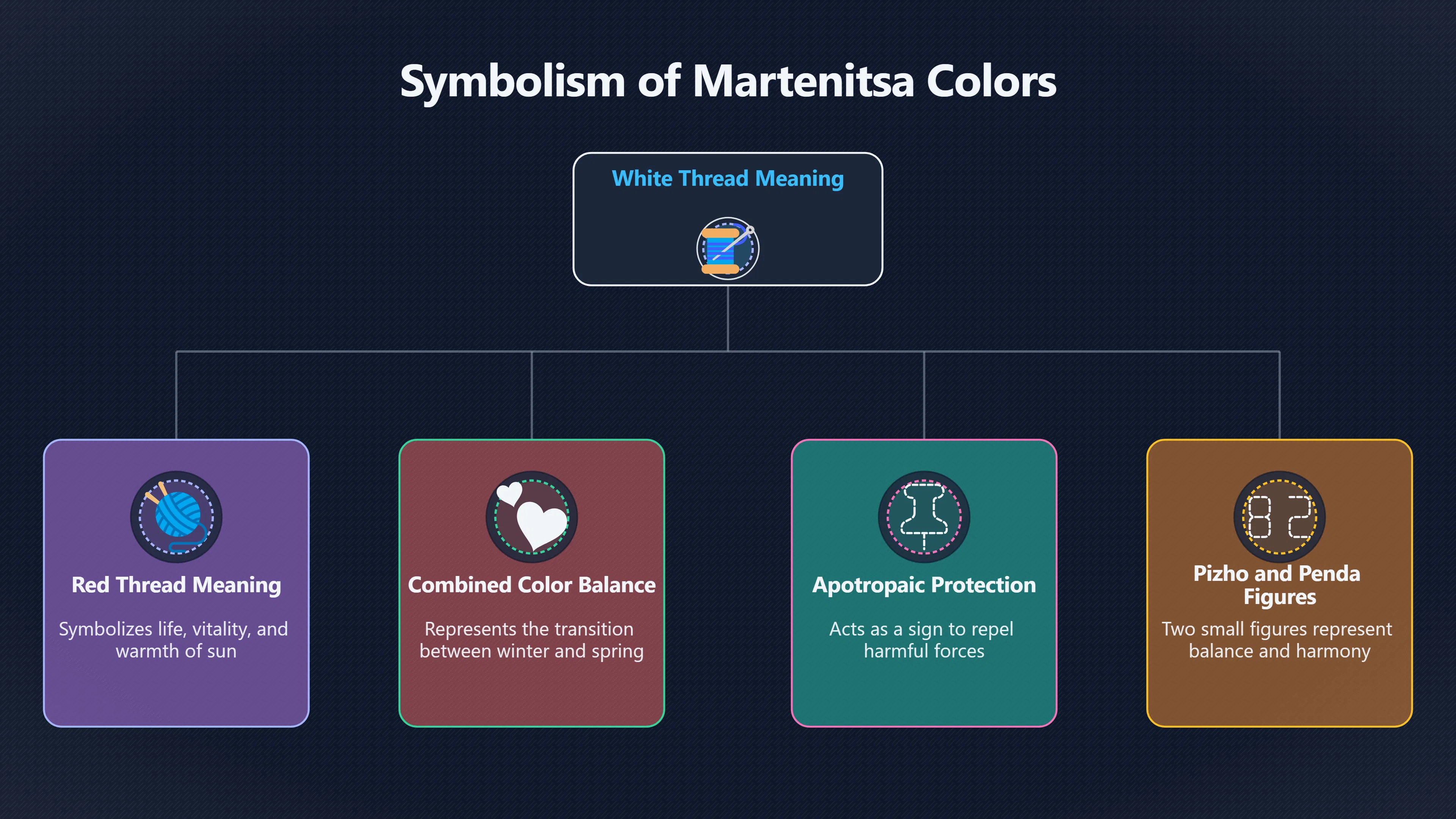
The power of the martenitsa lies in the pairing of two colours. Although interpretations vary between regions and periods, the combination consistently represents the transition from winter to spring and the wish for wellbeing.[horniman.ac.uk]horniman.ac.ukbaba marta and martenitsaHorniman Museum and GardensBaba Marta and Martenitsa1 Mar 2023 — The threads are worn as a symbol of luck for good health, as a bracelet…
Common explanations include:
- White as a symbol of purity, light, innocence, snow or new beginnings.
- Red as a symbol of life, blood, vitality, fertility, health and warmth.
- Red and white together as a balance between ending and beginning, winter and spring, vulnerability and renewal.[bnt.bg]bnt.bgBNT'Baba Marta' and the 'Martenitsa' – the Bulgarian tradition…Mar 1, 2026 — The red is associated with health, vitality, fertility an…
In older folk belief, the colours were not merely decorative. The intertwined threads acted as an apotropaic symbol—a protective sign intended to repel danger and attract good fortune. This protective role survives in modern explanations even when the supernatural meanings are no longer taken literally.[move2bulgaria.com]move2bulgaria.comMartenitsa for Baba MartaIt is a symbol promoting good health, fertility, as well as protection against evil eyes. Bulgarian…
Many traditional martenitsi take the form of two small figures, often known as Pizho and Penda: a predominantly white male figure and a predominantly red female figure. Whether interpreted as masculine and feminine principles, social companionship or simply beloved folk characters, they reinforce the idea that balance and harmony help bring the new season into being.[wikipedia.org]WikipediaOpen source on wikipedia.org.
From Protective Amulet to National Symbol
The precise origins of the custom are debated. Folklorists generally agree that the practice is very old, but the modern form has been shaped by centuries of cultural change. UNESCO describes the wider March 1 tradition as one transmitted across generations since ancient times, though its meanings and local expressions have evolved.[UNESCO Intangible Cultural Heritage]ich.unesco.orgUNESCO Intangible Cultural HeritageCultural practices associated to the 1st of MarchThe main practice consists of making, offering and we…
What is easier to document is its remarkable continuity. The custom survived major political and social transformations, including Ottoman rule, the rise of modern Bulgarian nationalism, the socialist period and the post-1989 era. Rather than disappearing, it adapted.
During the nineteenth and twentieth centuries, martenitsi became increasingly visible as markers of Bulgarian identity. Today they function simultaneously as folklore, seasonal celebration, social gift and cultural symbol. A person may wear one out of personal belief, family tradition, nostalgia, national pride or simply because everyone around them is participating. These motivations often overlap rather than compete.[visitmybulgaria.com]visitmybulgaria.comVisit My Bulgaria The Bulgarian Tradition of Baba MartaBulgarians gift Martenitsas to friends and relatives on March 1.; Where. They are worn by all Bulgarians, no matter where they are in th…
Modern Martenitsa Gifts, Schools and Public Life
One reason the tradition remains so strong is that it is woven into everyday life. Unlike many folk customs that survive mainly through festivals, Baba Marta appears annually in ordinary settings.
Schools organise craft workshops where children make martenitsi by hand and learn the stories associated with the season. Museums and cultural institutions also run educational events centred on the tradition and its transmission between generations.[UNESCO Intangible Cultural Heritage]ich.unesco.org36231 EN.docUNESCO Intangible Cultural Heritage36231-EN.docAnother such occasion is provided by Martenitsa/ Martinka/ Mărţişor workshops organized by…
In towns and cities, market stalls fill with handmade and commercial versions ranging from simple woven bracelets to elaborate decorative designs. Colleagues exchange them at work, friends give them to one another, and families send them to relatives abroad. For many Bulgarians living outside the country, receiving a martenitsa remains an important emotional link to home.[visitmybulgaria.com]visitmybulgaria.comVisit My Bulgaria The Bulgarian Tradition of Baba MartaBulgarians gift Martenitsas to friends and relatives on March 1.; Where. They are worn by all Bulgarians, no matter where they are in th…
The ritual of removing the charm also survives. Trees covered in red-and-white threads become visible across Bulgaria as people tie their martenitsi to branches after seeing the first signs of spring. The landscape itself briefly becomes part of the tradition, turning parks, gardens and village roads into living displays of seasonal renewal.[tu-varna.bg]fs.tu-varna.bgTechnical University Varna1st of March – Baba Marta DayOn this day local people give each other a special amulet called Martenitsa (a sma…
Why the Tradition Still Matters
Baba Marta and the martenitsa endure because they do more than celebrate a date on the calendar. They transform a seasonal change into a shared social experience. A small object exchanged between two people carries wishes for health, acknowledges the hardships of winter and expresses hope for the months ahead.
The folklore of Baba Marta gives a human face to the unpredictability of spring, while the red-and-white charm provides a simple action through which everyone can participate. Together they create one of Bulgaria’s most successful examples of living folklore: a tradition that remains meaningful not because it has stayed frozen in the past, but because each generation continues to adapt it while preserving its core message of protection, renewal and connection.[unesco.org]ich.unesco.orgUNESCO Intangible Cultural HeritageCultural practices associated to the 1st of MarchThe main practice consists of making, offering and we…
Amazon book picks
Further Reading
Books and field guides related to Why Do Bulgarians Wear Martenitsa Charms?. Use these as the next step if you want deeper reading beyond the article.
Stations of the Sun
Offers comparative insight into spring rituals and calendar customs.
eBay marketplace picks
Marketplace Samples
Live-tested eBay searches with available results related to this page.

Endnotes
1.
Source: ich.unesco.org
Link:https://ich.unesco.org/en/RL/cultural-practices-associated-to-the-1st-of-march-01287
Source snippet
UNESCO Intangible Cultural HeritageCultural practices associated to the 1st of MarchThe main practice consists of making, offering and we...
2.
Source: Wikipedia
Title: Baba Marta
Link:https://en.wikipedia.org/wiki/Baba_Marta
3.
Source: move2bulgaria.com
Link:https://www.move2bulgaria.com/bulgarian-martenitsa/
Source snippet
Martenitsa for Baba MartaIt is a symbol promoting good health, fertility, as well as protection against evil eyes. Bulgarian...
4.
Source: unesco-bg.org
Link:https://unesco-bg.org/?language=us&post=137§ion=news
Source snippet
Happy March 1. Happy Baba Marta1 Mar 2011 — White and red thread woven into one, are a symbol of new and emerging spring wishes for healt...
5.
Source: Wikipedia
Link:https://en.wikipedia.org/wiki/Martenitsa
6.
Source: bnt.bg
Link:https://bnt.bg/news/-39baba-marta-39-and-the-39martenitsa-39-the-bulgarian-tradition-on-march-1-see-pics-326477news.html
Source snippet
BNT'Baba Marta' and the 'Martenitsa' – the Bulgarian tradition...Mar 1, 2026 — The red is associated with health, vitality, fertility an...
7.
Source: novinite.com
Link:https://www.novinite.com/articles/237253/Red%2C%2BWhite%2B%26%2BSpring%3A%2BThe%2BMagic%2Bof%2BBulgaria%27s%2BBaba%2BMarta%2BDay
Source snippet
Red, White & Spring: The Magic of Bulgaria's Baba Marta...1 Mar 2026 — The red thread symbolizes life, health, and the warmth of the sun...
8.
Source: ich.unesco.org
Title: 36231 EN.doc
Link:https://ich.unesco.org/doc/src/36231-EN.doc
Source snippet
UNESCO Intangible Cultural Heritage36231-EN.docAnother such occasion is provided by Martenitsa/ Martinka/ Mărţişor workshops organized by...
9.
Source: medium.com
Link:https://medium.com/picturethis/baba-marta-has-arrived-in-bulgaria-400dee9d85ea
Source snippet
Baba Marta Has Arrived in Bulgaria | by Krasi ShapkarovaThe martenitsi indicate that Baba Marta Day, celebrated on March 1st, is fa...
10.
Source: novinite.com
Link:https://www.novinite.com/articles/237253/Red%2C%2BWhite%2B%26%2BSpring%3A%2BThe%2BMagic%2Bof%2BBulgaria%27s%2BBaba%2BMarta%2BDay?disable_mobile=true
Source snippet
Red, White & Spring: The Magic of Bulgaria's Baba Marta...1 Mar 2026 — On March 1st, Bulgarians exchange martenitsi with family, friends...
11.
Source: unesco-bg.org
Link:https://www.unesco-bg.org/culture/bul-ich/?article=documents&language=us&post=17§ion=ich
Source snippet
MartenitsaOn March 1 Bulgarians decorate their clothes with small red and white ornaments called “martenitsi", after the Bulgarian name o...
12.
Source: ich.unesco.org
Link:https://ich.unesco.org/en/video/41019
Source snippet
unesco.orgVideo: Cultural practices associated to the 1st of MarchCultural practices associated to the 1st of March (Bulgaria, North Mace...
13.
Source: sofiaexpats.com
Title: baba marta why bulgarians wear red and white in march
Link:https://sofiaexpats.com/blog/baba-marta-why-bulgarians-wear-red-and-white-in-march
Source snippet
Sofia ExpatsBaba Marta – Why Bulgarians Wear Red and White in March23 Feb 2026 — Baba Marta literally means Grandma March. In Bulgarian f...
14.
Source: fs.tu-varna.bg
Link:https://fs.tu-varna.bg/news/1st-of-march-baba-marta-day/
Source snippet
Technical University Varna1st of March – Baba Marta DayOn this day local people give each other a special amulet called Martenitsa (a sma...
15.
Source: mywanderlust.pl
Title: My Wanderlust Martenitsa
Link:https://www.mywanderlust.pl/martenitsa-the-spring-celebration-in-bulgaria/
Source snippet
It's a gift (never buy one for yourself!) to the person you...Read more...
16.
Source: firstedit.co.uk
Title: baba marta
Link:https://www.firstedit.co.uk/blog/2026/03/baba-marta/
Source snippet
Bulgarian traditions: Baba Marta Day1 Mar 2026 — On this special day, people gift each other a martenitsa to wish each other good health...
17.
Source: bntnews.bg
Link:https://bntnews.bg/news/the-bulgarian-tradition-of-martenitsa-on-march-1-1381692news.html
Source snippet
BNT NewsThe Bulgarian tradition of Martenitsa on March 1Mar 1, 2026 — They were believed to protect people from diseases and evil forces...
18.
Source: brilltravel.com
Title: bulgarian cultural traditions unesco sites
Link:https://brilltravel.com/about-us-brill-travel/about-bulgaria-facts-figures/bulgarian-cultural-traditions-unesco-sites/
Source snippet
On March 1 every year all Bulgarians decorate themselves with...Read more...
19.
Source: horniman.ac.uk
Title: baba marta and martenitsa
Link:https://www.horniman.ac.uk/story/baba-marta-and-martenitsa/
Source snippet
Horniman Museum and GardensBaba Marta and Martenitsa1 Mar 2023 — The threads are worn as a symbol of luck for good health, as a bracelet...
20.
Source: bradtguides.com
Title: bulgarias intangible cultural heritage
Link:https://www.bradtguides.com/bulgarias-intangible-cultural-heritage/
Source snippet
Bulgaria's intangible cultural heritageMar 5, 2021 — The martenitsa is a small token made of red and white wool, in the form of a tassel...
21.
Source: visitmybulgaria.com
Title: Visit My Bulgaria The Bulgarian Tradition of Baba Marta
Link:https://visitmybulgaria.com/grandmother-marta/
Source snippet
Bulgarians gift Martenitsas to friends and relatives on March 1.; Where. They are worn by all Bulgarians, no matter where they are in th...
22.
Source: freeplovdivtour.com
Title: Baba Marta
Link:https://freeplovdivtour.com/blog/baba_marta/
Source snippet
The Martenitsa - Pizho and Penda17 Feb 2026 — Baba Marta Traditional Bulgaria... This is why every traditional martenitsa is made of two...
Additional References
23.
Source: gobalkans.travel
Link:https://www.gobalkans.travel/blog/the-bulgarian-tradition-of-baba-marta-and-martenitsa4419977
24.
Source: youtube.com
Link:https://www.youtube.com/watch?v=53R1H9Z_UaM
Source snippet
Cultural practices associated to the 1st of MarchThe main practice consists of wearing a red and white thread to... Who is Baba Marta, b...
25.
Source: instagram.com
Link:https://www.instagram.com/p/DWJs4iQiiLr/
Source snippet
Red: Symbolizes life, health, and the sun's warmth. Together, they serve as a wish...Read more...
26.
Source: gobalkans.travel
Title: the bulgarian tradition of baba marta and martenitsa
Link:https://www.gobalkans.travel/blog/the-bulgarian-tradition-of-baba-marta-and-martenitsa
Source snippet
THE BULGARIAN #TRADITION OF BABA MARTA AND #...2 Mar 2020 — Every year on 1st of March, Bulgarian people celebrate a centuries-old tradi...
27.
Source: unesco.org.cy
Title: Event Cultural practices of the 1st of March,49,EN
Link:https://www.unesco.org.cy/Event-Cultural_practices_of_the_1st_of_March%2C49%2CEN
Source snippet
Cultural practices of the 1st of MarchFeb 23, 2018 — The main practice consists of making, offering and wearing a red and white thread, n...
28.
Source: facebook.com
Link:https://www.facebook.com/batworld.bg/posts/explaining-those-white-and-red-threads-for-our-non-bulgarian-speaking-friendseve/190660020324956/
Source snippet
ta for mercy. They hoped that it would make winter pass...Read more...
29.
Source: facebook.com
Link:https://www.facebook.com/WeAreERUA/posts/happy-baba-marta-%EF%B8%8Fon-the-1st-of-march-bulgarians-celebrate-baba-marta-a-cherishe/944634811418061/
Source snippet
people ask Baba Marta for mercy. They hope that it will...Read more...
30.
Source: reddit.com
Link:https://www.reddit.com/r/AskBalkans/comments/t38tnz/do_you_have_the_march_bracelet_tradition_in_your/
Source snippet
them down when we see swallow, stork or blooming tree. Then we put...
31.
Source: instagram.com
Link:https://www.instagram.com/reel/DVZlTSMjba4/?hl=en
Source snippet
tsi). White = purity & new beginnings ❤️ Red = health & the...
32.
Source: instagram.com
Link:https://www.instagram.com/reel/DVV40e0jBQr/
Source snippet
ne another happiness, prosperity, and a fresh start. Red...
Topic Tree