Within Malta Folklore
Did Giants Build Malta's Temples?
Malta's giant stories turn prehistoric temple stones into memorable folklore about scale, ancestry and impossible labour.
On this page
- The giantess Sansuna and Ggantija
- What archaeology says instead
- Why huge stones create legends
Page outline Jump by section
Introduction
Did giants build Malta’s temples? In Maltese folklore, the answer is yes. The most famous story surrounding Ġgantija on the island of Gozo says that a giantess named Sansuna carried enormous stones across the landscape and assembled the temple complex while carrying her child. In archaeology, however, Ġgantija is understood as a remarkable achievement of Neolithic communities who lived more than 5,500 years ago. The enduring fascination of the site comes from the meeting point of these two explanations: one legendary, one scientific.[wikipedia.org]WikipediaOpen source on wikipedia.org.
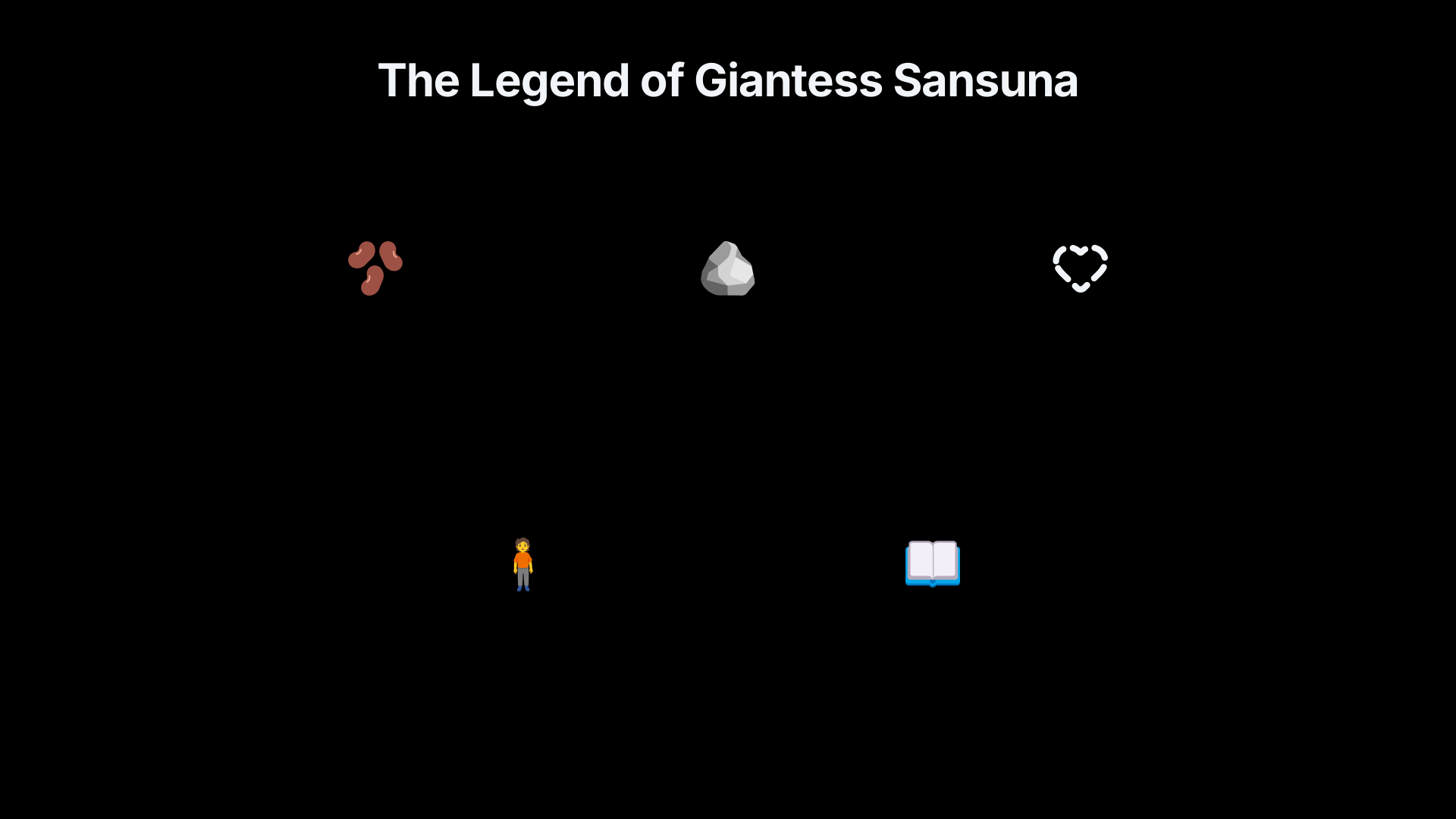
Among all Maltese giant stories, the legend of Sansuna is the best known. It has become a cultural shorthand for the mystery of the islands’ prehistoric monuments and remains one of the clearest examples of how folklore develops around ancient landscapes that seem almost impossible to explain.
The Giantess Sansuna and Ġgantija
The name Ġgantija itself helps explain the legend’s popularity. It is commonly interpreted as “place of giants” or “giants’ tower”, linking the monument directly to giant folklore. Long before archaeology established the temples’ age and purpose, local people faced a puzzle: who could have moved stones of such extraordinary size? The answer preserved in oral tradition was simple and memorable—giants built them.[Wikipedia]WikipediaOpen source on wikipedia.org.
According to the most widely repeated version of the tale, Sansuna was a giantess of immense strength who survived on broad beans and honey. She fell in love with a human man and gave birth to a child. Carrying the child on one shoulder, she transported huge megaliths across Gozo and used them to construct the temples. Some versions emphasise that she completed the task with astonishing speed, while others focus on her role as both mother and builder.[wikipedia.org]WikipediaOpen source on wikipedia.org.
What makes the story distinctive is that Sansuna is not usually portrayed as a destructive monster. Instead, she is often remembered as a powerful but largely benevolent figure whose strength allowed her to perform feats beyond ordinary human capability. This differs from many European giant traditions, where giants are frequently enemies of heroes or symbols of chaos.
The giantess became so closely associated with Gozo that her presence spread beyond the temple legend itself. A prehistoric standing stone in Xagħra is known as Sansuna’s Rock, and later folklore collections recorded stories describing her carrying megaliths around the island. These traditions helped anchor the giantess in the physical landscape rather than keeping her confined to a single tale.[Heritage Malta]heritagemalta.mtHeritage MaltaSansuna's RockIn his publication 'Ħrejjef Missijietna' (Tales of Our Forefathers), Sansuna features as a strong giantess wh…
How old is the legend?
The exact age of the Sansuna story is impossible to determine. Like many oral traditions, it was probably told for generations before being written down. References to giant explanations for the temples appear in historical descriptions of Gozo, while later folklorists and collectors preserved more detailed versions of the tale. The survival of the story into modern guidebooks, tourism literature and local storytelling shows how successfully it adapted to changing times.[Wikipedia]WikipediaOpen source on wikipedia.org.
Importantly, there is no evidence that the legend dates back to the Neolithic builders themselves. The story belongs to much later folklore. It is an explanation created by later communities trying to understand a monument whose true origins had long been forgotten.
What Archaeology Says Instead
Modern archaeology offers a very different account of Ġgantija. The temple complex was constructed during Malta’s Neolithic period, roughly between 3600 and 2500 BCE, making it older than Stonehenge and older than the pyramids of Egypt. It forms part of the UNESCO-listed Megalithic Temples of Malta, one of the most important prehistoric building traditions in the world.[heritagemalta.mt]heritagemalta.mtHeritage MaltaĠgantija Archaeological ParkThe Ġgantija Archaeological Park complex is a unique prehistoric monument situated at the centr…
Archaeologists attribute the site to farming communities who possessed sophisticated knowledge of stoneworking, construction and ritual architecture. Excavations have revealed evidence of ceremonial activity, including altars, figurines and animal remains. Rather than the work of a single supernatural builder, Ġgantija represents generations of organised human labour.[wikipedia.org]WikipediaOpen source on wikipedia.org.
The stones themselves help explain why giant stories emerged. Some megaliths measure several metres in length and weigh many tonnes. To people living centuries or millennia after the temple builders disappeared, such achievements seemed beyond normal human capabilities. Without written records or archaeological knowledge, attributing the structures to giants was a reasonable imaginative solution.[Tripadvisor]tripadvisor.comGgantija Archaeological ParkConsisting of two temples which date back to between 3600 and 3200 BC, the Ġgantija Temples are in…
In this sense, the legend and the archaeology answer different questions. Archaeology explains how the temples were actually built. Folklore explains how later generations emotionally understood their presence.
Why Huge Stones Create Giant Legends
The Sansuna story is not unique in world folklore. Across Europe and beyond, giant tales often cluster around ancient monuments, megaliths and unexplained ruins. When communities encounter structures that appear too large, too old or too technically impressive to fit familiar experience, legends frequently fill the gap.
What makes Ġgantija especially suitable for giant folklore is the combination of three factors:
- Scale: The temple walls rise several metres high and contain massive stone blocks.[Wikipedia]WikipediaOpen source on wikipedia.org.
- Antiquity: The builders belonged to a prehistoric culture that vanished thousands of years before recorded Maltese history.[UNESCO World Heritage Centre]whc.unesco.orgUNESCO World Heritage CentreMegalithic Temples of MaltaThe two temples of Ggantija on the island of Gozo are notable for their gigantic B…
- Name: The association with giants became embedded in the very name of the site.[Wikipedia]WikipediaOpen source on wikipedia.org.
Folklore scholars often describe such stories as “etiological” legends—narratives that explain why something exists or how it came to be. Sansuna does not merely entertain. She provides a human-shaped explanation for an otherwise bewildering monument.
The detail that she carried a child while moving stones is especially revealing. It transforms a remote prehistoric structure into a story about strength, family and endurance. The temple becomes memorable because it is connected to a vivid character rather than an anonymous past.
From Folk Explanation to National Symbol
Today, few people visit Ġgantija believing that a literal giantess built it. Yet the story remains culturally important. The legend survives in heritage interpretation, tourism, local storytelling and popular retellings because it expresses something that archaeology alone cannot: the sense of wonder inspired by the site.[Visit Gozo]visitgozo.comgozo a legendary islandVisit GozoGozo, a legendary island!17 Apr 2024 — Like Sansuna, a giantess with super-strength, who is said to have easily lifted the huge…
Modern presentations of Ġgantija often place folklore and archaeology side by side. Visitors learn that Neolithic people constructed the temples, but they also encounter the tale of Sansuna. Rather than competing, the two narratives enrich one another. The scientific explanation reveals the achievement of prehistoric builders, while the legend preserves generations of local imagination.
This combination has made Sansuna one of the most recognisable figures in Maltese folklore. She embodies a recurring theme in Malta’s legendary landscape: when ancient monuments seem too extraordinary for ordinary history, stories of giants emerge to bridge the gap between visible stone and forgotten memory.[heritagemalta.mt]heritagemalta.mtHeritage MaltaSansuna's RockIn his publication 'Ħrejjef Missijietna' (Tales of Our Forefathers), Sansuna features as a strong giantess wh…
Amazon book picks
Further Reading
Books and field guides related to Did Giants Build Malta's Temples?. Use these as the next step if you want deeper reading beyond the article.
Fingerprints of the Gods
Appeals to readers drawn to mysteries about ancient megalithic builders.
Malta, Prehistory and Temples
Provides context for temple-building societies and monument myths.
Myths and Symbols in Pagan Europe
Helps explain how giant traditions emerge around ancient monuments.
eBay marketplace picks
Marketplace Samples
Live-tested eBay searches with available results related to this page.




Endnotes
1.
Source: Wikipedia
Link:https://en.wikipedia.org/wiki/%C4%A0gantija
2.
Source: whc.unesco.org
Link:https://whc.unesco.org/en/list/132/
Source snippet
UNESCO World Heritage CentreMegalithic Temples of MaltaThe two temples of Ggantija on the island of Gozo are notable for their gigantic B...
3.
Source: Wikipedia
Title: Megalithic Temples of Malta
Link:https://en.wikipedia.org/wiki/Megalithic_Temples_of_Malta
4.
Source: Wikipedia
Title: Ħaġar Qim
Link:https://en.wikipedia.org/wiki/%C4%A6a%C4%A1ar_Qim
5.
Source: tripadvisor.com
Link:https://www.tripadvisor.com/Attraction_Review-g190314-d321111-Reviews-Ggantija_Archaeological_Park-Ggantija_Island_of_Gozo.html
Source snippet
Ggantija Archaeological ParkConsisting of two temples which date back to between 3600 and 3200 BC, the Ġgantija Temples are in...
6.
Source: unesco.org
Title: The Organization
Link:https://www.unesco.org/en
Source snippet
Building Peace through Education, Science and...UNESCO is the United Nations organization that promotes cooperation in educatio...
7.
Source: Wikipedia
Link:https://de.wikipedia.org/wiki/%C4%A0gantija
Source snippet
ĠgantijaDie Ġgantija-Tempel [dʒɡɐnˈtiːjɐ] auf der Insel Gozo im Archipel von Malta gehören zu den ältesten noch halbwegs erhaltenen fr...
8.
Source: heritagemalta.mt
Link:https://heritagemalta.mt/explore/ggantija-archaeological-park/
Source snippet
Heritage MaltaĠgantija Archaeological ParkThe Ġgantija Archaeological Park complex is a unique prehistoric monument situated at the centr...
9.
Source: etc.worldhistory.org
Link:https://etc.worldhistory.org/travel/malta-islands-of-giants/
Source snippet
World History FoundationMalta: Islands of GiantsOnce upon a time, Sansuna, a giantess on the island of Gozo, went to the town of Ta' Cenc...
10.
Source: heritagemalta.mt
Link:https://heritagemalta.mt/explore/hagra-ta-sansuna/
Source snippet
Heritage MaltaSansuna's RockIn his publication 'Ħrejjef Missijietna' (Tales of Our Forefathers), Sansuna features as a strong giantess wh...
11.
Source: visitgozo.com
Title: gozo a legendary island
Link:https://visitgozo.com/2024/04/17/gozo-a-legendary-island/
Source snippet
Visit GozoGozo, a legendary island!17 Apr 2024 — Like Sansuna, a giantess with super-strength, who is said to have easily lifted the huge...
12.
Source: tuljak.com
Title: megalithic temples of malta
Link:https://www.tuljak.com/blog/megalithic-temples-of-malta
Source snippet
11 Feb 2026 — Ġgantija, or “Giantess” in the Maltese language, is the country's largest of all megalithic temples. According to commonly...
Additional References
13.
Source: gettyimages.com
Link:https://www.gettyimages.com/photos/ggantija
Source snippet
162 Ggantija Stock Photos, High-Res Pictures, and ImagesView of the megalithic temple complex of Ggantija, one of the earliest man made s...
14.
Source: unexpectedtraveller.com
Link:https://www.unexpectedtraveller.com/ggantija-giants-tower-gozo/
Source snippet
The Unexpected TravellerGgantija – The Giant's Tower in GozoThe temples are roughly 5,500 years old and UNESCO has them on its World Heri...
15.
Source: themaritimeexplorer.ca
Link:https://themaritimeexplorer.ca/2022/01/14/ggantija-temples/
Source snippet
Ggantija Temples - Gozo's Megalithic MarvelsJan 14, 2022 — The Ggantija temples on Gozo were long considered to be the oldest religious s...
16.
Source: hunebednieuwscafe.nl
Title: place of the giants megalithic temples in malta
Link:https://www.hunebednieuwscafe.nl/2022/02/place-of-the-giants-megalithic-temples-in-malta/
Source snippet
Place of the Giants; megalithic temples in Malta19 Feb 2022 — Sansuna, a giantess on the island of Gozo, once went to the town of Ta' Cen...
17.
Source: facebook.com
Link:https://www.facebook.com/radio105malta/posts/the-legend-of-il-%C4%A1gantija-tells-of-a-giantess-sansuna-who-built-the-temples-whil/122215260176302000/
Source snippet
les while carrying massive stones on her head and holding her child...
18.
Source: pilgrimaps.com
Link:https://www.pilgrimaps.com/ggantija-where-humans-first-spoke-to-the-sacred/
Source snippet
Ġgantija: Where humans first spoke to the sacred24 Oct 2025 — According to local legend, a giantess named Sansuna built them while nursin...
19.
Source: facebook.com
Link:https://www.facebook.com/groups/1499645980339908/posts/3899389717032177/
Source snippet
ng her child in one arm. When Sansuna fell in love...Read more...
20.
Source: axhotelsmalta.com
Title: That makes them even older than the Pyramids of Egypt.Read more
Link:https://axhotelsmalta.com/discover-activities-in-malta/history-culture/ggantija-gozo/
Source snippet
A Giant on a Tiny Island: Exploring Ġgantija Temples in GozoThe Ġgantija Temples in Gozo are a stunning example of ancient architecture...
21.
Source: lovemalta.com
Link:https://lovemalta.com/ggantija-the-legend-of-the-giantess-and-her-children/
Source snippet
Ġgantija: The Legend of the Giantess and Her...Mar 23, 2024 — The story says that essentially there was a giantess who had two children...
22.
Source: youtube.com
Link:https://www.youtube.com/watch?v=4ddJrpANCsY
Source snippet
Ġgantija a megalithic UNESCO site. Tempji Neolithci Tal-Ggantija. 5600 years!! - Gozo Malta...
Topic Tree