Within Austria Folklore
Who Haunts Austria's Homes and Hills?
Austrian domestic legends turn fear of night, illness, spoiled food, and social disorder into witches, Trud figures, and wild women.
On this page
- Legendary witches versus historical witch trials
- Trud, Schrätel, Percht, and night fear
- Wild women in caves, forests, and high pastures
Page outline Jump by section
Introduction
Austria’s folklore is famous for dramatic winter figures such as Krampus and the Perchten, but some of its most revealing legends are far more intimate. They belong to bedrooms, barns, mountain huts, lonely pastures, and forest edges. In these stories, unexplained illness, nightmares, spoiled milk, tangled horse manes, and the dangers of isolation become witches, night spirits, wild women, and household beings that move between the human and supernatural worlds.
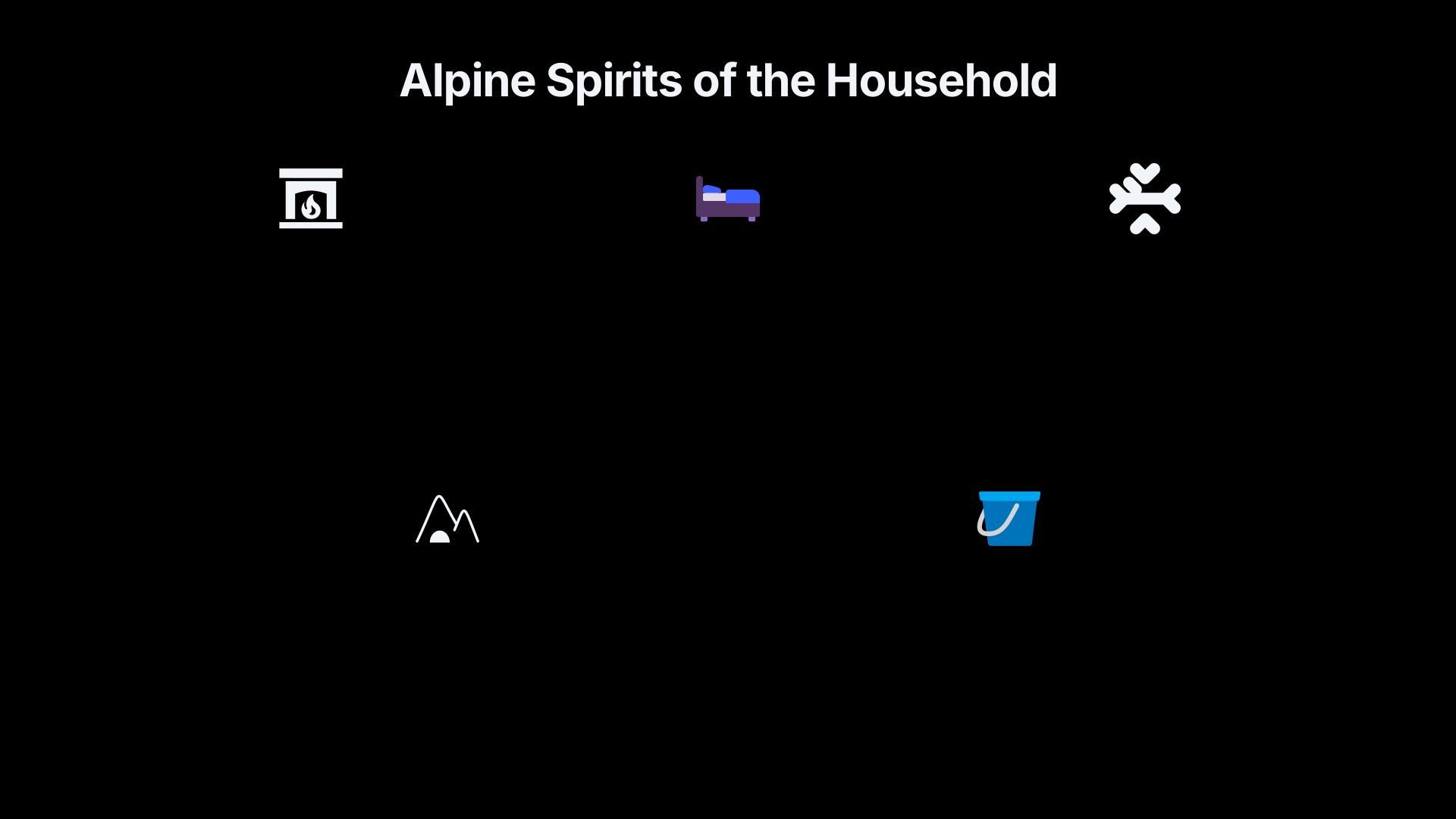
These traditions are especially important because they show how ordinary people understood everyday risks before modern medicine, psychology, and science offered other explanations. Austrian legends about witches, Trud-like night spirits, Schrätel household beings, and wild women of the Alps preserve older fears and hopes tied to family life, farming, livestock, and survival in mountainous landscapes. Many of these figures overlap, and over time their stories blended together, creating one of the richest bodies of supernatural folklore in the Alpine world.[ResearchGate]researchgate.netResearch Gate(PDF) Witches and Devil's Magic in AustrianResearchGate(PDF) Witches and Devil's Magic in Austrian…January 1, 2018 — 5 Jun 2024 — Although Austrian witch legends are very simila…
Legendary Witches Versus Historical Witch Trials
Readers often assume that folklore witches and the victims of historical witch trials were the same thing. Austrian tradition suggests a more complicated picture.
The witch of legend was usually a supernatural threat rather than a real neighbour standing trial. Folktales describe women who could control storms, spoil milk, curse livestock, travel through the night, transform into animals, or send harmful spirits against sleeping victims. These stories belonged to oral tradition and were often told long before anyone appeared in a courtroom.[ResearchGate]researchgate.netResearch Gate(PDF) Witches and Devil's Magic in AustrianResearchGate(PDF) Witches and Devil's Magic in Austrian…January 1, 2018 — 5 Jun 2024 — Although Austrian witch legends are very simila…
Historical witch trials, by contrast, involved real people accused of impossible crimes. Austria experienced witch persecutions, especially between the sixteenth and eighteenth centuries, as part of the wider European witch-hunt era. Yet folklore and trial records did not always match. Scholars studying Austrian demonological legends note that many older Alpine supernatural figures were gradually absorbed into witch narratives. Instead of being independent spirits, beings such as Percht, Trud, Schrätel, and various wild women increasingly appeared as servants, companions, or alternate forms of witches.[ResearchGate]researchgate.netResearch Gate(PDF) Witches and Devil's Magic in AustrianResearchGate(PDF) Witches and Devil's Magic in Austrian…January 1, 2018 — 5 Jun 2024 — Although Austrian witch legends are very simila…
This blending matters because it shows how folklore adapts. A mountain spirit feared in one century could become a witch’s helper in another. Stories changed as religious beliefs, legal systems, and social anxieties changed.
Why Nightmares Became Supernatural Beings
Before sleep paralysis and night terrors had medical explanations, many Austrians understood them through the figure often called the Trud or Trude.
The Trud belonged to a wider Central European family of nightmare spirits. People believed that this being sat or lay upon sleepers during the night, causing terrifying dreams, breathlessness, exhaustion, and a feeling of pressure on the chest. Modern descriptions of sleep paralysis often sound remarkably similar to older accounts of Trud attacks.[Wikipedia]WikipediaAlp (folkloreAlp (folklore
In Austrian and neighbouring Alpine traditions, the Trud was not always imagined as a separate monster. Sometimes it was believed to be a witch travelling in spirit form. In other stories it appeared as a night demon acting independently. Medieval sources even mention offerings and protective customs intended to keep such beings away from homes.[Wikipedia]WikipediaOpen source on wikipedia.org.
What makes the Trud especially interesting is that it stands at the boundary between folklore and lived experience. Unlike dragons or giants, nightmares are real experiences. The supernatural explanation gave people a way to discuss frightening events that otherwise seemed impossible to understand.
Schrätel and the Spirits Inside the House
Not every supernatural visitor was entirely evil. Austrian folklore contains a broad family of household spirits often grouped under names such as Schrätel, Schratl, or related forms.
These beings occupied an uncertain position. They could act like helpful household guardians, mischievous goblins, stable spirits, poltergeists, or nightmare demons depending on the region and story. Medieval sources describe beliefs that every house possessed such a spirit, and that respectful treatment could bring prosperity to the household. Neglect or insult, however, might provoke disturbances.[Wikipedia]WikipediaOpen source on wikipedia.org.
In parts of Styria and Carinthia, traditions described Schratl figures as domestic spirits associated with homes and hearths. Reports attributed mysterious knocking sounds, strange lights, unexplained noises in walls, or disturbances in stables to their activity. They could also become more sinister, tangling horse manes, harming livestock, or causing illness.[Wikipedia]WikipediaOpen source on wikipedia.org.
The same figure often shifted between categories. One storyteller might describe a Schratl as a household helper; another might insist it was a nightmare demon. This ambiguity reflects a broader feature of Austrian folklore: supernatural beings rarely fit into neat categories. A spirit could protect and threaten at the same time.

Percht and Fear After Dark
Although Percht is often associated today with winter festivals and masked processions, older legends present a more unsettling figure.
Traditional accounts describe Percht as a female supernatural being who travelled during the winter season, particularly in the period between Christmas and Epiphany. She inspected households, rewarded diligence, punished laziness, and enforced social expectations. In some versions she entered homes at night, making her a figure of domestic supervision as much as a seasonal spirit.[Wikipedia]WikipediaMay 2, 2005 — Perchta or Berchta also commonly known as Percht and other variations, was thought to be a goddess in Alpine paganism in th…
For families living through long Alpine winters, such stories reinforced practical rules. Children were expected to behave, household tasks had to be completed, and social order mattered. The supernatural visitor transformed these expectations into memorable stories.
Over time, Percht also became entangled with witch beliefs. Researchers have noted that characteristics originally attached to Percht and related Alpine beings were transferred into later witch legends, further blurring the line between folk spirit and witch figure.[ResearchGate]researchgate.netResearch Gate(PDF) Witches and Devil's Magic in AustrianResearchGate(PDF) Witches and Devil's Magic in Austrian…January 1, 2018 — 5 Jun 2024 — Although Austrian witch legends are very simila…
Wild Women in Caves, Forests, and High Pastures
Among Austria’s most distinctive legendary figures are the wild women who inhabit remote mountain landscapes.
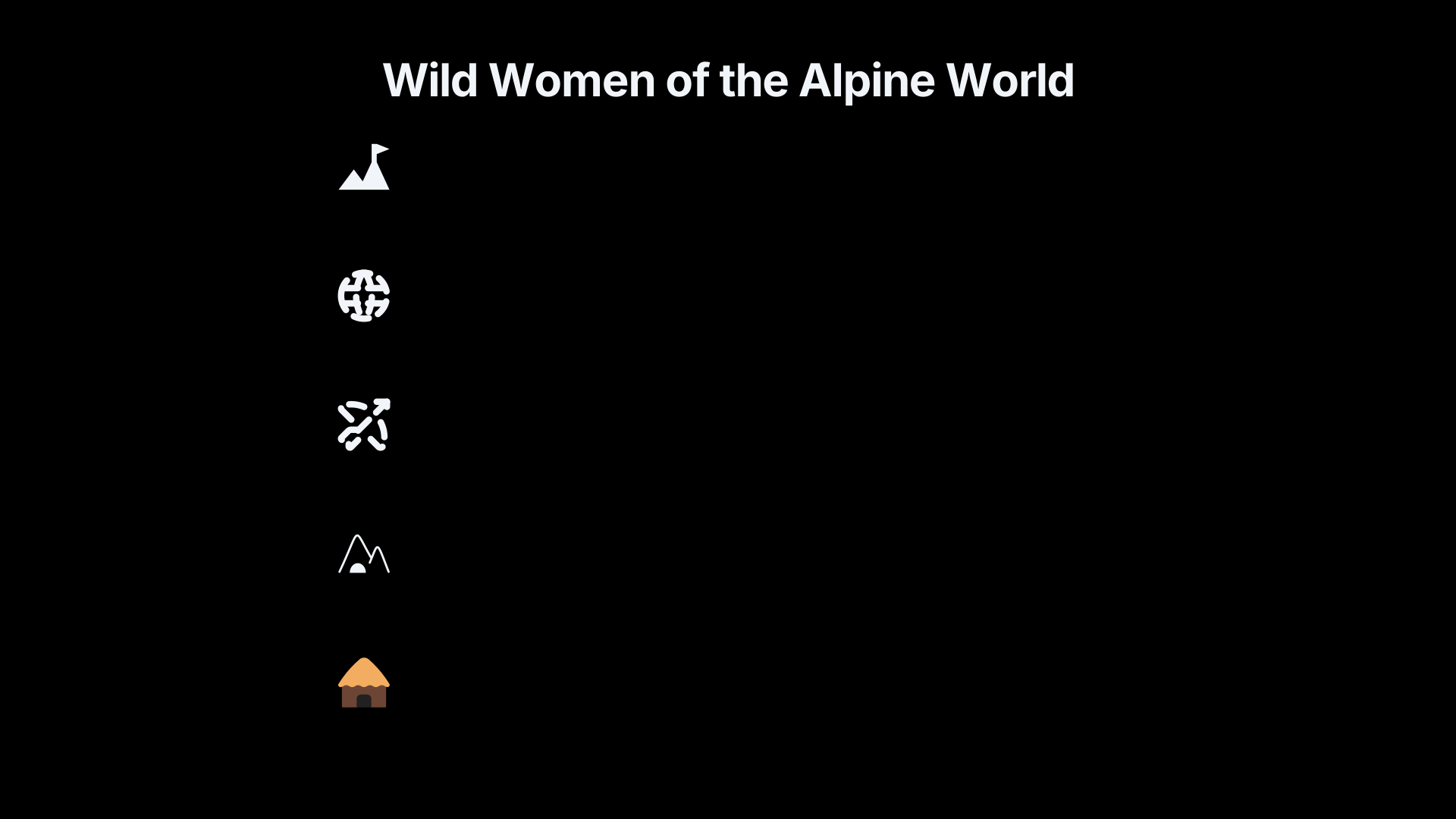
Unlike the frightening image suggested by the term, these beings were not always monstrous. Alpine wild women often appeared as mysterious female figures living beyond ordinary society. They occupied caves, forests, high meadows, and inaccessible mountain regions. Some stories portray them as beautiful and wise; others describe them as strange, untamed, or dangerous.[Wikipedia]WikipediaWild manWild man
Wild women frequently possessed knowledge unavailable to ordinary people. They taught shepherds useful skills, revealed secrets of nature, warned communities about danger, or offered rewards to respectful visitors. Yet they could also punish greed, disrespect, or violations of natural boundaries. In many stories, humans lose access to their wisdom because they betray trust or attempt to exploit them.[Wikipedia]WikipediaWild manWild man
These tales reflect the realities of Alpine life. Mountain pastures provided food and income but also exposed people to storms, accidents, isolation, and harsh conditions. Wild women embodied both the generosity and unpredictability of the high mountains.
Guardians of the Alpine World
Several Alpine traditions depict wild women as protectors of animals and wilderness.
Stories from Tyrol and neighbouring regions describe female supernatural figures associated with mountain game, forests, and remote valleys. Hunters who ignored their warnings could face punishment, while those who respected the balance of nature received protection. Such legends present wild women less as monsters than as guardians enforcing moral rules within the landscape.[Wikipedia]WikipediaWild manWild man
In this sense, they resemble nature spirits more than witches. Their role was not simply to frighten people but to express a traditional understanding that mountains demanded respect.
What These Legends Reveal About Austrian Culture
Taken together, witches, Trud spirits, household beings, and wild women reveal a recurring pattern in Austrian folklore. The supernatural often appears where everyday life becomes uncertain.
Nightmares become the work of a Trud. Strange sounds in a farmhouse become a Schratl. Winter discipline becomes Percht’s inspection. The risks of remote mountain life become wild women watching from caves and forests. These stories transformed ordinary anxieties into memorable characters that could be discussed, feared, and understood.[researchgate.net]researchgate.netResearch Gate(PDF) Witches and Devil's Magic in AustrianResearchGate(PDF) Witches and Devil's Magic in Austrian…January 1, 2018 — 5 Jun 2024 — Although Austrian witch legends are very simila…
Today, few Austrians literally believe that a wild woman guards an Alpine pasture or that a Trud causes sleep paralysis. Yet the stories remain culturally significant. They survive in local legends, folklore collections, museum exhibits, regional tourism, seasonal celebrations, and modern fantasy literature. Their lasting appeal comes from the fact that they address experiences that still feel familiar: fear in the dark, uncertainty in nature, strange events at home, and fascination with people who live beyond society’s rules.
In Austrian legend, the home and the wilderness are never entirely separate. Between them stand witches, night spirits, household beings, and wild women—figures that continue to haunt the imagination long after belief in them has faded.
Amazon book picks
Further Reading
Books and field guides related to Who Haunts Austria's Homes and Hills?. Use these as the next step if you want deeper reading beyond the article.
Witches, Midwives and Nurses
Provides context for how societies viewed witches and female healers.
Women Who Run with the Wolves
Explores wild-woman archetypes echoed in Alpine folklore.
The Encyclopedia of Witches, Witchcraft and Wicca
Covers many figures and motifs found in European witch lore.
eBay marketplace picks
Marketplace Samples
Live-tested eBay searches with available results related to this page.
Endnotes
1.
Source: researchgate.net
Title: Research Gate(PDF) Witches and Devil’s Magic in Austrian
Link:https://www.researchgate.net/publication/320307611_Witches_and_Devil%27s_Magic_in_Austrian_Demonological_Legends
Source snippet
ResearchGate(PDF) Witches and Devil's Magic in Austrian...January 1, 2018 — 5 Jun 2024 — Although Austrian witch legends are very simila...
Published: January 1, 2018
2.
Source: Wikipedia
Link:https://en.wikipedia.org/wiki/Schrat
3.
Source: Wikipedia
Title: Alp (folklore)
Link:https://en.wikipedia.org/wiki/Alp_%28folklore%29
4.
Source: Wikipedia
Link:https://en.wikipedia.org/wiki/Perchta
Source snippet
May 2, 2005 — Perchta or Berchta also commonly known as Percht and other variations, was thought to be a goddess in Alpine paganism in th...
Published: May 2, 2005
5.
Source: Wikipedia
Title: Wild man
Link:https://en.wikipedia.org/wiki/Wild_man
6.
Source: austria.info
Link:https://www.austria.info/en-gb/inspiration/holidays-on-an-alpine-pasture/
Source snippet
Holidays on an Alpine Pasture in AustriaHere you'll find Alpine hut holidays in Austria – from simple self-catering huts and mountain far...
7.
Source: tyrol.com
Link:https://www.tyrol.com/travel-service/typically-tirolean/tyrolean-legends
Source snippet
ean legends | Tyrol in AustriaThe spirit of the dairyman was condemned to live every winter in various huts in Tyrol as a Kasermandl...
8.
Source: skichaletsaustria.co.uk
Title: Austrian Folklore
Link:https://www.skichaletsaustria.co.uk/austrian-folklore-customs.html
Source snippet
During the summer he lives up in the mountains where he lives off roots, herbs...Read more...
Additional References
9.
Source: farmholidays.com
Link:https://www.farmholidays.com/en/inspirations/magazine/A-Treasure-Hunt-on-Austria-s-Alpine-Pastures_bba_54408
Source snippet
A Treasure Hunt on Austria's Alpine PasturesOur Alps are millions of years old. And up to this day, they hide treasures - find them on yo...
10.
Source: reddit.com
Link:https://www.reddit.com/r/Austria/comments/19dgj87/creating_fantasy_from_the_mythology_of_austria/
Source snippet
Creating Fantasy from the Mythology of AustriaThe Salzkammergut has a myth about a mermaid/nymph (Nixe) called Blondchen and her lover th...
11.
Source: facebook.com
Link:https://www.facebook.com/themarysue/posts/my-favorite-variation-on-this-that-i-discovered-just-today-in-the-folklore-thurs/3593920607342285/
12.
Source: youtube.com
Link:https://www.youtube.com/watch?v=QcK5TWjD5Ns
13.
Source: facebook.com
Link:https://www.facebook.com/61559190213644/posts/the-alp-is-a-malevolent-nocturnal-demon-from-germanic-folklore-etymologically-li/122209204178306340/
Source snippet
an incubus that comes to sleepers during the night...Read more...
14.
Source: vikingreligion.wordpress.com
Title: Viking Religion What Is a Drude or Trude?
Link:https://vikingreligion.wordpress.com/2023/07/12/what-is-a-drude-or-trude/
Source snippet
Viking Religion - WordPress.com12 Jul 2023 — In Southern German folk religion, a Drude is a female incubus or mare. So when a Drude lies...
15.
Source: budgetpixel.com
Title: ultimate list of mythical creatures from austrian folklore
Link:https://budgetpixel.com/blog/ultimate-list-of-mythical-creatures-from-austrian-folklore
Source snippet
Mirror Lake Maiden – Spirit appearing only in still alpine lakes. Shadow Huntsman...Read more...
16.
Source: bookatrekking.com
Title: flora and fauna austria
Link:https://bookatrekking.com/en/blog/flora-and-fauna-austria/
Source snippet
Austria's Flora and Fauna: Wildlife of the Austrian Alps3 Mar 2026 — Discover Austria's rich flora and fauna, from alpine ibex and golden...
17.
Source: youtube.com
Title: Spirits of Darkness
Link:https://www.youtube.com/watch?v=ojYHpai4fA0
Source snippet
Schrat, Banshee and Perchta explainedHave you ever heard of the Banshee, the Schrat, the Krampus or Perchta? Or Holle? All of them are so...
18.
Source: facebook.com
Link:https://www.facebook.com/groups/281886105961506/posts/979595636190546/
Source snippet
(aside from Roman & Greek mythology)?...
Topic Tree