Why Japan's Old Stories Still Feel Alive
Japan’s folklore is not a single neat mythology but a layered story-world shaped by old court chronicles, shrine traditions, Buddhist ideas, local farming and fishing customs, ghost stories, theatre, printed books, children’s tales, regional festivals and modern popular culture.
Page outline Jump by section
Introduction
A useful way to approach Japanese folklore is to avoid treating it as either “ancient religion” or “monster entertainment” alone. Some stories are tied to eighth-century mythic histories; others were fixed in Edo-period illustrated books and theatre; others survive as local custom or have been reshaped for schools, tourism and media. The same creature can be a warning, a joke, a god, a monster, a political symbol and a mascot, depending on where and when it is being told.[loc.gov]tile.loc.govLibrary of Congress Japanese Demon LoreLibrary of Congress Japanese Demon Lore
Where Japanese folklore begins: sacred landscapes and old chronicles
The oldest written layer of Japan’s mythic tradition is preserved in early court texts. The Nihon Shoki, completed in 720, gives an account beginning with the mythical age of the gods, while Shinto-related mythology is also recorded in classical sources including the Kojiki, the Nihon Shoki, regional gazetteers and later compilations. These texts do not represent all Japanese folk belief, but they are central for understanding the mythic framework around creation, islands, divine ancestry and sacred places.[Narahaku]narahaku.go.jpOpen source on go.jp.
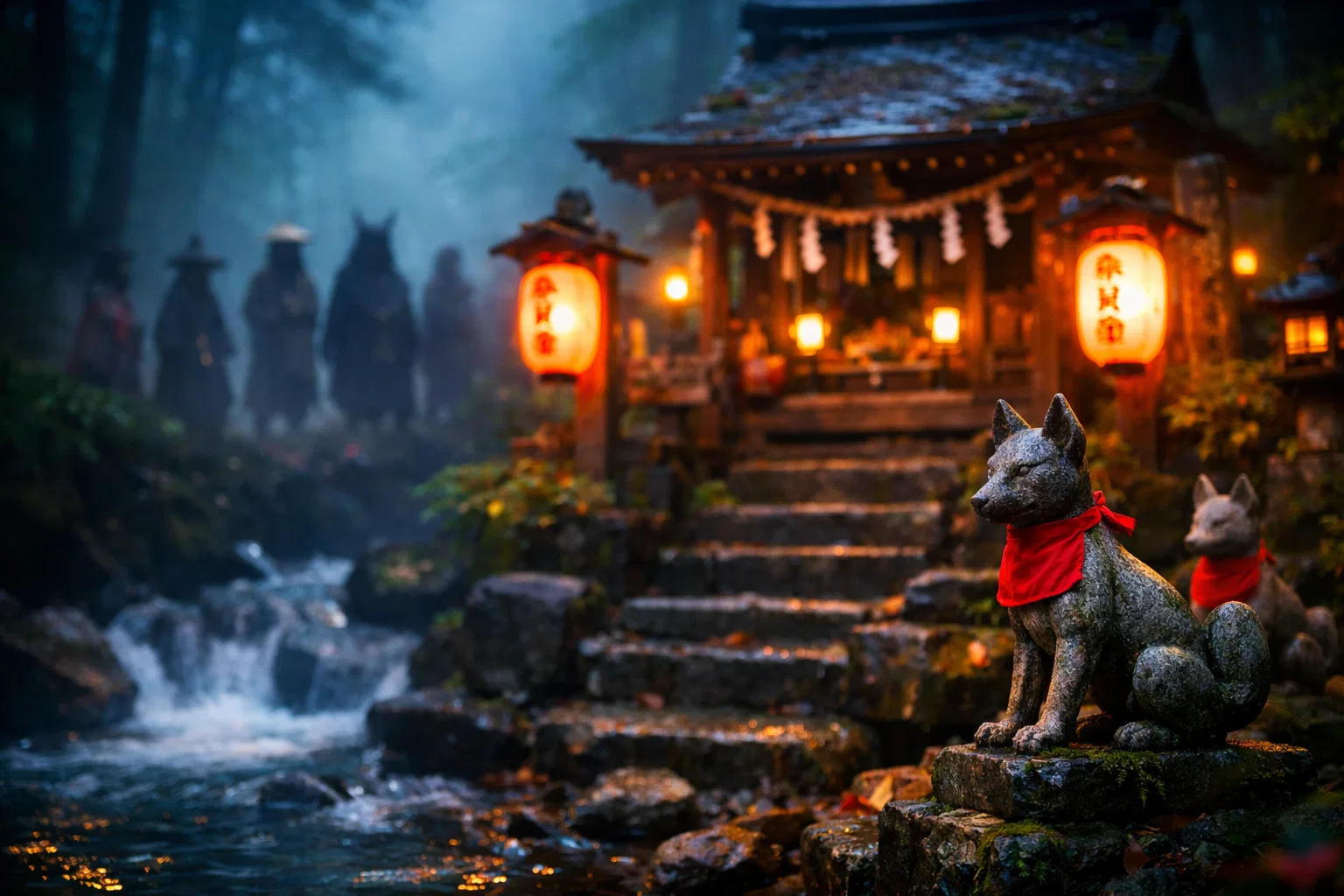
At the heart of much Japanese belief culture is the idea that the world is alive with sacred powers. Shinto is often described as Japan’s indigenous faith, and shrine material on Ise Jingu presents it as rooted in reverence for divine presences associated with nature, including rain, wind, mountains, trees and other forces or places. This matters for folklore because many Japanese legends do not separate “nature story” from “spirit story”: a mountain, waterfall, old tree, stone, fox, storm or stretch of sea can become the centre of a tale because it is experienced as more than scenery.[Ise Jingu]isejingu.or.jpOpen source on or.jp.
This sacred geography also helps explain why Japanese folklore is so regional. A national tale may be widely known, but its texture often comes from a named valley, shrine, island, riverbank or mountain. Tono in Iwate Prefecture, Oga in Akita, Okayama’s Kibi region and Miyoshi in Hiroshima all show how local landscapes become folklore maps: places where stories are collected, performed, displayed, marketed and argued over.[japan.travel]japan.travelOpen source on japan.travel.
Monsters are not just monsters
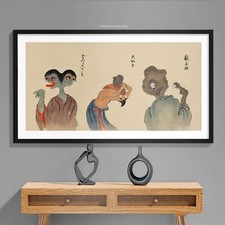
The most internationally recognisable category in Japanese folklore is the broad family of strange beings often called yōkai. The term covers an enormous range: monsters, apparitions, animal tricksters, animated tools, uncanny phenomena and local beings that do not fit easily into Western categories such as demon, fairy or ghost. A key point for readers is that these figures are not simply “evil”. Many are frightening; others are comic, protective, morally ambiguous or attached to very specific local warnings.[nichibun.ac.jp]nichibun.ac.jpOpen source on nichibun.ac.jp.
The famous “night parade” image tradition is a good example. Museum collections preserve illustrated processions of many strange beings, including personified tools and animals, marching across picture scrolls. The Hyogo Prefectural Museum of History describes one such scroll as showing ninety-nine monsters of varied forms, including demons, animals and personified objects, probably copied in the later Edo period. The Smithsonian’s National Museum of Asian Art also holds a Hyakki yagyō object and has exhibited such imagery in shows on Japanese ghosts, demons and theatre.[兵庫県立歴史博物館:兵庫県教育委員会]rekihaku.pref.hyogo.lg.jpOpen source on lg.jp.
Oni, often translated as ogres or demons, are among the most important of these beings, but even they are more complicated than “bad monsters”. Noriko Reider’s study Japanese Demon Lore: Oni from Ancient Times to the Present traces oni through literature, religion, art, folklore and film, showing them as fearsome outsiders, embodiments of violence, marginal figures, sources of prosperity and eventually commercial and pop-cultural characters. The same tradition can make an oni a cannibal threat, a defeated enemy, a lonely outsider or a softened children’s-book figure.[Library of Congress]tile.loc.govLibrary of Congress Japanese Demon LoreLibrary of Congress Japanese Demon Lore
That flexibility is one reason Japanese folklore has travelled so well into modern culture. A creature can be old enough to appear in pre-modern art, local enough to belong to a village story, and adaptable enough to become a museum exhibit, festival mask, manga character or tourist mascot. The modern Japan Yokai Museum in Miyoshi, for instance, displays more than 5,000 items from the collection of scholar and collector Koichi Yumoto, including picture scrolls, woodblock prints, pottery and toys.[Miyoshi DMO]miyoshi-dmo.jpmiyoshi mononoke museummiyoshi mononoke museum
Ghosts, theatre and the art of being unsettled
Japanese ghost lore has its own powerful visual and dramatic language. The British Museum notes that paintings of female ghosts became popular from the late eighteenth century after Maruyama Okyo, with a typical form: long dishevelled hair, white death robe and no visible legs. Such spirits are often imagined as unable to leave this world because of sudden or violent death, remaining until pacified by the right prayers or rituals.[British Museum]britishmuseum.orgOpen source on britishmuseum.org.
This image is not just “folk belief” in isolation; it is tied to entertainment, art and performance. In the nineteenth century, public ghost-storytelling was fashionable, and the British Museum links ghost paintings to the world of storytellers such as Sanyutei Encho and to the Zenshoan temple collection in Tokyo. Ghosts were therefore not only feared presences but also performed, painted, collected and displayed.[British Museum]britishmuseum.orgOpen source on britishmuseum.org.
The best-known Japanese ghost story for many readers is Yotsuya Kaidan, a tale of betrayal, murder and revenge centred on Oiwa and her cruel husband Iemon. The National Theatre of Japan describes it as one of Tsuruya Namboku IV’s representative kabuki works, revolving around two sisters and driven by Iemon’s villainous actions. Its importance lies not only in the plot but in its afterlife: it helped shape the visual vocabulary of Japanese horror, especially the wronged woman whose suffering returns as supernatural force.[www2.ntj.jac.go.jp]www2.ntj.jac.go.jpOpen source on go.jp.
Another major bridge between Japanese ghost traditions and English-speaking readers is Lafcadio Hearn’s Kwaidan, originally published in 1904. The Public Domain Review describes it as a collection of ghost stories from Japan, many translated from older Japanese texts, while archive records note that it was first published as Kwaidan: Stories and Studies of Strange Things. Hearn’s retellings are literary works, not raw oral transcripts, but they helped make Japanese ghostly tradition internationally legible.[The Public Domain Review]publicdomainreview.orgkwaidan stories and studies of strange things 1904kwaidan stories and studies of strange things 1904
Folktales children know, and what adults have done with them
Japan’s best-known folktales often look simple on the surface but have complex histories. Momotaro, the peach-born boy who travels with a dog, monkey and pheasant to defeat ogres, is a classic example. Okayama tourism and Japan Heritage material strongly associate the tale with the Kibi region, shrines and sites connected to an older demon-slaying legend. In contemporary Okayama, the story is a civic symbol found in statues, museums, souvenirs and heritage routes.[okayama-japan.jp]okayama-japan.jpOpen source on okayama-japan.jp.
Yet the tale is also a reminder that “traditional” does not always mean unchanged from antiquity. Modern scholarship has questioned simple claims that Okayama is the single original birthplace of Momotaro, and the story’s familiar national form was shaped through modern publishing and school readers. The tale entered state education in the Meiji period and was later used to teach ideals such as bravery, loyalty and service, showing how a folk hero could become a tool of national instruction.[Wikipedia]WikipediaOpen source on wikipedia.org.
This does not make Momotaro fake. It makes it a living example of how folklore works. A story can have local variants, printed versions, school versions, political uses and tourist versions without belonging wholly to any one of them. The useful question is not “which version is the real one?” but “who is telling this version, where, and for what purpose?”[Wikipedia]WikipediaOpen source on wikipedia.org.
Tono’s river creatures offer a different kind of lesson. The Japan National Tourism Organization describes Tono as famous for local folklore, including red river beings said to lure children towards water, with cucumbers as a favourite food. Tohoku tourism material connects Tono’s riverbank legends to Kunio Yanagita’s Tono Monogatari, including the claim that footprints might be found in sand after rain. Tourism sources also plainly state one social function of the stories: warning children away from dangerous rivers and ponds.[japan.travel]japan.travelOpen source on japan.travel.
Collectors, scholars and the making of “Japanese folklore”
Japanese folklore was not simply handed down intact; it was collected, edited and organised by scholars, writers and institutions. Kunio Yanagita is central here. His Tono Monogatari, published in 1910, recorded stories from the Tono region and helped establish modern Japanese folklore studies. Indiana University Press material on Yanagita notes that he later reflected on the work as an early step in his thinking about folk tales, and Japan-guide describes Tono’s oral tradition as having been passed down through generations before being collected by Yanagita.[publish.iupress.indiana.edu]publish.iupress.indiana.eduOpen source on indiana.edu.
Yanagita’s role is important because it shows the difference between oral tradition and collected folklore. A village tale told in one household or hamlet changes when it is written down, edited, printed, translated and taught as national heritage. The written version may preserve a story that might otherwise disappear, but it also fixes a moving tradition into a particular shape.[publish.iupress.indiana.edu]publish.iupress.indiana.eduOpen source on indiana.edu.
Modern databases have extended this process. The International Research Center for Japanese Studies developed a database of folktales of mysterious phenomena and yōkai under the leadership of Professor Kazuhiko Komatsu, with the aim of making difficult-to-access materials searchable together with reliable bibliographic information. This is not folklore as campfire rumour; it is folklore as an archive, a research field and a public cultural resource.[Nichibun]nichibun.ac.jpOpen source on nichibun.ac.jp.
The archive also matters in the digital age because Japanese folklore is now frequently encountered through translation, games, anime and internet summaries. A 2025 study on large language models and Japanese folktales introduced a benchmark of 809 questions about yōkai, arguing that folktales are a key medium for cultural knowledge and that English-centred systems can miss non-English cultural detail. That is a modern technical finding, but it points to an old problem: folklore changes when it moves between languages and media.[arXiv]arxiv.orgOpen source on arxiv.org.
Masked visitors, seasonal rites and living custom
Some of Japan’s most vivid folklore is not primarily a story to read but a ritual to witness. The UNESCO-listed “Raiho-shin” tradition covers ritual visits by deities in masks and costumes across regions of Japan, especially around the beginning of a year or the change of a season. UNESCO describes these rituals as stemming from folk beliefs that visiting deities enter communities to bring in a new year or season; costumed figures visit houses, admonish laziness and teach children good behaviour.[UNESCO]unesco.orgdocument 4788document 4788
The Oga Namahage of Akita Prefecture is the best-known example. On New Year’s Eve, men in fierce masks and straw garments go from house to house, shouting warnings and looking for crying children or lazy people. Japan’s official travel site stresses that, despite their frightening appearance, the visitors are understood as benevolent spirits who ward off misfortune and bring families good luck.[Japan Travel]japan.travelOpen source on japan.travel.
The details vary by village, and that variation is part of the tradition’s value. The Namahage Museum notes that the Oga rite was designated an Important Intangible Folk Cultural Property in 1978 and was included in UNESCO intangible cultural heritage in 2018. Local tourism material also notes a practical modern issue: participation has declined in some areas because of a lack of successors, even while revival and tourism efforts continue.[Oga Tourism Association]namahage.co.jpOpen source on namahage.co.jp.
This is where folklore becomes a community question rather than only a cultural curiosity. A ritual must be performed by people who still know the route, the masks, the household etiquette, the words, the timing and the social boundaries. Once staged for visitors or moved into festivals, it can gain visibility and funding, but it can also shift from household custom to public heritage performance.[Oga Tourism Association]namahage.co.jpOpen source on namahage.co.jp.
Local places where folklore becomes visible
For a reader travelling through Japanese folklore, certain places act almost like open-air indexes.
Tono in Iwate is strongly associated with rural legends, especially river beings and household or mountain spirits. It is remembered through Yanagita’s collecting work, but it is also a living tourism landscape of ponds, riverbanks, museums and local storytelling. The point is not that every visitor is expected to “believe” the tales, but that the region has made folklore part of how it explains its landscape.[japan-guide.com]japan-guide.comOpen source on japan-guide.com.
Oga in Akita is the place to understand masked visiting deities as social custom. The dramatic masks attract visitors, but the deeper tradition is about household blessing, seasonal renewal, children’s behaviour, village identity and the management of fear. The figures look demonic, yet official tourism material repeatedly explains them as protective rather than simply monstrous.[Japan Travel]japan.travelOpen source on japan.travel.
Okayama shows how a folktale hero can become regional heritage. The Momotaro story is attached to shrines, ancient sites, the Kibi plain and modern civic branding. It is also a good place to notice the tension between local pride and scholarly caution: the region’s association is culturally powerful even where the tale’s exact origins remain more complex than a tourist slogan can admit.[okayama-japan.jp]okayama-japan.jpOpen source on okayama-japan.jp.
Miyoshi in Hiroshima shows folklore as collection and display. Its Japan Yokai Museum grew from a large donated collection of yōkai-related objects, including scrolls, prints, ceramics and toys. The museum’s setting is also linked to a local monster story that circulated widely from the Edo period onward, showing how a local tale can become national visual culture.[Miyoshi DMO]miyoshi-dmo.jpmiyoshi mononoke museummiyoshi mononoke museum
Old tradition, modern invention and popular culture
One of the easiest mistakes is to imagine Japanese folklore as a fixed ancient catalogue. In reality, many familiar forms were shaped by media. Edo-period picture scrolls and woodblock prints gave strange beings memorable bodies. Kabuki gave ghosts dramatic gestures. Meiji schoolbooks standardised folktales. Twentieth-century film, manga and anime turned demons, ghosts and shape-shifters into globally recognisable characters.[lg.jp]rekihaku.pref.hyogo.lg.jpOpen source on lg.jp.
Reider’s history of oni makes this especially clear. Her study follows oni from ancient and medieval religious-literary contexts into early modern urban culture and then manga, anime and film, including examples where oni become cute, lonely, selfless or surreal rather than only terrifying. This is not a decline from “authentic” folklore into “mere pop culture”; it is one of the ways folklore survives by changing its emotional role.[Library of Congress]tile.loc.govLibrary of Congress Japanese Demon LoreLibrary of Congress Japanese Demon Lore
Modern exhibitions and databases continue the same process in institutional form. The Miyoshi museum turns yōkai objects into public heritage. Nichibunken’s database turns scattered tales and images into searchable evidence. Immersive exhibitions and tourism campaigns turn old imagery into experience-led culture. Each format highlights something different: scholarship values provenance, museums value objects, tourism values place, and entertainment values memorable characters.[nichibun.ac.jp]nichibun.ac.jpOpen source on nichibun.ac.jp.
The internet adds a further complication. Japanese folklore is now often encountered through short videos, fan wikis, AI-generated summaries and horror lists. Some of these introduce readers to real traditions; others flatten regional stories into generic “creepy Japan” content. A careful reader should look for named places, named sources, clear dates, collection history and whether a tale is being presented as oral tradition, literary adaptation, ritual practice, tourist retelling or modern invention.[arXiv]arxiv.orgOpen source on arxiv.org.
Why Japanese folklore still feels alive
Japanese folklore endures because it is useful as well as entertaining. It gives form to dangerous water, lonely roads, mountain weather, household luck, unjust death, social shame, seasonal renewal and the fear that ordinary objects may not be entirely ordinary. It also gives communities a way to remember themselves: through a shrine tale, a New Year visitor, a river warning, a ghost painting, a heroic child’s story or a museum collection.[tonojikan.jp]tonojikan.jpOpen source on tonojikan.jp.
Its modern visibility can make it seem familiar, but the best way to read it is with attention to layers. A fox statue may point to shrine belief, a trickster tale or a tourist photo. A masked figure may look like a demon but function as a visiting deity. A ghost may be a theatrical role, a moral warning, a memorial problem or a horror icon. A monster may be a joke, an outsider, a warning, a database entry or a beloved mascot.[oberlin.edu]amam.oberlin.edutrickster spirits demons foxes and tengu in japanese folkloretrickster spirits demons foxes and tengu in japanese folklore
That layered quality is the heart of Japan’s folklore. It is ancient but not frozen, local but nationally recognisable, playful but often morally serious, and modern precisely because it has never stopped being retold.

Amazon book picks
Further Reading
Books and field guides related to Why Japan's Old Stories Still Feel Alive. Use these as the next step if you want deeper reading beyond the article.
Japanese Tales
Covers the range of stories, beliefs and characters discussed across Japanese folklore.
The Book of Yokai
Explains how folklore creatures evolved through history and culture.
Kwaidan â Stories and Studies of Strange Things
Introduces influential ghost and supernatural traditions.
eBay marketplace picks
Marketplace Samples
Live-tested eBay searches with available results related to this page.
Endnotes
1.
Source: unesco.org
Title: document 4788
Link:https://www.unesco.org/archives/multimedia/document-4788
2.
Source: Wikipedia
Link:https://en.wikipedia.org/wiki/Momotar%C5%8D
3.
Source: miyoshi-dmo.jp
Title: miyoshi mononoke museum
Link:https://www.miyoshi-dmo.jp/en/miyoshi-mononoke-museum/
4.
Source: japan.travel
Link:https://www.japan.travel/en/spot/481/
5.
Source: japan.travel
Link:https://www.japan.travel/en/japan-magazine/1902_namahage/
6.
Source: www2.ntj.jac.go.jp
Link:https://www2.ntj.jac.go.jp/unesco/kabuki/en/play/play17.html
7.
Source: japan.travel
Title: haunted yotsuya hidden ghost stories in tokyo
Link:https://www.japan.travel/en/blog/haunted-yotsuya-hidden-ghost-stories-in-tokyo/
8.
Source: archive.org
Link:https://archive.org/details/kwaidanjapaneseg0000hear
9.
Source: okayama-japan.jp
Link:https://www.okayama-japan.jp/en/24107
10.
Source: japan.travel
Link:https://www.japan.travel/japan-heritage/popular/momotaro-okayama-kibi-kibitsuhiko-mikoto-kinojo
11.
Source: city.okayama.jp
Link:https://www.city.okayama.jp/bungakucity_en/category/24-1-0-0-0-0-0-0-0-0.html
12.
Source: publish.iupress.indiana.edu
Link:https://publish.iupress.indiana.edu/read/the-yanagita-kunio-guide-to-the-japanese-folk-tale/section/65bf777d-c80e-42b0-b20f-a0af0ce6d424
13.
Source: japan-guide.com
Link:https://www.japan-guide.com/e/e5060.html
14.
Source: publish.iupress.indiana.edu
Link:https://publish.iupress.indiana.edu/read/the-yanagita-kunio-guide-to-the-japanese-folk-tale/section/845d6b10-b29a-4f70-9095-44cbe21c81c7
15.
Source: arxiv.org
Link:https://arxiv.org/abs/2506.03619
16.
Source: yokai.com
Link:https://yokai.com/?srsltid=AfmBOormSx-0yaJP4bhfnro4y2YTI0CGJGsxDjhOP-k8pBFSIYh9jfCo
17.
Source: yokai.com
Link:https://yokai.com/oni/?srsltid=AfmBOoq7CjwNDm9pfJfPRjwP_v5zt_FiWZX5pGT2BXvW8aguCBykXjSe
18.
Source: yokai.com
Link:https://yokai.com/oiwa/?srsltid=AfmBOoo46oGKidkCj1RdGbH0gKsYFP6gXU4nNDpQXPEUecUt7jo7p_c0
19.
Source: ich.unesco.org
Link:https://ich.unesco.org/en/decisions/6.COM/13.26
20.
Source: ich.unesco.org
Title: raiho shin ritual visits of deities in masks and costumes 01271
Link:https://ich.unesco.org/en/RL/raiho-shin-ritual-visits-of-deities-in-masks-and-costumes-01271
21.
Source: ich.unesco.org
Link:https://ich.unesco.org/en/video/44818
22.
Source: ich.unesco.org
Title: 10b representative list 01013
Link:https://ich.unesco.org/en/10b-representative-list-01013?id=01271&include=slideshow_inc.php
23.
Source: ich.unesco.org
Title: raiho shin ritual visits of deities in masks and costumes 01271
Link:https://ich.unesco.org/en/RL/raiho-shin-ritual-visits-of-deities-in-masks-and-costumes-01271?RL=01271&id=44818&include=film_inc.php
24.
Source: ich.unesco.org
Title: japan JP
Link:https://ich.unesco.org/ar/state/japan-JP?call=film&id=44818&include=film_inc.php&width=700
25.
Source: ich.unesco.org
Link:https://ich.unesco.org/doc/src/36515.pdf?v=1493226390
26.
Source: archive.org
Link:https://archive.org/download/kwaidanstories00hearrich/kwaidanstories00hearrich.pdf
27.
Source: archive.org
Link:https://archive.org/details/japaneseghoststo0000hear
28.
Source: archive.org
Link:https://archive.org/details/orientalghoststo0000hear
29.
Source: archive.org
Link:https://www.archive.org/stream/kwaidanstoriesa00heargoog
30.
Source: Wikipedia
Title: Miyoshi Mononoke Museum
Link:https://en.wikipedia.org/wiki/Miyoshi_Mononoke_Museum
31.
Source: Wikipedia
Title: Japanese language
Link:https://en.wikipedia.org/wiki/Japanese_language
32.
Source: Wikipedia
Link:https://en.wikipedia.org/wiki/Y%C5%8Dkai
33.
Source: Wikipedia
Link:https://en.wikipedia.org/wiki/Oni
34.
Source: Wikipedia
Link:https://en.wikipedia.org/wiki/Kami
35.
Source: Wikipedia
Link:https://en.wikipedia.org/wiki/Y%C5%ABrei
36.
Source: Wikipedia
Link:https://en.wikipedia.org/wiki/Japan
37.
Source: Wikipedia
Title: Kunio Yanagita
Link:https://en.wikipedia.org/wiki/Kunio_Yanagita
38.
Source: Wikipedia
Link:https://en.wikipedia.org/wiki/Kojiki
39.
Source: Wikipedia
Link:https://en.wikipedia.org/wiki/Namahage
40.
Source: Wikipedia
Title: Kaii Yōkai Denshō Database
Link:https://en.wikipedia.org/wiki/Kaii-Y%C5%8Dkai_Densh%C5%8D_Database
41.
Source: Wikipedia
Title: Kwaidan: Stories and Studies of Strange Things
Link:https://en.wikipedia.org/wiki/Kwaidan%3A_Stories_and_Studies_of_Strange_Things
42.
Source: Wikipedia
Title: Yotsuya Kaidan
Link:https://en.wikipedia.org/wiki/Yotsuya_Kaidan
43.
Source: Wikipedia
Title: Kappa (folklore)
Link:https://en.wikipedia.org/wiki/Kappa_%28folklore%29
44.
Source: kojiki.co
Link:https://kojiki.co/en/
45.
Source: japan.travel
Title: unesco add japans ritual visits of deities to list of intangible cultural
Link:https://www.japan.travel/vi/news/unesco-add-japans-ritual-visits-of-deities-to-list-of-intangible-cultural/
46.
Source: note.com
Link:https://note.com/miyoshi_mononoke/n/n95dfaa2f91a7?hl=en
47.
Source: note.com
Link:https://note.com/open_hippo7755/n/n27fa6cae6344?hl=en
48.
Source: okayama-japan.jp
Link:https://www.okayama-japan.jp/en/momotaro
49.
Source: spoonbridge.medium.com
Link:https://spoonbridge.medium.com/narrating-the-strange-kaidan-of-yokai-and-yurei-in-japanese-folklore-e8c2b397962f
50.
Source: japan.je
Title: Yokai & Kami Encyclopedia
Link:https://www.japan.je/yokai-encyclopedia.html
51.
Source: narahaku.go.jp
Link:https://www.narahaku.go.jp/english/collection/1190-0.html
52.
Source: nichibun.ac.jp
Link:https://www.nichibun.ac.jp/YoukaiDB/english_kaisetsu.html
53.
Source: tile.loc.gov
Title: Library of Congress Japanese Demon Lore
Link:https://tile.loc.gov/storage-services/master/gdc/gdcebookspublic/20/20/71/98/76/2020719876/2020719876.pdf
54.
Source: isejingu.or.jp
Link:https://www.isejingu.or.jp/en/pdf/soul-of-japan.pdf
55.
Source: dive-hiroshima.com
Link:https://dive-hiroshima.com/en/explore/364/
56.
Source: asia.si.edu
Title: National Museum of Asian Art Hyakki yagyō 百鬼夜行
Link:https://asia.si.edu/explore-art-culture/collections/search/edanmdm%3Afsg_FSC-GR-780.621.1-3/
57.
Source: amam.oberlin.edu
Title: trickster spirits demons foxes and tengu in japanese folklore
Link:https://amam.oberlin.edu/exhibitions-events/exhibitions/current/2025/01/31/trickster-spirits-demons-foxes-and-tengu-in-japanese-folklore
58.
Source: rekihaku.pref.hyogo.lg.jp
Link:https://rekihaku.pref.hyogo.lg.jp/en/digital_museum/ebanashi/sakuhin/ka0014/
59.
Source: britishmuseum.org
Link:https://www.britishmuseum.org/collection/object/A
60.
Source: publicdomainreview.org
Title: kwaidan stories and studies of strange things 1904
Link:https://publicdomainreview.org/collection/kwaidan-stories-and-studies-of-strange-things-1904/
61.
Source: tonojikan.jp
Link:https://www.tonojikan.jp/Several_languages/english/english.html
62.
Source: nichibun.ac.jp
Link:https://www.nichibun.ac.jp/en/research/staff/s014/
63.
Source: namahage.co.jp
Link:https://namahage.co.jp/namahagekan/en/namahage/
64.
Source: loc.gov
Link:https://www.loc.gov/resource/gdcebookspublic.2020719876/
65.
Source: blogs.loc.gov
Title: new loc may 2023
Link:https://blogs.loc.gov/thesignal/2023/05/new-loc-may-2023/
Published: may 2023
66.
Source: facebook.com
Link:https://www.facebook.com/groups/officialmidjourney/posts/431778252447078/
67.
Source: koppernik.nl
Link:https://www.koppernik.nl/p/kwaidan-lafcadio-hearn/
68.
Source: kokoro-jp.com
Link:https://kokoro-jp.com/culture/1489/
69.
Source: kappapedia.blogspot.com
Title: tono monogatari
Link:https://kappapedia.blogspot.com/2014/12/tono-monogatari.html
70.
Source: kabuki21.com
Title: yotsuya kaidan
Link:https://www.kabuki21.com/yotsuya_kaidan.php
71.
Source: tcj.com
Title: tono monogatari
Link:https://www.tcj.com/reviews/tono-monogatari/
72.
Source: jf.overdrive.com
Link:https://jf.overdrive.com/media/6175405
Additional References
73.
Source: youtube.com
Link:https://www.youtube.com/watch?v=5PsNjG5CTgU
Source snippet
Japanese folklore mythology documentary Exploring 25+ Monsters & Spirits of Japanese Folklore | The Ultimate Yokai Documentary Forgotten...
74.
Source: youtube.com
Link:https://www.youtube.com/watch?v=vf82OS2D1Yo
Source snippet
The Complete Story of Japanese Mythology | Gods, Spirits, and Creation...
75.
Source: youtube.com
Link:https://www.youtube.com/watch?v=yBVa8zbzUwU
Source snippet
Shinto: Nature, Gods, and Man in Japan (1977)...
76.
Source: youtube.com
Title: A Guide to Japanese Folklore | Human Voiced, No Ads
Link:https://www.youtube.com/watch?v=bKzMvrAEPzY
Source snippet
Kitsune: Japanese Fox Spirits, Nine-Tailed Demons & Divine Messengers | Complete Mythology...
77.
Source: youtube.com
Title: The Complete Story of Japanese Mythology | Gods, Spirits, and Creation
Link:https://www.youtube.com/watch?v=PBvnnr7SRDo
Source snippet
A Guide to Japanese Folklore | Human Voiced, No Ads...
78.
Source: mythlok.com
Link:https://mythlok.com/experts/kazuhiko-komatsu/
79.
Source: tokyoartbeat.com
Link:https://www.tokyoartbeat.com/en/events/-/E-maki-of-Edo-Yokai/16071DF6/2023
80.
Source: japansociety.org
Link:https://japansociety.org/news/japans-monsters-inc-getting-to-know-obake-yokai-yurei/
81.
Source: japanesegallery.com
Link:https://japanesegallery.com/anime_and_manga/blog-page/anime-manga/japanese-folklore-yokai-the-kitsune-and-the-tanuki.html
82.
Source: facebook.com
Link:https://www.facebook.com/illustratedmonthly/posts/japanese-folklore-is-filled-with-a-rich-variety-of-ghosts-y%C5%ABrei-and-demons-oni-o/1205511431610683/
Topic Tree
Follow this branch
Related pages 192
- Afghan Folklore
- Albanian Folklore
- Algerian Folklore
- Australian Folklore
- Azerbaijan Folklore
- +187 more in sidebar