Within Zambia Folklore
When Masks Become Ancestors in Zambia
Makishi shows how Zambian folklore can be danced, worn and feared rather than only told as a tale.
On this page
- Mukanda initiation and public return
- Spirit characters and social lessons
- Heritage, festivals and outside audiences
Page outline Jump by section
Introduction
The Makishi masquerade is one of Zambia’s most distinctive living traditions because it turns folklore into a public performance rather than simply a story. In north-western and western Zambia, masked dancers are understood not merely as entertainers but as embodiments of ancestral or spiritual beings who emerge at the end of the Mukanda initiation ceremony for boys. Through dance, costume, music and dramatic encounters with spectators, these figures teach moral values, reinforce community identity and mark the transition from childhood to adulthood. Although the tradition has adapted to modern life, its central idea remains that the ancestors return in masked form to guide the living. UNESCO recognised the Makishi masquerade as Intangible Cultural Heritage in 2005, with inscription on the Representative List in 2008, acknowledging both its cultural importance and the challenges involved in preserving it.[ICH UNESCO]ich.unesco.orgICH UNESCOMakishi masqueradeUNESCO Intangible Cultural Heritage…

Mukanda initiation and the return of the ancestors
Makishi performances belong to the annual Mukanda initiation ritual practised among communities including the Luvale, Chokwe, Luchazi and Mbunda peoples. During the ceremony, boys traditionally spend weeks in an isolated bush camp after circumcision, where they receive practical instruction alongside lessons about social responsibilities, respect, courage, family life and community values. Their temporary separation from ordinary village life symbolises the death of childhood before their return as recognised young men.[ICH UNESCO]ich.unesco.orgICH UNESCOMakishi masqueradeUNESCO Intangible Cultural Heritage…
The masked dancers appear during the public conclusion of this process. Within local belief, the audience is encouraged to treat the Makishi not as ordinary men in disguise but as ancestral spirits visiting the community. The concealment of the performers’ identities helps sustain this transformation. Rather than asking who is inside the costume, attention is directed towards the character being represented and the lesson that character embodies.[ICH UNESCO]ich.unesco.orgICH UNESCOMakishi masqueradeUNESCO Intangible Cultural Heritage…
This understanding distinguishes Makishi from theatrical costume traditions elsewhere. The masks are not simply decorative objects; they gain meaning through ritual, performance and the relationship between the living community and remembered ancestors.
Spirit characters and the lessons they teach
A Makishi performance brings together many different spirit characters, each with a recognisable appearance, personality and moral role. Instead of telling one fixed story, the masquerade presents a series of encounters that audiences already understand through shared tradition.
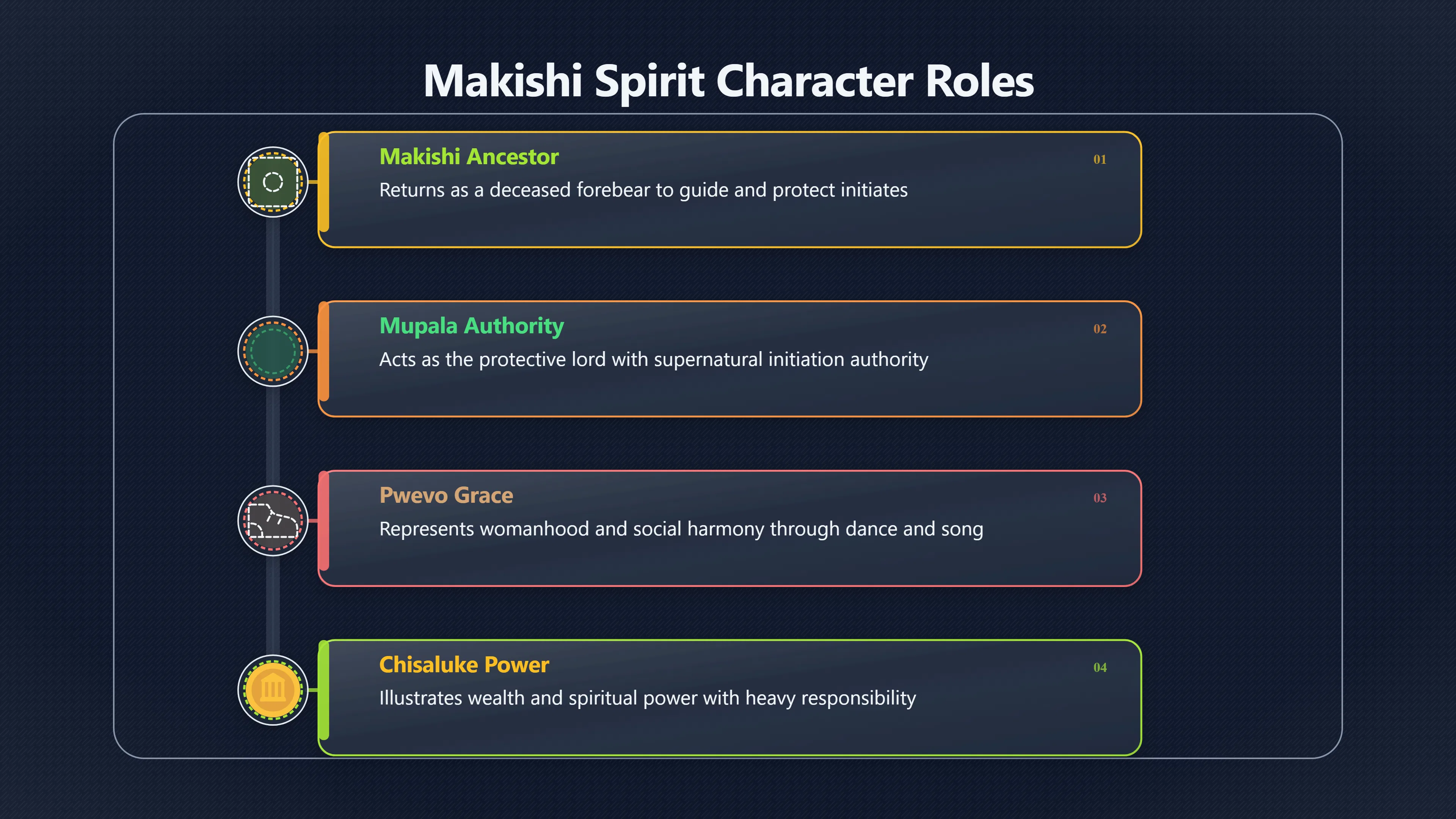
Some of the best-known figures include:
- The Makishi ancestor itself, representing a deceased forebear who returns to guide and protect the initiates.
- Mupala, regarded as the protective lord of the Mukanda with supernatural authority over the initiation.
- Pwevo, a female character performed by a man, representing ideals of womanhood, grace and social harmony while accompanying songs and dances.
- Chisaluke, representing wealth, influence and spiritual power, illustrating both authority and responsibility.[ICH UNESCO]ich.unesco.orgICH UNESCOMakishi masqueradeUNESCO Intangible Cultural Heritage…
Many communities also recognise numerous additional masked figures with distinctive behaviours. Some dance elegantly, others deliberately frighten children, joke with spectators or exaggerate human weaknesses. Through humour, fear, discipline and spectacle, they communicate expectations about generosity, obedience, self-control and respect for elders.
Because each character represents a recognised social type or ancestral force, the masquerade functions as a form of public teaching. The lessons are remembered through performance rather than through written instruction.

Why fear is part of the tradition
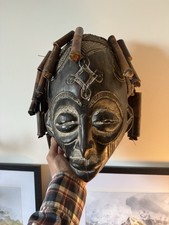
To outsiders, some Makishi masks can appear intimidating. Large eyes, dramatic painted patterns, towering headpieces and concealed bodies create an impression that is intentionally otherworldly. The emotional impact is part of the tradition.
Children often learn early that Makishi deserve respect. The dancers may chase spectators, perform sudden movements or maintain an air of mystery. These moments are not intended as entertainment alone but reinforce the idea that ancestral powers command proper behaviour and cannot be approached casually.[ICH UNESCO]ich.unesco.orgICH UNESCOMakishi masqueradeUNESCO Intangible Cultural Heritage…
At the same time, different characters balance seriousness with humour. A frightening figure may be followed by a playful dancer or comic performance, creating a rich mixture of instruction, celebration and communal enjoyment.
Heritage, festivals and changing audiences
Today, Makishi performances appear not only during Mukanda but also at cultural festivals, national celebrations and heritage events. This wider visibility has helped introduce the tradition to audiences across Zambia and internationally, strengthening appreciation of the country’s cultural diversity. UNESCO’s recognition has also encouraged documentation, training programmes and projects supporting experienced mask-makers and performers in passing their knowledge to younger generations.[ICH UNESCO]ich.unesco.orgICH UNESCOAction Plan for the Safeguarding of the Makishi Masquerade in ZambiaUNESCO Intangible Cultural Heritage…
Greater public exposure, however, creates new questions. UNESCO notes that the initiation period has often been shortened to fit modern school calendars, while demand for performances at political events, tourism activities and public celebrations risks separating the masquerade from its original ritual setting. When performances become detached from Mukanda, some community members worry that audiences may appreciate the colourful spectacle without understanding the deeper ancestral and educational meanings behind it.[ICH UNESCO]ich.unesco.orgICH UNESCOMakishi masqueradeUNESCO Intangible Cultural Heritage…
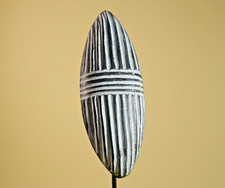
Museums and cultural organisations therefore increasingly present Makishi as more than striking masks. They emphasise that the costumes, dances, songs and teachings together form a living tradition that cannot be fully understood by displaying the masks alone.[objectlessons.org]objectlessons.orgMakishi Mask, Zambia | Object LessonsCeremony & Celebration: Puppets & Masks…
A living example of folklore in motion
Makishi demonstrates that Zambian folklore is often experienced through action rather than through written tales. The tradition combines belief in ancestral presence, moral education, performance, craftsmanship and communal memory into a single public event. Every appearance of a masked spirit reminds spectators that folklore can be danced, worn and enacted as well as narrated.
For many communities in north-western and western Zambia, the power of Makishi lies precisely in this transformation. Behind the painted masks are human performers, yet within the ritual they become ancestors whose temporary return helps educate a new generation and renew the community’s connection with its past.[ICH UNESCO]ich.unesco.orgICH UNESCOMakishi masqueradeUNESCO Intangible Cultural Heritage…
Amazon book picks
Further Reading
Books and field guides related to When Masks Become Ancestors in Zambia. Use these as the next step if you want deeper reading beyond the article.
African Art in Motion
Helps readers understand masquerade traditions and ritual embodiment.
African Folktales
Offers wider folklore context surrounding the cultural world in which Makishi exists.
Oral Literature in Africa
Explains performance traditions that accompany folklore and initiation rites.
African Myths of Origin
Explores traditional narratives that often intersect with ritual performance.
eBay marketplace picks
Marketplace Samples
Live-tested eBay searches with available results related to this page.

Endnotes
1.
Source: ich.unesco.org
Title: ICH UNESCOMakishi masquerade
Link:https://ich.unesco.org/en/RL/makishi-masquerade-00140
Source snippet
UNESCO Intangible Cultural Heritage...
2.
Source: ich.unesco.org
Title: ICH UNESCOAction Plan for the Safeguarding of the Makishi Masquerade in Zambia
Link:https://ich.unesco.org/en/projects/action-plan-for-the-safeguarding-of-the-makishi-masquerade-in-zambia-00026
Source snippet
UNESCO Intangible Cultural Heritage...
3.
Source: objectlessons.org
Title: Makishi Mask, Zambia | Object Lessons
Link:https://www.objectlessons.org/ceremony-and-celebration-puppets-and-masks/makishi-mask-zambia/s81/a1012/
Source snippet
Ceremony & Celebration: Puppets & Masks...
4.
Source: objectlessons.org
Title: Makishi Figure, Zambia | Object Lessons
Link:https://www.objectlessons.org/ceremony-and-celebration-family-and-culture/makishi-figure-zambia/s78/a984/
Source snippet
Ceremony & Celebration: Family & Culture...
5.
Source: children.org
Title: Evoking the spirits in Zambia
Link:https://www.children.org/archive/2010/oct/evoking-the-spirits-in-zambia
Source snippet
October 29, 2010 — EVOKING THE SPIRITS IN ZAMBIA * Clementina Chapusha * 1.1.0001 * * 1 * 4 Zambia does not celebrate Halloween, but it h...
Published: October 29, 2010
6.
Source: unesco.org
Title: This ritual i
Link:https://www.unesco.org/archives/multimedia/document-644
Source snippet
Tha Makish of Zambia | Intangible Heritage - UNESCO Multimedia ArchivesTHA MAKISH OF ZAMBIA * * * Language: English The Makishi masquerad...
7.
Source: ich.unesco.org
Title: la mascarade makishi 00140
Link:https://ich.unesco.org/fr/RL/la-mascarade-makishi-00140
Source snippet
mascarade Makishi - UNESCO Patrimoine culturel immatérielLA MASCARADE MAKISHI DOSSIER DE CANDIDATURE N° 00140 DÉCISION Inscription: 3.COM...
8.
Source: ich.unesco.org
Title: action plan for the safeguarding of the makishi masquerade in zambia 00026
Link:https://ich.unesco.org/en/projects/action-plan-for-the-safeguarding-of-the-makishi-masquerade-in-zambia-00026?projectID=00026&project_id=00026
Source snippet
Plan for the Safeguarding of the Makishi Masquerade in Zambia - UNESCO Intangible Cultural HeritageACTION PLAN FOR THE SAFEGUARDING OF TH...
9.
Source: ich.unesco.org
Title: la mascarada makishi 00140
Link:https://ich.unesco.org/es/RL/la-mascarada-makishi-00140
Source snippet
mascarada Makishi - UNESCO Patrimonio cultural inmaterialLA MASCARADA MAKISHI EXPEDIENTE DE CANDIDATURA N° 00140 DECISIÓN Inscripción: 3...
10.
Source: unesco.org
Link:https://www.unesco.org/en/countries/zm/lists-and-nominations
Source snippet
Lists and Nominations | UNESCOImage: Zambia Zambia UNESCO member since 1964 Africa [Button: Lists & Data] * Lists & Data (A -> Z) * Lists...
11.
Source: unesco.org
Title: Intangible Cultural Heritage
Link:https://www.unesco.org/en/intangible-cultural-heritage/list?fq%5Bsm_unsc_field_ref_countries_label%5D%5B0%5D=Zambia
Source snippet
ListUNESCO [Button: English] * English * Français * Español * Русский * العربية * 中文 UNESCO Intangible Cultural Heritage chevron_left * H...
12.
Source: unesco.pl
Title: Zambia | Polski Komitet ds
Link:https://www.unesco.pl/kultura/dziedzictwo-kulturowe/dziedzictwo-niematerialne/listy-dziedzictwa-niematerialnego/afryka/zambia/
Source snippet
ZAMBIA Maskarada Makiszi Kraj(e) członkowski(e): Zambia Wpis na Listę reprezentatywną niematerialnego dziedzictwa kulturowego ludzk...
13.
Source: zambia.travel
Link:https://www.zambia.travel/likumbi.html
Source snippet
Likumbi Lya Mize CeremonyLIKUMBI LYA MIZE Home Likumbi Lya Mize Ceremony Image: Likumbi Lya Mize Ceremony Every Last Saturday of August L...
14.
Source: books.google.com
Link:https://books.google.com/books/about/Makishi.html?id=naK0AAAAIAAJ
Source snippet
google.comMakishi: Mask Characters of Zambia - Manuel Jordán - Google BooksMAKISHI: MASK CHARACTERS OF ZAMBIA Image: Front CoverManuel Jo...
Additional References
15.
Source: kingsfari.com
Link:https://www.kingsfari.com/community-festivals-and-events/bene-mukuni-traditional-ceremony-in-zambia
16.
Source: amkingart.org
Link:https://www.amkingart.org/non-western-dance/makishi-dance-%E2%80%93-zambia
Source snippet
Makishi Dance – Zambia | AmKing AssociationMAKISHI DANCE – ZAMBIA < Back Image * A masked ritual of rebirth, mythic memory, and ancestr...
17.
Source: tourismupdate.com
Title: A Zambian cultural phenomenon | Southern & East African Tourism Update
Link:https://www.tourismupdate.com/article/a-zambian-cultural-phenomenon
Source snippet
August 28, 2024 — A ZAMBIAN CULTURAL PHENOMENON 28 Aug 2024 Image Comments | 0 The pic of the week captures the vibrant Likumbi Lya Mize...
Published: August 28, 2024
18.
Source: zambianimmigration.org
Title: Zambia Festivals: Cultural celebrations define tradition and unity
Link:https://www.zambianimmigration.org/news/zambia-festivals-the-unmissable-for-every-traveler-journey
Source snippet
April 13, 2026 — ZAMBIA FESTIVALS: CULTURAL CELEBRATIONS DEFINE TRADITION AND UNITY Image: User By Jenna Jolie | Update on: Apr 13, 2026...
Published: April 13, 2026
19.
Source: chalochatu.org
Title: In Zambia they are found mainly in the North-Western Provin
Link:https://chalochatu.org/Luvale_people
Source snippet
Luvale people - Chalo Chatu, Zambia online encyclopediaBaluvale means the Luvale people, also spelled Lovale and also called (in Angola)...
20.
Source: luanocouncil.gov.zm
Title: ichibwela-mushi-ceremony – Luano Town Council ICHIBWELA MUSHI
Link:https://www.luanocouncil.gov.zm/?page_id=2795
Source snippet
When the harvest moon rises over the heart of Mkushi, the air fills with song, drumbeats, and the joyful cries of homecoming...
21.
Source: journals.sagepub.com
Title: Mujimbu, featuring loosely coordinated
Link:https://journals.sagepub.com/doi/10.1177/20592043241292975
Source snippet
sagepub.comKutanga, Mujimbu, and the Tacit Orchestration of Events Among the Luvale of Zambia1 - Jason Winikoff, 2024November 18, 2024 —...
Published: November 18, 2024
22.
Source: fowler.ucla.edu
Title: makishi mask characters of zambia
Link:https://fowler.ucla.edu/exhibitions/makishi-mask-characters-of-zambia/
Source snippet
ucla.eduMakishi: Mask Characters of Zambia | Fowler Museum at UCLAJanuary 14, 2007 — Image: Makishi mask 18 MAY MAKISHI: MASK CHARACTERS...
Published: January 14, 2007
23.
Source: thedigitalphilatelist.com
Title: Zambia Philately: Makishi
Link:https://thedigitalphilatelist.com/zambia-philately-makishi/
Source snippet
The Digital PhilatelistOctober 24, 1964 — ZAMBIA PHILATELY: MAKISHI thedigitalphilatelist 24/10/1964 The Makishi is a masked character th...
Published: October 24, 1964
24.
Source: youtube.com
Title: Zambia: Mothers’ role during a Mukanda ceremony | SLICE
Link:https://www.youtube.com/watch?v=UVkjP1dd914
Source snippet
Likumbi Lya Mize Traditional Ceremony in Zambia, the Mukanda initiation...
Topic Tree