Within Syrian Folklore
Why Do Evil Eye Charms Matter in Syria?
Syrian protective traditions use charms, blessings and sacred ideas to guard children, homes and loved possessions from unseen harm.
On this page
- Envy, Vulnerability and Everyday Fear
- Amulets, Blessings and Household Protection
- Jinn, Saints and Local Interpretation
Page outline Jump by section
Introduction
Protective charms and beliefs against the evil eye are among the most widespread and enduring elements of Syrian folk culture. While Syria is home to many legends, saints’ stories and supernatural traditions, the fear of harmful envy touches everyday life more directly than most folklore. The basic idea is simple: excessive admiration, jealousy or ill will can bring misfortune, illness, bad luck or weakness, especially to children, newly married couples, valuable possessions and households. To counter that danger, Syrians have long used blessings, amulets, sacred texts and protective rituals. These practices sit at the intersection of folk religion, family custom and traditional ideas about unseen forces, and they remain familiar even among people who do not think of themselves as particularly superstitious.[Oxford PRM]web.prm.ox.ac.ukOxford PRMSmall Blessings1956.10.1 PRM… Often it is thought that the glance is fuelled by jealousy, leading people…Read more…
Rather than forming a separate religion, evil-eye protection functions as a practical mechanism within everyday culture. A blessing spoken after a compliment, a protective charm hung in a home, or a sacred verse carried on the body all express the same concern: how to guard people and possessions from invisible harm believed to arise through envy.[ox.ac.uk]web.prm.ox.ac.ukOxford PRMSmall Blessings1956.10.1 PRM… Often it is thought that the glance is fuelled by jealousy, leading people…Read more…
Why Do Evil Eye Charms Matter in Syria?
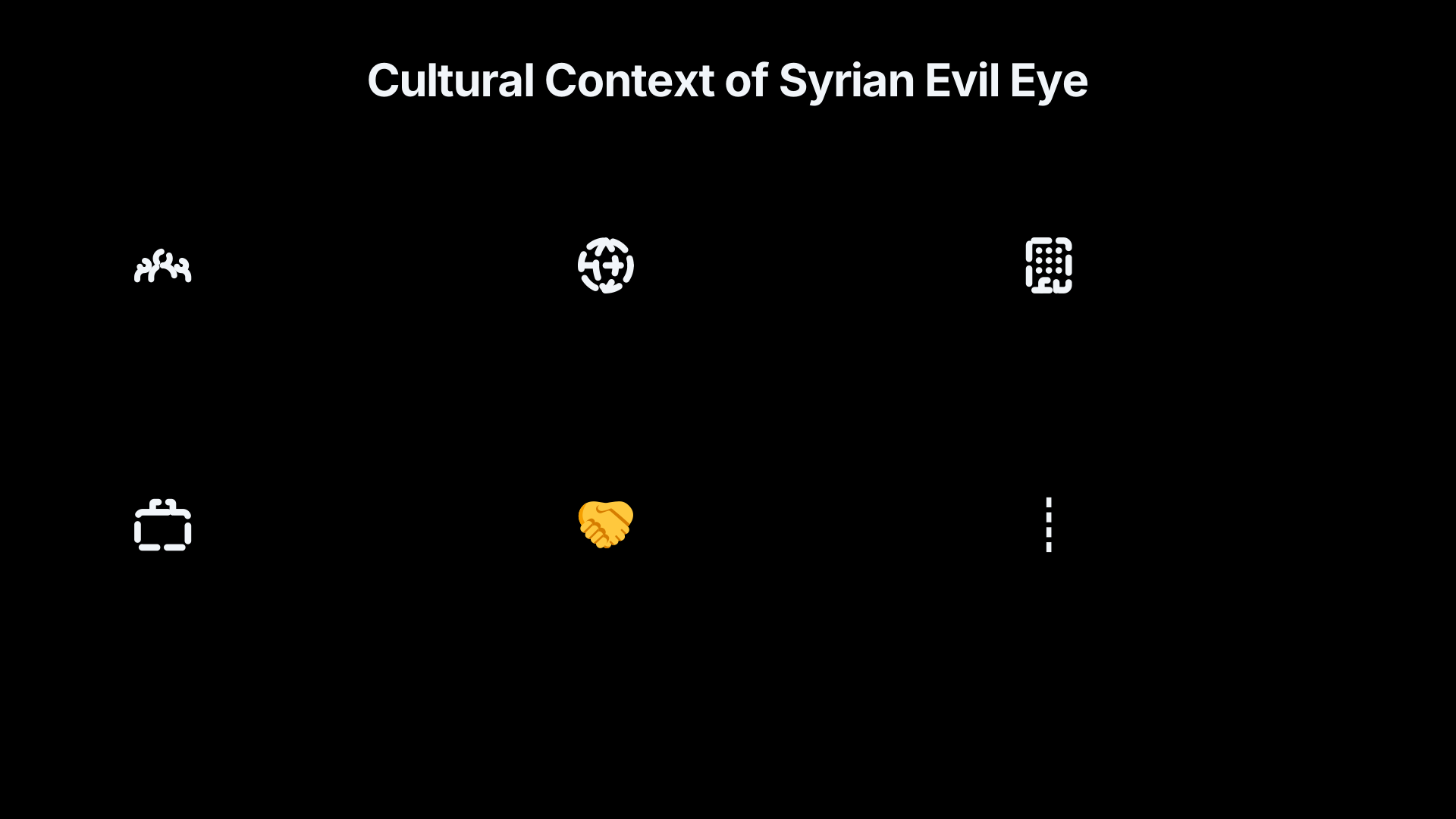
The evil eye tradition survives because it addresses a universal social problem: envy. In Syrian folk understanding, good fortune can attract unwanted attention. Beauty, wealth, healthy children, a successful business or even a newly purchased possession may become vulnerable when others admire them too intensely. The danger is often imagined as unintentional. A person may cast the evil eye without consciously wishing harm. This distinction is important because it turns protection into a communal responsibility rather than an accusation against specific individuals.[Oxford PRM]web.prm.ox.ac.ukOxford PRMSmall Blessings1956.10.1 PRM… Often it is thought that the glance is fuelled by jealousy, leading people…Read more…
The belief is deeply rooted in the wider Levant and Middle East, where surveys have shown substantial acceptance of the evil eye and related supernatural concepts such as jinn. In this environment, protective customs become part of ordinary social etiquette rather than fringe practices.[Pew Research Center]pewresearch.orgPew Research CenterChapter 4: Other Beliefs and Practices9 Aug 2012 — In most of the countries surveyed, roughly half or more Muslims aff…
For folklorists, the evil eye is especially interesting because it links ancient ideas, religious traditions and modern daily life. A blue charm hanging from a mirror, a blessing spoken over a baby, and a written amulet containing sacred words all belong to the same protective system, even though they come from different historical and religious backgrounds.[Wikipedia]WikipediaEvil eyeEvil eye
Envy, Vulnerability and Everyday Fear
In Syrian tradition, not everyone is thought to be equally vulnerable. Children are often considered the most susceptible because they are precious, admired and unable to protect themselves. Newborn babies, in particular, frequently appear in accounts of protective customs. Parents may avoid excessive public praise or accompany compliments with blessings intended to neutralise any harmful effect.[PMC]pmc.ncbi.nlm.nih.govPMCArab Folk Medicine and MagicNIHMany parents used amulets to protect their children against the “evil eye.” The evil eye, called “salty eye” in Persian, refers…
Other vulnerable targets include:
- Newly married couples.
- Pregnant women.
- Livestock and domestic animals.
- New houses.
- Valuable possessions and businesses.
- People regarded as unusually attractive, successful or fortunate.[Learn Arabic with Nasma]nasmaofny.comAs a result, many people think that the evil eye can bring disability, domesticLearn Arabic with NasmaEvil Eye Beliefs In The Middle EastMay 16, 2022 — The evil eye exists in Arab society with envy and hatred being c…
This concern shapes social behaviour. Compliments are often followed by phrases acknowledging divine blessing rather than personal achievement. Such expressions act as verbal safeguards, redirecting attention away from envy and towards God’s protection. Across Syria and neighbouring countries, saying a blessing after praise remains one of the most common forms of defence against the evil eye.[Wikipedia]WikipediaEvil eyeEvil eye
The result is a folklore of caution. Good fortune should be appreciated, but displaying it too openly may be considered risky. This attitude appears repeatedly in Levantine oral traditions and family customs.

Amulets, Blessings and Household Protection
The most visible protective objects are amulets. Museums and ethnographic collections preserve Syrian examples specifically identified as protection against the evil eye. These objects were attached to houses, animals, clothing or personal belongings in order to deflect harmful influence.[Oxford PRM]web.prm.ox.ac.ukOxford PRMSmall Blessings1956.10.1 PRM… Often it is thought that the glance is fuelled by jealousy, leading people…Read more…
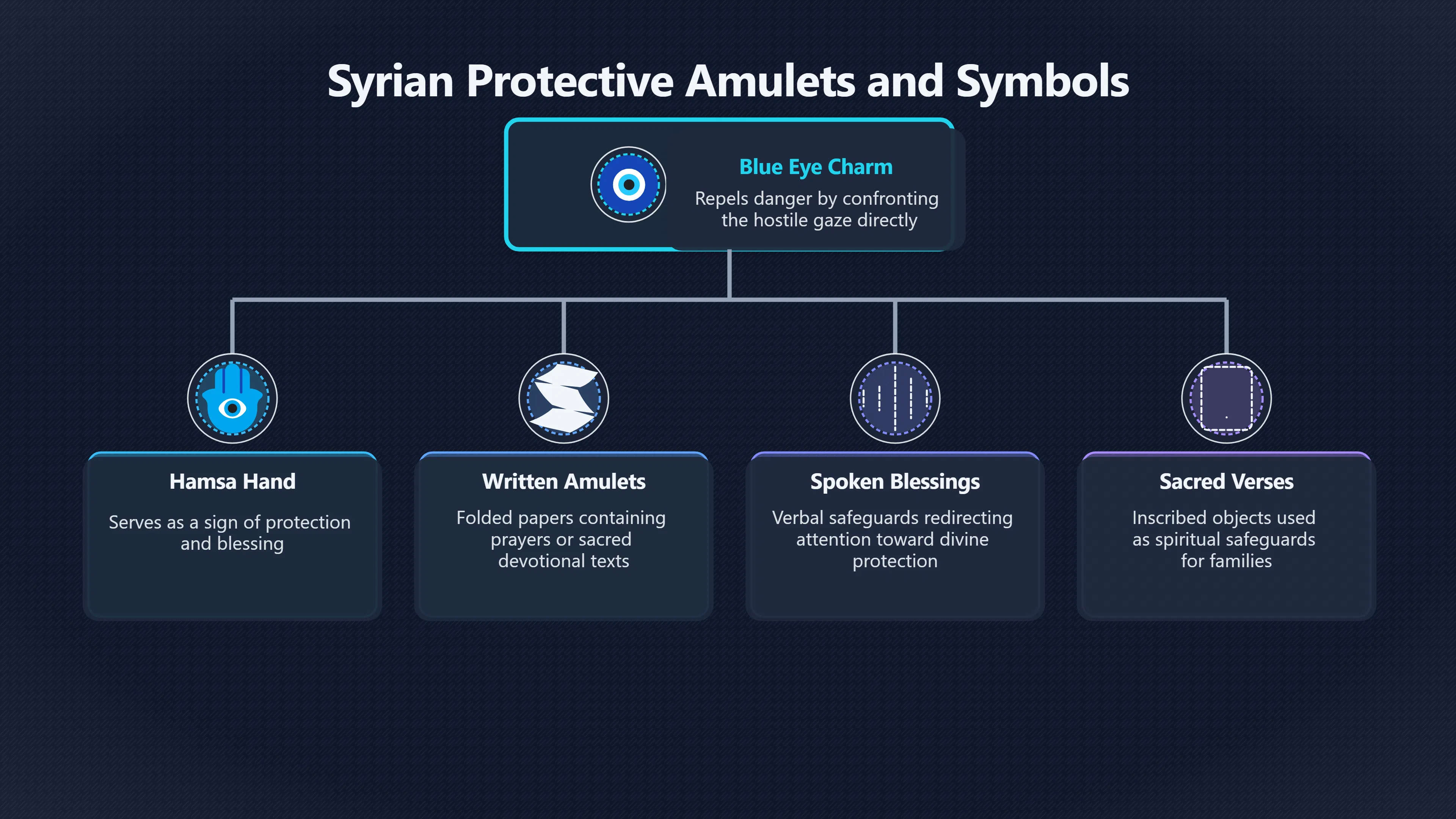
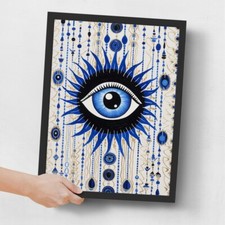
One of the best-known symbols is the blue eye-shaped charm often associated with the eastern Mediterranean. Such charms are commonly hung in homes, vehicles and workplaces or worn as jewellery. Their purpose is apotropaic: they are meant to repel danger by confronting the hostile gaze with another eye. Variations of this symbol are found across Syria and the wider Levant.[Wikipedia]WikipediaEvil eyeEvil eye
Another widespread protective symbol is the hand-shaped amulet often known internationally as the hamsa. In Syrian settings it may appear near entrances, inside homes or as personal jewellery. The open hand serves as a sign of protection and blessing, combining folk symbolism with religious meaning.[wikipedia.org]WikipediaEvil eyeEvil eye
Protection is not limited to physical objects. Spoken blessings are often considered equally important. A compliment followed by an invocation of God’s will or blessing can function as a protective act in itself. In many households, words are treated as powerful tools capable of either attracting or preventing misfortune.[Wikipedia]WikipediaEvil eyeEvil eye
Written amulets form another layer of protection. Historical examples from Syrian Muslim and Christian communities include folded papers, leather pouches and inscribed objects containing prayers, sacred verses or devotional texts. These items were carried on the body, pinned to clothing or placed in homes as spiritual safeguards.[jstor.org]jstor.orgWhile Christians have no objection.Read more…
Protection for Children
Children occupy a special place in Syrian protective folklore. Ethnographic studies from the wider Arab world repeatedly note the use of amulets, beads and written charms to shield infants from envy. Some traditions employ eye-shaped beads, while others use specially designed amulets attached to clothing or head coverings.[PMC]pmc.ncbi.nlm.nih.govPMCArab Folk Medicine and MagicNIHMany parents used amulets to protect their children against the “evil eye.” The evil eye, called “salty eye” in Persian, refers…
Museum collections also preserve Syrian protective objects intended specifically for safeguarding valued family members and possessions from the evil eye. The repeated appearance of children’s charms in folklore and material culture shows how strongly protection and family life are connected.[Oxford PRM]web.prm.ox.ac.ukOxford PRMSmall Blessings1956.10.1 PRM… Often it is thought that the glance is fuelled by jealousy, leading people…Read more…
Jinn, Saints and Local Interpretation
Although the evil eye is often discussed separately, many Syrians historically understood it within a broader unseen world that also included jinn, blessings, sacred persons and divine protection. Folk belief did not always draw sharp boundaries between these categories. Misfortune might be attributed to envy, spiritual disturbance or other invisible influences, and protective practices could address several dangers at once.[Pew Research Center]pewresearch.orgPew Research CenterChapter 4: Other Beliefs and Practices9 Aug 2012 — In most of the countries surveyed, roughly half or more Muslims aff…
For this reason, protective objects sometimes combined multiple layers of meaning. A charm might contain sacred writing intended to invoke God’s protection against both the evil eye and harmful spirits. Talismans inscribed with religious texts are well documented across the Islamic world and formed part of the wider cultural environment in which Syrian traditions developed.[Wikipedia]WikipediaOpen source on wikipedia.org.
Local shrines and saintly traditions also contributed to ideas of protection. Throughout Syria’s diverse Muslim and Christian communities, holy figures and sacred places were often associated with blessing, healing and safety. Visiting a shrine, seeking a blessing or carrying a devotional object could become part of a broader strategy for confronting misfortune. While these practices varied greatly between regions and communities, they demonstrate how protective folklore merged with lived religion.[Linguistics, Literature & Culture Journal]ijllc.euLinguistics, Literature & Culture JournalA Case of Healing Arabic Amulets among Syriac Orthodox…They were carried by or pinned to the…
How These Beliefs Are Understood Today
Modern Syrians understand evil-eye traditions in different ways. Some treat them as literal spiritual dangers, others see them as cultural heritage, and many occupy a middle ground where traditional customs coexist with modern life. A blue charm may be displayed partly from belief, partly from family habit and partly because it symbolises protection and good wishes.[Wikipedia]WikipediaEvil eyeEvil eye
Migration and displacement have helped carry these customs beyond Syria’s borders. Syrian families living abroad often continue familiar protective practices, preserving them as markers of identity and continuity. The result is that evil-eye beliefs remain among the most recognisable and resilient forms of Syrian folk culture.
What makes them significant is not merely the charm itself but the underlying idea. Whether expressed through a blessing, an amulet or a prayer, these traditions reveal a long-standing concern with vulnerability, envy and the desire to protect loved ones from unseen harm. In that sense, they remain one of the clearest windows into how everyday folklore operates in Syrian life.[ox.ac.uk]web.prm.ox.ac.ukOxford PRMSmall Blessings1956.10.1 PRM… Often it is thought that the glance is fuelled by jealousy, leading people…Read more…
Amazon book picks
Further Reading
Books and field guides related to Why Do Evil Eye Charms Matter in Syria?. Use these as the next step if you want deeper reading beyond the article.
A History of the Arab Peoples
Helps readers understand the historical layers that shaped Syrian folklore and identity.
Arab Folktales
Contains folk beliefs and supernatural themes that overlap with protective customs.
The Book of Khalid
Captures the intellectual and social atmosphere of Arab urban storytelling traditions.
eBay marketplace picks
Marketplace Samples
Live-tested eBay searches with available results related to this page.


Endnotes
1.
Source: web.prm.ox.ac.uk
Title: Oxford PRMSmall Blessings
Link:https://web.prm.ox.ac.uk/amulets/index.php/museum-trail/15-resources/145-trail-evil-eye/index.html
Source snippet
1956.10.1 PRM... Often it is thought that the glance is fuelled by jealousy, leading people...Read more...
2.
Source: Wikipedia
Title: Evil eye
Link:https://en.wikipedia.org/wiki/Evil_eye
3.
Source: pmc.ncbi.nlm.nih.gov
Title: PMCArab Folk Medicine and Magic
Link:https://pmc.ncbi.nlm.nih.gov/articles/PMC3424785/
Source snippet
NIHMany parents used amulets to protect their children against the “evil eye.” The evil eye, called “salty eye” in Persian, refers...
4.
Source: superstitionsmap.com
Link:https://superstitionsmap.com/syrian-superstitions/
Source snippet
Syrian Superstitions (World #77, ≈200 total) - SuperstitionsMap29 Mar 2026 — When praising someone, adding “mashallah” is...
5.
Source: jstor.org
Link:https://www.jstor.org/stable/538102
Source snippet
While Christians have no objection.Read more...
6.
Source: Wikipedia
Link:https://en.wikipedia.org/wiki/Jinn
7.
Source: pmc.ncbi.nlm.nih.gov
Title: PMCOn the typology and the worship status of sacred trees
Link:https://pmc.ncbi.nlm.nih.gov/articles/PMC1500805/
Source snippet
by A Dafni · 2006 · Cited by 133 — Tree/grove is grown/planted in sacred places, burial sites, graveyards, temple worship sites.... T...
8.
Source: Wikipedia
Title: Middle Ages
Link:https://en.wikipedia.org/wiki/Middle_Ages
Source snippet
Middle AgesThe medieval period is the middle epoch of the three traditional divisions of Western history: classical antiquity, the med...
9.
Source: thegivingtreegallery.com
Link:https://www.thegivingtreegallery.com/blog/the-meaning-behind-evil-eye-hamsa-jewelry-protection-power-style/?srsltid=AfmBOoqA-_l_eDcfZWgqfKnyWiwbK1NeLPduSLRDTiP6lvvFN7FucWeo
Source snippet
The Meaning Behind Evil Eye & Hamsa Jewelry: Protection...The evil eye is typically depicted as a single eye (usually blue or turquoise)...
10.
Source: pewresearch.org
Link:https://www.pewresearch.org/religion/2012/08/09/the-worlds-muslims-unity-and-diversity-4-other-beliefs-and-practices/
Source snippet
Pew Research CenterChapter 4: Other Beliefs and Practices9 Aug 2012 — In most of the countries surveyed, roughly half or more Muslims aff...
11.
Source: ijllc.eu
Link:https://ijllc.eu/?download_id=17739&sdm_process_download=1
Source snippet
Linguistics, Literature & Culture JournalA Case of Healing Arabic Amulets among Syriac Orthodox...They were carried by or pinned to the...
12.
Source: nasmaofny.com
Title: As a result, many people think that the evil eye can bring disability, domestic
Link:https://nasmaofny.com/evil-eye-beliefs-in-the-middle-east/
Source snippet
Learn Arabic with NasmaEvil Eye Beliefs In The Middle EastMay 16, 2022 — The evil eye exists in Arab society with envy and hatred being c...
Published: May 16, 2022
Additional References
13.
Source: bedouinsilver.com
Link:https://bedouinsilver.com/seven-eyes-saba-uyun/
Source snippet
'Seven Eyes' amuletsSaba 'uyun amulets are considered powerful against the evil eye. They are pinned with regular glass eye beads on chil...
14.
Source: facebook.com
Link:https://www.facebook.com/groups/Cypriotmemories/posts/10157775838519783/
15.
Source: playaling.com
Link:https://playaling.com/the-meaning-of-evil-eye/
Source snippet
The Meaning of Evil Eye in Arab CultureThe meaning behind the Evil Eye revolves around the idea that envious or malevolent stares can bri...
16.
Source: timesofindia.indiatimes.com
Link:https://timesofindia.indiatimes.com/life-style/soul-search/6-powerful-items-believed-to-shield-you-from-the-evil-eye/photostory/128247803.cms
Source snippet
These items serve as spiritual safeguards across different cultures: 1. **Nazar Amulet** – A blue eye-shaped talisman common in Turkey, G...
17.
Source: skyjems.ca
Link:https://skyjems.ca/pages/encyclopedia-evil-eye-style?srsltid=AfmBOooYhANydc484A9W78RZN-RunJJTl50d1KOyHjsNBf80v7L3XAki
18.
Source: memphistours.com
Link:https://www.memphistours.com/blog/nazar-amulet-boncugu-turkey-blue-eye-fends-off-envy
19.
Source: facebook.com
Link:https://www.facebook.com/groups/1033803409974413/posts/7729347697086584/
Source snippet
Likely worn by Kurdish women but not exclusively It has hands, crescents, amulet holders and pendants and...
20.
Source: researchgate.net
Title: 303291541 EVIL EYE BELIEF IN TURKISH CULTURE MYTH OF EVIL EYE BEAD
Link:https://www.researchgate.net/publication/303291541_EVIL_EYE_BELIEF_IN_TURKISH_CULTURE_MYTH_OF_EVIL_EYE_BEAD
Source snippet
(PDF) EVIL EYE BELIEF IN TURKISH CULTURE: MYTH...21 Jun 2026 — Being popularly associated with Turkey and Anatolia, the evil eye beads a...
21.
Source: etsy.com
Link:https://www.etsy.com/au/market/arabic_protection_amulet
Source snippet
Arabic Protection AmuletHandmade Islamic Talisman for Home Protection from Evil and Misfortune | Arabic Amulet for Divine Help & Blessing...
22.
Source: researchgate.net
Link:https://www.researchgate.net/publication/233221689_Beliefs_about_Jinn_black_magic_and_the_evil_eye_among_Muslims_age_gender_and_first_language_influences
Source snippet
er believed affliction by these supernatural entities could cause physical or...Read more...
Topic Tree