Within Finnish Folklore
Which Finnish Creatures Were Feared or Welcomed?
Nakki, hiisi and tonttu show how Finnish folklore uses creatures to explain danger, protection and proper behaviour.
On this page
- Nakki and the danger of deep water
- Hiisi from sacred site to monster
- Tonttu as household helper and trickster
Page outline Jump by section
Introduction
Finland’s best-known folk creatures reveal something important about traditional life: they were not simply monsters or magical beings, but ways of teaching people how to behave. Stories about dangerous water spirits warned children away from deep lakes, tales of wild forest beings encouraged respect for remote places, and household guardians rewarded hard work while punishing carelessness. Among the most enduring figures are Näkki, the feared spirit of deep water; Hiisi, a being whose meaning changed dramatically over time; and Tonttu, the small guardian associated with homes, farms and everyday life. Together they show how Finnish folklore linked danger, protection and proper conduct to the landscapes people lived in.[Wikipedia]WikipediaNixie (folkloreNixie (folklore
Which Finnish Creatures Were Feared or Welcomed?
Unlike many modern fantasy creatures, Finnish folk beings were usually tied to specific places and practical concerns. Lakes, forests, fields, barns and saunas were all thought to have unseen presences. Some deserved respect because they protected people; others served as warnings about risks that could not always be controlled.[Wikipedia]WikipediaApril 4, 2026 — In Finnish mythology, a haltija is a supernatural inhabitant of a specific place and a protector of living beings, living…
The contrast between Näkki, Hiisi and Tonttu is especially revealing:
- Näkki represented the dangers hidden beneath seemingly calm water.
- Hiisi became associated with untamed and threatening wilderness.
- Tonttu protected households and rewarded good behaviour.
These creatures occupied different parts of daily life, yet all helped explain why certain rules mattered.[Wikipedia]WikipediaNixie (folkloreNixie (folklore
Näkki and the Danger of Deep Water
For generations, Finnish children grew up hearing warnings about Näkki, a water spirit said to lurk in lakes, rivers, ponds and dangerous stretches of shoreline. The figure belongs to a wider northern European family of water beings related to the Scandinavian näck and other water spirits found around the Baltic Sea. In Finland, however, Näkki became particularly associated with drowning hazards.[Wikipedia]WikipediaNixie (folkloreNixie (folklore
According to many traditions, Näkki waited for careless swimmers and dragged them beneath the surface. Some stories described it as a terrifying creature lurking under docks or in whirlpools, while others portrayed it as a deceptive being capable of attracting victims before pulling them into its underwater realm.[Wikipedia]WikipediaNixie (folkloreNixie (folklore
The folklore served a practical purpose. Finland’s landscape contains countless lakes and waterways, and accidental drownings were a genuine danger long before modern swimming instruction and safety equipment. By giving the threat a face and a personality, stories could communicate risk in a memorable way. Rather than telling children simply to stay away from deep water, communities told them that Näkki was waiting there.[Wikipedia]WikipediaNixie (folkloreNixie (folklore
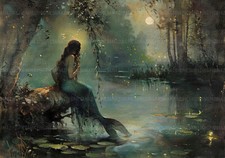
Some traditions also gave Näkki a more complex character. Like related Scandinavian figures, it could be linked with music and enchantment, luring people through fascination rather than brute force. This combination of beauty and danger made the spirit particularly memorable in oral storytelling.[Reddit]reddit.comThe Duality of Finland's Water Spirit: How the Beautiful,The Duality of Finland's Water Spirit: How the Beautiful…June 13, 2025 — Many tales describe the Näkki as a master violin playe…
Today, Näkki remains one of the most recognisable figures in Finnish folklore and continues to appear in books, games, illustrations and popular retellings. Yet its original function as a warning about water safety is still easy to recognise.[thisisFINLAND]finland.fithisisFINLANDFinnish mythical creatures still lurkHere's our field guide to the fascinating mythical creatures that might still be lurkin…

How Hiisi Changed from Sacred Power to Monster
Hiisi is one of the most fascinating and difficult figures in Finnish folklore because its meaning changed dramatically over centuries. Early evidence suggests that the word originally referred not to a monster at all, but to sacred places, groves, hills or other significant locations in the landscape. Related words in neighbouring Finnic traditions still retain meanings connected with sacred natural sites.[Wikipedia]WikipediaOpen source on wikipedia.org.
Over time, however, Hiisi became increasingly personified. Folklore began to describe beings associated with wild forests, rocky hills, caves and remote terrain. In many legends, hiisi creatures were giant-like, troll-like or goblin-like inhabitants of places that ordinary people approached cautiously. Strange rock formations and unusual landscape features were sometimes explained as the work of these beings.[Wikipedia]WikipediaOpen source on wikipedia.org.
One reason Hiisi is so important is that it illustrates the effect of religious change on folklore. Scholars have noted that Christianisation altered the meaning of many older sacred concepts. Places once regarded as holy or spiritually powerful gradually came to be portrayed as dangerous, pagan or demonic. As this process unfolded, Hiisi shifted from a sacred association toward a more threatening supernatural figure.[Wikipedia]WikipediaOpen source on wikipedia.org.
In later folklore, hiidet—the plural form—could appear as hostile beings that travelled noisily through forests, stole from people or inhabited forbidding wilderness. Cultivated farmland and settled communities represented order, while the territory of Hiisi represented the unpredictable forces beyond human control.[Wikipedia]WikipediaOpen source on wikipedia.org.
Modern Finns still encounter the word in place names, folklore collections and popular culture. The persistence of the name reflects how deeply these older ideas became embedded in the landscape itself.[Wikipedia]WikipediaOpen source on wikipedia.org.
Tonttu as Household Helper and Trickster
If Näkki represented danger and Hiisi represented the threatening wilderness, Tonttu represented protection close to home. A tonttu was a household or farm guardian, usually imagined as a small human-like being that watched over a particular property. The figure belongs to a broader Nordic tradition of household spirits but developed a distinctive place within Finnish culture.[Wikipedia]WikipediaNisse (folkloreNisse (folklore
Traditional stories portray the tonttu as hardworking, observant and highly sensitive to how a household was run. A respectful family might benefit from its protection, while laziness, disorder or constant quarrelling could provoke its anger. The lesson was clear: a successful home depended on proper behaviour, cooperation and respect.[Reddit]reddit.comHouse Spirits: r/mythologyIn Finland, the home spirit is known as Tonttu, its name is a loanword from the Swedish Tomten. Tonttu…
Different kinds of tonttu could be associated with different locations. Household guardians watched over homes, while others were linked to barns, stables or saunas. The sauna spirit became particularly important because the sauna occupied a special place in Finnish life and was expected to be treated respectfully.[YouTube]youtube.comTonttu & Haltia: The Guardians of Finnish FolkloreIn Finnish folklore, Tonttu and Haltia are key spirits that watch over nature an…
The tonttu was not always gentle. Like many household spirits across northern Europe, it could be helpful one moment and troublesome the next. This ambiguity helped reinforce social expectations. Good conduct brought rewards; disrespect brought consequences.[Reddit]reddit.comHouse Spirits: r/mythologyIn Finland, the home spirit is known as Tonttu, its name is a loanword from the Swedish Tomten. Tonttu…
During the nineteenth and twentieth centuries, the figure became increasingly connected with Christmas traditions. Modern Finnish Christmas imagery often depicts friendly tonttu figures helping prepare gifts and celebrations. This cheerful image survives today, although it represents only one stage in a much older tradition of household guardianship.[Wikipedia]WikipediaNisse (folkloreNisse (folklore

What These Creatures Reveal About Finnish Folklore
Taken together, Näkki, Hiisi and Tonttu show that Finnish folklore was often less concerned with fantasy adventure than with everyday survival and social order. The creatures marked different zones of life:
- Deep water demanded caution and respect.
- Wilderness required humility and awareness.
- Home life depended on cooperation and proper conduct.
Rather than existing only as entertainment, these beings helped communities pass on practical knowledge, moral expectations and attitudes toward the natural world. Their stories explained why lakes were dangerous, why lonely forests deserved caution and why households functioned best when people fulfilled their responsibilities.[Wikipedia]WikipediaNixie (folkloreNixie (folklore
That practical connection to daily life helps explain why these creatures remain among the most memorable figures in Finnish folklore. Even when modern audiences no longer believe in them literally, the fears, values and lessons they embodied are still easy to recognise.[thisisFINLAND]finland.fithisisFINLANDFinnish mythical creatures still lurkHere's our field guide to the fascinating mythical creatures that might still be lurkin…
Amazon book picks
Further Reading
Books and field guides related to Which Finnish Creatures Were Feared or Welcomed?. Use these as the next step if you want deeper reading beyond the article.
Finnish Folk Belief: A Reader
Explains household spirits, forest beings and supernatural traditions.
eBay marketplace picks
Marketplace Samples
Live-tested eBay searches with available results related to this page.
Endnotes
1.
Source: Wikipedia
Title: Nixie (folklore)
Link:https://en.wikipedia.org/wiki/Nixie_%28folklore%29
2.
Source: Wikipedia
Link:https://en.wikipedia.org/wiki/Hiisi
3.
Source: Wikipedia
Title: Nisse (folklore)
Link:https://en.wikipedia.org/wiki/Nisse_%28folklore%29
4.
Source: Wikipedia
Link:https://en.wikipedia.org/wiki/Haltija
Source snippet
April 4, 2026 — In Finnish mythology, a haltija is a supernatural inhabitant of a specific place and a protector of living beings, living...
Published: April 4, 2026
5.
Source: finland.fi
Link:https://finland.fi/life-society/finnish-mythical-creatures-still-lurk/
Source snippet
thisisFINLANDFinnish mythical creatures still lurkHere's our field guide to the fascinating mythical creatures that might still be lurkin...
6.
Source: Wikipedia
Link:https://en.wikipedia.org/wiki/Water_spirit
Source snippet
Water spiritThe Nixie (English) or the Nix/Nixe/Nyx (German) are shapeshifting water spirits who usually appear in human, or horse, fo...
7.
Source: reddit.com
Title: The Duality of Finland’s Water Spirit: How the Beautiful,
Link:https://www.reddit.com/r/folklore/comments/1laotjv/the_duality_of_finlands_water_spirit_how_the/
Source snippet
The Duality of Finland's Water Spirit: How the Beautiful...June 13, 2025 — Many tales describe the Näkki as a master violin playe...
Published: June 13, 2025
8.
Source: reddit.com
Link:https://www.reddit.com/r/mythology/comments/100ntde/house_spirits/
Source snippet
House Spirits: r/mythologyIn Finland, the home spirit is known as Tonttu, its name is a loanword from the Swedish Tomten. Tonttu...
9.
Source: youtube.com
Link:https://www.youtube.com/watch?v=HWLdVE1q-sc
Source snippet
Tonttu & Haltia: The Guardians of Finnish FolkloreIn Finnish folklore, Tonttu and Haltia are key spirits that watch over nature an...
10.
Source: youtube.com
Title: 6 Horrific Sea Monsters in Finnish Mythology
Link:https://www.youtube.com/watch?v=0y0nb5OmZG4
Source snippet
spirits one might come across when swimming in the Finnish waters. According to folklore, at least. 00:28 Vetehinen 02:33 Näkki 03:37 Great...
11.
Source: youtube.com
Title: An incredibly nasty creature, Näkki lives in lakes,
Link:https://www.youtube.com/watch?v=wjd4h_nIPBI
Source snippet
A Monster Hiding in Finnish Lakes: Näkki - YouTubeNovember 23, 2020 — näkki #finnishmythology #näkkileipä In Finnish mythology, Näkki is...
Published: November 23, 2020
12.
Source: Wikipedia
Title: Finnish mythology
Link:https://en.wikipedia.org/wiki/Finnish_mythology
Source snippet
Finnish mythology - WikipediaNixie (folklore) - WikipediaWater Spirits in Finnish Folklore | by Niina Pekantytär - Medium...
13.
Source: reddit.com
Link:https://www.reddit.com/r/Finland/comments/olpb37/is_there_a_difference_between_vetehinen_and_n%C3%A4kki/
Source snippet
ying to find out about a type of water cow in Finnish mythology...
14.
Source: reddit.com
Link:https://www.reddit.com/r/DnDHomebrew/comments/15xfr1d/elk_of_the_hiisi_from_finnish_mythology/
Source snippet
Elk of the Hiisi from Finnish Mythology: r/DnDHomebrewThe forests are full of creatures like Hiisi, Maahinen, and Aarnivalkea, and playe...
15.
Source: youtube.com
Title: Spirit(s) of the Sauna: Seen and Unseen Beings in Finnish Folklore
Link:https://www.youtube.com/watch?v=Ii0Hj2I-MAk
Source snippet
6 Horrific Sea Monsters in Finnish Mythology...
16.
Source: youtube.com
Title: The Saga of Hiiden hirvi, Goblin’s Elk
Link:https://www.youtube.com/watch?v=rZGPHGYphV4
Source snippet
The True Story of Trolls: The Most Dangerous Creatures of the North | Finnish Folklore Revealed...
17.
Source: youtube.com
Link:https://www.youtube.com/watch?v=CFMU-Cy35Po
18.
Source: mythus.fandom.com
Link:https://mythus.fandom.com/wiki/N%C3%A4kki
Source snippet
fandom.comNäkki - Myth and Folklore Wiki - FandomIn Finnish folklore, Näkki was a terrible evil water demon. It lived in the deepest end...
19.
Source: monster.fandom.com
Link:https://monster.fandom.com/wiki/Hiisi
Source snippet
Monster Wiki - FandomHiisi could be seen as demonic (especially when Christianity became more common) or magical, with trickster-like t...
20.
Source: episodi.fi
Link:https://www.episodi.fi/elokuvat/tonttu/
Source snippet
elokuvan arvostelu14 Nov 2025 — Perhe-elokuvan seikkailun ilo ja joulun taika ovat kuin suomalaisten onnellisuus kansakuntana: vaikeasti...
Additional References
21.
Source: facebook.com
Link:https://www.facebook.com/melanie.bakerowen/photos/finnish-mythology-nakkin%C3%A4kki-is-the-most-well-known-water-spirit-in-finnish-myth/26797017999896407/
Source snippet
Finnish water spirit mythologyIn Finnish folklore, Näkki was a terrible evil water demon. It lived in the deepest end of lakes, ponds and...
22.
Source: nightbringer.se
Link:https://nightbringer.se/nightbringer/lair_hiisi.html
Source snippet
HiisiOriginally, the term meant "holy place". In the related Estonian language 'Hiis' still means sacred forest. Often, the English "gobl...
23.
Source: facebook.com
Link:https://www.facebook.com/groups/1730259997015827/posts/28033874096227725/
Source snippet
Nordic folklore creature nisse descriptionA nisse, tomte, tomtenisse, or tonttu is a household spirit from Nordic folklore which has alwa...
24.
Source: cinemanse.fi
Link:https://cinemanse.fi/project/tonttu/
Source snippet
TonttuAlkaa seikkailu, joka vaatii rohkeutta, luottamusta ja kekseliäisyyttä. Aluksi tontut suhtautuvat epäluuloisesti tyhjästä ilmestyne...
25.
Source: finnkino.fi
Link:https://www.finnkino.fi/elokuvat/tonttu/HO00000137/
Source snippet
TonttuTaianomainen koko perheen jouluseikkailu Tonttu on lämmin tarina ystävyydestä, rohkeudesta ja mielikuvituksen voimasta. Lumi ja Tal...
26.
Source: jolabokaflod.org
Link:https://jolabokaflod.org/tag/tonttu/
Source snippet
tonttuAncient beliefs: The concept of nisse or tomte has its origins in ancient Norse and Scandinavian folklore. These beings were believ...
27.
Source: outinthenature.com
Title: unlocking the secrets of finnish mythology and sacred sites
Link:https://www.outinthenature.com/unlocking-the-secrets-of-finnish-mythology-and-sacred-sites/
Source snippet
Apr 9, 2024 — In Finnish folklore, the heap tombs were referred as giant's stoves (=hiidenkiuas) because they were believed to be homes o...
28.
Source: the-war-of-the-sword.fandom.com
Link:https://the-war-of-the-sword.fandom.com/wiki/Hiisi
Source snippet
The War of the Sword WikiHiisi | The War of the Sword Wiki - FandomIn Estonian hiis (or his) means a sacred grove in trees, usually on el...
29.
Source: rukapalvelu.fi
Link:https://rukapalvelu.fi/en/what-are-the-ancient-forest-legends-of-finnish-mythology/
Source snippet
d), Mielikki (the forest goddess), and Hiisi (a malevolent forest spirit), along...
30.
Source: instagram.com
Link:https://www.instagram.com/p/DS5VHPpDAxT/
Source snippet
especially children, into the water with her beautiful song or...Read more...
Topic Tree