Within Salvadoran Folklore
Who Haunts El Salvador's Night Roads?
El Salvador's most famous night beings turn rivers, roads and late journeys into moral stories about danger, desire and protection.
On this page
- The river woman and the eternal child
- White and black Cadejo road stories
- Warnings about drink, desire and darkness
Page outline Jump by section
Introduction
Ask many Salvadorans which beings rule the night, and three names appear again and again: the Siguanaba, the Cipitio and the Cadejo. They are among the country’s best-known legendary figures, but they are more than supernatural characters. In oral tradition, they function as warnings attached to particular places and behaviours: rivers after dark, lonely roads, late-night wandering, excessive drinking, infidelity and careless desire. Rather than presenting danger as an abstract idea, the stories give it a face, a voice and a memorable encounter. Generations of families have used these tales to explain why some journeys should not be taken, why some temptations should be resisted and why darkness deserves respect.[visitelsalvador.ai]visitelsalvador.aiLa Siguanaba, El Cipitío and the Cadejo | Visit El SalvadorJan 5, 2026 — La Siguanaba is undoubtedly the most famous legend of El Salvador…

Although versions differ between communities and across Central America, the Salvadoran forms of these legends remain deeply embedded in local storytelling and cultural identity. They continue to appear in school programmes, cultural events, television adaptations, tourism materials and family conversations, keeping old warnings alive in modern forms.[visitelsalvador.ai]visitelsalvador.aiLa Siguanaba, El Cipitío and the Cadejo | Visit El SalvadorJan 5, 2026 — La Siguanaba is undoubtedly the most famous legend of El Salvador…
Who Haunts El Salvador’s Night Roads?
What makes these three figures distinctive is that they divide the night into different kinds of danger.
The Siguanaba waits near rivers, streams and isolated places where desire can lead travellers astray. The Cipitio lingers around riverbanks, paths and village spaces as an eternal child whose strange behaviour reminds listeners of broken family obligations and youthful mischief. The Cadejo belongs to roads and journeys, appearing as a mysterious dog that may either protect or threaten those travelling after dark. Together they create a folklore map of the night landscape.[visitelsalvador.ai]visitelsalvador.aiLa Siguanaba, El Cipitío and the Cadejo | Visit El SalvadorJan 5, 2026 — La Siguanaba is undoubtedly the most famous legend of El Salvador…
Unlike modern horror monsters, these beings rarely exist only to frighten. Their stories explain social expectations. A listener is meant to remember the lesson as much as the supernatural encounter.
The River Woman and the Eternal Child
The Siguanaba’s trap
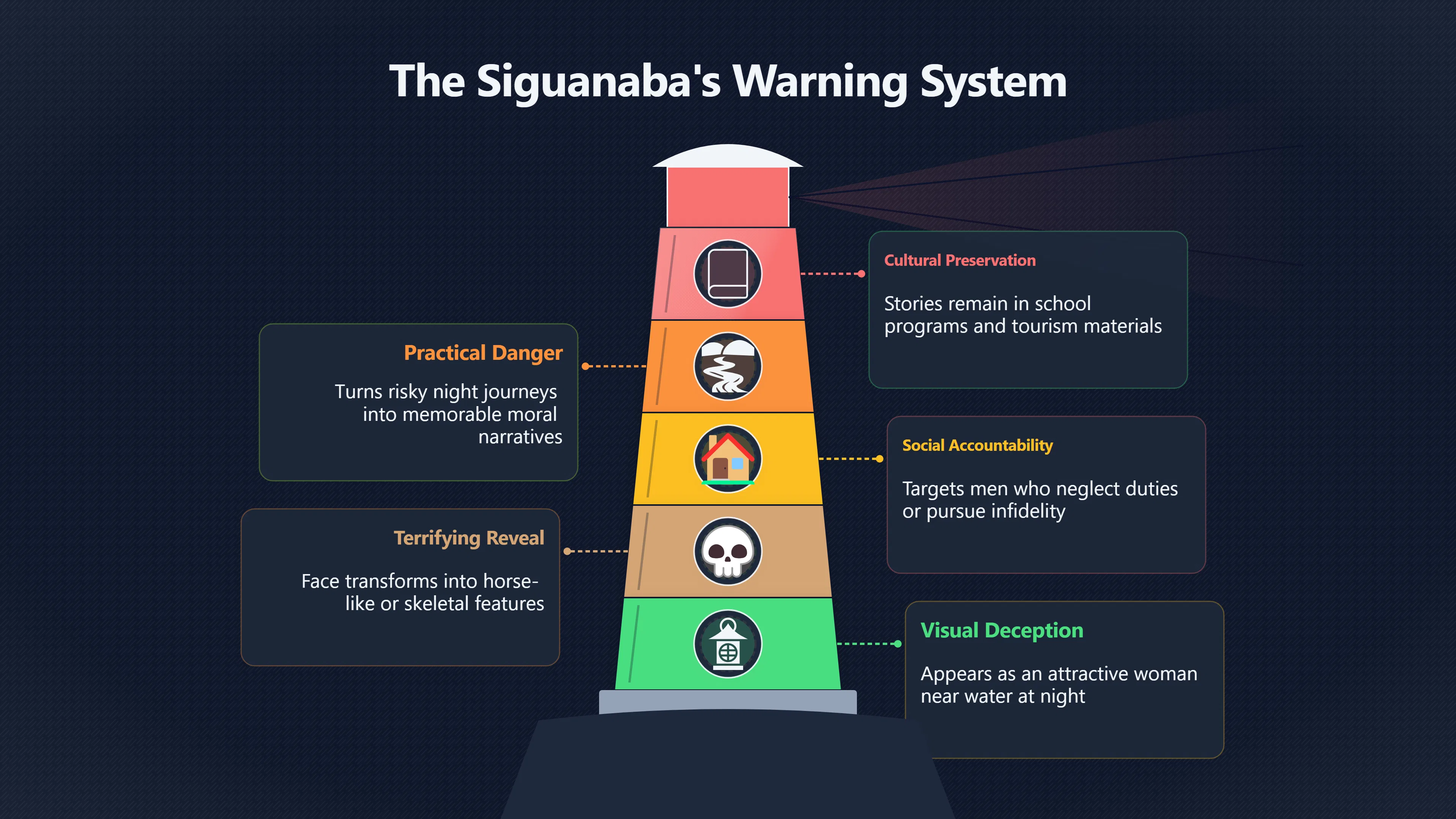
In Salvadoran tradition, the Siguanaba often appears first as an attractive woman seen from a distance, frequently near water at night. Men who follow her discover too late that the beautiful figure is an illusion. Depending on the version, her face becomes horse-like, skeletal or otherwise terrifying, leaving victims shocked, lost or driven to madness. She is especially associated with men who stay out late, pursue forbidden relationships or neglect responsibilities.[visitelsalvador.ai]visitelsalvador.aiLa Siguanaba, El Cipitío and the Cadejo | Visit El SalvadorJan 5, 2026 — La Siguanaba is undoubtedly the most famous legend of El Salvador…
The warning mechanism is straightforward. A dangerous night journey becomes a story about temptation. Rivers and ravines are already risky places in darkness; the legend turns that practical danger into a memorable moral narrative. Instead of saying “do not wander alone at night”, the tradition imagines a traveller following the wrong attraction until disaster follows.[visitelsalvador.ai]visitelsalvador.aiLa Siguanaba, El Cipitío and the Cadejo | Visit El SalvadorJan 5, 2026 — La Siguanaba is undoubtedly the most famous legend of El Salvador…
The Siguanaba also carries a strong theme of social accountability. Many retellings emphasise that her preferred victims are womanisers, adulterers or irresponsible men. The frightening encounter therefore becomes a symbolic punishment for behaviour that communities viewed as harmful.[visitelsalvador.ai]visitelsalvador.aiLa Siguanaba, El Cipitío and the Cadejo | Visit El SalvadorJan 5, 2026 — La Siguanaba is undoubtedly the most famous legend of El Salvador…
Why the Cipitio is more than comic relief
The Cipitio is usually described as the son of the Siguanaba, condemned to remain a child forever. He is recognisable by his oversized hat, round belly and backwards feet, which make his tracks impossible to follow correctly. Stories portray him throwing pebbles, playing tricks, eating ashes and appearing unexpectedly near rivers or village paths.[wikipedia.org]WikipediaOpen source on wikipedia.org.
At first glance he seems less threatening than his mother. Yet his role as a warning figure is subtler. In many versions, his strange appearance and eternal childhood result from neglect and wrongdoing within his family. The character therefore acts as a reminder of failed parental responsibility and the consequences of broken social bonds.[wordpress.com]babeltowerfr.wordpress.comShe caught the eye of a NahuaBabel TowerEl Salvador: Into a World of Myths and Legends - Babel TowerApr 21, 2018 — According to Salvadoran legend, La Siguanaba used t…
The Cipitio also warns listeners against becoming lost, physically or socially. His backwards feet create confusion for anyone who tries to track him. In a rural society where paths, fields and rivers were part of everyday life, a being who deliberately misleads people reflects anxieties about wandering away from safety or good judgement.[Wikipedia]WikipediaOpen source on wikipedia.org.
An important difference from many other legendary beings is that the Cipitio often remains playful rather than malevolent. His stories teach through mischief and embarrassment rather than outright terror. That balance helps explain why he became one of the most enduring figures in Salvadoran popular culture.[Wikipedia]WikipediaOpen source on wikipedia.org.
White and Black Cadejo Road Stories
If the Siguanaba belongs to rivers, the Cadejo belongs to roads.
The Cadejo appears as a mysterious dog encountered during late-night journeys. Salvadoran tradition commonly distinguishes between two forms:
- The white Cadejo, usually protective.
- The black Cadejo, usually dangerous or hostile.[Wikipedia]WikipediaOpen source on wikipedia.org.
Stories describe the white Cadejo accompanying solitary travellers and protecting them from robbers, accidents or supernatural threats. Some versions even portray it as guarding people who have made poor decisions but still need protection to reach home safely. The black Cadejo, by contrast, seeks to terrify, mislead or harm those who meet it on lonely roads.[Wikipedia]WikipediaOpen source on wikipedia.org.
The pairing creates one of the most interesting warning systems in Salvadoran folklore. The night is not presented as entirely evil; danger and protection coexist. A traveller may encounter either force depending on circumstance, behaviour or simple fate. The lesson is therefore not merely “stay indoors” but “treat the night with caution and respect”.[Wikipedia]WikipediaOpen source on wikipedia.org.
The Cadejo’s connection with roads reflects older rural realities. Before electric lighting and modern transport, travelling after dark involved genuine risks from rough terrain, criminals, animals and disorientation. The supernatural dog transformed those dangers into a vivid narrative that listeners could remember long after a simple warning had been forgotten.[Wikipedia]WikipediaOpen source on wikipedia.org.

Warnings About Drink, Desire and Darkness
Taken together, the Siguanaba, the Cipitio and the Cadejo form a system of folk warnings about behaviour rather than a collection of unrelated monsters.
The Siguanaba warns against uncontrolled desire, infidelity and reckless wandering. The Cipitio reflects concerns about family neglect, immaturity and losing one’s way. The Cadejo addresses the hazards of travelling alone at night, especially after drinking or staying out too late. Salvadoran accounts frequently connect both the Siguanaba and the Cadejo with trasnochadores—people who roam after midnight when they should be at home.[visitelsalvador.ai]visitelsalvador.aiLa Siguanaba, El Cipitío and the Cadejo | Visit El SalvadorJan 5, 2026 — La Siguanaba is undoubtedly the most famous legend of El Salvador…
These themes reveal how folklore works in practice. A story that frightens children can simultaneously remind adults about responsibility. A tale told around a family table can preserve older ideas about safety, morality and community expectations. Even listeners who no longer believe the beings literally exist often understand the lesson being communicated.[visitelsalvador.ai]visitelsalvador.aiLa Siguanaba, El Cipitío and the Cadejo | Visit El SalvadorJan 5, 2026 — La Siguanaba is undoubtedly the most famous legend of El Salvador…
Why These Night Beings Still Matter
The continuing popularity of these legends comes partly from their flexibility. They can be told as ghost stories, moral tales, cultural heritage or symbols of Salvadoran identity. Modern retellings often emphasise entertainment, while older versions may stress fear or moral instruction, but the underlying warnings remain recognisable.[visitelsalvador.ai]visitelsalvador.aiLa Siguanaba, El Cipitío and the Cadejo | Visit El SalvadorJan 5, 2026 — La Siguanaba is undoubtedly the most famous legend of El Salvador…
The three figures also complement one another. The Siguanaba tempts. The Cipitio confuses. The Cadejo accompanies or pursues. Together they transform ordinary landscapes—rivers, paths, crossroads and roads—into places where choices matter. That combination helps explain why they remain the most famous night beings in El Salvador and why their stories continue to be passed from one generation to the next.[visitelsalvador.ai]visitelsalvador.aiLa Siguanaba, El Cipitío and the Cadejo | Visit El SalvadorJan 5, 2026 — La Siguanaba is undoubtedly the most famous legend of El Salvador…
Amazon book picks
Further Reading
Books and field guides related to Who Haunts El Salvador's Night Roads?. Use these as the next step if you want deeper reading beyond the article.
Legends of Guatemala
Features supernatural beings and legends closely related to regional traditions.
Latin American Folktales
Contains comparable cautionary tales and supernatural encounters.
Cuentos de barro
Reflects local culture from which figures like the Cadejo and Siguanaba emerge.
eBay marketplace picks
Marketplace Samples
Live-tested eBay searches with available results related to this page.


Endnotes
1.
Source: visitelsalvador.ai
Link:https://www.visitelsalvador.ai/blog/legendes-mythes-el-salvador
Source snippet
La Siguanaba, El Cipitío and the Cadejo | Visit El SalvadorJan 5, 2026 — La Siguanaba is undoubtedly the most famous legend of El Salvador...
2.
Source: Wikipedia
Title: Cultura de El Salvador
Link:https://es.wikipedia.org/wiki/Cultura_de_El_Salvador
3.
Source: Wikipedia
Link:https://en.wikipedia.org/wiki/Cipit%C3%ADo
4.
Source: Wikipedia
Title: Salvadoran folklore
Link:https://en.wikipedia.org/wiki/Salvadoran_folklore
Source snippet
Salvadoran folkloreGoblins and other mythical characters: Cipitio, the Cadejo, the Dwarf, the Fair Judge of the Night, the Black Knigh...
5.
Source: Wikipedia
Link:https://es.wikipedia.org/wiki/Cipit%C3%ADo
6.
Source: Wikipedia
Link:https://en.wikipedia.org/wiki/Cadejo
7.
Source: babeltowerfr.wordpress.com
Title: She caught the eye of a Nahua
Link:https://babeltowerfr.wordpress.com/2018/04/21/el-salvador-into-a-world-of-myths-and-legends/
Source snippet
Babel TowerEl Salvador: Into a World of Myths and Legends - Babel TowerApr 21, 2018 — According to Salvadoran legend, La Siguanaba used t...
8.
Source: mythfolks.com
Title: salvadoran folklore
Link:https://www.mythfolks.com/salvadoran-folklore
Source snippet
7 El Salvador Folklore Tales You've Never HeardOct 16, 2024 — 7 bizarre folklore tales from El Salvador & the hidden meanings we...
9.
Source: espookytales.com
Title: The Legend of El Cipitio
Link:https://www.espookytales.com/blog/The-Legend-of-El-Cipitio/
Source snippet
Dec 5, 2020 — El Cipitio is the son of La Siguanaba. When his mother was cursed for eternity, he too was cursed. He was to remain a child...
Additional References
10.
Source: bluejacketstudentnews.org
Link:https://bluejacketstudentnews.org/2169/showcase/salvadoran-culture/
Source snippet
Salvadoran CultureThe Salvadoran legend of La Siguanaba says that the woman, originally called Sihuehuet (beautiful woman), was a peasant...
11.
Source: facebook.com
Link:https://www.facebook.com/groups/281886105961506/posts/989228528560590/
Source snippet
Siguanaba and Cipitio in Latin American folkloreSiguanaba (also known as La Siguanaba) is a well-known figure from both Salvadoran and Gu...
12.
Source: teachingcentralamerica.org
Link:https://www.teachingcentralamerica.org/spooky
Source snippet
Spooky Central AmericaThe cipitio is a ghost that takes the form of a boy child and is the son of la siguanaba. He is known to be a trick...
13.
Source: superstitionsmap.com
Link:https://superstitionsmap.com/salvadoran-superstitions/
Source snippet
Salvadoran Superstitions (World #90, ≈190 total)For many people, El Cipitío keeps Salvadoran folklore playful, local, and deeply familiar...
14.
Source: astadventures.com
Title: myths legends of el salvador
Link:https://www.astadventures.com/blogs/blog-ast/myths-legends-of-el-salvador
Source snippet
Myths & Legends of El SalvadorSep 14, 2015 — El Cipitio is known to eat ashes leftover in rural kitchens, and is often used as an excuse...
15.
Source: scribd.com
Link:https://www.scribd.com/document/966103692/Legends
Source snippet
Cipitío, Siguanaba, and others.Read more...
16.
Source: youtube.com
Title: Exploring Myths & Legends of El Salvador: The Enigmatic Siguanaba
Link:https://www.youtube.com/watch?v=LdO6ZnBuM34
Source snippet
The Legend of La Siguanaba | El Salvador | Cultural Roots | Season 2...
17.
Source: youtube.com
Title: El Salvador’s Backward-Footed Trickster Revealed
Link:https://www.youtube.com/watch?v=MPj5HGqsYg8
Source snippet
The Cadejo: A Legendary Battle Between Light and Shadow | San Salvador, El Salvador...
18.
Source: youtube.com
Title: The Legend of La Siguanaba | El Salvador | Cultural Roots | Season 2
Link:https://www.youtube.com/watch?v=2uLAU1Z4KyA
Source snippet
El Salvador's Backward-Footed Trickster Revealed...
19.
Source: youtube.com
Title: Simple Stories in Spanish: La Leyenda de la Siguanaba
Link:https://www.youtube.com/watch?v=QpogIqJwah8
Source snippet
Exploring Myths & Legends of El Salvador: The Enigmatic Siguanaba...
Topic Tree