Haunting Traditions of Saint Lucia
Saint Lucia’s folklore is best understood as a living Creole tradition: a blend of African, French, British, Catholic, Indigenous Caribbean and wider Eastern Caribbean influences carried through storytelling, ritual, music, festivals and place-memory.
Page outline Jump by section
Why Saint Lucian folklore has a Creole shape
Saint Lucia’s folk culture grew from a layered history. The island was inhabited by Indigenous peoples before European colonisation, later became a contested French and British colonial territory, and developed a strong Creole identity through African, European and Caribbean influences. English is the official language, but Saint Lucian Creole remains central to everyday cultural expression, storytelling, music, foodways and identity.[Saint Lucia Tourism Authority]stlucia.orgOpen source on stlucia.org.
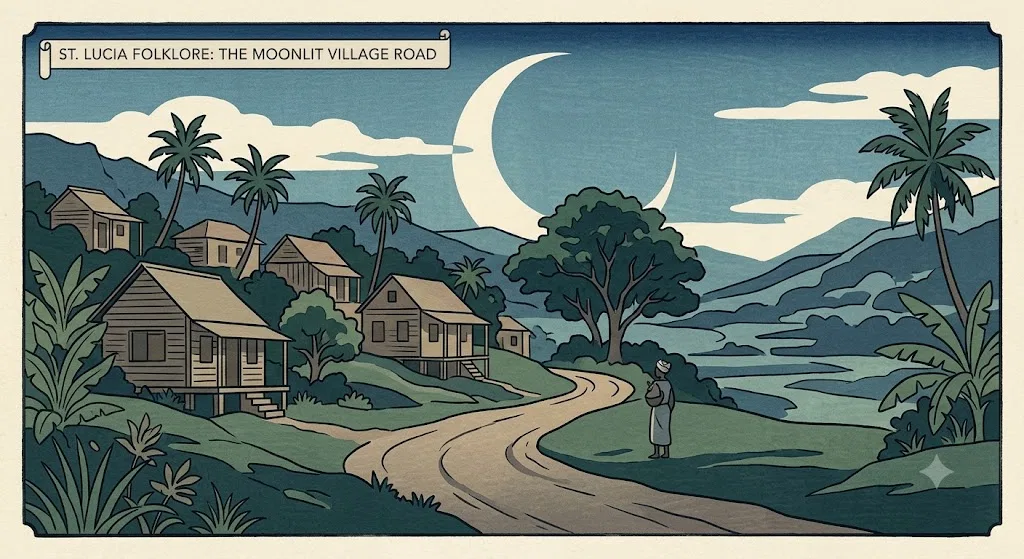
That matters for folklore because many Saint Lucian stories do not sit neatly inside a single “mythology”. A tale may include Catholic ideas about the devil, African-derived ideas about spirit power, French Creole names and rural Saint Lucian settings. The result is a storytelling world where a road, a river, a ravine, a village path or a lonely house can carry moral meaning as well as fear.
This also explains why some figures are shared with neighbouring islands but still feel Saint Lucian in local telling. La Diablesse and the soucouyant are known in parts of the wider Caribbean, yet Saint Lucian public culture identifies them, alongside Ti Bolom, as Saint Lucian folklore characters in performance and youth arts. A 2019 Government of Saint Lucia report on the play A Little Folktale described the work as drawing on “Saint Lucian folklore characters” including La Diablesse, soucouyant and Ti Bolom, and noted that one of its young writers had heard such stories from her grandmother.[Saint Lucia - Access Government]govt.lcSaint LuciaWeb Portal of the Government of Saint Lucia…
The figures readers usually ask about first
La Diablesse, the dangerous woman on the road
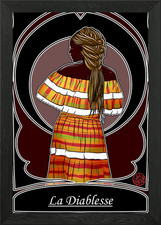
La Diablesse is one of the most recognisable supernatural women in Caribbean folklore. In Saint Lucian contexts she is usually remembered as a dangerously attractive woman who appears in public space, especially around roads, paths or lonely places, and leads unwary men into danger. Her beauty is deceptive; in many versions, a hidden hoof or other unnatural sign reveals that she is not simply human.
The story works partly as a warning tale. It speaks to male desire, night travel, stranger danger and the risks of leaving the safe social world of village and family. Its details vary from island to island and teller to teller, so it is better read as a flexible tradition than as a single fixed legend. What is especially important in Saint Lucia is that La Diablesse remains recognisable enough to be used in contemporary theatre and public cultural projects, not only in private family storytelling.[Saint Lucia - Access Government]govt.lcSaint LuciaWeb Portal of the Government of Saint Lucia…
The soucouyant, the fire-like night being
The soucouyant is another major figure in Saint Lucian and wider Caribbean supernatural tradition. It is commonly described as a person who appears ordinary by day but becomes a dangerous night-being, often imagined as a fiery form or blood-seeking entity. In many Caribbean versions, the soucouyant is associated with secrecy, bodily transformation and household vulnerability.
Saint Lucian retellings sometimes repeat the familiar stereotype of the soucouyant as an old woman, but newer cultural discussion has challenged that as too narrow. A Saint Lucian-focused article on female folklore characters notes that one writer grew up with the idea of the soucouyant as an old woman who becomes a fireball, while another Saint Lucian writer explained that the figure could be imagined as any gender or age. That variation is a useful reminder that oral tradition is not a museum label: it changes with the teller, the audience and the social concern being expressed.[JournoPortfolio]media.journoportfolio.comJourno Portfolio6 Saint Lucian Female Folklore Characters You ShouldJourno Portfolio6 Saint Lucian Female Folklore Characters You Should
Ti Bolom, the “little man” with a modern research trail
Ti Bolom is especially valuable for understanding Saint Lucian folklore today because it is both widely known and currently being documented. A University of Bristol project describes Ti Bolom as a child-sized spirit, often thought to serve the devil and to be summoned to do its master’s bidding. The same project states that people of all generations in Saint Lucia know Ti Bolom stories, while also noting that researchers are still investigating how far the tale appears in colonial archives.[University of Bristol]bristol.ac.uktelling and re telling talestelling and re telling tales
Recent fieldwork adds an important layer. A 2025 report on building a “folk map” of Saint Lucia says researchers recorded several versions of Ti Bolom stories in 2024 and found that details shifted between storytellers, while the moral warning against greed often remained. The stories also referred to specific Saint Lucian villages, iconic locations and links with neighbouring islands, suggesting that folklore can act like a map of lived memory as much as a catalogue of creatures.[jeangoldinginstitute.blogs.bristol.ac.uk]jeangoldinginstitute.blogs.bristol.ac.ukTelling Tales: Building a Folk Map of St Lucia – Jean Golding Institute NewsTelling Tales: Building a Folk Map of St Lucia – Jean Golding Institute News
This is a good example of how old oral tradition enters the digital age. The question is no longer only “what is Ti Bolom?” but also “how should a living story be archived without flattening it?” Researchers involved in the project explicitly raised ethical concerns because Caribbean folk stories are often treated by tellers as true, and because naming real people or places can expose private community knowledge.[jeangoldinginstitute.blogs.bristol.ac.uk]jeangoldinginstitute.blogs.bristol.ac.ukTelling Tales: Building a Folk Map of St Lucia – Jean Golding Institute NewsTelling Tales: Building a Folk Map of St Lucia – Jean Golding Institute News
Storytelling is not just entertainment
Saint Lucian folklore has often been transmitted through family and community settings rather than formal books. That is why a grandmother’s story, a village warning, a tale told at night or a performance during a cultural event may carry as much weight as a written text. The young writer behind A Little Folktale explicitly connected the play to stories heard from her grandmother and to concern that younger people were not passing on such legends as actively as before.[Saint Lucia - Access Government]govt.lcSaint LuciaWeb Portal of the Government of Saint Lucia…
The University of Bristol’s Saint Lucia folk-mapping work makes the same point in a more research-oriented way. It describes folk stories as “fluid and embodied”, shaped by the storyteller’s location, memory, language and relationship to place. It also notes that Saint Lucia’s official place names do not always match the names used by Creole-speaking storytellers, so careful translation and local validation are needed when turning oral material into maps or archives.[jeangoldinginstitute.blogs.bristol.ac.uk]jeangoldinginstitute.blogs.bristol.ac.ukTelling Tales: Building a Folk Map of St Lucia – Jean Golding Institute NewsTelling Tales: Building a Folk Map of St Lucia – Jean Golding Institute News
For readers, this means Saint Lucian folklore should not be treated as a set of dead “monster facts”. The same figure can carry different meanings in different households. One teller may emphasise fear; another may stress greed, sexual caution, respect for elders, religious danger or the consequences of selfish behaviour. The tradition lives in those variations.
Folk religion, healing and moral suspicion
Saint Lucia’s folklore also overlaps with folk religion and spiritual practice, though the categories should not be blurred carelessly. A monster story told to children is not the same thing as a healing consultation, a Catholic devotion or an African-derived ritual. Still, Saint Lucian belief culture has long included ideas about spiritual power, protection, harm, illness and moral danger.
One important tradition is the Kélé ceremony, identified by the Folk Research Centre as an African religious ceremony performed in the north-eastern region around Babonneau, Fond Assau and nearby areas. The centre describes it as involving procession, prayer, food offerings and rites honouring Ogun and Shango, with practices passed through families identifying as Nèg Djiné. It also notes that participants may be church-going Christians who blend the traditions in their personal lives.[folkresearchcentre.org]folkresearchcentre.orgTraditional Practices – Folk Research CentreTraditional Practices – Folk Research Centre
Obeah is a more contested term. Anthropologist Marie Meudec’s research on Saint Lucia argues that obeah is not a single homogeneous practice but a broad and morally charged category associated with healing, spirituality, magic and witchcraft. Her fieldwork found that, although obeah was removed from the criminal code in 2004, negative moral judgements around it have persisted through religious, public and everyday discourse.[Academia]academia.eduOpen source on academia.edu.
This matters because folklore is often shaped by what a society fears, condemns or half-believes. Stories about night beings, spiritual servants, curses or dangerous practitioners can reflect real social tensions: who is trusted, who is suspected, who is thought to have hidden power, and how communities explain misfortune.

Festivals keep tradition public
Saint Lucia’s folklore is not confined to frightening stories. It also appears in public festivals, performance, music, dress, food and community memory. The Folk Research Centre identifies Jounen Kwéyòl as a Saint Lucian celebration linked to International Creole Day, held on the Sunday nearest 28 October and forming the climax of a month-long October celebration of Creole culture. The festival highlights language, traditional practices, food, drink, dress and community participation.[folkresearchcentre.org]folkresearchcentre.orgJounen kwéyòl – Folk Research CentreJounen kwéyòl – Folk Research Centre
The older Folk Research Centre site describes Jounen Kwéyòl as a community-based celebration of Creole food, music and folk traditions that has grown since 1984 into one of Saint Lucia’s most anticipated national calendar events. A Government of Saint Lucia account of Creole Day 2019 similarly describes celebrations featuring Creole food, music, games and folklore representing the island’s blended Caribbean, African and European heritage.[stluciafolk.org]stluciafolk.orgGeneral PagesGeneral Pages
The flower festivals, La Rose and La Marguerite, belong to this same wider field of folk culture. A Government of Saint Lucia report on the 2024 La Marguerite Flower Festival described it as a celebration of song, dance and tradition centred on the Marguerite Flower Society, with church service, parade, traditional performances and community pride. Such events are not “monster folklore”, but they preserve the performative and communal side of Saint Lucian traditional culture.[Saint Lucia - Access Government]govt.lcSaint LuciaWeb Portal of the Government of Saint Lucia…
The landscape as a story-holder
Saint Lucia’s landscape is central to its sense of identity, and folklore often attaches meaning to place. The Pitons are the clearest example of a landscape that is at once natural landmark, national symbol and story-bearing terrain. UNESCO describes the Pitons Management Area in south-west Saint Lucia as a 2,909-hectare site of land and sea, dominated by Gros Piton and Petit Piton rising side by side from the sea, with volcanic features, fumaroles, hot springs and evidence of historic Amerindian Carib presence through petroglyphs and artefacts.[UNESCO World Heritage Centre]whc.unesco.orgWorld Heritage Centre Pitons Management AreaWorld Heritage Centre Pitons Management Area
The UNESCO account is geological and heritage-focused rather than a folklore source, but it helps explain why such places attract story. The Pitons are visible from much of the island and have long functioned as landmarks for seafarers; dramatic landscapes like these naturally become anchors for memory, identity and narration.[UNESCO World Heritage Centre]whc.unesco.orgWorld Heritage Centre Pitons Management AreaWorld Heritage Centre Pitons Management Area
The 2025 folk-map project makes this landscape connection more explicit for oral tradition. Ti Bolom stories recorded in Saint Lucia referred to villages, iconic locations and links beyond the island, leading researchers to argue that folk stories can reveal a “folk landscape” made from remembered routes, dangers, encounters and local names.[jeangoldinginstitute.blogs.bristol.ac.uk]jeangoldinginstitute.blogs.bristol.ac.ukTelling Tales: Building a Folk Map of St Lucia – Jean Golding Institute NewsTelling Tales: Building a Folk Map of St Lucia – Jean Golding Institute News
What is old, what is modern, and what is being reinvented?
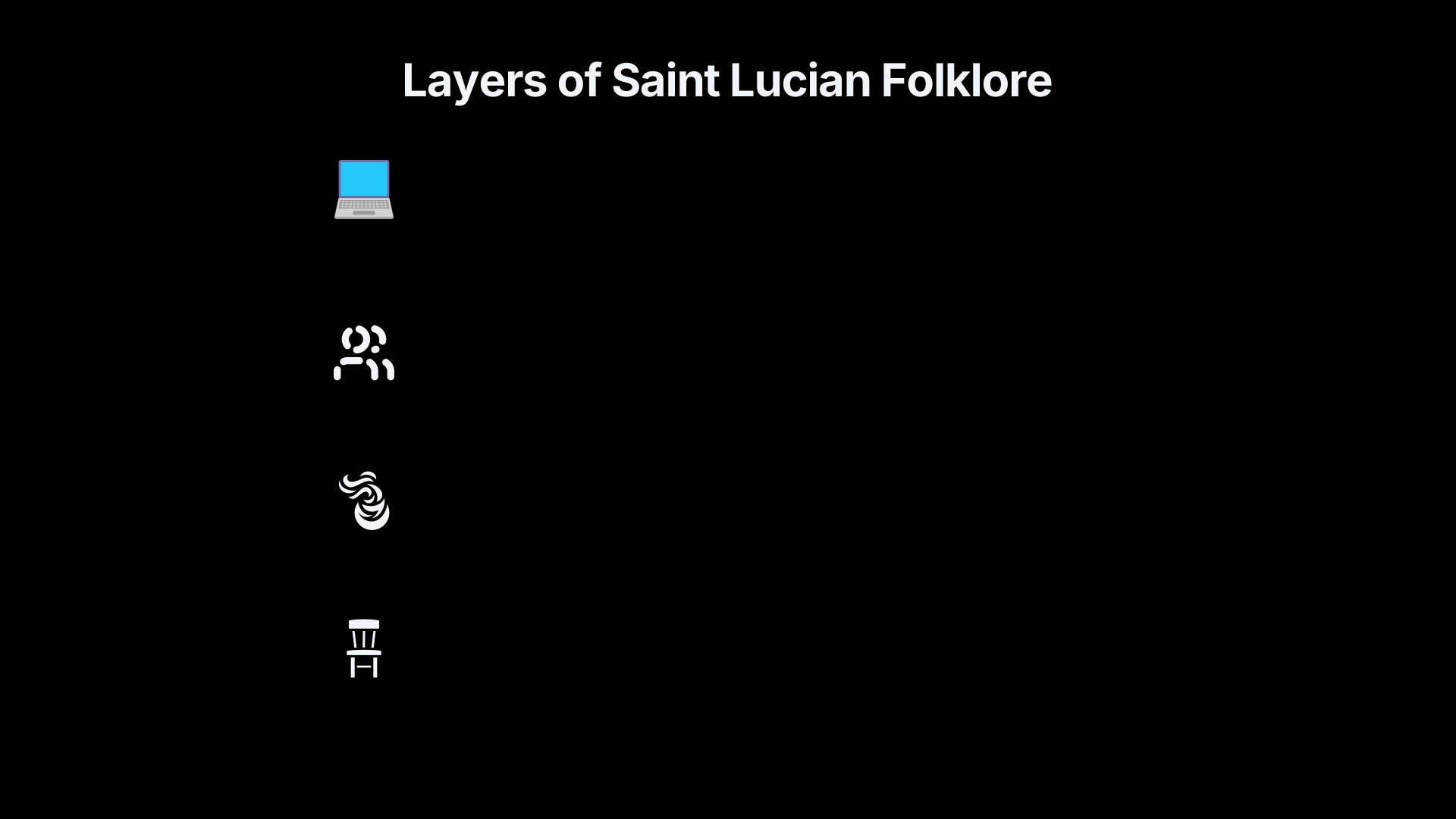
A useful way to read Saint Lucian folklore is to separate four overlapping layers.
First, there is old oral tradition: stories passed through families, villages and Creole-speaking communities, often with no single author and no fixed version. La Diablesse, the soucouyant and Ti Bolom belong here, even when their exact details shift.[Saint Lucia - Access Government]govt.lcSaint LuciaWeb Portal of the Government of Saint Lucia…
Second, there is ritual and religious tradition, including Kélé and contested spiritual practices associated with obeah. These are not simply “legends”; they involve real communities, moral debate, secrecy, stigma, devotion and lived religious practice.[folkresearchcentre.org]folkresearchcentre.orgTraditional Practices – Folk Research CentreTraditional Practices – Folk Research Centre
Third, there is public cultural preservation: the work of the Folk Research Centre, Jounen Kwéyòl, flower festivals, school projects, theatre and government-supported cultural activity. This is where folklore becomes visible as heritage and national identity.[folkresearchcentre.org]folkresearchcentre.orgJounen kwéyòl – Folk Research CentreJounen kwéyòl – Folk Research Centre
Fourth, there is modern reinterpretation. Youth theatre, university archives, digital folk maps and online articles all reshape how Saint Lucian folklore is encountered. Some of this is careful and locally grounded; some online material can simplify or sensationalise. The strongest recent work treats folklore as living community knowledge rather than as a spooky list of creatures.[jeangoldinginstitute.blogs.bristol.ac.uk]jeangoldinginstitute.blogs.bristol.ac.ukTelling Tales: Building a Folk Map of St Lucia – Jean Golding Institute NewsTelling Tales: Building a Folk Map of St Lucia – Jean Golding Institute News
Why Saint Lucia’s folklore still matters
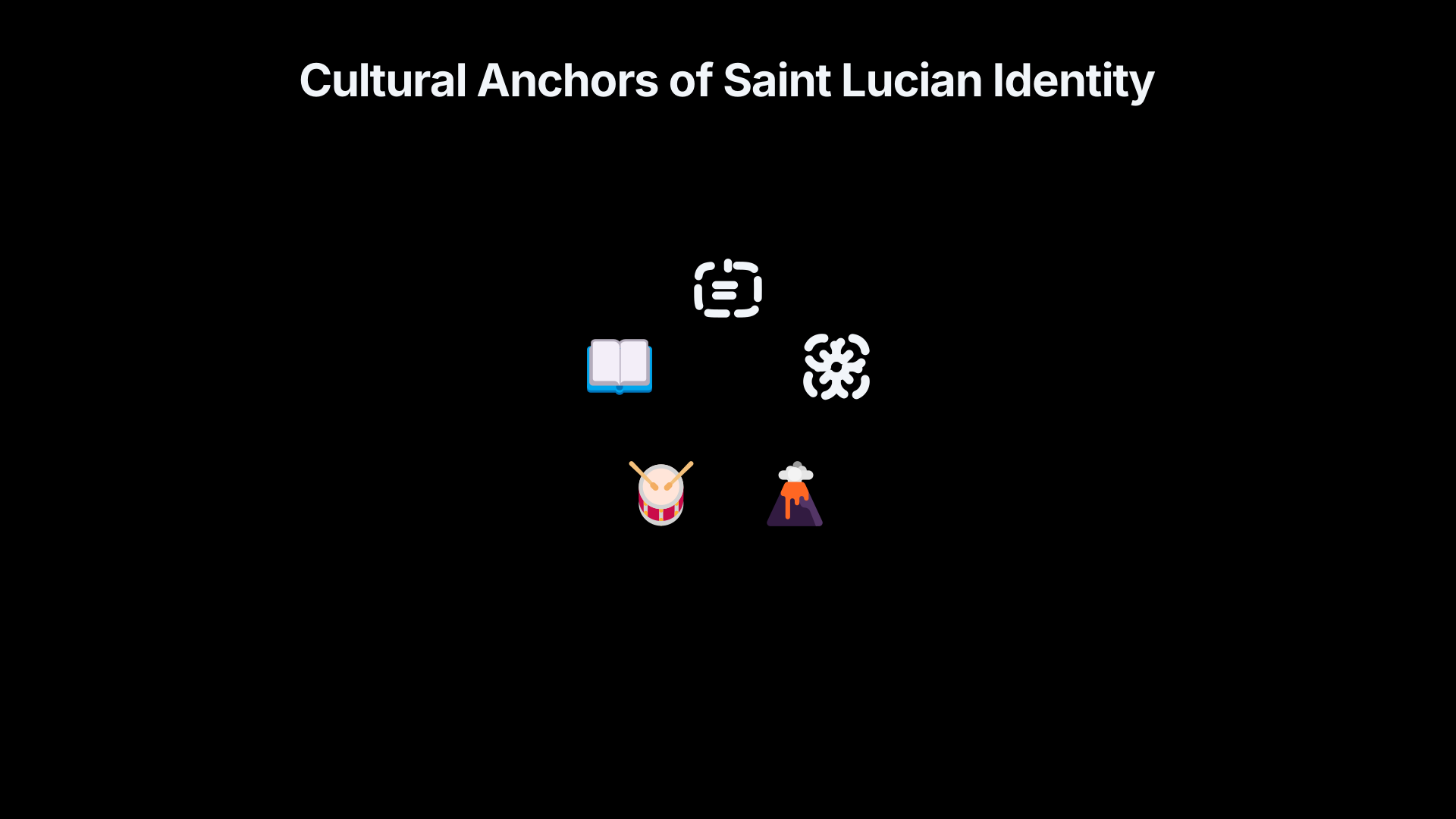
Saint Lucian folklore matters because it gives ordinary stories a cultural job. La Diablesse warns about desire and danger; the soucouyant turns fear of hidden harm into a memorable night image; Ti Bolom condenses anxieties about greed, power and spiritual bargains; Kélé preserves African religious memory in a Christian-majority society; Jounen Kwéyòl turns language and folk culture into public pride.
The most responsible reading is neither to dismiss these traditions as mere superstition nor to present them as proven supernatural fact. They are narratives, beliefs, performances and practices through which Saint Lucians have explained risk, misfortune, morality, place and belonging. Their survival in theatre, festivals, research projects and digital mapping shows that folklore in Saint Lucia is not just a remnant of the past. It remains a flexible way of telling the island what it has been, what it fears, and what it chooses to remember.
Amazon book picks
Further Reading
Books and field guides related to What Haunts Saint Lucia's Story World?. Use these as the next step if you want deeper reading beyond the article.
Tell My Horse
Explores Caribbean spiritual beliefs and folk practices related to supernatural traditions.

Anansi, the Spider Man
Explains shared regional folk traditions that influenced storytelling across the Caribbean.
Caribbean Folk Tales
Introduces major Caribbean storytelling traditions that help contextualize Saint Lucian folklore.
eBay marketplace picks
Marketplace Samples
Live-tested eBay searches with available results related to this page.
Endnotes
1.
Source: govt.lc
Title: Saint Lucia
Link:https://www.govt.lc/news/final-rehearsals-for-cast-of-a-little-folktale
Source snippet
Web Portal of the Government of Saint Lucia...
2.
Source: bristol.ac.uk
Title: telling and re telling tales
Link:https://www.bristol.ac.uk/brigstow/research/projects/20232024/telling-and-re-telling-tales.html
3.
Source: jeangoldinginstitute.blogs.bristol.ac.uk
Title: Telling Tales: Building a Folk Map of St Lucia – Jean Golding Institute News
Link:https://jeangoldinginstitute.blogs.bristol.ac.uk/2025/10/07/telling-tales-building-a-folk-map-of-st-lucia/
4.
Source: media.journoportfolio.com
Title: Journo Portfolio6 Saint Lucian Female Folklore Characters You Should
Link:https://media.journoportfolio.com/users/355480/uploads/1f99af0e-4a7f-44aa-a66e-29e777ebf843.pdf
5.
Source: folkresearchcentre.org
Title: Traditional Practices – Folk Research Centre
Link:https://folkresearchcentre.org/heritage-studies/traditional-practices/
6.
Source: academia.edu
Link:https://www.academia.edu/7090957/_Obeah_in_St_Lucia_as_a_moral_and_ethical_practice_Moralities_of_healing_and_spiritual_practices_Kosanba_A_Scholarly_Association_for_the_Study_of_Haitian_Vodou_Harvard_University
7.
Source: folkresearchcentre.org
Title: Jounen kwéyòl – Folk Research Centre
Link:https://folkresearchcentre.org/heritage-studies/jounen-kweyol/
8.
Source: stluciafolk.org
Title: General Pages
Link:https://stluciafolk.org/generalPages/view/1
9.
Source: govt.lc
Title: Saint Lucia
Link:https://www.govt.lc/news/creole-heritage-celebrated
Source snippet
Web Portal of the Government of Saint Lucia...
10.
Source: govt.lc
Title: Saint Lucia
Link:https://www.govt.lc/news/cdf-celebrates-annual-la-marguerite-festival-in-vieux-fort
Source snippet
Web Portal of the Government of Saint Lucia...
11.
Source: whc.unesco.org
Title: World Heritage Centre Pitons Management Area
Link:https://whc.unesco.org/en/list/1161/
12.
Source: folkresearchcentre.org
Title: host venues for jounen kweyol 2025
Link:https://folkresearchcentre.org/host-venues-for-jounen-kweyol-2025/
13.
Source: ich.unesco.org
Link:https://ich.unesco.org/en/lists
14.
Source: stlucia.org
Link:https://stlucia.org/en/discover-saint-lucia/history-culture/
15.
Source: wendyshearer.co.uk
Title: la diablesse
Link:https://wendyshearer.co.uk/2020/04/la-diablesse/
16.
Source: education.govt.lc
Title: final rehearsals for cast of a little folktale
Link:https://education.govt.lc/news/final-rehearsals-for-cast-of-a-little-folktale
17.
Source: facebook.com
Link:https://www.facebook.com/saintluciafolk/
18.
Source: Wikipedia
Link:https://en.wikipedia.org/wiki/Obeah
19.
Source: Wikipedia
Title: La Diablesse
Link:https://en.wikipedia.org/wiki/La_Diablesse
20.
Source: Wikipedia
Link:https://en.wikipedia.org/wiki/Soucouyant
21.
Source: Wikipedia
Link:https://en.wikipedia.org/wiki/K%C3%A9l%C3%A9
22.
Source: youtube.com
Link:https://www.youtube.com/watch?v=thHqMLoNzqc
23.
Source: world-heritage-datasheets.unep-wcmc.org
Title: pitons management area
Link:https://world-heritage-datasheets.unep-wcmc.org/datasheet/output/site/pitons-management-area
24.
Source: caribbeanreads.com
Link:https://www.caribbeanreads.com/soucouyant/
Additional References
25.
Source: loc.gov
Link:https://www.loc.gov/item/hlas-bi98015864/
26.
Source: researchgate.net
Link:https://www.researchgate.net/publication/276914851_%27Behind_the_Church_Door_Stands_the_Devil%27_Derek_Walcott_the_Caribbean_Church_and_the_Island_of_Saint_Lucia
27.
Source: river-stories.com
Link:https://river-stories.com/caribbean-folklore-folktales-fables-ananse/
28.
Source: baygardensresorts.com
Link:https://www.baygardensresorts.com/blog/celebrating-creole-heritage-month-in-saint-lucia
29.
Source: facebook.com
Link:https://www.facebook.com/saintluciatourismauthority/posts/come-celebrate-the-french-creole-traditions-that-make-saint-lucia-so-unique-join/342198154914378/
30.
Source: facebook.com
Link:https://www.facebook.com/cdfsaintlucia/posts/1195327252618443/
31.
Source: facebook.com
Link:https://www.facebook.com/groups/1310508596300250/posts/1514985269185914/
32.
Source: facebook.com
Link:https://www.facebook.com/groups/Concernedcreativecitizens/posts/4719524381474157/
33.
Source: ebsco.com
Link:https://www.ebsco.com/research-starters/literature-and-writing/dream-monkey-mountain-derek-walcott
34.
Source: facebook.com
Link:https://www.facebook.com/groups/ilovestlucia/posts/4114517105243751/
Topic Tree
Follow this branch
Related pages 192
- Afghan Folklore
- Albanian Folklore
- Algerian Folklore
- Australian Folklore
- Azerbaijan Folklore
- +187 more in sidebar