Why Honduras Keeps Telling Ghost Stories
Honduran folklore is not one single mythology but a layered tradition shaped by Indigenous peoples, Spanish Catholicism, Afro-Indigenous Garifuna culture, rural storytelling, radio, tourism and modern internet retellings.
Page outline Jump by section
What makes Honduran folklore distinctive?
Honduras sits between several cultural zones, and its folklore reflects that position. The country includes the Maya world of the west, Lenca communities in the highlands, Miskito, Pech and Tawahka traditions in eastern forest and coastal regions, and Garifuna communities along the Caribbean coast. A World Bank Indigenous Peoples Planning document describes Honduran Indigenous and Afro-descendant peoples as belonging to groups of diverse origin: Lenca and Chortí are identified with Mesoamerican descent; Tolupán, Pech, Tawahka and Miskito with Chibcha-related origins; and Garifuna and English-speaking Black communities with African descent.[World Bank]documents1.worldbank.orgOpen source on worldbank.org.
That diversity matters because Honduran folklore is often local before it is national. A ghost story may be known across the country, but the river, hill, bridge or road where it is said to appear can change from town to town. This is why Honduran legend is best understood as a living storytelling field rather than a fixed canon. The same figure can be a moral warning in one place, a frightening entertainment in another, and a nostalgic childhood memory in a third.
There is also a strong pattern of blending. Catholic images, Indigenous communal practice, Afro-Caribbean drumming, Spanish-language ghost stories and local landscape memory often sit side by side. The Lenca Guancasco is a good example: it is described today as a ritual of peace and reconciliation between communities, but sources also note that it became wrapped in Catholic imagery over time as churches and patron-saint celebrations absorbed older forms of Indigenous encounter.[AWASQA]awasqa.orgHonduras: Guancasco Lenca, A Peace Ritual BetweenHonduras: Guancasco Lenca, A Peace Ritual Between
The legends most readers meet first
The most widely circulated Honduran legends are frightening, but they are rarely just horror stories. They usually carry a social rule: do not wander at night, do not drink recklessly, do not betray your family, do not go near dangerous water, do not ignore obligations to the dead, the community or the sacred.
La Sucia, the river woman who tests desire
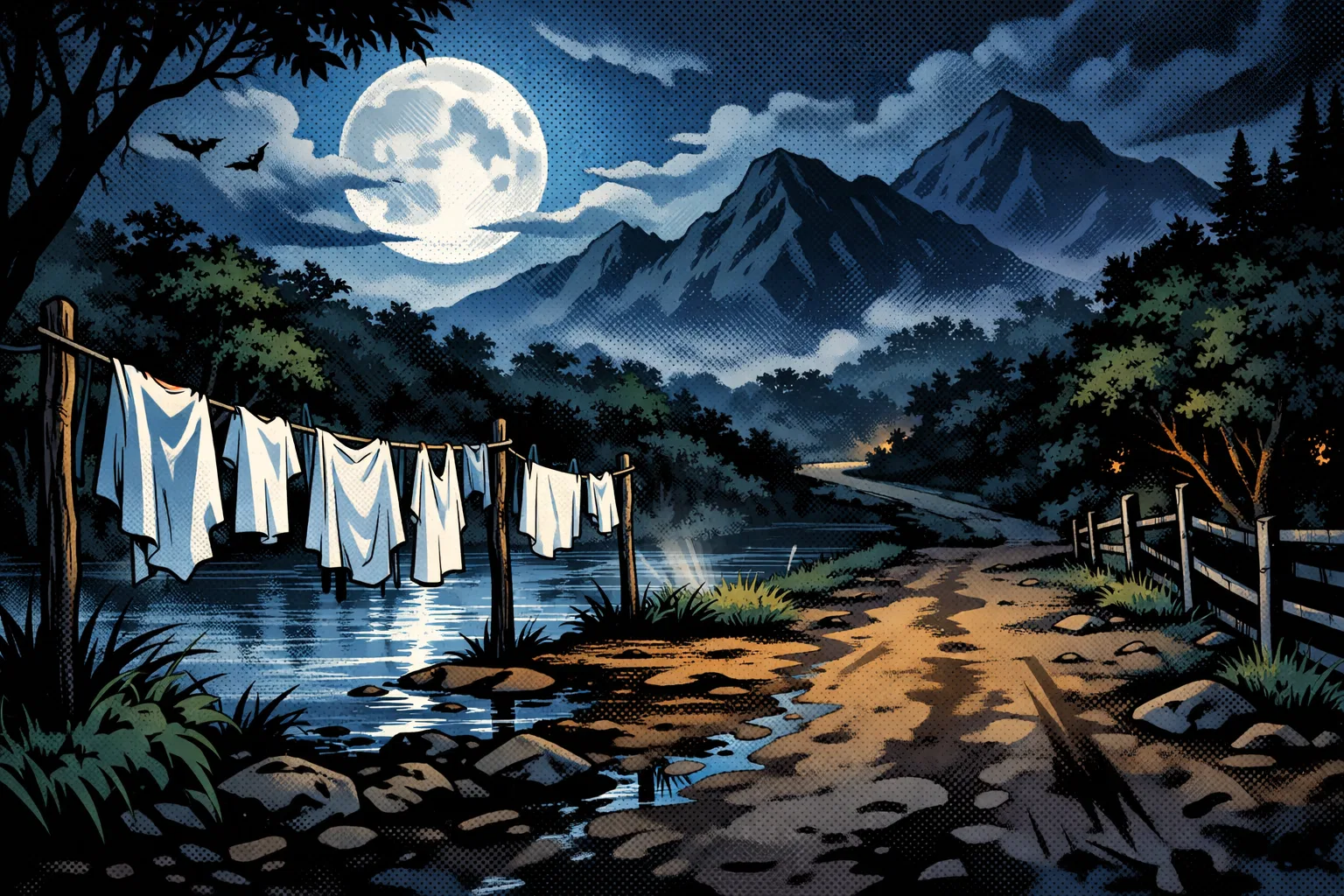
La Sucia is one of the clearest Honduran examples of a supernatural warning tied to landscape. In many versions, she appears near rivers, streams or washing places as a beautiful woman, often with long hair and pale or white clothing. Men who approach her discover too late that the beauty was deceptive: her face or body changes, and the encounter leaves them terrified, lost or driven mad. Popular Honduran retellings connect her to washing clothes by the river and to a young woman whose life is ruined by shame, failed marriage or religious exclusion.[xplorhonduras.com]xplorhonduras.comOpen source on xplorhonduras.com.
La Sucia belongs to a wider Central American family of deceptive female spirits, sometimes compared with La Siguanaba or La Cegua in neighbouring countries. The Honduran form is especially memorable because it is so firmly tied to riverside domestic labour and male night-time behaviour. The story turns an ordinary rural setting — a woman washing clothes by water — into a place where desire, guilt and danger are suddenly exposed.
The moral meaning is not simple. Older tellings often present La Sucia as a warning against male drunkenness, womanising or sexual misconduct. At the same time, the origin story may make her a tragic figure: a young woman punished by social and religious rules, not simply a monster. That tension helps explain why she survives well in modern retellings. She can be read as a frightful apparition, a moral enforcer, or a ghost of social shame.

La Llorona, the weeping mother in Honduran form
La Llorona, the weeping woman who mourns lost or murdered children, is not unique to Honduras. Versions of her story are known across Latin America and the Hispanic United States, often connected to rivers, lakes, roads and night cries. Central American summaries describe her as a grieving female apparition whose core story changes locally while retaining the image of a woman crying for her children near water.[RUTA]ruta.orgFolklore and legends in Central AmericaFolklore and legends in Central America
In Honduras, La Llorona overlaps with the same landscape logic as La Sucia: water is beautiful, necessary and dangerous. The legend can frighten children away from rivers after dark, but it also speaks to grief, motherhood, abandonment and guilt. In some Honduran retellings, the tale is localised to particular rivers or southern landscapes, showing how a pan-Latin American figure becomes Honduran through place.
The important point for readers is that La Llorona is not “imported folklore” in a simple sense. Shared stories travel through language, religion, migration, schooling, family memory and media. Once they attach to Honduran rivers, villages and childhood warnings, they become part of Honduran oral culture as well as part of a wider Latin American tradition.
El Cadejo, the dog on the night road
El Cadejo is another legend shared across Central America, but it has a strong Honduran presence. He is usually imagined as a supernatural dog encountered on lonely roads at night. Many versions distinguish between a protective white dog and a dangerous black dog, though the exact moral alignment can vary by country and storyteller. Honduran and regional sources describe the white Cadejo as a guide or guardian and the black Cadejo as a frightening or harmful spirit associated with night travel, drunkenness and danger.[xplorhonduras.com]xplorhonduras.comOpen source on xplorhonduras.com.
The Cadejo is effective folklore because it turns an ordinary rural risk into a visible being. Walking home drunk on an unlit road, hearing an animal behind you, or crossing isolated country at night becomes a story about protection and punishment. The legend can warn against alcohol, but it also reflects the real vulnerability of travellers before street lighting, cars and mobile phones changed night-time movement.
Unlike La Sucia or La Llorona, El Cadejo is not centred on grief or seduction. He is a road spirit. His power comes from ambiguity: is the animal following you a guardian, a threat, or a sign that you should not have been out there in the first place?
Older roots: Indigenous and Afro-Indigenous worlds
The popular ghost legends are only one layer of Honduran folklore. A deeper picture includes the ritual, musical and sacred traditions of the country’s Indigenous and Afro-Indigenous peoples.
Lenca ritual and the Guancasco
The Lenca are one of Honduras’s most important Indigenous peoples, especially associated with western and central highland areas. Minority Rights Group describes Lenca communities in Honduras as living in departments including La Paz, Lempira, Ocotepeque and Intibucá, and notes that although the Lenca language has largely not survived as a community language, social structures and communal practices remain significant.[Department of Justice]justice.govDepartment of Justice Lenca, Miskitu, Tawahka, Pech, Maya, Chortis and XicaqueDepartment of Justice Lenca, Miskitu, Tawahka, Pech, Maya, Chortis and Xicaque
The Guancasco is one of the clearest surviving examples of Lenca-rooted ceremonial culture. It is commonly described as a peace or brotherhood ritual between communities. In contemporary celebrations, neighbouring towns meet through processions, dance, music, masks, food, drink and patron-saint imagery. Red Honduras describes it as a Lenca-origin dance and ceremony of peace between villages, performed with masks in a town square and accompanied by flutes, drums and communal hospitality.[RedHonduras - El referente de Honduras]redhonduras.hnRed HondurasRed Honduras
What makes the Guancasco folklorically rich is not just that it is “old”. It shows how tradition adapts. An Indigenous mechanism for alliance, reconciliation and communal encounter has lived on through Catholic festival forms, local politics, performance and heritage identity. The wooden mask, drum, baton, flags and whistle are not decorative extras; they are portable signs of memory, authority and continuity.[FSC Indigenous Foundation]fscindigenousfoundation.orgFSC Indigenous Foundation We are Lenca WomenFSC Indigenous Foundation We are Lenca Women
Garifuna language, music and ancestral memory
Garifuna culture is one of Honduras’s most internationally recognised living traditions. UNESCO lists the language, dance and music of the Garifuna — shared by communities in Belize, Guatemala, Honduras and Nicaragua — as intangible cultural heritage. UNESCO notes that Garifuna language belongs to the Arawakan language family and that elders play a key role in maintaining ceremonies, festivals and oral traditions.[UNESCO Intangible Cultural Heritage]ich.unesco.orgOpen source on unesco.org.
Garifuna songs are not merely entertainment. UNESCO’s heritage material describes melodies that bring together African and Amerindian elements, with song texts preserving history and traditional knowledge about cassava growing, fishing, canoe building and house construction. It also notes that ceremonies use drums and that songs can include satire aimed at behaviour within the community.[UNESCO]unesco.orgdocument 1document 1
For folklore readers, this is crucial: in Garifuna culture, oral tradition is often sung, danced and drummed rather than told as a campfire ghost story. Music can carry genealogy, migration memory, social criticism, spiritual obligation and communal identity. The modern popularity of Garifuna music has also created a bridge between village tradition and global audiences. Honduran artist Aurelio Martínez, who died in 2025, was widely described as a cultural ambassador for Garifuna music and helped bring paranda and other Garifuna forms to international listeners.[The Guardian]theguardian.comThe Guardian Aurelio obituaryAurelio rose to international prominence after collaborating with Belizean musician Andy Palacio and producer Ivan Duran. His debut solo…
Garifuna spirituality also includes ceremonies for the dead and the ancestors. The Dugu is often described as an ancestral ceremony concerned with healing, obligation and restoring proper relations between the living and the dead. Scholarly work identifies it as a possession and ancestral practice of the Garifuna, an Afro-Amerindian community originating in Saint Vincent and now spread along the Central American Caribbean coast.[Scholarly Publishing Collective]scholarlypublishingcollective.orgSomatizing the Past Healing the Dead throughSomatizing the Past Healing the Dead through
Sacred and haunted landscapes
Honduran folklore is strongly geographical. Its stories live in places: rivers, roads, ruins, village squares, coastlines and mountains.
Copán is the most obvious sacred-historical landscape in the country. UNESCO calls the Maya Site of Copán one of the most important sites of Maya civilisation and identifies it as the political, civil and religious centre of the Copán Valley, as well as a cultural focus for a larger south-eastern Maya region.[UNESCO World Heritage Centre]whc.unesco.orgOpen source on unesco.org. The site was inscribed on the World Heritage List in 1980, and UNESCO has also described it as holding deep cultural and ceremonial meaning for local Indigenous communities today.[UNESCO World Heritage Centre]whc.unesco.orgOpen source on unesco.org.
For a folklore page, Copán should not be treated as a fantasy ruin or a vague “mystical” tourist backdrop. Its importance is more precise: it is a monumental record of Maya kingship, ritual, writing, sculpture and sacred urban space. The Hieroglyphic Stairway, stelae and plazas belong to documented archaeology, not unsourced paranormal legend. But the site also shows how ancient sacred landscapes continue to shape modern imagination, national identity and heritage tourism.
Rivers are the other major Honduran folklore landscape. La Sucia and La Llorona both use water as a threshold: the place where domestic work, danger, death, sexuality, grief and the supernatural meet. Roads belong to El Cadejo. Town squares belong to Guancasco. The Caribbean coast belongs to Garifuna song, ceremony and migration memory. These landscapes give Honduran folklore its physical texture.
How Honduran folklore changed in the modern era
Honduran folklore has not stayed frozen in rural oral tradition. It has moved through books, radio, podcasts, tourism pages, illustrated projects, school culture, diaspora memory and social media.
One especially important modern transmitter is Jorge Montenegro’s Cuentos y Leyendas de Honduras. The programme is described in podcast listings as having begun as a radio programme created by Montenegro when he was 24, first broadcast on 9 September 1964. Modern podcast listings show hundreds of episodes continuing the brand into the 2020s.[Apple Podcasts]podcasts.apple.comPodcasts Cuentos y Leyendas de HondurasPodcasts Cuentos y Leyendas de Honduras That matters because radio changed the scale of folklore. Stories once told in households or villages could become national childhood memory, repeated with a recognisable voice, mood and structure.
Internet retellings have done something similar, but less reliably. They keep legends visible for younger and diaspora audiences, yet they often flatten local variation into short listicles: “top Honduran monsters”, “scariest legends”, “creatures from Honduras”. Those formats are useful gateways, but they can blur the difference between Honduran oral tradition, neighbouring Central American variants, recent horror writing and invented online folklore.
The safest way to read modern Honduran legend is to ask three questions. First, is the figure widely attested in Honduran family, radio, school or local storytelling? La Sucia, La Llorona and El Cadejo pass that test. Second, does the version name a place, community or ritual context, or is it just a generic monster entry? Place-specific versions are usually more meaningful. Third, does the retelling explain whether it is oral tradition, literary adaptation, tourist folklore or modern horror? Good folklore writing should not pretend those are all the same thing.
What is well attested, and what is harder to verify?
The strongest evidence for Honduran folklore comes from living heritage documentation, archaeology, and institutional or scholarly work on Indigenous and Afro-Indigenous communities. UNESCO’s Garifuna listing, UNESCO’s Copán documentation, Minority Rights Group material on Indigenous peoples, and research on Garifuna ritual all give solid anchors for cultural context.[unesco.org]ich.unesco.orgOpen source on unesco.org.
The evidence for individual ghost stories is different. La Sucia, La Llorona and El Cadejo are very well known, but their earliest dates, original forms and exact Honduran variants are harder to pin down. They survive through oral circulation, local compilations, radio, blogs and family memory. That does not make them unimportant. Folklore often lives precisely because it is retold rather than fixed. But it does mean readers should be cautious when a webpage claims one “true” version.
Some figures often listed in Honduran legend roundups — ghost carts, goblins, high-heeled women, haunted hills, night noises and death omens — may be genuine local traditions, but many online accounts are thinly sourced. They are best treated as regional or modern popular folklore unless supported by a named locality, collector, archive, older publication or living community context.
Honduras’ folklore in cultural memory
Honduran folklore remains powerful because it makes social memory feel immediate. La Sucia turns the riverbank into a warning about desire, shame and danger. La Llorona turns grief into a sound in the night. El Cadejo turns the road home into a test of conduct. Guancasco turns old relations between communities into public ritual. Garifuna music turns history, migration, labour and ancestral belonging into performance. Copán turns carved stone into a continuing national and Indigenous heritage landscape.
For curious readers, the main takeaway is that Honduras should not be reduced to a handful of spooky legends, even though those legends are vivid and beloved. Its folklore is a countrywide conversation between story and place, fear and teaching, ceremony and entertainment, local memory and national identity. Some traditions are ancient in origin, some are colonial or postcolonial blends, and some have been reshaped by radio and the internet. The most interesting Honduran folklore often sits exactly at those crossings, where an old warning becomes a childhood story, a ritual becomes heritage, and a local landscape becomes unforgettable.
Amazon book picks
Further Reading
Books and field guides related to Why Honduras Keeps Telling Ghost Stories. Use these as the next step if you want deeper reading beyond the article.
Popol Vuh
Foundational Mesoamerican mythology relevant to the cultural landscape around Honduras.
Latin American Folktales
Provides strong context for the kinds of legends and oral traditions found across Honduras.
Gods and Symbols of Ancient Mexico and the Maya
Explains mythic symbols and traditions connected to the broader region.
An illustrated dictionary of the gods and symbols of ancient...
First published 1997. Subjects: Mayas, Religion, Aztecs, Religion and mythology, Dictionaries.
eBay marketplace picks
Marketplace Samples
Live-tested eBay searches with available results related to this page.

Endnotes
1.
Source: awasqa.org
Title: Honduras: Guancasco Lenca, A Peace Ritual Between
Link:https://awasqa.org/honduras-guancasco-lenca-a-peace-ritual-between-indigenous-peoples/?lang=en
2.
Source: redhonduras.hn
Title: Red Honduras
Link:https://redhonduras.hn/en/culture/celebration-guancasco-honduras/
3.
Source: xplorhonduras.com
Link:https://www.xplorhonduras.com/la-sucia/
4.
Source: ruta.org
Title: Folklore and legends in Central America
Link:https://www.ruta.org/folklore-and-legends-in-central-america/
5.
Source: xplorhonduras.com
Link:https://www.xplorhonduras.com/el-cadejo/
6.
Source: justice.gov
Title: Department of Justice Lenca, Miskitu, Tawahka, Pech, Maya, Chortis and Xicaque
Link:https://www.justice.gov/sites/default/files/eoir/legacy/2014/02/19/Lenca%2C%20Miskitu%2C%20Tawahka%2C%20Pech%2C%20Maya%2C%20Chortis%20and%20Xicaque.pdf
7.
Source: ich.unesco.org
Link:https://ich.unesco.org/en/RL/language-dance-and-music-of-the-garifuna-00001
8.
Source: unesco.org
Title: document 1
Link:https://www.unesco.org/archives/multimedia/document-1
9.
Source: whc.unesco.org
Link:https://whc.unesco.org/en/list/129/
10.
Source: whc.unesco.org
Link:https://whc.unesco.org/en/news/2657
11.
Source: unesco.org
Title: honduras initiates development new management plan maya site copan
Link:https://www.unesco.org/en/articles/honduras-initiates-development-new-management-plan-maya-site-copan
12.
Source: podcasts.apple.com
Title: Podcasts Cuentos y Leyendas de Honduras
Link:https://podcasts.apple.com/hn/podcast/cuentos-y-leyendas-de-honduras/id1516849884
13.
Source: ich.unesco.org
Title: action plan for the safeguarding of the garifuna language music and dance 00055
Link:https://ich.unesco.org/en/projects/action-plan-for-the-safeguarding-of-the-garifuna-language-music-and-dance-00055?projectID=00055&ref=
14.
Source: ich.unesco.org
Link:https://ich.unesco.org/es/00555
15.
Source: ich.unesco.org
Title: 00184 EN DOC.doc
Link:https://ich.unesco.org/doc/src/00184-EN-DOC.doc
16.
Source: ich.unesco.org
Title: photo pop up 00973
Link:https://ich.unesco.org/en/photo-pop-up-00973?photoID=00150
17.
Source: ich.unesco.org
Title: photo pop up 00973
Link:https://ich.unesco.org/en/photo-pop-up-00973?photoID=00479
18.
Source: ich.unesco.org
Title: honduras HN
Link:https://ich.unesco.org/en/state/honduras-HN?cp=HN&info=projects&topic=fr-etat
19.
Source: ich.unesco.org
Title: 00264 EN
Link:https://ich.unesco.org/doc/src/00264-EN.pdf
20.
Source: ich.unesco.org
Title: nicaragua NI
Link:https://ich.unesco.org/en/state/nicaragua-NI?info=projects
21.
Source: ich.unesco.org
Title: 04590 EN.doc
Link:https://ich.unesco.org/doc/src/04590-EN.doc
22.
Source: unesdoc.unesco.org
Link:https://unesdoc.unesco.org/ark%3A/48223/pf0000390718
23.
Source: unesco.org
Link:https://www.unesco.org/en/articles/honduras-concludes-project-safeguarding-intangible-cultural-heritage-relation-disaster-risk
24.
Source: whc.unesco.org
Link:https://whc.unesco.org/en/decisions/3294/
25.
Source: unesco.org
Title: document 116
Link:https://www.unesco.org/archives/multimedia/document-116
26.
Source: whc.unesco.org
Title: org36 COM 7B.100
Link:https://whc.unesco.org/en/decisions/4761/
27.
Source: ich.unesco.org
Link:https://ich.unesco.org/?call=film&id=41661&include=film_inc.php&width=700
28.
Source: folklore.earth
Link:https://www.folklore.earth/culture/miskito/
29.
Source: redhonduras.hn
Title: ethnic honduras
Link:https://redhonduras.hn/en/culture/ethnic-honduras/
30.
Source: redhonduras.hn
Title: ethnic pech honduras
Link:https://redhonduras.hn/en/culture/ethnic-pech-honduras/
31.
Source: redhonduras.hn
Title: ethnic miskitos honduras
Link:https://redhonduras.hn/en/culture/ethnic-miskitos-honduras/
32.
Source: documents1.worldbank.org
Link:https://documents1.worldbank.org/curated/en/147081468036294584/pdf/IPP1220rev0IPDP1FINAL151231051Revised.pdf
33.
Source: fscindigenousfoundation.org
Title: FSC Indigenous Foundation We are Lenca Women
Link:https://www.fscindigenousfoundation.org/lenca-women-cultural-revitalization/
34.
Source: theguardian.com
Title: The Guardian Aurelio obituary
Link:https://www.theguardian.com/music/2025/mar/26/aurelio-obituary
Source snippet
Aurelio rose to international prominence after collaborating with Belizean musician Andy Palacio and producer Ivan Duran. His debut solo...
35.
Source: scholarlypublishingcollective.org
Title: Somatizing the Past Healing the Dead through
Link:https://scholarlypublishingcollective.org/psup/africana-religions/article/10/1/47/293757/Somatizing-the-Past-Healing-the-Dead-through
36.
Source: Wikipedia
Title: Honduran folklore
Link:https://en.wikipedia.org/wiki/Honduran_folklore
37.
Source: Wikipedia
Title: La Llorona
Link:https://en.wikipedia.org/wiki/La_Llorona
38.
Source: Wikipedia
Title: Cuentos y leyendas de Honduras
Link:https://es.wikipedia.org/wiki/Cuentos_y_leyendas_de_Honduras
39.
Source: Wikipedia
Link:https://en.wikipedia.org/wiki/Cop%C3%A1n
40.
Source: Wikipedia
Link:https://en.wikipedia.org/wiki/Lenca
41.
Source: Wikipedia
Link:https://en.wikipedia.org/wiki/Garifuna
42.
Source: folkways.si.edu
Title: unesco collection week 56 classical and folk traditions in indian music
Link:https://folkways.si.edu/news-and-press/unesco-collection-week-56-classical-and-folk-traditions-in-indian-music
43.
Source: facebook.com
Link:https://www.facebook.com/groups/Archaeology.Prehistoric/posts/626163270866219/
44.
Source: amazon.com
Link:https://www.amazon.com/Mythology-Folk-Tales-Honduras-Literature-Fiction/s?rh=n%3A5391238011%2Cp_28%3AHonduras&tag=searcht-20
45.
Source: authorangelawinter.wordpress.com
Title: la sucia
Link:https://authorangelawinter.wordpress.com/2017/10/11/la-sucia/
46.
Source: folktalesamerica.com
Title: Honduran legends
Link:https://folktalesamerica.com/tag/honduran-legends/
47.
Source: folktalesamerica.com
Link:https://folktalesamerica.com/tag/honduran-folklore/
48.
Source: irtfcleveland.org
Link:https://www.irtfcleveland.org/content/lenca-honduras
49.
Source: everything-everywhere.com
Title: unesco world heritage sites honduras
Link:https://everything-everywhere.com/unesco-world-heritage-sites-honduras/
50.
Source: behance.net
Title: Honduran Legends
Link:https://www.behance.net/gallery/115605821/Honduran-Legends
51.
Source: books.google.com
Title: Cuentos y leyendas de Honduras
Link:https://books.google.com/books/about/Cuentos_y_leyendas_de_Honduras.html?id=9b8NAAAAYAAJ
Additional References
52.
Source: youtube.com
Title: Ancient Aliens: Gods or Extraterrestrials? 3 Mythical Rulers’ Origins | History
Link:https://www.youtube.com/watch?v=kqkb0-Ih9EU
Source snippet
Honduras legends and myths folklore English "The Legend of La Sucia: Honduras' Most Haunting Ghost Story" Storyteller - Stories of Earthl...
53.
Source: youtube.com
Title: Creatures and Monsters of Central and South American Folklore
Link:https://www.youtube.com/watch?v=H5CrJSd-eeU
Source snippet
Ancient Aliens: Gods or Extraterrestrials? 3 Mythical Rulers' Origins | History...
54.
Source: youtube.com
Title: The Legend of La Sucia: Honduras’ Most Haunting Ghost Story
Link:http://www.youtube.com/watch?v=RtqvLhDjrAk
Source snippet
13 FASCINATING Facts About HONDURAS - The Most UNIQUE Country in Central America...
55.
Source: loc.gov
Link:https://www.loc.gov/aba/publications/Archived-LCSH44/C.pdf
56.
Source: loc.gov
Link:https://www.loc.gov/aba/publications/Archived-LCSH46/G.pdf
57.
Source: loc.gov
Link:https://www.loc.gov/aba/publications/Archived-LCSH38/G.pdf
58.
Source: loc.gov
Link:https://www.loc.gov/aba/publications/Archived-LCSH38/R.pdf
59.
Source: loc.gov
Link:https://www.loc.gov/aba/publications/Archived-LCSH34/S.pdf
60.
Source: researchgate.net
Link:https://www.researchgate.net/publication/398626626_ReCrafting_Indigenous_Tradition_in_Honduras_How_Constructions_of_National_Identity_and_Heritage_Shape_Artisan_Craft_Livelihoods_in_Five_Lenca_Communities
61.
Source: cambridge.org
Link:https://www.cambridge.org/core/journals/latin-american-research-review/article/recrafting-indigenous-tradition-in-honduras-how-constructions-of-national-identity-and-heritage-shape-artisan-craft-livelihoods-in-five-lenca-communities/F51818CF95AB4CE33ED5455CB5A1EC1D
Topic Tree
Follow this branch
Related pages 192
- Afghan Folklore
- Albanian Folklore
- Algerian Folklore
- Australian Folklore
- Azerbaijan Folklore
- +187 more in sidebar