Within Zimbabwe Folklore
What Lives in Zimbabwe's Sacred Waters?
Zimbabwean water-spirit traditions link pools, rivers, healing, possession, rainmaking and taboos that protect sacred water places.
On this page
- Mermaid translations and local meanings
- Spirit mediums, healing and rainmaking
- Water taboos and environmental protection
Page outline Jump by section
Introduction
Water spirits are among the most enduring and widely recognised figures in Zimbabwean traditional belief. Rather than existing as isolated mythical creatures, they are closely connected to sacred pools, springs, rivers and wetlands where communities believe the boundary between the human and spiritual worlds is especially thin. Stories of these beings help explain healing, rainmaking, unusual disappearances, the calling of spirit mediums and the importance of treating water with respect. At the same time, many traditions surrounding sacred pools have had practical consequences by discouraging pollution, overfishing and careless use of vital water sources. Today these beliefs continue to exist alongside Christianity, scientific understandings of the environment and modern conservation efforts, making Zimbabwe’s sacred waters an important meeting point between folklore, religion and ecology.[Academic Journals]academicjournals.orgZimbabwean mythology, mermaids (njuzu) were viewed as water spirits. The mermaid spirits possessed some. Zimbabweans who then became merm…
What Lives in Zimbabwe’s Sacred Waters?
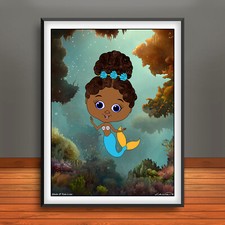
Across much of Zimbabwe, especially among Shona-speaking communities but also in the traditions of several other peoples, rivers and deep pools are believed to be inhabited by powerful water spirits often referred to in English as “mermaids”. This translation can be misleading. Although many modern artistic depictions resemble the familiar half-human, half-fish figure from European folklore, local traditions describe beings whose significance lies less in their appearance than in their spiritual power and relationship with particular places.[Academic Journals]academicjournals.orgZimbabwean mythology, mermaids (njuzu) were viewed as water spirits. The mermaid spirits possessed some. Zimbabweans who then became merm…
The best-known of these beings are called njuzu in Shona traditions. Rather than simply luring people to their deaths, as European mermaids often do, njuzu are usually portrayed as morally complex. They may punish disrespect for sacred waters, but they may also choose certain individuals for spiritual knowledge, healing or divination. Someone believed to have received the favour of a water spirit may later become a respected traditional healer or spirit medium. These stories present water not merely as a physical resource but as a living place inhabited by spiritual intelligence.[Academic Journals]academicjournals.orgZimbabwean mythology, mermaids (njuzu) were viewed as water spirits. The mermaid spirits possessed some. Zimbabweans who then became merm…
Mermaid Translations and Local Meanings
The English word “mermaid” captures only part of what Zimbabwean traditions describe. In oral accounts, water spirits are not simply supernatural creatures but agents connected with ancestors, territorial spirits and the spiritual balance of the landscape.
Traditional stories often describe encounters in which an individual disappears beneath the water for days or even years before returning with remarkable knowledge of medicines, healing or prophecy. Such narratives are understood as signs of a spiritual calling rather than ordinary drowning. While outsiders sometimes interpret these stories literally, within many communities they function as explanations for how exceptional ritual specialists acquire their gifts.[Academic Journals]academicjournals.orgZimbabwean mythology, mermaids (njuzu) were viewed as water spirits. The mermaid spirits possessed some. Zimbabweans who then became merm…
Descriptions vary between regions and storytellers. Some accounts portray extraordinarily beautiful women emerging from deep pools, while others avoid physical descriptions altogether and instead emphasise mysterious voices, dreams or invisible spiritual presence. This variety reflects the oral nature of the traditions rather than a single fixed mythology.[archive.olats.org]archive.olats.orgShe is called njuzu. This woman can be very dangerous. If there is somebody whom she likes, she will…Read more…
Why Sacred Pools Matter More Than Ordinary Water
Zimbabwean folklore consistently distinguishes certain pools, springs and wetlands from ordinary stretches of river. These places are regarded as spiritually inhabited and require special behaviour.
Sacred pools are commonly associated with:[fs.usda.gov]fs.usda.govUS Forest ServiceEcological Implications of Water Spirit Beliefs in Southern…by PS Bernard · Cited by 81 — Significant cave sites, oft…
- places where offerings may be made to spirits;
- locations linked with healing rituals;
- pools connected to rainmaking ceremonies;
- sites where unusual disappearances or miraculous recoveries are remembered;
- landscapes protected through inherited community rules rather than formal law.
Research on traditional environmental management in Zimbabwe shows that communities have long treated particular pools as spiritually protected spaces. Some gained sacred status through association with territorial spirits, while others became linked to respected healers or historical events remembered in oral tradition. Once recognised as sacred, the surrounding environment often became subject to strict customary rules.[Environment & Society Portal]environmentandsociety.orgMukamuriEnvironment & Society PortalMukamuri, BB "Local Environmental Conservation Strategiesby BB MUKAMURI · 1995 · Cited by 71 — Sacredness of…
Rather than separating religion from conservation, these traditions often merged the two. Protecting the spirit’s home also protected the water supply.

Spirit Mediums, Healing and Rainmaking
One of the most distinctive features of Zimbabwean water-spirit traditions is the belief that sacred waters can call people into religious service.
Many traditional healers are believed to have received knowledge from water spirits after dreams, visions or extraordinary encounters associated with rivers or pools. These stories explain how specialist knowledge of herbal medicine, divination and ritual entered human society. The calling is generally viewed as something bestowed rather than chosen voluntarily.[Academic Journals]academicjournals.orgZimbabwean mythology, mermaids (njuzu) were viewed as water spirits. The mermaid spirits possessed some. Zimbabweans who then became merm…
Water spirits also appear within wider systems of rainmaking. Although major rain shrines such as Njelele have their own histories and ritual structures, water, springs and sacred pools are recurring features in ceremonies seeking rainfall, agricultural fertility and communal wellbeing. Water itself becomes both the object of ritual and the medium through which communication with spiritual forces takes place.[Wikipedia]WikipediaNjelele ShrineNjelele Shrine
These traditions reinforce a broader Zimbabwean understanding that environmental health, social harmony and spiritual order are interconnected rather than separate concerns.
Water Taboos and Environmental Protection
Many customs surrounding sacred pools function as practical environmental rules.
Depending on the locality, communities may forbid actions such as:
- washing dirty clothing directly in sacred pools;
- cutting vegetation around important springs;
- fishing or hunting in protected waters;
- making excessive noise near ritual sites;
- entering certain pools without ritual permission;
- polluting water with waste or chemicals.
Breaking these taboos is traditionally believed to anger resident spirits, leading to illness, drowning, drought or other forms of misfortune. Whether interpreted literally or symbolically, such beliefs often discouraged overuse of fragile water sources and preserved wetlands long before modern environmental legislation existed.[scielo.org.za]scielo.org.zaTaboos assist the Ndau in safeguarding water resources for both present and future generations. The study…Read more…
Researchers studying Zimbabwean environmental traditions argue that these customary beliefs helped maintain biodiversity and protect reliable sources of clean water by attaching moral and spiritual consequences to environmental damage.[Academic Journals]academicjournals.orgZimbabwean mythology, mermaids (njuzu) were viewed as water spirits. The mermaid spirits possessed some. Zimbabweans who then became merm…
Regional Traditions Beyond the Shona Heartland
Although njuzu are most commonly discussed in relation to Shona traditions, comparable ideas appear elsewhere in Zimbabwe.
Recent research on Ndau religious traditions shows that water is widely regarded as spiritually protected. Rivers, wetlands and springs are understood as inhabited by spiritual forces, while taboos governing water use continue to influence community attitudes towards conservation and respect for natural resources. Rather than treating water simply as an economic asset, these beliefs frame it as part of a sacred relationship between people, ancestors and the environment.[SciELO]scielo.org.zaTaboos assist the Ndau in safeguarding water resources for both present and future generations. The study…Read more…
These regional variations demonstrate that Zimbabwe’s water-spirit traditions are not a single national legend but a family of related beliefs shaped by local landscapes and histories.
How These Traditions Are Understood Today
Contemporary Zimbabwe contains many different interpretations of water-spirit traditions.
For some believers, sacred pools remain genuinely inhabited by powerful spiritual beings that continue to influence healing, rainfall and human destiny. Traditional healers and spirit mediums may still refer to water spirits when explaining their calling.
Others understand the stories as symbolic expressions of respect for nature, community memory or cultural identity rather than literal descriptions of supernatural beings. Environmental researchers have increasingly highlighted how traditional beliefs surrounding sacred pools encouraged sustainable use of wetlands, rivers and springs, suggesting that indigenous knowledge and modern conservation need not be in conflict.[scielo.org.za]scielo.org.zaTaboos assist the Ndau in safeguarding water resources for both present and future generations. The study…Read more…
Popular culture has also reshaped these traditions. Modern newspapers, social media and tourism sometimes present njuzu simply as mysterious “Zimbabwean mermaids”, emphasising sensational stories of disappearances while overlooking their deeper roles in healing, ritual authority and environmental stewardship. The older oral traditions present a more complex picture in which sacred waters are places of both danger and blessing, demanding respect rather than fear alone.[Academic Journals]academicjournals.orgZimbabwean mythology, mermaids (njuzu) were viewed as water spirits. The mermaid spirits possessed some. Zimbabweans who then became merm…

Amazon book picks
Further Reading
Books and field guides related to What Lives in Zimbabwe's Sacred Waters?. Use these as the next step if you want deeper reading beyond the article.
The Soul of Mbira
Discusses spirit beliefs and ceremonial practices connected to the spiritual world.
Voices from the Rocks
Explores the relationship between landscape, spirituality and community memory.
African Religions and Philosophy
Provides the broadest framework for understanding water spirits, sacred places and ritual life.
African Traditional Religion
Helps explain the religious logic behind sacred waters and spirit mediation.
eBay marketplace picks
Marketplace Samples
Live-tested eBay searches with available results related to this page.
Endnotes
1.
Source: archive.olats.org
Link:https://archive.olats.org/africa/projets/gpEau/genie/contrib/contrib_zilberg.shtml
Source snippet
She is called njuzu. This woman can be very dangerous. If there is somebody whom she likes, she will...Read more...
2.
Source: Wikipedia
Title: Njelele Shrine
Link:https://en.wikipedia.org/wiki/Njelele_Shrine
3.
Source: academicjournals.org
Link:https://academicjournals.org/journal/IJSA/article-full-text-pdf/B5D05C941150
Source snippet
Zimbabwean mythology, mermaids (njuzu) were viewed as water spirits. The mermaid spirits possessed some. Zimbabweans who then became merm...
4.
Source: scielo.org.za
Link:https://scielo.org.za/scielo.php?pid=S0259-94222024000200051&script=sci_arttext
Source snippet
Taboos assist the Ndau in safeguarding water resources for both present and future generations. The study...Read more...
5.
Source: environmentandsociety.org
Title: Mukamuri 1 3
Link:https://www.environmentandsociety.org/sites/default/files/key_docs/Mukamuri-1-3.pdf
Source snippet
Environment & Society PortalMukamuri, BB "Local Environmental Conservation Strategiesby BB MUKAMURI · 1995 · Cited by 71 — Sacredness of...
6.
Source: frontiersin.org
Link:https://www.frontiersin.org/journals/conservation-science/articles/10.3389/fcosc.2026.1790546/full
Source snippet
Spirituality in traditional water knowledge systems as a...by B Utete · 2026 — In Zimbabwe, most water bodies are considered sacred and...
Additional References
7.
Source: fs.usda.gov
Link:https://www.fs.usda.gov/rm/pubs/rmrs_p027/rmrs_p027_148_154.pdf
Source snippet
US Forest ServiceEcological Implications of Water Spirit Beliefs in Southern...by PS Bernard · Cited by 81 — Significant cave sites, oft...
8.
Source: researchgate.net
Link:https://www.researchgate.net/publication/343569626_Experiencing_the_Sacred
Source snippet
(PDF) Experiencing the SacredThe vaShona deem specific bodies of water as sacred, and believe that Amadlozi, through njuzu the water spir...
9.
Source: researchgate.net
Link:https://www.researchgate.net/publication/269679263_Water_spirits_and_the_conservation_of_the_natural_environment_A_case_study_from_Zimbabwe
Source snippet
Water spirits and the conservation of the natural environment23 Jun 2026 — This work advocates that the traditional and modern approaches...
10.
Source: x.com
Link:https://x.com/ZimbabweHistor2/status/2025816908902076900
Source snippet
HISTORICAL BACKGROUND OF "maNJUZU" The...In Shona mythology, Njuzu (the singular form, with "maNjuzu" as plural) are ancient water spiri...
11.
Source: occult-world.com
Link:https://occult-world.com/njuzu/
Source snippet
NjuzuNjuzu, beautiful water spirit, lures (or kidnaps) people she finds interesting to her underwater realm. Initially, she treats them h...
12.
Source: shonasculpture.gallery
Title: Shona Sculpture Gallery Common Themes in Shona Sculpture Njuzu (Water Spirit)
Link:https://www.shonasculpture.gallery/shona-sculpture/sculpture-themes/
Source snippet
Shona beliefs ascribe a spiritual presence to inanimate objects. The spirits that inhabit rivers, lakes and streams are called 'njuzu'.Re...
13.
Source: repository.up.ac.za
Title: up.ac.za The place of water in the Ndau religion of Zimbabwe
Link:https://repository.up.ac.za/items/d533653b-a27c-4a8e-bcab-a25d162310ea
Source snippet
Taboos assist the Ndau in safeguarding water resources for both present and future generations. The study...Read mor...
14.
Source: facebook.com
Link:https://www.facebook.com/justutter/posts/zimbabwe-horror-folklore-creatures-mermaids-the-feared-ones-in-landlocked-zimbab/1383674963758351/
Source snippet
Zimbabwe Horror Folklore Creatures: Mermaids – The...The Nzuzu are a lesser-known but eerie phenomenon deeply rooted in Zimbabwean folk...
15.
Source: facebook.com
Title: Njuzu/Mermaids 🧜♀️ Myth or Mystery?
Link:https://www.facebook.com/wasudigital/posts/njuzumermaids-%EF%B8%8F-myth-or-mysteryevery-time-i-write-about-our-beautiful-waterfalls/857086290167348/
Source snippet
Every time I write...The Nzuzu are a lesser-known but eerie phenomenon deeply rooted in Zimbabwean folklore. These beings are believed t...
16.
Source: academia.edu
Link:https://www.academia.edu/129543629/Water_Spirits_and_Sacred_Rituals_The_Role_of_African_Traditional_Juju_in_Protecting_Blue_Ecosystems_in_Cross_River_State
Source snippet
(PDF) Water Spirits and Sacred Rituals: The Role of African...In Zimbabwe, the Shona people believe in the Njuzu spirit, a mermaid-like...
Topic Tree