Within Slovak Folklore
How Do Slovak Seasons Become Folk Rituals?
Slovakia's calendar customs turn spring, Easter, winter and Christmas into a living cycle of protection, renewal and village drama.
On this page
- Destroying Morena and welcoming spring
- Easter water and willow rites
- Lucia, Christmas and winter protection
Page outline Jump by section
Introduction
Slovakia’s ritual year is one of the clearest ways to see how folklore survives in everyday life. Rather than existing only in old stories, many traditions are tied to specific moments in the calendar, when villages, families and communities symbolically confront winter, welcome spring, seek health and fertility, or protect themselves from unseen dangers. The cycle stretches from the dramatic destruction of Morena, the personification of winter and death, through Easter customs involving water and willow branches, to the mysterious winter season marked by Lucia’s Day and Christmas rituals. Together these customs reveal a recurring theme in Slovak folk culture: the belief that seasonal transitions are powerful moments requiring ritual action, protection and communal participation.[Slovakia Travel]slovakia.travelBurning of Morena (two weeks before Easter)Morena symbolised the winter and so when people wanted the spring to come, they had to kill he…
Destroying Morena and Welcoming Spring
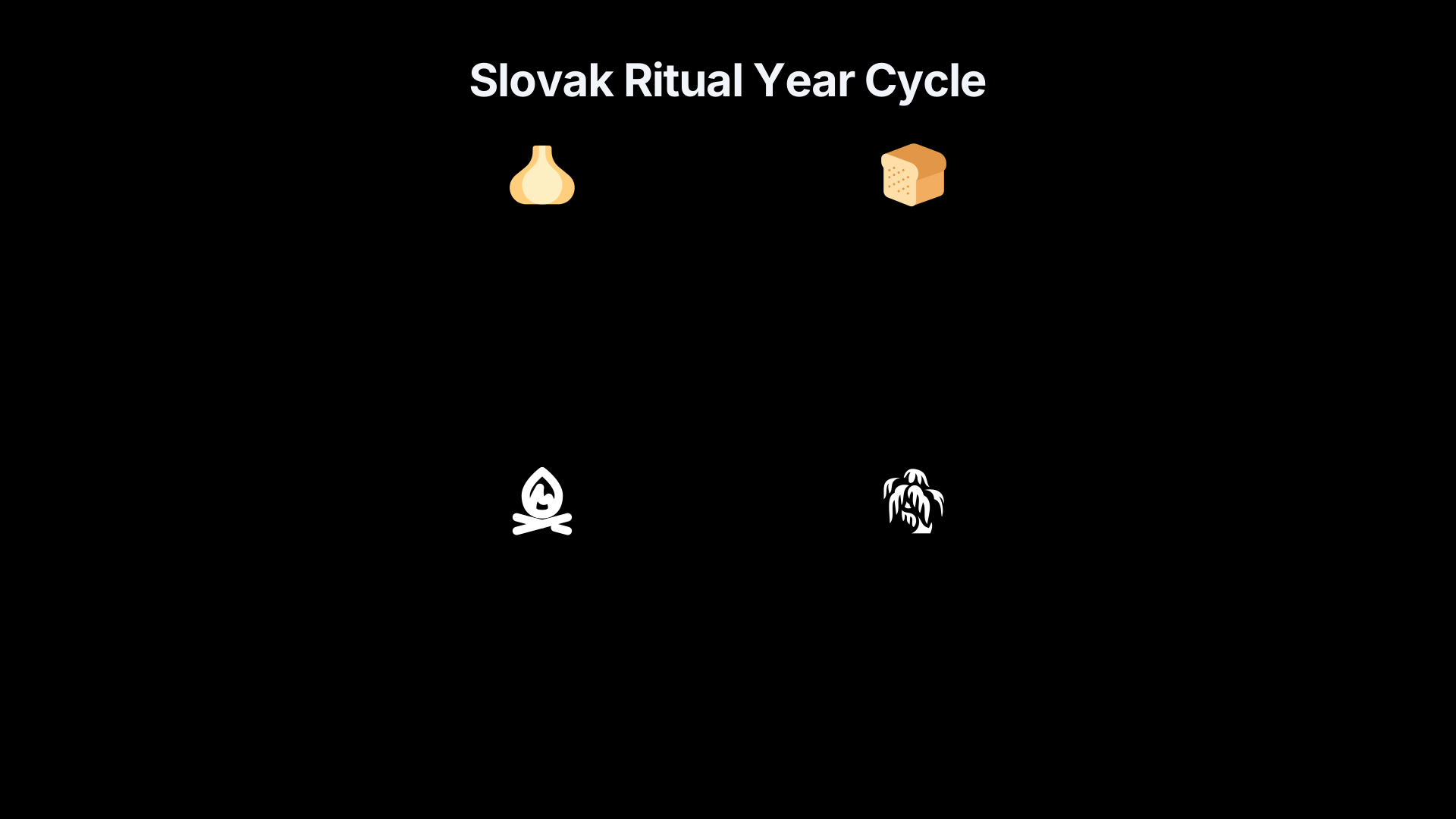
Among Slovakia’s most recognisable folk customs is the ritual known as the burning or drowning of Morena. Traditionally performed in the weeks before Easter, it centres on a straw effigy dressed as a woman. In folk belief, Morena represented winter, death and the hardships of the cold season. To ensure the arrival of spring, the community had to symbolically remove her.[Slovakia Travel]slovakia.travelBurning of Morena (two weeks before Easter)Morena symbolised the winter and so when people wanted the spring to come, they had to kill he…
The ritual was often led by young girls, who carried the effigy through the village while singing. At the edge of a stream or river, Morena was stripped, burned, drowned, or subjected to both actions before being swept away by the current. The destruction of the figure represented more than changing weather. It marked the defeat of death and barrenness and the return of growth, warmth and agricultural fertility.[slovakia.travel]slovakia.travelBurning of Morena (two weeks before Easter)Morena symbolised the winter and so when people wanted the spring to come, they had to kill he…
What makes the Slovak version especially memorable is the sense of public drama. The ritual transformed an abstract seasonal change into a visible event. Winter was not merely ending; it was being expelled. In many places, the departure of Morena was followed by ceremonies welcoming spring greenery into the village, reinforcing the contrast between death and renewal.[Slovakia Travel]slovakia.travelBurning of Morena (two weeks before Easter)Morena symbolised the winter and so when people wanted the spring to come, they had to kill he…
Although modern Slovaks no longer treat Morena as a literal supernatural being, the custom remains widely performed in schools, museums, folk festivals and local celebrations. It survives because it provides a powerful visual expression of seasonal rebirth and continuity with the past.[Wikipedia]WikipediaMorana (goddessMorana (goddess
Why Water and Willow Matter at Easter
If the Morena ritual celebrates the arrival of spring, Easter customs focus on transferring the season’s life-giving energy to people. Traditional Slovak Easter practices are built around two recurring symbols: water and fresh willow branches. Ethnologists studying Slovak customs have noted that both were associated with health, vitality, fertility and protection.[Comenius University]uniba.skComenius UniversityAn Ethnologist from Comenius University Discovers Why…26 Mar 2018 — The most significant aspects of Easter customs…
The best-known custom takes place on Easter Monday. Boys and young men visit girls and women carrying water, which may be sprinkled lightly or, in older rural forms, poured in generous quantities. In some regions women could even be taken to a stream. The act was traditionally understood as bringing health, youth and beauty for the coming year.[slovakia.travel]slovakia.travelTraditional Easter in SlovakiaIn certain areas, girls are symbolically whipped with canes made of willow branches, in a custom known as "…
Alongside water came willow branches woven into decorative switches. These were used in a symbolic striking ritual that was not intended as punishment but as a transfer of spring vitality. Willow trees were especially significant because they were among the first plants to show signs of life after winter. In Slovak folk belief, their freshness and resilience could be passed to the recipient through ritual contact.[uniba.sk]uniba.skComenius UniversityAn Ethnologist from Comenius University Discovers Why…26 Mar 2018 — The most significant aspects of Easter customs…
Several layers of meaning overlap in these Easter practices:
- Health and renewal: water and greenery were believed to strengthen the body and ensure well-being.
- Fertility: many customs originated in agricultural communities concerned with growth and reproduction.
- Courtship and social bonds: visits created opportunities for interaction between young men and women.
- Community identity: participation reinforced membership in the village and continuity with earlier generations.[uniba.sk]uniba.skComenius UniversityAn Ethnologist from Comenius University Discovers Why…26 Mar 2018 — The most significant aspects of Easter customs…
Today these traditions remain among the most discussed aspects of Slovak folklore. Some communities maintain them enthusiastically, while others adapt them to modern attitudes about gender and personal choice. Even where the practices have become more symbolic, they remain a vivid reminder of how folk ritual once linked human health to the rhythms of nature.[The Guardian]theguardian.comThe Guardian Easter Monday tradition of whipping girls into health?No…6 Apr 2015 — Getting drenched in ice cold water in Slovakia is meant to symbolise youth and make women healthy for spring but this…
Lucia and the Dangerous Days of Winter
At the opposite end of the ritual year lies Lucia’s Day on 13 December, one of the most mysterious dates in Slovak folk tradition. While the historical Saint Lucy is a Christian martyr, Slovak folk belief transformed Lucia into a figure associated with witchcraft, supernatural danger and protective magic. Official Slovak heritage sources describe the day as one of the most important “witches’ days” before Christmas.[Slovakia Travel]slovakia.travelLucia (13th December)Lucia´s Day is one the most magic customs and it ranks among the “witches´ days” preceding Christmas. Lucy - in Slov…
In traditional belief, winter darkness created opportunities for harmful forces to act. Lucia’s Day therefore became a time when households took special precautions. Garlic, crosses, prayers and protective markings were used to guard homes, animals and families from witches and other dangers believed to be especially active during the season.[Slovakia Travel]slovakia.travelLucia (13th December)Lucia´s Day is one the most magic customs and it ranks among the “witches´ days” preceding Christmas. Lucy - in Slov…
One of the most distinctive customs involved people dressed as Lucia figures. Wearing white clothing and often concealing their faces, they moved through villages carrying out ritual visits. To modern observers these processions can appear almost ghostlike, but their purpose was protective rather than threatening. The white-clad figures marked the boundary between ordinary life and the supernatural dangers associated with the darkest period of the year.[Radio Prague International]english.radio.czPrague International Slovakia's witches come out to play on StLucy's DayThe day of St Lucy is famous for so called Lucia walks in Slovak folk tradition. Katarina Nadaska: "Men and women used to dress…
Lucia’s Day was also famous for fortune-telling. Folk traditions connected the date with predictions about marriage, livestock, harvests and the coming year. Young women used a variety of rituals intended to reveal future husbands, while households watched for signs thought to indicate prosperity or misfortune. Such practices reflected a broader belief that certain moments in the calendar opened a temporary window into hidden knowledge.[Fellowship & Fairydust]fellowdustmag.comFellowship & Fairydust Slovak Winter Traditions and HolidaysIn some regions, families made a loaf of bread for each member of the family. Then…Read more…
Christmas as the Completion of the Cycle
The customs surrounding Lucia did not stand alone. They formed part of a wider sequence leading into Christmas, a period filled with protective rites, household ceremonies and attempts to secure good fortune for the coming year. In traditional Slovak villages, the weeks before Christmas were often viewed as a liminal period when normal boundaries between the human and supernatural worlds became less secure.[Slovakia Travel]slovakia.travelLucia (13th December)Lucia´s Day is one the most magic customs and it ranks among the “witches´ days” preceding Christmas. Lucy - in Slov…
Many winter customs therefore combined Christian celebration with older folk concerns about protection, luck and prosperity. Ritual foods, fortune-telling practices and household blessings all reflected the same underlying desire seen elsewhere in the ritual year: to influence the uncertain future through symbolic action.[Fellowship & Fairydust]fellowdustmag.comFellowship & Fairydust Slovak Winter Traditions and HolidaysIn some regions, families made a loaf of bread for each member of the family. Then…Read more…
Seen as a whole, the journey from Morena to Lucia forms a coherent cycle. Spring begins with the destruction of winter, Easter renews human vitality through water and greenery, and winter closes with rituals guarding against darkness and misfortune. These customs differ in detail, but they share a common logic. Seasonal change is treated not as a passive event but as something that communities must actively manage through ceremony, symbolism and collective participation.[slovakia.travel]slovakia.travelBurning of Morena (two weeks before Easter)Morena symbolised the winter and so when people wanted the spring to come, they had to kill he…
How Ritual Year survived in retelling
The survival of these customs helps explain why Slovak folklore remains unusually visible in public life. Morena processions continue in schools and cultural events, Easter water and willow rituals are still widely recognised, and Lucia remains one of the most evocative figures in Slovak seasonal folklore. While few participants today literally believe every older explanation, the customs preserve a distinctive way of understanding the year through cycles of death and renewal, danger and protection, darkness and light.[Slovakia Travel]slovakia.travelBurning of Morena (two weeks before Easter)Morena symbolised the winter and so when people wanted the spring to come, they had to kill he…
For modern audiences, these traditions offer more than colourful performances. They reveal how generations of Slovaks interpreted the changing seasons, responded to uncertainty and turned the calendar itself into a sequence of memorable folk dramas. From the burning of Morena beside a spring stream to the white-clad Lucia figures walking through winter villages, the ritual year remains one of the most vivid expressions of Slovakia’s traditional culture.[slovakia.travel]slovakia.travelBurning of Morena (two weeks before Easter)Morena symbolised the winter and so when people wanted the spring to come, they had to kill he…
eBay marketplace picks
Marketplace Samples
Live-tested eBay searches with available results related to this page.


Endnotes
1.
Source: slovakia.travel
Link:https://slovakia.travel/en/burning-of-morena-two-weeks-before-easter
Source snippet
Burning of Morena (two weeks before Easter)Morena symbolised the winter and so when people wanted the spring to come, they had to kill he...
2.
Source: slovakia.travel
Link:https://slovakia.travel/en/lucia-13th-december
Source snippet
Lucia (13th December)Lucia´s Day is one the most magic customs and it ranks among the “witches´ days” preceding Christmas. Lucy - in Slov...
3.
Source: Wikipedia
Title: Morana (goddess)
Link:https://en.wikipedia.org/wiki/Morana_%28goddess%29
4.
Source: slovakia.travel
Link:https://slovakia.travel/en/easter-whipping-or-bathing-march-or-april
Source snippet
Traditional Easter in SlovakiaIn certain areas, girls are symbolically whipped with canes made of willow branches, in a custom known as "...
5.
Source: Wikipedia
Title: Easter whip
Link:https://en.wikipedia.org/wiki/Easter_whip
6.
Source: Wikipedia
Title: Easter traditions
Link:https://en.wikipedia.org/wiki/Easter_traditions
7.
Source: english.radio.cz
Title: Prague International Slovakia’s witches come out to play on St
Link:https://english.radio.cz/slovakias-witches-come-out-play-st-lucys-day-8093750
Source snippet
Lucy's DayThe day of St Lucy is famous for so called Lucia walks in Slovak folk tradition. Katarina Nadaska: "Men and women used to dress...
8.
Source: Wikipedia
Title: Saint Lucy’s Day
Link:https://en.wikipedia.org/wiki/Saint_Lucy%27s_Day
Source snippet
Saint Lucy's DayThe celebration of Saint Lucy's Day is said to help one live the winter days with enough light. A special devotion to...
9.
Source: english.radio.cz
Title: burning morana 8597859
Link:https://english.radio.cz/burning-morana-8597859
Source snippet
the Morana24 Mar 2008 — “It is an old symbol of the death of winter, because Morana was a Slavonic goddess of winter in medieval times. T...
10.
Source: youtube.com
Title: Zabíjačka: Where Pork Meets Tradition
Link:https://www.youtube.com/watch?v=zLnNo3lZlx0
Source snippet
SLOVAK Folklore...
11.
Source: youtube.com
Title: SLOVAK Folklore!
Link:https://www.youtube.com/watch?v=bogY6AurK80
12.
Source: uniba.sk
Link:https://uniba.sk/detail-aktuality/back_to_page/aktuality-1/article/an-ethnologist-from-comenius-university-discovers-why-slavs-used-to-visit-graves-at-easter/
Source snippet
Comenius UniversityAn Ethnologist from Comenius University Discovers Why...26 Mar 2018 — The most significant aspects of Easter customs...
13.
Source: theguardian.com
Title: The Guardian Easter Monday tradition of whipping girls into health?
Link:https://www.theguardian.com/world/2015/apr/06/easter-monday-tradition-whipping-slovakia-girls-health
Source snippet
No...6 Apr 2015 — Getting drenched in ice cold water in Slovakia is meant to symbolise youth and make women healthy for spring but this...
14.
Source: fellowdustmag.com
Title: Fellowship & Fairydust Slovak Winter Traditions and Holidays
Link:https://fellowdustmag.com/2025/12/01/slovak-winter-traditions-and-holidays/
Source snippet
In some regions, families made a loaf of bread for each member of the family. Then...Read more...
Additional References
15.
Source: archaeotravel.eu
Link:https://archaeotravel.eu/tag/ethnography/
Source snippet
EthnographyThe first important ritual of the Jare Gody was to burn or drown Morena (Marzanna in Polish), an effigy which has been a symbo...
16.
Source: magicbohemia.com
Link:https://magicbohemia.com/morana-the-czech-goddess-of-winter-and-death/
Source snippet
Morana, the Czech goddess of winter and deathIn some rural areas, an effigy of Morana is drowned in the local river or stream on either t...
17.
Source: facebook.com
Link:https://www.facebook.com/globalslovakia/posts/-st-lucia-and-the-goose-feather-magic-rituals-and-ancient-echoesin-slovak-tradit/1163136982695467/
Source snippet
Facebook✨ St Lucia and the Goose Feather — Magic, Rituals...On this day, you might see processions of girls dressed in white robes, carr...
18.
Source: expats.cz
Title: drowning morana the slavic goddess of death is driven away before easter
Link:https://www.expats.cz/czech-news/article/drowning-morana-the-slavic-goddess-of-death-is-driven-away-before-easter
Source snippet
Drowning Morana: the Slavic goddess of death is driven...18 Mar 2021 — Two weeks before Easter the Slavic goddess of death, Morana, is e...
19.
Source: facebook.com
Link:https://www.facebook.com/groups/467372920894792/posts/1724027885229283/
Source snippet
thuania, is drowning (or burning, or both) a straw effigy dressed...Read more...
20.
Source: superstitionsmap.com
Link:https://superstitionsmap.com/slovak-superstitions/
Source snippet
Slovak Superstitions (World #147, ≈85 total) - SuperstitionsMap27 Jun 2026 — Lucia, observed on December 13, is one of Sl...
21.
Source: facebook.com
Link:https://www.facebook.com/groups/382719475884892/posts/2118579925632163/
Source snippet
ext day the men.. Can any one enlighten me and detailing...
22.
Source: wheelandcross.substack.com
Title: spring equinox the eastern european
Link:https://wheelandcross.substack.com/p/spring-equinox-the-eastern-european
Source snippet
Equinox: the Eastern European tradition of drowning...The Eastern European tradition of killing Morana either by drowning or burning is...
23.
Source: vinepair.com
Title: slovakia easter water vodka
Link:https://vinepair.com/articles/slovakia-easter-water-vodka/
Source snippet
The Ancient Easter Ritual That Starts With Ice Water and...19 Apr 2019 — In keeping with Slovakian folk tradition, men and boys douse wo...
24.
Source: facebook.com
Link:https://www.facebook.com/pureslovakia/posts/-on-easter-monday-in-slovakia-theres-a-tradition-that-might-surprise-you-men-vis/1422722913230972/
Source snippet
🇸🇰 On Easter Monday in Slovakia, there's a tradition that...A long lived folk tradition in Slovakia is young men 'kupac' dousing young l...
Topic Tree