Within Russian Folklore
Who Watches the Russian Home?
Russian household spirits show how folklore made domestic work, family order and ordinary rooms feel morally alive.
On this page
- The domovoy and the moral household
- Barns, bathhouses and courtyard rules
- Belief, half belief and modern anecdotes
Page outline Jump by section
Introduction
Russian folklore is often associated with forests, witches and wandering heroes, but many of its most persistent supernatural traditions were centred on the home itself. For generations, ordinary spaces such as the stove corner, the barn, the courtyard and the bathhouse were believed to have their own unseen inhabitants. These spirits helped explain good fortune, accidents, illness, family harmony and domestic disorder. Rather than existing in distant mythical realms, they were imagined as neighbours sharing the household. Folklore turned everyday life into a relationship between people and invisible guardians whose favour had to be maintained through respect, cleanliness, good behaviour and observance of local custom.[Wikipedia]WikipediaOpen source on wikipedia.org.

The result was a world in which practical rules and supernatural rules often overlapped. Looking after animals, keeping a tidy home, behaving respectfully and observing rituals when moving house were not merely sensible habits; they were also ways of living alongside powerful domestic spirits. Many Russians today treat such stories with humour or half-belief, yet the figures themselves remain among the most recognisable beings in Russian folk culture.[UBC Library]ojs.library.ubc.caContemporary belief in the Slavic house spirit, the Domovoy (or Domovoi), among. Russians stems from a long history of Slavic pagan belie…
Who Watches the Russian Home?
The domovoy and the moral household
At the centre of Russian household folklore stands the domovoy, the spirit of the home. Traditional accounts describe him as a small elderly man, often hairy, sometimes resembling a deceased family member or ancestor. In many regions he was understood less as a monster than as a guardian whose wellbeing was tied to that of the family itself. Scholars of Russian folk belief have long noted the close connection between the domovoy and ancestor traditions, suggesting that he embodied the continuing presence of earlier generations within the household.[wikipedia.org]WikipediaOpen source on wikipedia.org.
The domovoy’s role was protective but conditional. He watched over children, livestock and property, warned of approaching misfortune and encouraged prosperity. Yet he was also a moral judge. A respectful, orderly family might receive his help, while a household marked by quarrels, foul language, neglect or disorder risked his anger. Stories tell of unexplained noises, broken objects, restless animals or other disturbances when the spirit was offended. In some traditions the worst outcome was not punishment but abandonment: the domovoy simply left, taking the home’s luck and protection with him.[wikipedia.org]WikipediaOpen source on wikipedia.org.
This belief effectively turned housekeeping into a moral activity. A clean, harmonious home was not only socially desirable but spiritually correct. Folklorists have argued that such stories reinforced communal values important in village life, including cooperation, modesty, respect for elders and responsibility toward family members.[UBC Library]ojs.library.ubc.caContemporary belief in the Slavic house spirit, the Domovoy (or Domovoi), among. Russians stems from a long history of Slavic pagan belie…
The domovoy was also treated almost like a family member. Food offerings might be left overnight, especially bread or portions of an evening meal. When families moved, some traditions held that the household spirit should be formally invited to accompany them to the new dwelling. Such customs reveal how seriously the relationship could be taken, even when expressed through small domestic rituals.[Wikipedia]WikipediaOpen source on wikipedia.org.
Barns, Bathhouses and Courtyard Rules
The Russian supernatural household extended beyond the walls of the main house. Different spaces carried different risks, and folklore often assigned a spirit to each.
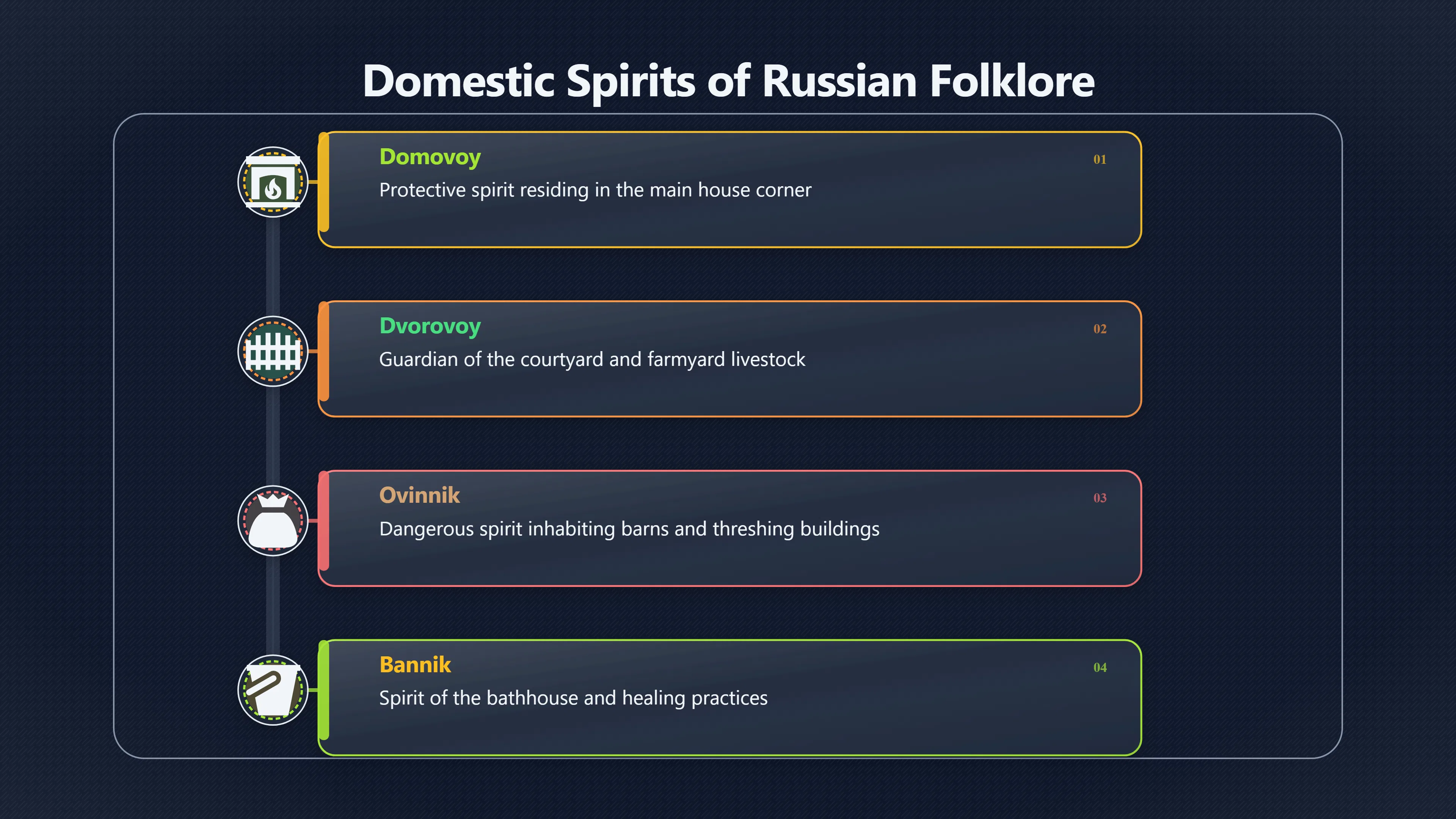
The courtyard was associated with a being known as the dvorovoy. Less friendly than the domovoy, this spirit watched over farmyards, stables and outbuildings. Rural traditions frequently linked it to the welfare of livestock. Unexplained illness among animals or problems in the stable could be attributed to its displeasure.[Wikipedia]WikipediaOpen source on wikipedia.org.
Barns and threshing buildings were associated with the ovinnik, a far more dangerous figure. Grain represented a family’s survival and wealth, while barns were highly vulnerable to fire. Folklore reflected these anxieties by imagining a spirit capable of destroying stored harvests if offended. Offerings and rituals directed toward the ovinnik can be understood as symbolic attempts to manage very real fears about agricultural disaster.[Wikipedia]WikipediaOpen source on wikipedia.org.
Perhaps the most striking domestic spirit was the bannik, who inhabited the bathhouse. The Russian bathhouse occupied a special place in traditional culture. It was used not only for washing but also for childbirth, healing practices and divination. Because it stood between ordinary domestic life and something more mysterious, it was regarded as a spiritually charged place. The bannik was therefore treated with caution. Folklore warned people not to intrude during the spirit’s allotted bathing times and described punishments ranging from scalding water to physical attacks for those who ignored the rules. Offerings of soap, water or branches might be left behind after bathing as a sign of respect.[Wikipedia]WikipediaOpen source on wikipedia.org.
What looks at first like a collection of supernatural beings also functions as a map of traditional village concerns:
- The house required harmony and proper conduct.
- The courtyard required care of animals and property.
- The barn required vigilance against fire and crop loss.
- The bathhouse required caution in a powerful and potentially dangerous space.[wikipedia.org]WikipediaOpen source on wikipedia.org.
These spirits helped translate practical dangers into memorable stories and customs.
Everyday Rules for Living with the Unseen
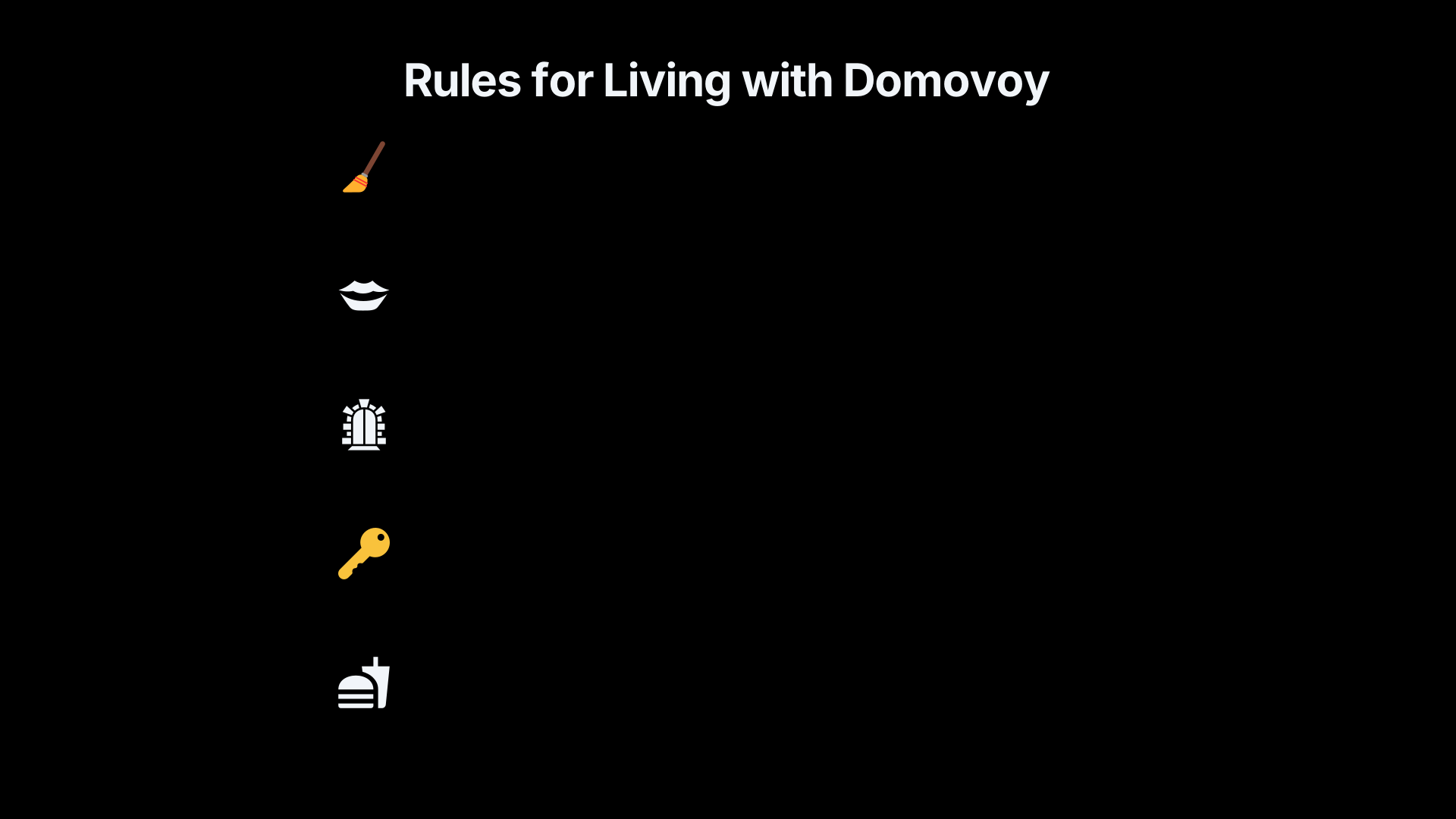
Many Russian household beliefs took the form of simple rules rather than dramatic legends. Folklore often worked through everyday habits.
Common themes included:
- Keep the house clean and orderly. Disorder could offend the household spirit.[UBC Library]ojs.library.ubc.caContemporary belief in the Slavic house spirit, the Domovoy (or Domovoi), among. Russians stems from a long history of Slavic pagan belie…
- Avoid excessive quarrelling and bad language. Moral behaviour was thought to affect supernatural protection.[Reddit]reddit.comAbout the Domovoj: The Slavic Household Spirit and…He protects the house from thieves and evil spirits. A master who knows how t…
- Respect thresholds and entrances. These were often regarded as spiritually sensitive parts of a dwelling.[Wikipedia]WikipediaOpen source on wikipedia.org.
- Acknowledge the spirit when moving house. Traditions frequently included inviting the old guardian to accompany the family.[Wikipedia]WikipediaOpen source on wikipedia.org.
- Leave offerings or expressions of thanks. Small gifts reinforced the reciprocal relationship between people and spirit.[Wikipedia]WikipediaOpen source on wikipedia.org.
Such customs blurred the line between religion, etiquette and superstition. They were rarely formal doctrines. Instead, they formed a body of practical knowledge passed through families and communities.
Belief, Half-Belief and Modern Anecdotes
One reason household spirits remain culturally important is that they survived longer than many other folk beings. Forest spirits and ancient gods belonged to distant places, but the domovoy belonged to one’s own home. Ethnographic research has found that belief in household spirits persisted in parts of rural Russia well into the modern era, often alongside Orthodox Christianity rather than in direct opposition to it.[UBC Library]ojs.library.ubc.caContemporary belief in the Slavic house spirit, the Domovoy (or Domovoi), among. Russians stems from a long history of Slavic pagan belie…
Today many Russians encounter the domovoy through children’s books, films, television, internet humour and popular retellings. Yet modern anecdotes still circulate. Missing objects, unexplained footsteps, strange sounds at night or the feeling that a house has its own personality are sometimes jokingly attributed to the household spirit. In these stories, people often occupy a middle ground between belief and scepticism. They may not literally expect a hairy guardian to live behind the stove, but they enjoy treating old folklore as a meaningful way of talking about luck, memory and attachment to place.[Reddit]reddit.comRussian folklore questions: r/AskARussianI'm looking for a little info on the Домовой. I can find out some basics about the histor…
This half-believing attitude may be the domovoy’s greatest survival strategy. Unlike grand mythological figures, household spirits remain connected to experiences that many people still recognise: the sense that a family home develops its own character, that old houses seem to remember former occupants, and that domestic life works best when people care for the spaces they share. In Russian folklore, those feelings were given a face, a personality and a set of rules. The invisible guardian of the house became a way of imagining the moral life of the home itself.[UBC Library]ojs.library.ubc.caContemporary belief in the Slavic house spirit, the Domovoy (or Domovoi), among. Russians stems from a long history of Slavic pagan belie…
Amazon book picks
Further Reading
Books and field guides related to Who Watches the Russian Home?. Use these as the next step if you want deeper reading beyond the article.
The Bathhouse at Midnight
Explains domestic spirits, rituals and folk supernaturalism.
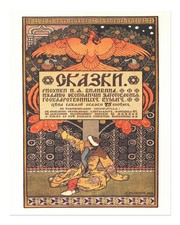
Russian Fairy Tales (Illustrated by Ivan Bilibin)
Provides broader Russian folk context surrounding spirit beliefs.
eBay marketplace picks
Marketplace Samples
Live-tested eBay searches with available results related to this page.
Endnotes
1.
Source: Wikipedia
Link:https://en.wikipedia.org/wiki/Domovoy
2.
Source: ojs.library.ubc.ca
Link:https://ojs.library.ubc.ca/index.php/EJAS/article/download/199552/193038/255634
Source snippet
Contemporary belief in the Slavic house spirit, the Domovoy (or Domovoi), among. Russians stems from a long history of Slavic pagan belie...
3.
Source: reddit.com
Link:https://www.reddit.com/r/FolkloreAndMythology/comments/1kg2d5w/about_the_domovoj_the_slavic_household_spirit_and/
Source snippet
About the Domovoj: The Slavic Household Spirit and...He protects the house from thieves and evil spirits. A master who knows how t...
4.
Source: Wikipedia
Link:https://es.wikipedia.org/wiki/Domovik
5.
Source: Wikipedia
Link:https://en.wikipedia.org/wiki/Dvorovoy
6.
Source: Wikipedia
Link:https://en.wikipedia.org/wiki/Ovinnik
7.
Source: Wikipedia
Link:https://en.wikipedia.org/wiki/Bannik
8.
Source: reddit.com
Link:https://www.reddit.com/r/AskARussian/comments/17c3pzl/russian_folklore_questions/
Source snippet
Russian folklore questions: r/AskARussianI'm looking for a little info on the Домовой. I can find out some basics about the histor...
9.
Source: youtube.com
Link:https://www.youtube.com/watch?v=JZFDH5bTMZ4
Source snippet
Brendan Noble...
10.
Source: youtube.com
Title: The Domowik/Domovoy in Slavic Mythology
Link:https://www.youtube.com/watch?v=xW443WGjikg
Source snippet
Domovoy - Mythical Creatures Bestiary...
11.
Source: youtube.com
Link:https://www.youtube.com/watch?v=PvUvwe7NqQ8
12.
Source: slaviclore.com
Title: Slavic Lore Domovoy
Link:https://slaviclore.com/domovoy-guardian-of-the-home
Source snippet
Domovoy - the guardian spirit of the home and the family16 Apr 2021 — The Slavic home is the domain of a spirit called the Domovoy, a sma...
13.
Source: monster.fandom.com
Link:https://monster.fandom.com/wiki/Domovoy
Source snippet
Monster Wiki - FandomIt literally means the spirit of the house in Slavic folklore. In Ukrainian tradition, the Domovoy is considered a r...
14.
Source: adf.org
Link:https://www.adf.org/pt-br/articles/gods-and-spirits/slavic/domovoy.html
Source snippet
Domovoy | ADF: Ár nDraíocht FéinA Domovoy is a household spirit. According to the Encyclopedia of Russian and Slavic Myth and Legend, "At...
Additional References
15.
Source: facebook.com
Link:https://www.facebook.com/groups/281886105961506/posts/2174848859998545/
Source snippet
Domovoy spirit in Slavic traditionIn Russian folklore, the Domovoi is a household spirit who protects the home and its inhabitants, but i...
16.
Source: facebook.com
Link:https://www.facebook.com/groups/281886105961506/posts/1649236385893131/
Source snippet
ogenitor of the family. The term “Domovik” or “Domovoy”...Read more...
17.
Source: storycrossroads.org
Title: k kikimora and domovoi slavic folklore
Link:https://storycrossroads.org/2025/04/12/k-kikimora-and-domovoi-slavic-folklore/
Source snippet
K = Kikimora and Domovoi (Slavic Folklore)Apr 12, 2025 — The Domovoi—a household guardian—keeps the peace, tends to the family's welfare...
18.
Source: ronelthemythmaker.com
Link:https://www.ronelthemythmaker.com/domovoi-the-guardians-of-the-house-atozchallenge-folklore/
Source snippet
Domovoi: The Guardians of the House #AtoZChallenge...10 Apr 2020 — The domovoi are household spirits from Slavic folklore generally depi...
19.
Source: youtube.com
Link:https://www.youtube.com/watch?v=63pbaxt9mjg
Source snippet
very Russian household has their own Domovoi, including Cotey. If in...
20.
Source: ztevetevans.wordpress.com
Title: russian folklore the domovoi a spirit of hearth and home
Link:https://ztevetevans.wordpress.com/2020/08/05/russian-folklore-the-domovoi-a-spirit-of-hearth-and-home/
Source snippet
Domovoi are usually small bearded males who sometimes have bodies covered in white fur, or...Read more...
21.
Source: youtube.com
Title: Slavic spirit of the house: where is the Domovoy hiding?
Link:https://www.youtube.com/watch?v=NHShJ9F3l60
Source snippet
The Secret of the Domovoy Russian House Spirit | Slow Russian Story...
22.
Source: works.swarthmore.edu
Link:https://works.swarthmore.edu/cgi/viewcontent.cgi?article=1144&context=fac-russian
Source snippet
Russian villagers believed in domestic and field spirits until at least the nineteenth century. Spirits were named for the places they in...
23.
Source: youtube.com
Title: The Secret of the Domovoy Russian House Spirit | Slow Russian Story
Link:https://www.youtube.com/watch?v=_x58lqphRLo
Source snippet
The Domowik/Domovoy in Slavic Mythology...
Topic Tree