Within Korean Folklore
Are Dokkaebi Really Korean Goblins?
Dokkaebi are not simply Korean goblins, but teasing, powerful spirits that can reward, punish, enchant and confuse humans.
On this page
- What dokkaebi are in folk belief
- Trickster tales, treasure and goblin fire
- How television changed their image
Page outline Jump by section
Introduction
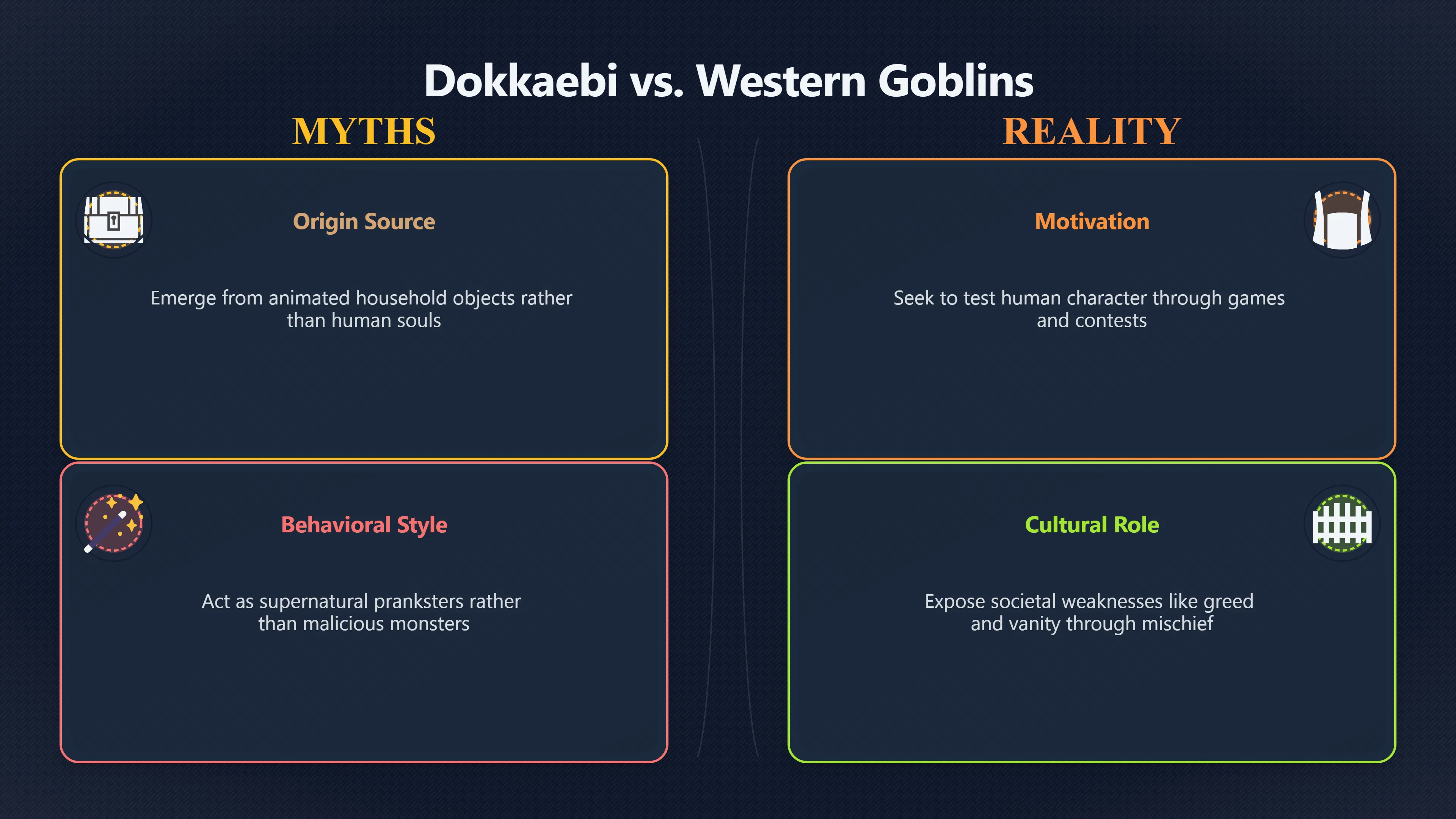
Dokkaebi are often introduced to international audiences as “Korean goblins”, but that translation creates a problem. In traditional Korean folklore, dokkaebi are not simply monsters, goblins, demons or fairy-tale creatures. They are powerful trickster beings who blur the line between luck and danger, generosity and mischief. They may challenge travellers to contests, shower a worthy person with treasure, embarrass the arrogant, or fill a night landscape with mysterious lights. In many stories they are less interested in evil than in testing human character. Their role is closer to that of a supernatural prankster than a conventional monster.[Wikipedia]WikipediaOpen source on wikipedia.org.
This difference matters because dokkaebi have become one of the most recognisable figures in South Korean folklore and modern popular culture. Yet the image many people now know—from television dramas and fantasy fiction—often differs sharply from the older folk traditions. Understanding dokkaebi means understanding both the traditional trickster spirit and the modern reinvention.
Are Dokkaebi Really Korean Goblins?
The English word “goblin” became attached to dokkaebi largely because translators needed a familiar term. It is useful as a rough introduction, but it can also be misleading. European goblins are often imagined as malicious underground creatures, while traditional dokkaebi occupy a different place in Korean storytelling. They are supernatural beings associated with enchantment, luck, contests, transformation and practical jokes.[Wikipedia]WikipediaOpen source on wikipedia.org.
One of the most distinctive features of dokkaebi lore is that they are generally not the spirits of dead humans. Folklore sources describe them as beings that emerge through the spiritual animation of objects, especially old household items or objects that have absorbed unusual spiritual energy. This separates them from ghosts and ancestral spirits, which form a different category in Korean belief.[Wikipedia]WikipediaOpen source on wikipedia.org.
The oldest surviving written references are linked to medieval Korean sources that preserve much older traditions. By the Joseon period, dokkaebi appeared widely in folk narratives collected and transmitted across different regions. Their stories reveal remarkable variety: some are frightening, some comic, and many are both at once.[Wikipedia]WikipediaOpen source on wikipedia.org.
The “goblin problem” is therefore not that the translation is completely wrong. It is that the translation encourages readers to imagine the wrong kind of creature. Dokkaebi belong to a specifically Korean tradition of trickster spirits whose behaviour cannot be neatly fitted into Western fantasy categories.
What Dokkaebi Are in Folk Belief
Traditional stories rarely portray dokkaebi as purely good or purely evil. Instead, they reward and punish according to circumstance.
Many tales describe them as fascinated by humans. They enjoy conversation, drinking, games and wrestling matches. They frequently challenge people to contests, particularly tests of strength or cleverness. Victory often depends not on brute force but on wit. A clever farmer or traveller may outsmart a supernatural opponent and gain wealth, while a greedy or foolish person may end up humiliated.[Wikipedia]WikipediaOpen source on wikipedia.org.
This moral ambiguity helps explain their popularity. Dokkaebi represent a world where intelligence, adaptability and humour can matter more than social status. Unlike many monsters, they are not simply obstacles to be defeated. They are participants in a game whose rules are not always obvious.
In some traditions they can bring prosperity, abundant harvests or good fortune. In others they cause confusion, illness or bad luck. Communities developed both ways to attract their favour and ways to drive them away, reflecting the belief that supernatural power could be beneficial or disruptive depending on how it was encountered.[Wikipedia]WikipediaOpen source on wikipedia.org.
Trickster Tales, Treasure and Goblin Fire
The most memorable dokkaebi stories revolve around trickery, magical objects and strange encounters at night.
A recurring theme is supernatural wealth. Dokkaebi often possess enchanted treasures, especially a magical club capable of producing desired objects or riches. The club appears repeatedly in folklore as a symbol of abundance that can transform poverty into prosperity. Yet the gift is rarely straightforward. Trickster stories often warn that wealth gained without wisdom can create new problems.[Wikipedia]WikipediaOpen source on wikipedia.org.
Another famous motif is the mysterious light known as “goblin fire”. Folklore describes strange blue flames or wandering lights that signal the presence of dokkaebi. Travellers who encounter such lights may be lured from familiar paths into confusing or enchanted situations. Like similar light traditions elsewhere in the world, goblin fire sits at the boundary between supernatural storytelling and attempts to explain unusual experiences in the landscape.[Wikipedia]WikipediaOpen source on wikipedia.org.
One widely circulated folktale concerns an old man who befriends a dokkaebi. Their friendship appears harmless until the man discovers unsettling similarities between himself and the spirit. The story then turns into a contest of deception in which both sides attempt to discover each other’s fears. The tale is memorable because neither character is completely villainous. Instead, the narrative becomes a battle of cunning, demonstrating the central role of cleverness in dokkaebi folklore.[Wikipedia]WikipediaOpen source on wikipedia.org.
These stories reveal that dokkaebi are not terrifying because they are murderous. They are unsettling because they distort ordinary reality. Wealth appears from nowhere, lights move through darkness, and everyday rules suddenly stop working.
Why Tricksters Matter More Than Monsters
Dokkaebi survive in Korean folklore because they perform an important cultural function. Tricksters expose weaknesses that respectable society prefers to hide.
Many stories target greed, vanity, laziness or excessive confidence. A powerful official may be embarrassed. A poor but resourceful villager may triumph. Social expectations are temporarily overturned. The supernatural encounter creates a safe space for questioning authority and rewarding ingenuity.
This is one reason dokkaebi often feel surprisingly modern. They are not distant cosmic gods. They interact directly with ordinary people and everyday concerns. Their stories ask practical questions: Who deserves good fortune? Can cleverness overcome power? What happens when desire outruns wisdom?
The answers vary, but the questions remain familiar.
How Television Changed Their Image
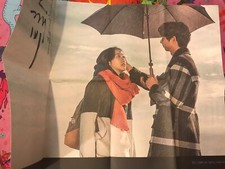
For many people outside Korea, the best-known dokkaebi is not a folk creature at all but the immortal hero of the hugely successful television drama Guardian: The Lonely and Great God, often marketed internationally as Goblin. The series introduced millions of viewers to the word “dokkaebi” and became one of the most influential modern reinterpretations of Korean folklore.[Korea Herald]koreaherald.comKorea Herald'Guardian,' popular but controversial4 Jan 2017 — Based on the Korean folklore of dokkaebi, a higher spiritual being roughly…
The drama borrowed the name and some supernatural associations, but its central character differs greatly from traditional folklore. Instead of a mischievous trickster spirit emerging from folk belief, viewers encounter a tragic, romantic and god-like immortal warrior. Critics and commentators noted that the series used folklore as inspiration while transforming the creature into something closer to a fantasy protagonist.[Medium]medium.comTo be honest, the dokkaebi wasn't recognizable at all to me.Read moreAnalysis of K-Drama “Dokkaebi” | by YJ Jun | ILLUMINATIONAugust 3, 2021 — Easter eggs throughout the series refer to different aspe…
This transformation has had lasting effects. Modern audiences increasingly associate dokkaebi with handsome immortals, epic romance and fantasy drama rather than wrestling contests, magical clubs and goblin fire. The television version has become culturally influential enough that it sometimes overshadows the older traditions from which it borrowed its name.[Medium]medium.comTo be honest, the dokkaebi wasn't recognizable at all to me.Read moreAnalysis of K-Drama “Dokkaebi” | by YJ Jun | ILLUMINATIONAugust 3, 2021 — Easter eggs throughout the series refer to different aspe…
Yet the popularity of the drama also renewed interest in Korean folklore. Many viewers who first encountered dokkaebi through television later discovered the richer and stranger world of the traditional stories.
The Lasting Appeal of Dokkaebi
Dokkaebi remain among the most recognisable supernatural figures in Korean culture because they resist simple classification. They are neither heroes nor villains, neither gods nor ghosts, neither wholly frightening nor wholly friendly. They inhabit the unstable territory in between.
The enduring fascination of dokkaebi lies in that ambiguity. They can bring treasure or trouble, laughter or fear, reward or humiliation. They challenge people not simply to survive, but to think, improvise and recognise their own weaknesses. That makes them far more than Korean versions of goblins. They are trickster spirits whose stories continue to evolve, from village folktales and museum collections to television dramas, fantasy novels and digital media, while retaining the playful unpredictability that first made them memorable.[wikipedia.org]WikipediaOpen source on wikipedia.org.
Amazon book picks
Further Reading
Books and field guides related to Are Dokkaebi Really Korean Goblins?. Use these as the next step if you want deeper reading beyond the article.
Japanese Tales of Mystery and Imagination
Appeals to readers interested in East Asian folklore and uncanny traditions.

eBay marketplace picks
Marketplace Samples
Live-tested eBay searches with available results related to this page.
Endnotes
1.
Source: Wikipedia
Link:https://en.wikipedia.org/wiki/Dokkaebi
2.
Source: books.google.com
Link:https://books.google.com/books/about/Encyclopedia_of_Korean_Folk_Literature.html?hl=it&id=DsR3BgAAQBAJ
Source snippet
Google BooksEncyclopedia of Korean Folk Literature... dokkaebi dragon farmhand father father-in-law filial piety Folk Tales... The Natio...
3.
Source: medium.com
Title: To be honest, the dokkaebi wasn’t recognizable at all to me.Read more
Link:https://medium.com/illumination/conflict-within-conflict-within-conflict-analysis-of-k-drama-dokkaebi-6b7b4512b675
Source snippet
Analysis of K-Drama “Dokkaebi” | by YJ Jun | ILLUMINATIONAugust 3, 2021 — Easter eggs throughout the series refer to different aspe...
Published: August 3, 2021
4.
Source: Wikipedia
Link:https://en.wikipedia.org/wiki/South
Source snippet
SouthSouth is one of the cardinal directions or compass points. The direction is the opposite of north and is perpendicular to both we...
5.
Source: Wikipedia
Title: South London
Link:https://en.wikipedia.org/wiki/South_London
Source snippet
South LondonSouth London is the southern part of London, England, mostly south of the River Thames. The region consists of the borough...
6.
Source: youtube.com
Title: Dokkaebi | The Korean Goblin
Link:https://www.youtube.com/watch?v=_PHPwlTVRhg
Source snippet
The Dokkaebi 도깨비 aka Korean Goblin [Korean Folklore]...
7.
Source: koreaherald.com
Link:https://www.koreaherald.com/article/1198527
Source snippet
Korea Herald'Guardian,' popular but controversial4 Jan 2017 — Based on the Korean folklore of dokkaebi, a higher spiritual being roughly...
8.
Source: ubisoft.com
Link:https://www.ubisoft.com/en-au/game/rainbow-six/siege/game-info/operators/dokkaebi
Source snippet
Dokkaebi | Operators | Tom Clancy's Rainbow Six SiegeY11S2 | In Operation System Override, Dokkaebi receives an Operator Remaster with th...
9.
Source: pdsh.fandom.com
Link:https://pdsh.fandom.com/wiki/Dokkaebi
Source snippet
Public Domain Super Heroes - FandomDokkaebi, also known as "Korean goblins", are nature deities or spirits possessing extraordinary pow...
10.
Source: dictionary.cambridge.org
Link:https://dictionary.cambridge.org/dictionary/english/south
Source snippet
English meaning - Cambridge Dictionary6 days ago — the direction that goes towards the part of the earth below the equator, opposite to...
Additional References
11.
Source: pinterest.com
Link:https://www.pinterest.com/ideas/dokkaebi-korean/935290378674/
Source snippet
Dokkaebi KoreanKorean Mythology Creatures · Dokkaebi Demon · Korean Goblin Traditional. Dokkaebi Mythical Creature. Dokkaebi | Korean art...
12.
Source: facebook.com
Link:https://www.facebook.com/groups/officialconceptart/posts/2331471320384864/
Source snippet
Korean dokkaebi folklore inspirationHere, we ask – what are Dokkaebi? Read on for the story of Korean goblins In simple terms, Dokkaebi a...
13.
Source: youtube.com
Link:https://www.youtube.com/shorts/Yx1n9qV1KNQ
Source snippet
The Mischievous Dokkaebi of Korean MythologyThe DOI are mythological figures in Korean culture frequently described as goblins or mischie...
14.
Source: youtube.com
Link:https://www.youtube.com/watch?v=5G9MvpQVLS0
Source snippet
Why Korea's Monsters Aren't Meant to Scare You | MonstrumDokabe are traditionally believed to possess immense supernatural powers. In som...
15.
Source: theunwrittenpast.com
Title: Learn their origins, powers, legends, and how they differ from Oni and goblins
Link:https://theunwrittenpast.com/korean-dokkaebi-folklore/
Source snippet
The World of the Dokkaebi: Tricksters, Spirits, and StoriesDiscover the Korean Dokkaebi, mischievous trickster spirits of folklore...
16.
Source: instagram.com
Link:https://www.instagram.com/p/DPi4Ma_k7QO/
Source snippet
He's a mischievous spirit of fire, fate, and forgotten legends — a symbol of luck, chaos, and...Read more...
17.
Source: kculture.com
Title: korean mythological creatures dokkaebi gumiho jeoseungsaja
Link:https://kculture.com/korean-mythological-creatures-dokkaebi-gumiho-jeoseungsaja/
Source snippet
Dokkaebi And Gumiho, Jeoseung Saja16 Dec 2025 — Cultural Insight: In the drama Goblin, the main character is a god-like warrior. However...
18.
Source: en.wizztour.com
Link:https://en.wizztour.com/2014/02/blog-post_3.html
Source snippet
the Korean Goblin Dokkaebi: Family Fun and History at...18 Apr 2025 — Discover Korea's friendly goblins, Dokkaebi, at Gyeongju National...
19.
Source: thejakartapost.com
Title: korean drama goblin popular but controversial
Link:https://www.thejakartapost.com/life/2017/01/06/korean-drama-goblin-popular-but-controversial
Source snippet
Korean drama 'Goblin' popular but controversial6 Jan 2017 — Based on the Korean folklore of dokkaebi, a higher spiritual being roughly tr...
20.
Source: facebook.com
Link:https://www.facebook.com/newsblackdesert/posts/from-king-sangoon-who-rules-over-mount-taebaek-to-douksini-leader-of-the-dokkebi/546378690701260/
Source snippet
Gaksi and Chonggak Dokkaebi are male and female goblins...Read more...
Topic Tree