Within Japan Folklore
Why Are Japan's Monsters So Hard To Define?
Yokai and oni range from terrifying outsiders to comic mascots, making them one of Japan's most flexible folklore traditions.
On this page
- What yokai means and why the category is slippery
- Oni from violent outsiders to softened popular characters
- How scrolls, museums and media keep monsters changing
Page outline Jump by section
Introduction
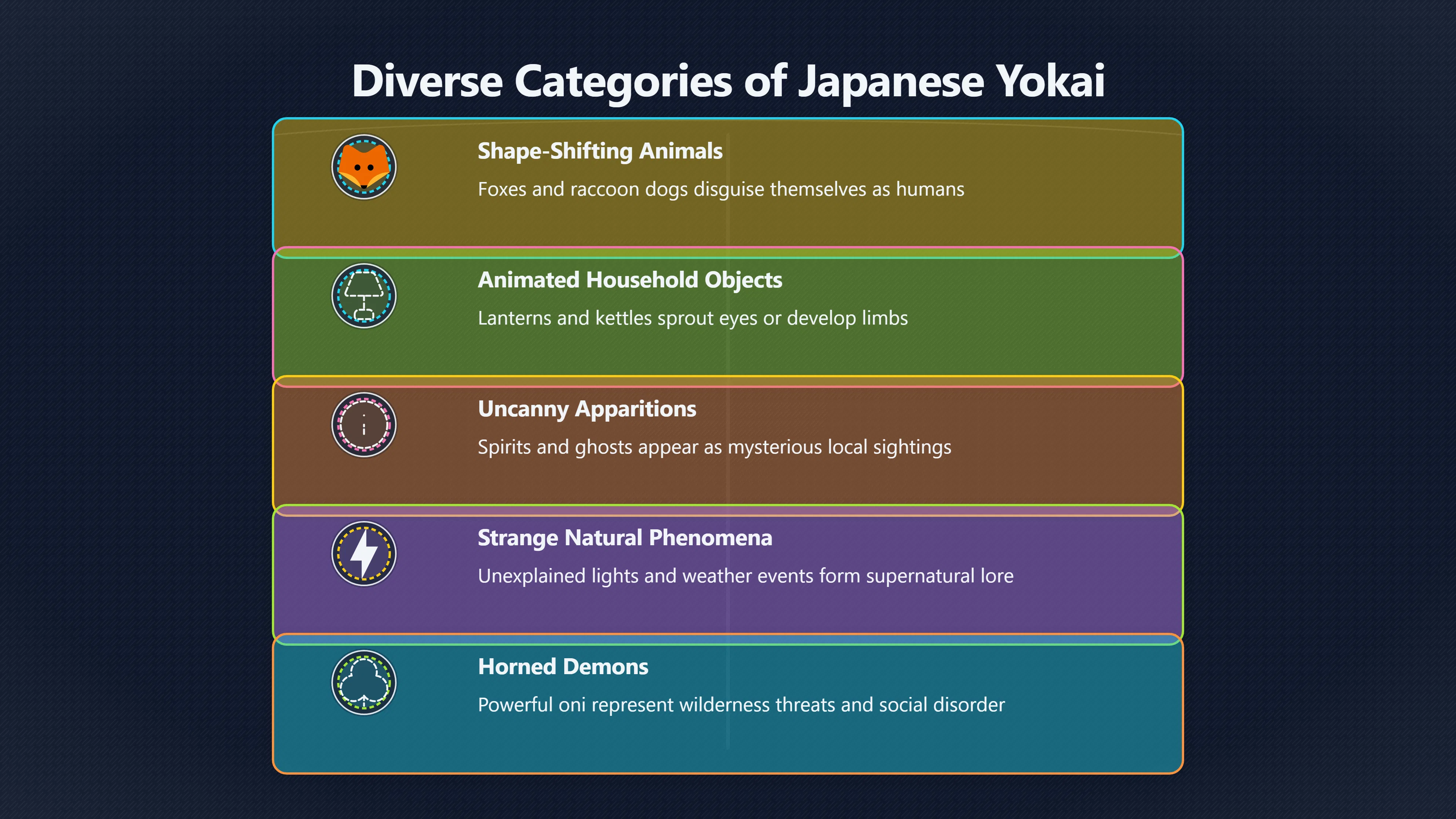
Japan’s monsters are famous around the world, yet one of the first surprises for newcomers is that many of them resist clear definition. The broad category often translated as “monster” includes shape-shifting animals, living household objects, uncanny apparitions, local spirits, strange natural phenomena and horned demons. Rather than forming a fixed catalogue of creatures, these beings have changed constantly across centuries of storytelling, art, religion and popular culture. That flexibility is one reason they remain so influential today. In Japan, monsters are not only things to fear; they can be comic, protective, mischievous, symbolic, educational or even adorable.[moifa.org]yokai.moifa.orgtricksters, and other kinds of supernatural beings and mysterious phenomena.Read more…
Among the most important figures are the beings commonly grouped under the label “yokai” and the powerful demon-like creatures known as “oni”. Together they reveal how Japanese folklore has repeatedly reshaped the unknown into new forms, allowing monsters to evolve alongside society rather than remaining frozen in the distant past.[moifa.org]yokai.moifa.orgtricksters, and other kinds of supernatural beings and mysterious phenomena.Read more…
What Yokai Means And Why The Category Is Slippery
The biggest challenge in understanding Japanese monsters is that “yokai” is not a single species. It is closer to a catch-all category for mysterious beings and unexplained phenomena. Museums, folklore databases and scholars use the term to cover everything from shape-shifting foxes and raccoon dogs to animated tools, river creatures, strange lights, giant spiders and local apparitions.[moifa.org]yokai.moifa.orgtricksters, and other kinds of supernatural beings and mysterious phenomena.Read more…
This makes yokai difficult to translate into Western categories. Some resemble ghosts, some act like fairies, some look like demons and others are closer to folk explanations for unusual events. A single creature might be terrifying in one region, humorous in another and protective somewhere else. Folklore scholar Michael Dylan Foster has noted that the category often includes not only beings but also strange experiences and mysterious occurrences themselves.[educationaboutasia.org]educationaboutasia.orgFolklore, Popular Culture, and Hometown Yōkai in the Twenty…by MD Foster · 2026 — Within the folklore of Japan, the word yōkai general…
Shape-shifting lies at the heart of many famous yokai traditions. Animals frequently cross the boundary between ordinary nature and the supernatural. Foxes may become humans, raccoon dogs may disguise themselves as travellers, and other creatures can take deceptive forms to trick, test or teach people. These transformations are not merely magical tricks. They reflect a deeper folklore idea that the world is unstable and that appearances cannot always be trusted.[oglethorpe.edu]museum.oglethorpe.eduOUMAYokai Parade: Supernatural Monsters from JapanOUMA26 May 2026 — Visit the Yokai Parade: Supernatural Monsters from Japan exhibition at Oglethorpe University Museum of Art… yokai mo…
The category became even broader as stories circulated between regions. Local monsters that once belonged to isolated communities were collected, illustrated and published, allowing creatures from one area to become known across Japan. Over time, yokai evolved from local folklore into a national imagination filled with endlessly adaptable beings.[hyakumonogatari.com]hyakumonogatari.com百物語怪談会 Hyakumonogatari KaidankaiA Brief History of Yokai - Hyakumonogatari KaidankaiFebruary 5, 2013 — 5 Feb 2013 — Each isolated region…
Why Shape-Shifting Matters More Than Appearance
Many readers imagine monsters as defined by what they look like. In Japanese folklore, however, transformation is often more important than physical form.
A yokai may change shape because it is testing human behaviour, expressing hidden emotions or revealing that the boundary between human and non-human worlds is fragile. Some stories feature animals disguised as people. Others involve everyday objects gaining awareness and personality. In illustrated traditions, a lantern may sprout eyes, a kettle may develop limbs and a household tool may join a supernatural procession.[go.jp]jpf.go.jpYokai Parade: Supernatural Monsters from JapanMarch 1, 2021 — Of the five, the saddle monster and teapot monster are especially uncommon…
This helps explain why yokai are so difficult to classify. They are less like fixed monsters and more like a storytelling mechanism for exploring uncertainty. Strange sounds, unusual weather, unexpected encounters and social anxieties could all be expressed through creatures that shifted between categories.[osu.edu]library.osu.eduOhio State University LibrariesHistory | Japanese Collections | Page 2In Japanese folklore, yōkai (妖怪) refers to legendary ghosts, monste…
The result is a folklore tradition where transformation itself becomes the central idea. A monster can become a person, an object can become alive, a joke can become a warning and a local rumour can become a national legend.
Oni: From Violent Outsiders To Familiar Faces
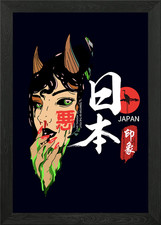
If yokai are difficult to define, oni appear at first glance much simpler. They are usually portrayed as enormous, horned beings with fierce faces, wild hair and great physical strength. Traditional images often show them carrying iron clubs and wearing tiger-skin garments. Older stories portray them as terrifying threats associated with violence, punishment and the wilderness beyond settled society.[Asian Ethnology]asianethnology.orgPopular modern day literary treatments of the oni reveal several new renderings of this.Read more…
Yet oni have also undergone remarkable transformation.
Historically, oni could represent many different fears. They were linked with disease, disasters, social disorder and the dangerous unknown. Some stories portrayed them as man-eating monsters. Others connected them with Buddhist ideas about suffering and moral consequences. Their exact role varied across regions and historical periods.[Asian Ethnology]asianethnology.orgPopular modern day literary treatments of the oni reveal several new renderings of this.Read more…
Over time, however, oni became increasingly flexible cultural symbols. Modern literature, children’s stories, festivals and commercial media softened many of their harsher features. Some oni remain frightening villains, but others appear as comic characters, sympathetic figures or even mascots. Scholarly studies of oni imagery have noted a long-term shift from overwhelmingly terrifying portrayals toward more varied and approachable representations.[Asian Ethnology]asianethnology.orgPopular modern day literary treatments of the oni reveal several new renderings of this.Read more…
This transformation is especially visible during the annual spring festival known as Setsubun. Families throw beans while chanting for demons to leave and good fortune to enter. In many homes, schools and community events, someone dresses as an oni and willingly becomes the target of the ritual. The monster is still present, but it has become part of a playful community tradition rather than a source of genuine terror.[wikipedia.org]WikipediaMarch 10, 2004 — Setsubun (節分) is the day before the beginning of spring in the old calendar in Japan. The name literally means 'seasona…

How Scrolls Turned Monsters Into Shared Culture
The survival of yokai and oni owes much to visual storytelling.
From the medieval and early modern periods onward, artists produced illustrated scrolls showing vast processions of supernatural beings. These famous “night parade” scenes gathered creatures of every imaginable shape into crowded, often humorous spectacles. Rather than documenting a fixed belief system, the images encouraged creativity and variation. Different artists added, removed and reinvented monsters as they copied earlier works.[jpf.go.jp]jpf.go.jpYokai Parade: Supernatural Monsters from JapanMarch 1, 2021 — Of the five, the saddle monster and teapot monster are especially uncommon…
The popularity of printed books during the Edo period helped spread these images beyond their original regions. Creatures that may once have belonged to local oral traditions became recognisable across much of Japan. Visual culture effectively created a shared monster vocabulary while still leaving room for local differences.[百物語怪談会 Hyakumonogatari Kaidankai]hyakumonogatari.com百物語怪談会 Hyakumonogatari KaidankaiA Brief History of Yokai - Hyakumonogatari KaidankaiFebruary 5, 2013 — 5 Feb 2013 — Each isolated region…
Because artists continually reinterpreted monsters, appearance never became completely fixed. A yokai could gain new features, lose old ones or acquire an entirely different personality. The tradition remained alive precisely because it encouraged reinvention.

How Museums And Databases Keep Monsters Changing
Japan’s monster tradition is often described as ancient, but it is also remarkably modern.
Large research projects now catalogue thousands of references to mysterious phenomena, monsters and supernatural traditions. The International Research Center for Japanese Studies maintains extensive databases of yokai-related folklore and imagery, drawing together materials from archives, museums and scholarly collections. These resources reveal not a single canon but a vast and constantly expanding record of regional variation.[Nichibun]nichibun.ac.jpMysterious Phenomena and Yōkai (Spirits, Ghosts…Bibliographic information on Yōkai and mysterious phenomena reported in folklo…
Museums and exhibitions continue to reinterpret these creatures for contemporary audiences. Exhibitions devoted to yokai often place historical scrolls alongside modern merchandise, animation and digital experiences. This presentation highlights an important truth: Japanese monsters survive not because they remain unchanged, but because each generation finds new uses for them.[oglethorpe.edu]museum.oglethorpe.eduOUMAYokai Parade: Supernatural Monsters from JapanOUMA26 May 2026 — Visit the Yokai Parade: Supernatural Monsters from Japan exhibition at Oglethorpe University Museum of Art… yokai mo…
Today, yokai and oni appear in manga, anime, films, games, tourism campaigns and local heritage projects. Some communities even promote distinctive regional monsters as symbols of local identity. What began as folklore has become part of cultural branding, education and entertainment while still retaining connections to older traditions.[educationaboutasia.org]educationaboutasia.orgFolklore, Popular Culture, and Hometown Yōkai in the Twenty…by MD Foster · 2026 — Within the folklore of Japan, the word yōkai general…
Why Japan’s Monsters Remain So Hard To Define
The enduring power of yokai and oni comes from their ability to change meaning without disappearing. They can represent fear, humour, morality, local identity, childhood imagination, religious symbolism or artistic creativity depending on the context.
Unlike many monster traditions that rely on fixed categories, Japanese folklore often embraces ambiguity. A creature can be frightening and funny, ancient and modern, local and national, human-like and non-human at the same time. That ambiguity is not a flaw in the tradition; it is the reason it remains so adaptable.
Yokai and oni therefore function less as a list of monsters than as a cultural language for thinking about the unknown. Across centuries of stories, paintings, festivals, museums and popular media, they continue to change shape—just as many of the monsters themselves do.[moifa.org]yokai.moifa.orgtricksters, and other kinds of supernatural beings and mysterious phenomena.Read more…
Amazon book picks
Further Reading
Books and field guides related to Why Are Japan's Monsters So Hard To Define?. Use these as the next step if you want deeper reading beyond the article.
Japanese Tales
Includes many stories featuring supernatural beings and legendary creatures.
Pandemonium and Parade
Explores how monster traditions evolved through history and media.
eBay marketplace picks
Marketplace Samples
Live-tested eBay searches with available results related to this page.
Endnotes
1.
Source: yokai.moifa.org
Link:https://yokai.moifa.org/
Source snippet
tricksters, and other kinds of supernatural beings and mysterious phenomena.Read more...
2.
Source: educationaboutasia.org
Link:https://www.educationaboutasia.org/article/id/1843/
Source snippet
Folklore, Popular Culture, and Hometown Yōkai in the Twenty...by MD Foster · 2026 — Within the folklore of Japan, the word yōkai general...
3.
Source: blogs.libraries.indiana.edu
Title: beasts of belief installment 1 yokai spirits of japanese folklore
Link:https://blogs.libraries.indiana.edu/lilly/2025/07/30/beasts-of-belief-installment-1-yokai-spirits-of-japanese-folklore/
Source snippet
Beasts of Belief (#1): Yōkai Spirits of Japanese Folklore | IUJul 30, 2025 — Yōkai (妖怪) are a classification of spirits described by Mich...
4.
Source: museum.oglethorpe.edu
Title: OUMAYokai Parade: Supernatural Monsters from Japan
Link:https://museum.oglethorpe.edu/exhibitions/yokai-parade-supernatural-monsters-from-japan/
Source snippet
OUMA26 May 2026 — Visit the Yokai Parade: Supernatural Monsters from Japan exhibition at Oglethorpe University Museum of Art... yokai mo...
Published: May 2026
5.
Source: tofugu.com
Link:https://www.tofugu.com/series/yokai/
Source snippet
Yokai - Japan's Supernatural Folktale CreaturesYōkai 妖怪 ( ようかい ) is Japan's catch-all term for supernatural beings and folktale cre...
6.
Source: voyapon.com
Link:https://voyapon.com/yokai-japan-history-legendary-monsters/
Source snippet
Yokai: Discover the History of Japan's Legendary MonstersJan 21, 2025 — A yokai is a mysterious phenomenon beyond human understand...
7.
Source: hyakumonogatari.com
Link:https://hyakumonogatari.com/2013/02/05/a-brief-history-of-yokai/
Source snippet
百物語怪談会 Hyakumonogatari KaidankaiA Brief History of Yokai - Hyakumonogatari KaidankaiFebruary 5, 2013 — 5 Feb 2013 — Each isolated region...
Published: February 5, 2013
8.
Source: jpf.go.jp
Link:https://www.jpf.go.jp/j/project/culture/exhibit/traveling/pdf/Yokai_Parade.pdf
Source snippet
Yokai Parade: Supernatural Monsters from JapanMarch 1, 2021 — Of the five, the saddle monster and teapot monster are especially uncommon...
Published: March 1, 2021
9.
Source: Wikipedia
Link:https://en.wikipedia.org/wiki/Setsubun
Source snippet
March 10, 2004 — Setsubun (節分) is the day before the beginning of spring in the old calendar in Japan. The name literally means 'seasona...
Published: March 10, 2004
10.
Source: unseen-japan.com
Title: setsubun japan festival
Link:https://unseen-japan.com/setsubun-japan-festival/
Source snippet
Setsubun: Japan's Demon-Expelling Festival for Kids of All...31 Jan 2026 — Demons out, luck in! How the holiday of Setsubun evolved into...
11.
Source: voyapon.com
Title: setsubun demons celebration
Link:https://voyapon.com/setsubun-demons-celebration/
Source snippet
Setsubun: Japan's Festival of Luck and Demon Banishing28 Jan 2025 — Setsubun is celebrated with rituals designed to cleanse homes of evil...
12.
Source: youtube.com
Link:https://www.youtube.com/watch?v=-jGrBeBfNn8
Source snippet
Yōkai 101: Exploring the Thrill of Japanese FolkloreThis special program is dedicated to yōkai, supernatural entities and spirits that ap...
13.
Source: Wikipedia
Link:https://en.wikipedia.org/wiki/Y%C5%8Dkai
Source snippet
YōkaiYōkai are a vast range of beings, including shapeshifters, ghosts, demons, and tricksters. They can be mischievous, helpful, or m...
14.
Source: Wikipedia
Link:https://vi.wikipedia.org/wiki/Y%C5%8Dkai
Source snippet
Yōkai – Wikipedia tiếng ViệtYōkai (妖 (よう) 怪 (かい), Yōkai yêu quái) là một nhóm các loài ma quỷ, linh hồn và các sinh vật siêu nhi...
15.
Source: yokai.com
Link:https://yokai.com/?srsltid=AfmBOoqTi54fktlX2TWHajiD12YRQmspbxGgeMYfkDmeg3xOZXNInUHK
Source snippet
This is an illustrated encyclopedia featuring ghosts, monsters, and legendary figures from...Read more...
16.
Source: yokai.com
Link:https://yokai.com/finder/?srsltid=AfmBOoozBERpL-jevd6hwoPi4sRhjzBCKaxQ9xTIib5D957_KBwVNePB
Source snippet
Yōkai FinderYōkai Finder. Can't think of the name of the yōkai you are looking for? You can browse yōkai by specific categories to narrow...
17.
Source: youtube.com
Link:https://www.youtube.com/watch?v=sAqwtx4oWBQ
Source snippet
"Namahage: Demon-Deities of Northern Japan," a lecture with Dr. Michael Dylan Foster (2021)...
18.
Source: youtube.com
Link:https://www.youtube.com/watch?v=de9h_5fbRjM
Source snippet
Oni - The Traditional Japanese Demon - The Story of Shuten Dōji (Japanese Folklore Explained)...
19.
Source: youtube.com
Link:https://www.youtube.com/watch?v=B_u3I65lvWQ
Source snippet
Japan's Oni. Demonic, Cannibalistic, and a Totally Great Hosts? - Extra Mythology...
20.
Source: youtube.com
Title: Japan’s Oni. Demonic, Cannibalistic, and a Totally Great Hosts?
Link:https://www.youtube.com/watch?v=GHJswuzP4ok
Source snippet
Yokai: Spirits, Demons or Something Else? The Supernatural World of Japan...
21.
Source: youtube.com
Title: Yokai: Spirits, Demons or Something Else? The Supernatural World of Japan
Link:https://www.youtube.com/watch?v=SLAIpUbmX48
Source snippet
Yokai and oni japanese folklore michael dylan foster Yokai and Monsters in Japanese Art: A Conversation between Michael Dylan Foster and...
22.
Source: nichibun.ac.jp
Link:https://www.nichibun.ac.jp/en/db/category/yokai/
Source snippet
Mysterious Phenomena and Yōkai (Spirits, Ghosts...Bibliographic information on Yōkai and mysterious phenomena reported in folklo...
23.
Source: asianethnology.org
Link:https://asianethnology.org/article/149377-transformation-of-the-oni-from-the-frightening-and-diabolical-to-the-cute-and-sexy.pdf
Source snippet
Popular modern day literary treatments of the oni reveal several new renderings of this.Read more...
24.
Source: nichibun.ac.jp
Link:https://www.nichibun.ac.jp/en/db/
Source snippet
The Database of Paintings of Mysterious...Read more...
25.
Source: library.osu.edu
Link:https://library.osu.edu/site/japanese/category/databases-resources/history/page/2/
Source snippet
Ohio State University LibrariesHistory | Japanese Collections | Page 2In Japanese folklore, yōkai (妖怪) refers to legendary ghosts, monste...
26.
Source: nichibun.ac.jp
Link:https://www.nichibun.ac.jp/YoukaiGazouMenu/english_kaisetsu.html
Source snippet
The Database of Paintings of Mysterious Phenomena and...The Yōkai Image Database is a collection of yōkai depictions found in pi...
27.
Source: yokaiimmersive.com
Link:https://www.yokaiimmersive.com/en
Source snippet
more...
28.
Source: japanesegallery.com
Title: Japanese Folklore
Link:https://japanesegallery.com/anime_and_manga/blog-page/anime-manga/japanese-folklore-an-introduction-to-yokai.html
Source snippet
An Introduction to YokaiYōkai (妖怪), also known as mononoke (物の怪), are a class of supernatural creatures originating from the Shinto faith...
Additional References
29.
Source: ny.jpf.go.jp
Link:https://ny.jpf.go.jp/event/meet-the-yokai-monsters-from-japanese-folklore/
Source snippet
Meet the Yokai! Monsters From Japanese FolkloreThis presentation will explore Japan's rich culture of yokai: creatures from Japanese folk...
30.
Source: ndl.go.jp
Link:https://www.ndl.go.jp/en/
Source snippet
National Diet Library, JapanThe official website of the National Diet Library. The Library collects and conserves materials and informati...
31.
Source: facebook.com
Link:https://www.facebook.com/OglethorpeUniversityMuseumofArt/posts/did-you-know-the-word-y%C5%8Dkai-comes-from-peoples-fear-and-curiosity-about-the-unkn/1650341347097980/
Source snippet
Yokai: Japan's supernatural monsters and their historyThese beings aren't your average ghosts or goblins—they are a kaleidoscope of weird...
32.
Source: tsukushi-japan.com
Link:https://tsukushi-japan.com/en-eu/blogs/journal/celebrate-setsubun-bean-throwing-japanese-tradition?srsltid=AfmBOorHFsboeRYHxz3eyiK0TRu0RWrsNzVhro6F9-cYkrbv2MX4h1t7
Source snippet
Understanding Setsubun: Japan's Seasonal Festival24 Jan 2025 — The figure of the Oni (鬼, demon) is central to Setsubun's customs...
33.
Source: intojapanwaraku.com
Title: 和樂web 美の国ニッポンをもっと知る!What is the Oni of setsubun?
Link:https://intojapanwaraku.com/culture/264595/
Source snippet
What is the meaning of their...22 Feb 2025 — The five colours of the oni during setsubun symbolise these human hindrances, with each sha...
34.
Source: yamatomagazine.home.blog
Title: how the oni transformed from a japanese demon into a pop culture icon
Link:https://yamatomagazine.home.blog/2019/06/04/how-the-oni-transformed-from-a-japanese-demon-into-a-pop-culture-icon/
Source snippet
The event involves purification rituals, driving away evil spirits. People...Read more...
35.
Source: thealephreview.com
Title: encounters with the supernatural
Link:https://www.thealephreview.com/post/encounters-with-the-supernatural
Source snippet
7 Oct 2024 — Spanning over 300 years of Yokai folklore, the exhibition unveils a world of supernatural creatures that reflect humanity's...
36.
Source: publicdomainreview.org
Title: He is followed by rodent-like monsters.Read more
Link:https://publicdomainreview.org/collection/night-parade-of-one-hundred-demons
Source snippet
The Public Domain ReviewKawanable Kyōsai's Night Parade of One Hundred...16 Jun 2020 — At right is the demon Nurarihyon, in the guise of...
37.
Source: remitly.com
Title: What Are Yokai?
Link:https://www.remitly.com/blog/lifestyle-culture/what-are-yokai/
Source snippet
Understanding Japan's Supernatural...Aug 5, 2025 — Yokai are supernatural beings from Japanese folklore that encompass spirits, demons...
38.
Source: matthewmeyer.net
Title: yokai museum
Link:https://matthewmeyer.net/blog/2013/11/10/yokai-museum/
Source snippet
10 Nov 2013 — One of the reasons that I wrote The Night Parade of One... monsters, and of the ones that do exist there are so few that r...
Topic Tree