Why Guatemala's Folklore Feels So Alive
Guatemala’s folklore is not a single set of bedtime stories. It is a layered tradition shaped by Maya sacred narrative, colonial Catholic practice, village oral storytelling, literary reinvention and modern tourism.
Page outline Jump by section
Introduction
The result is a folklore landscape where “legend” can mean several different things. Some tales are old oral warnings told in families and neighbourhoods; some are regional Central American figures with Guatemalan versions; some are literary retellings made famous by Miguel Ángel Asturias; and some are public cultural performances now recognised by heritage bodies. A good guide to Guatemalan folklore therefore has to ask not just “what is the monster?” but “who tells the story, where, and in what form?”[Agencia Balcells]agenciabalcells.comAgencia Balcells Leyendas de GuatemalaAgencia Balcells Leyendas de Guatemala
Why Guatemalan folklore feels so layered
Guatemala sits at the meeting point of Indigenous Maya cultures, Spanish colonial history, Catholic ritual life, Afro-Caribbean Garifuna traditions, and modern national identity. That mix matters because many Guatemalan traditions are not cleanly “pre-Hispanic” or “European”. They are lived combinations: saints’ festivals with Indigenous meanings, Maya sacred sites also treated as archaeological parks, ghost stories set in colonial streets, and local legends reshaped by printed books, school lessons, theatre and social media.
The Popol Vuh is the strongest example of Guatemala’s deep mythic inheritance. The Newberry Library describes its manuscript as one of the most widely known and probably earliest surviving copies, transcribed between 1700 and 1715 in Chichicastenango by the Dominican priest Francisco Ximénez. The Smithsonian’s National Museum of the American Indian explains that the text preserves a Maya creation account, the stories of the Hero Twins, and K’iche’ genealogies and land rights, recorded in the sixteenth century by members of royal K’iche’ lineages under colonial rule.[Newberry Library]newberry.orgOpen source on newberry.org.
That makes the Popol Vuh more than a storybook. It is a record of cosmology, political memory and survival. It shows why maize, underworld journeys, ancestral authority and the ordering of the world remain so important when readers encounter Guatemalan myth, ritual and literature. At the same time, it should not be treated as a simple key to every modern ghost story. The scary legends of city streets and rural paths often belong to later oral and colonial worlds, even when they echo older concerns about water, night travel, moral danger and sacred places.[Up Colorado]upcolorado.comUp Colorado The Myths of the Popol Vuh in Cosmology, Art, and RitualUp Colorado The Myths of the Popol Vuh in Cosmology, Art, and Ritual
The famous legends most readers meet first
The legends most often presented as “Guatemalan legends” are usually short, vivid and moral. They are told in families, schools, tourist settings and public performances, and they overlap with traditions elsewhere in Central America and Mexico. Their power lies less in a single fixed version than in repeated situations: walking alone at night, hearing a cry near water, meeting a beautiful stranger, seeing a dog on a lonely road, or being seduced by music.
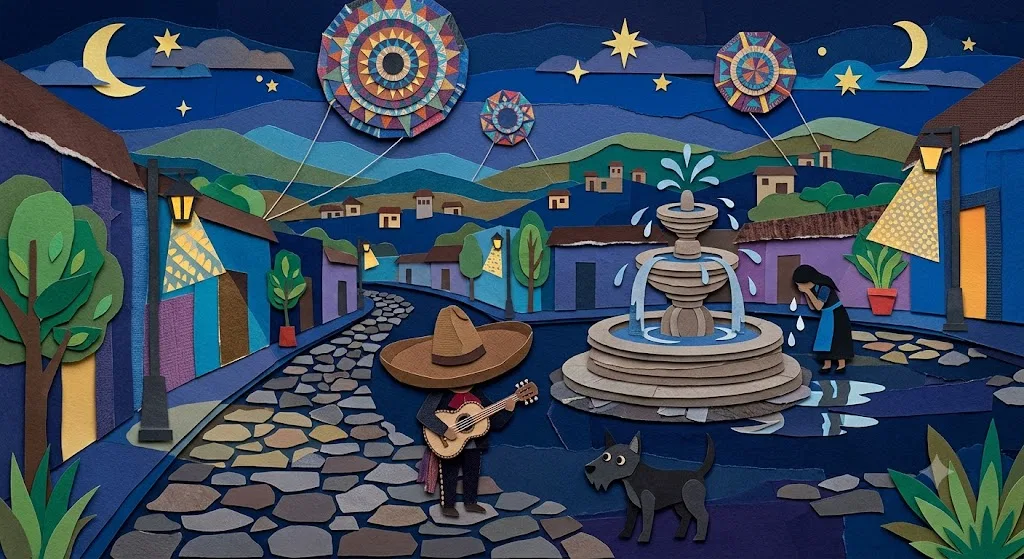
The weeping mother is one of the most recognisable figures across Latin America, but Guatemala has its own local tellings. In a Guatemalan version, she is associated with a woman condemned after killing her child and searching for him near water. A common feature of the tale is the deceptive distance of her cry: the sound may seem far away when the spirit is near, and near when she is far away. Such details make the story work as a night-time warning, especially around rivers, fountains and deserted streets.[Wikipedia]WikipediaLa LloronaLa Llorona
The small man with the great hat is especially associated with courtship, music and hair. He is usually imagined as a short figure dressed in dark clothes, carrying a guitar and wearing an oversized hat. Popular retellings say he serenades young women, enchants them, braids their hair, and may arrive with mules. In some versions, the cure for his attention is to cut the girl’s hair, a detail that makes the legend feel intimate and domestic rather than merely monstrous.[Wikipedia]WikipediaEl SombrerónEl Sombrerón
The night dog is a road legend. In Central American folklore, the creature appears as a supernatural dog or dog-like spirit encountered at night. Many versions distinguish a protective white dog from a harmful black one, turning the story into a moralised image of danger and guardianship on lonely paths. For Guatemalan storytelling, this makes the figure ideal for tales about drunkenness, late travel, temptation and the feeling that someone — or something — is following behind.[Wikipedia]WikipediaOpen source on wikipedia.org.
The dangerous woman by water appears as an attractive woman seen from behind, often near a river, ravine or bathing place. When the man approaches, she reveals a horrifying face, sometimes described as horse-like or skeletal, and the encounter ends in terror, madness or death. In Guatemalan summaries, she is often said to target unfaithful men or men wandering alone at night. The figure is part of a wider Central American tradition, but local versions give her Guatemalan settings and social lessons.[Qué Pasa Magazine]quepasa.gtlegends guatemala traditionlegends guatemala tradition
The condemned witch is commonly known through the story of a woman accused of witchcraft who escapes punishment by drawing or using a magical boat. Modern retellings often place her among Guatemala’s classic legends alongside the weeping mother, the hat-wearing seducer, the night dog and the dangerous woman. Her appeal is different from the others: she is not simply a monster or warning, but a figure of accusation, escape and ambiguous power.[Noticias MCD]noticias.mcd.gob.gtOpen source on gob.gt.
What these stories are really doing
It is tempting to read these legends as a catalogue of monsters, but their social function is more interesting. They turn everyday risks into memorable figures. The weeping mother makes water, grief and parental guilt uncanny. The night dog makes the road after dark feel watched. The hat-wearing musician turns unwanted courtship and enchantment into a household story. The woman by water gives shape to male temptation, infidelity and the fear of being lured beyond safe boundaries.
Many of these legends also operate as sound stories. The cry, the guitar, the laugh, the footsteps, the dog behind the traveller: these are tales designed for oral performance. A good narrator can make listeners feel the legend before explaining it. That helps explain why they remain useful in theatre, schools and public cultural events. Guatemala’s Ministry of Culture has promoted staged “Night of Legends” events featuring figures such as the weeping mother, the hat-wearing seducer, the night dog, the dangerous woman and the condemned witch, explicitly connecting new audiences with oral tradition.[Noticias MCD]noticias.mcd.gob.gtOpen source on gob.gt.
The tales also show how folklore changes as it circulates. A local family version may emphasise a grandmother’s warning; a school version may present a moral lesson; a tourist version may highlight atmosphere; a theatre version may turn the figure into a character with costume, lighting and music. None of these forms is automatically “fake”, but they are not the same thing. For readers, the key is to notice whether a claim is based on oral tradition, a literary retelling, a public performance, a tourism page or an internet summary.
The Popol Vuh and the deeper mythic frame
The Popol Vuh is the most important written doorway into highland Maya mythic tradition associated with Guatemala. It is often translated as the “Book of the Community” or “Book of Counsel”. It includes the creation of the world, the making of humans, the adventures of the Hero Twins, and the ancestral history of the K’iche’ people. The Library of Congress describes it as a creation account, while the National Museum of the American Indian stresses that it also records genealogy and land rights, not just mythic episodes.[The Library of Congress]loc.govOpen source on loc.gov.
Its preservation history is part of the story. The original Indigenous manuscript is lost, but Ximénez’s K’iche’ transcription and Spanish translation survived. The Newberry Library identifies its manuscript as copied in Chichicastenango between 1700 and 1715, and Library of Congress material notes that some scholars believe Ximénez’s copy derived from an earlier sixteenth-century version written by a native speaker using Latin characters.[Newberry Library]newberry.orgOpen source on newberry.org.
For folklore readers, the Popol Vuh matters because it shows a world ordered by creation, trial, trickery, descent and renewal. The Hero Twins’ journey into the underworld is not a casual adventure; it is a mythic contest with death and power. The making of humanity from maize gives agricultural life sacred weight. These themes echo through Maya art, ritual and modern cultural memory, even when later Guatemalan legends draw on different historical sources.[Living Maya Time]maya.nmai.si.eduOpen source on si.edu.
Ritual, performance and public heritage
Some of Guatemala’s strongest folklore-related traditions are not ghost stories at all. They are performed, sung, danced, carried, cooked, flown or enacted in community settings. This is where the boundary between folklore, religion and cultural heritage becomes especially blurred.
The Rabinal Achí dance-drama is one of the clearest examples. UNESCO describes it as a tradition in which oral and written narrative is presented by characters on a stage representing Maya villages. It is associated with Rabinal in Baja Verapaz and preserves a dramatic story of conflict, captivity and ritual performance. Later commentary on the tradition has highlighted its account of territorial struggle and the oral trial of a captured prince.[Intangible Cultural Heritage]ich.unesco.orgOpen source on unesco.org.
Holy Week in Guatemala shows a different kind of folkloric force. UNESCO describes it as a religious and cultural celebration involving processions, vigils, funeral marches, seasonal food, carpets, orchards and altars. Its heritage listing stresses that the practices are transmitted through active participation and preparation. The Guatemalan national inventory similarly describes Holy Week as a festival experienced through the five senses, involving applied arts, craft, oral tradition, literature, gastronomy and nature across the country’s departments.[unesco.org]ich.unesco.orgOpen source on unesco.org.
The giant kites of Santiago Sacatepéquez and Sumpango connect death, ancestry, creativity and public spectacle. UNESCO states that the tradition of making and flying the kites dates to the late nineteenth and early twentieth centuries, and that the kites are exhibited during the Day of the Saints and the Dead. UNESCO’s multimedia archive adds that their designs may address themes such as the environment, violence and human rights, while the tradition is understood as a way of connecting with ancestors, warding off negative spirits and promoting renewal.[Intangible Cultural Heritage]ich.unesco.orgOpen source on unesco.org.
These traditions matter because they prevent a narrow view of folklore as “old spooky stories”. In Guatemala, folklore also lives in collective labour: making carpets, carrying processional images, preparing costumes, rehearsing performance, building kites for months, visiting cemeteries and teaching younger people by participation rather than by formal explanation.

Sacred landscapes and living Maya spirituality
Guatemalan folklore cannot be separated from landscape. Mountains, caves, lakes, forests, ruins, cemeteries and old streets all carry story. Some places are tourist sites, some are archaeological zones, some are active sacred spaces, and some are all three at once. That overlap can create tension when visitors treat living spiritual practice as spectacle.
There is official recognition that Maya spiritual practice continues at historical sites. A United States religious freedom report notes that Guatemalan law permits Maya spiritual groups to conduct ceremonies at Maya historical sites on government-owned property free of charge with written permission. UNESCO documentation for Tak’alik Ab’aj also notes ministerial decrees granting spiritual guides access to the archaeological site, recognising it as a sacred place for local Indigenous communities.[State.gov]2021-2025.state.govOpen source on state.gov.
These details change how readers should understand “mythic places” in Guatemala. A site is not merely a ruin because it has stone monuments, and not merely a tourist attraction because it is photographed. For many communities, places can be connected with ancestors, offerings, healing, calendar practice and the living presence of sacred order. Reports on Maya spiritual guides describe fire ceremonies, invocations and the role of spiritual specialists in maintaining religious tradition, while also noting histories of persecution and marginalisation.[globalpressjournal.com]globalpressjournal.comIn Rural Guatemala, Spiritual Guides Carry on AncientIn Rural Guatemala, Spiritual Guides Carry on Ancient
This is also why respectful language matters. Calling such practices “folklore” can be useful in a broad cultural project, but it should not imply that they are make-believe, obsolete or performed only for outsiders. Some traditions are stories people tell about the supernatural; others are religious practices people live.
Literary retellings and the Asturias effect
Modern readers often encounter Guatemalan legend through literature, especially Miguel Ángel Asturias’s Legends of Guatemala. Asturias, who later won the Nobel Prize in Literature, published the work in 1930. His literary agency describes the book as bringing together fantastical legends from Maya and Guatemalan colonial traditions in places such as Tikal, Copán, Santiago and Antigua.[Agencia Balcells]agenciabalcells.comAgencia Balcells Leyendas de GuatemalaAgencia Balcells Leyendas de Guatemala
Asturias did not simply collect folktales as a neutral recorder. He transformed them. His book intersects origin myth, colonial atmosphere, surreal imagery and national identity. Critics have described the work as a lyrical recreation of Guatemalan folklore, and later discussion of Asturias often places him near the beginnings of magical realism because of the way he joined political reality, Indigenous culture, dream and myth.[Wikipedia]WikipediaLeyendas de GuatemalaLeyendas de Guatemala
That distinction is important for readers. When a legend appears in Asturias, it may be based on older oral or textual material, but it is also a crafted literary object. The same named figure can exist in several forms at once: a family warning, a neighbourhood tale, a schoolbook summary, a literary adaptation and a staged heritage performance. Treating those forms as identical flattens the tradition; noticing the differences makes it richer.[Biblioteca Virtual Miguel de Cervantes]cervantesvirtual.comOpen source on cervantesvirtual.com.
How Guatemalan folklore is understood today
Today, Guatemalan folklore is both intimate and public. It is intimate when grandparents tell children not to go near a river at night, when someone recalls a story from a village road, or when families repeat a legend attached to a neighbourhood. It is public when ministries stage legend nights, when festivals draw visitors, when UNESCO lists a practice, when tourism pages explain a ritual calendar, or when filmmakers and writers reinterpret old figures for new audiences.[gob.gt]noticias.mcd.gob.gtOpen source on gob.gt.
The giant kites show this modern flexibility especially well. They are linked to remembrance of the dead and Indigenous spirituality, but their designs can address current concerns such as violence, human rights or the environment. That does not make the tradition less traditional. It shows how a living tradition keeps its form while changing its messages.[UNESCO]unesco.orgdocument 6913document 6913
The same is true of scary legends. The weeping mother, the night dog and the dangerous woman still work because they attach supernatural drama to experiences people understand: grief, guilt, desire, danger, night travel and the fear of crossing a boundary. Modern media may exaggerate them, simplify them or turn them into horror icons, but the underlying stories remain powerful because they are easy to retell and easy to localise.
What to remember about Guatemala’s legendary culture
The most useful way to approach Guatemalan folklore is to think in layers. At the deepest written level are Maya sacred narratives such as the Popol Vuh, preserved through colonial transcription but rooted in Indigenous intellectual and spiritual life. Alongside them are living rituals, sacred places and performance traditions that continue to organise community memory. Then come the popular legends of streets, rivers, ravines and roads: flexible oral stories that teach, frighten and entertain. Finally, there are literary, theatrical, tourist and internet retellings that keep the figures visible while changing their style.
That layered view avoids two common mistakes. One mistake is to treat every Guatemalan legend as ancient Maya myth. Another is to treat living Maya spirituality as mere colourful folklore. Guatemala’s traditions are more complicated and more interesting than either simplification. They include sacred books, local ghosts, colonial streets, public processions, giant kites, haunted warnings, national literature and community practices that continue to change while remaining recognisably Guatemalan.
Amazon book picks
Further Reading
Books and field guides related to Why Guatemala's Folklore Feels So Alive. Use these as the next step if you want deeper reading beyond the article.
The Mythology of Mexico and Central America
Places Guatemalan traditions within wider regional mythic contexts.
eBay marketplace picks
Marketplace Samples
Live-tested eBay searches with available results related to this page.




Endnotes
1.
Source: newberry.org
Link:https://www.newberry.org/collection/research-guide/popol-vuh
2.
Source: ich.unesco.org
Link:https://ich.unesco.org/en/RL/rabinal-achi-dance-drama-tradition-00144
3.
Source: ich.unesco.org
Link:https://ich.unesco.org/en/RL/holy-week-in-guatemala-01854
4.
Source: ich.unesco.org
Link:https://ich.unesco.org/en/RL/technique-of-making-the-giant-kites-of-santiago-sacatepequez-and-sumpango-guatemala-01991
5.
Source: Wikipedia
Title: La Llorona
Link:https://en.wikipedia.org/wiki/La_Llorona
6.
Source: Wikipedia
Title: El Sombrerón
Link:https://en.wikipedia.org/wiki/El_Sombrer%C3%B3n
7.
Source: Wikipedia
Link:https://es.wikipedia.org/wiki/Sombrer%C3%B3n
8.
Source: Wikipedia
Link:https://en.wikipedia.org/wiki/Cadejo
9.
Source: Wikipedia
Link:https://en.wikipedia.org/wiki/Sihuanaba
10.
Source: unesco.org
Title: Holy Week In Guatemala
Link:https://www.unesco.org/archives/multimedia/document-6020
11.
Source: unesco.org
Title: document 6913
Link:https://www.unesco.org/archives/multimedia/document-6913
12.
Source: 2021-2025.state.gov
Link:https://2021-2025.state.gov/reports/2019-report-on-international-religious-freedom/guatemala/
13.
Source: whc.unesco.org
Link:https://whc.unesco.org/document/205720
14.
Source: globalpressjournal.com
Title: In Rural Guatemala, Spiritual Guides Carry on Ancient
Link:https://globalpressjournal.com/americas/guatemala/in-rural-guatemala-spiritual-guides-carry-on-ancient-legacy-of-mayan-faith/index.html
15.
Source: Wikipedia
Title: Leyendas de Guatemala
Link:https://en.wikipedia.org/wiki/Leyendas_de_Guatemala
16.
Source: noticias.mcd.gob.gt
Link:https://noticias.mcd.gob.gt/2024/12/04/la-tecnica-de-elaboracion-de-barriletes-gigantes-de-santiago-sacatepequez-y-sumpango-es-reconocida-como-patrimonio-cultural-inmaterial-de-la-humanidad-por-la-unesco/
17.
Source: ich.unesco.org
Link:https://ich.unesco.org/en/decisions/17.COM/7.B.13
18.
Source: ich.unesco.org
Title: photo pop up 00973
Link:https://ich.unesco.org/en/photo-pop-up-00973?photoID=00499
19.
Source: ich.unesco.org
Link:https://ich.unesco.org/en/video/62062
20.
Source: ich.unesco.org
Title: photo pop up 00973
Link:https://ich.unesco.org/en/photo-pop-up-00973?photoID=15641
21.
Source: ich.unesco.org
Link:https://ich.unesco.org/en/video/75320
22.
Source: Wikipedia
Link:https://en.wikipedia.org/wiki/Guatemala
23.
Source: Wikipedia
Link:https://es.wikipedia.org/wiki/Siguanaba
24.
Source: Wikipedia
Title: Popol Vuh
Link:https://en.wikipedia.org/wiki/Popol_Vuh
25.
Source: Wikipedia
Title: Popol Vuh
Link:https://simple.wikipedia.org/wiki/Popol_Vuh
26.
Source: archive.org
Link:https://archive.org/details/popolvuhsacredbo0000unse
27.
Source: agenciabalcells.com
Title: Agencia Balcells Leyendas de Guatemala
Link:https://www.agenciabalcells.com/en/authors/works/miguel-angel-asturias/leyendas-de-guatemala/
28.
Source: noticias.mcd.gob.gt
Link:https://noticias.mcd.gob.gt/2025/11/09/record-de-asistencia-miles-de-guatemaltecos-viven-la-noche-de-leyendas-en-el-palacio-nacional/
29.
Source: maya.nmai.si.edu
Link:https://maya.nmai.si.edu/the-maya/creation-story-maya
30.
Source: upcolorado.com
Title: Up Colorado The Myths of the Popol Vuh in Cosmology, Art, and Ritual
Link:https://upcolorado.com/media/acfupload/Moyes_TOCIntro.pdf
31.
Source: quepasa.gt
Title: legends guatemala tradition
Link:https://quepasa.gt/legends-guatemala-tradition/
32.
Source: loc.gov
Link:https://www.loc.gov/resource/gdcwdl.wdl_19995/?sp=11
33.
Source: loc.gov
Link:https://www.loc.gov/resource/gdcwdl.wdl_19995/?sp=28&st=text
34.
Source: mcd.gob.gt
Title: National Inventory eng
Link:https://mcd.gob.gt/wp-content/uploads/2021/03/National_Inventory_eng.pdf
35.
Source: cervantesvirtual.com
Link:https://www.cervantesvirtual.com/obra-visor/recuperacin-del-mundo-precolombino-y-colonial-en-la-narrativa-de-miguel-ngel-asturias-0/html/00643f6e-82b2-11df-acc7-002185ce6064_7.html
36.
Source: quepasa.gt
Title: kite festival guatemala november 1
Link:https://quepasa.gt/kite-festival-guatemala-november-1/
37.
Source: guatemala.gob.gt
Link:https://guatemala.gob.gt/
38.
Source: mcd.gob.gt
Link:https://mcd.gob.gt/wp-content/uploads/2013/07/Breviario_deLegislacionCulturalporMaxAraujo.pdf
39.
Source: mcd.gob.gt
Title: 0107 OBIWONG 187 2024 DICIEMBRE
Link:https://mcd.gob.gt/informes/ruta/Direccion%20General%20de%20las%20Artes/2024/12%20Diciembre/Sub-Grupo%2018/0107-OBIWONG-187-2024-DICIEMBRE.pdf
40.
Source: mcd.gob.gt
Link:https://mcd.gob.gt/wp-content/uploads/2017/02/Inventario-de-Investigacion-del-MCD-SIC-1.pdf
41.
Source: noticias.mcd.gob.gt
Link:https://noticias.mcd.gob.gt/2025/10/29/patrimonio-cultural-los-barriletes-gigantes-que-llenan-el-cielo-de-color-y-cultura/
42.
Source: noticias.mcd.gob.gt
Title: mcd.gob.gt Sitemap
Link:https://noticias.mcd.gob.gt/elements_list/sitemap/
43.
Source: mcd.gob.gt
Link:https://mcd.gob.gt/?page_id=1186
44.
Source: mcd.gob.gt
Title: MCD MEMORIA LABORES DEL 2021 comprimido
Link:https://mcd.gob.gt/wp-content/uploads/2022/02/MCD-MEMORIA-LABORES-DEL-2021-comprimido.pdf
45.
Source: noticias.mcd.gob.gt
Link:https://noticias.mcd.gob.gt/2025/11/01/barriletes-gigantes-de-sumpango-y-santiago-sacatepequez-patrimonio-de-la-humanidad/
46.
Source: mcd.gob.gt
Title: POA Institucional 2015 MCD 2
Link:https://mcd.gob.gt/wp-content/uploads/2014/05/POA-Institucional-2015-MCD-2.pdf
47.
Source: noticias.mcd.gob.gt
Link:https://noticias.mcd.gob.gt/2025/01/17/ministerio-de-cultura-y-deportes-celebra-entrega-de-certificado-que-nombra-a-la-tecnica-de-elaboracion-de-barriletes-gigantes-de-sumpango-y-santiago-sacatepequez-como-patrimonio-inmaterial-de-la-human/
48.
Source: mcd.gob.gt
Title: MEMORIA DE LABORES 2016 2017
Link:https://mcd.gob.gt/informes/ruta/Finiquitos/Otros/memorialabores/MEMORIA_DE_LABORES%202016_2017.pdf
49.
Source: mcd.gob.gt
Title: Acuerdo Ministerial 139 2022Tecnica de elaboracion de barriletes gigantes
Link:https://mcd.gob.gt/wp-content/uploads/2022/03/Acuerdo-Ministerial-139-2022Tecnica-de-elaboracion-de-barriletes-gigantes.pdf
50.
Source: mcd.gob.gt
Title: POA Institucional 2015 DIC 15 RBSH
Link:https://mcd.gob.gt/wp-content/uploads/2018/01/POA-Institucional-2015-DIC-15-RBSH.pdf
51.
Source: noticias.mcd.gob.gt
Link:https://noticias.mcd.gob.gt/2025/11/04/barriletes-de-sumpango-un-ano-de-colorida-tradicion-que-celebra-bicentenario-municipal/
52.
Source: mcd.gob.gt
Title: CONTRATACIONES PUBLICAS 3.xlsx
Link:https://mcd.gob.gt/wp-content/uploads/2025/10/CONTRATACIONES_PUBLICAS-3.xlsx
53.
Source: noticias.mcd.gob.gt
Link:https://noticias.mcd.gob.gt/2025/10/29/vuelan-los-colores-del-patrimonio-mcd-celebra-los-barriletes-gigantes-en-el-parque-erick-barrondo/
54.
Source: noticias.mcd.gob.gt
Title: mcd.gob.gt Ministerio de Cultura y Deportes de Guatemala
Link:https://noticias.mcd.gob.gt/2024/12/04/alcanzando-el-cielo-la-tecnica/
55.
Source: noticias.mcd.gob.gt
Title: barriletes gigantes por siempre
Link:https://noticias.mcd.gob.gt/2024/07/18/barriletes-gigantes-por-siempre/
56.
Source: books.google.com
Title: Popol Vuh
Link:https://books.google.com/books/about/Popol_Vuh.html?id=hJx47n_sm-YC
57.
Source: es.scribd.com
Link:https://es.scribd.com/document/714307362/leyendas
58.
Source: mayan.org
Link:https://mayan.org/myths/
59.
Source: mayan.org
Title: Popol Vuh: The Sacred Maya Book of Creation
Link:https://mayan.org/gods/popol-vuh/
60.
Source: mayan.org
Title: The Popol Vuh — Complete
Link:https://mayan.org/myths/popol-vuh-full/
61.
Source: culturaguate.gob.gt
Title: Informacion adicional noviembre 2021
Link:https://culturaguate.gob.gt/wp-content/uploads/2023/06/Informacion-adicional-noviembre-2021.pdf
62.
Source: goodreads.com
Title: Miguel Ángel Asturias
Link:https://www.goodreads.com/book/show/73724
63.
Source: dictionary.cambridge.org
Link:https://dictionary.cambridge.org/es/diccionario/ingles-espanol/guatemalan
64.
Source: edblogs.columbia.edu
Title: popol vuh
Link:https://edblogs.columbia.edu/worldepics/project/popol-vuh/
65.
Source: sicultura.gob.gt
Title: Miguel Ángel Asturias
Link:https://www.sicultura.gob.gt/miguel-angel-asturias/
66.
Source: quepasa.gt
Title: leyendas guatemala tradicion
Link:https://quepasa.gt/leyendas-guatemala-tradicion/?lang=es
68.
Source: x.com
Link:https://x.com/UNESCO/status/1864371310027010302
Additional References
69.
Source: youtube.com
Title: The ENTIRE Story of Mayan Mythology
Link:https://www.youtube.com/watch?v=O2ZlivfBtf0
Source snippet
Popol Vuh: The Creation Myth of the Maya provides a classic visual adaptation of the sacred Kʼicheʼ Maya text featured prominently in the...
70.
Source: youtube.com
Title: Creatures and Monsters of Central and South American Folklore
Link:https://www.youtube.com/watch?v=H5CrJSd-eeU
Source snippet
Popol Vuh: The Creation Myth of the Maya...
71.
Source: pinterest.com
Link:https://www.pinterest.com/pin/512425263848906179/
72.
Source: facebook.com
Link:https://www.facebook.com/groups/lakeatitlanguatemalatravel/posts/9217936844974243/
73.
Source: ebsco.com
Link:https://www.ebsco.com/research-starters/religion-and-philosophy/analysis-creation-story-maya-popol-vuh
74.
Source: instagram.com
Link:https://www.instagram.com/reel/CzCt2HTAuYJ/?hl=en
75.
Source: facebook.com
Link:https://www.facebook.com/groups/lakeatitlanguatemalatravel/posts/24776235392051137/
76.
Source: researchgate.net
Link:https://www.researchgate.net/publication/319435295_Chol_Mayan_Folktales_A_collection_of_stories_from_the_modern_maya_of_southern_mexico
77.
Source: reddit.com
Link:https://www.reddit.com/r/guatemala/comments/1c6dwqf/common_folk_lore_and_superstitions/
78.
Source: researchgate.net
Link:https://www.researchgate.net/profile/Fredy-Rodriguez-Mejia/publication/286597503_Depiction_of_Animals_in_the_Popol_Vuh_and_Current_Mayan_Folktales/links/5ca675fc92851c64bd50af1a/Depiction-of-Animals-in-the-Popol-Vuh-and-Current-Mayan-Folktales.pdf
Topic Tree
Follow this branch
Related pages 192
- Afghan Folklore
- Albanian Folklore
- Algerian Folklore
- Australian Folklore
- Azerbaijan Folklore
- +187 more in sidebar