Why Vanuatu's Folklore Lives Island by Island
Vanuatu’s folklore is not a single national mythology with one fixed set of gods and monsters. It is a living island-by-island web of oral stories, ancestor traditions, spirit beliefs, ceremonial knowledge, sacred places and modern religious movements, shaped by one of the densest language landscapes on Earth.
Page outline Jump by section
Introduction
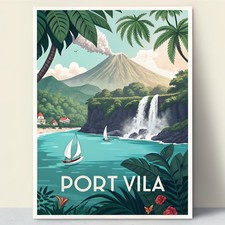
The best way to understand Vanuatu folklore is therefore to think in layers: northern creator and trickster stories such as Qat or Kpwet; ancestor and spirit traditions embodied in masks, dances and restricted knowledge; place-based oral histories such as Chief Roi Mata and Kuwae; dramatic seasonal customs such as Pentecost land diving; and newer movements such as John Frum on Tanna, where twentieth-century colonial disruption, war and local prophecy became part of Vanuatu’s modern mythic landscape.[anglicanhistory.org]anglicanhistory.orgOpen source on anglicanhistory.org.
Why Vanuatu folklore is so local
Vanuatu’s traditions are unusually hard to compress into a neat “national myths” list because the country’s cultural diversity is not decorative background; it is the structure of the folklore itself. A story may be told in one language, tied to one reef, cave, village, dance ground or chiefly title, and understood differently only a short distance away. Linguistic research describes Vanuatu as the country with the world’s highest linguistic density, with its many Oceanic languages developing over roughly three millennia from earlier shared networks into today’s mosaic.[Open Research Repository]openresearch-repository.anu.edu.auOpen source on edu.au.
This helps explain why a visitor looking for “Vanuatu mythology” often finds a mixture of creator stories, local legends, ceremonial masks, spirit dances, volcanic memories and Christian-era prophetic movements. They are connected, but not interchangeable. Vanuatu’s oral literature has been passed down by word of mouth, and recent scholarship stresses that it still needs careful local description before broad comparisons are made across the archipelago.[Linguistic Society of New Zealand]nzlingsoc.orgmyths tales or history on two storytelling traditions in vanuatumyths tales or history on two storytelling traditions in vanuatu
The everyday word often used for indigenous custom, knowledge and practice is “kastom”. It can include social rules, land relationships, ritual authority, ancestral knowledge, performance, story, healing, ecological knowledge and moral expectations. The Vanuatu Cultural Centre describes its role as preserving, protecting and promoting the country’s culture, while its research policy defines fieldworkers as voluntary community-based workers responsible for documenting, maintaining and developing kastom in their own communities.[Vanuatu Cultural Centre]vanuatuculturalcentre.gov.vuOpen source on vanuatuculturalcentre.gov.vu.
Qat, Kpwet and the northern creator stories
One of the best-known figures in Vanuatu’s older recorded mythology is Qat, associated especially with the Banks Islands in northern Vanuatu. In Robert Henry Codrington’s nineteenth-century account of Melanesian anthropology and folklore, Qat appears as the eldest of twelve brothers in Vanua Lava, a creative and trickster-like figure who makes people, pigs, trees and rocks in a world that already exists. Codrington also describes Marawa, a spider spirit, as Qat’s assistant and sometimes opponent.[Anglican History]anglicanhistory.orgOpen source on anglicanhistory.org.
Modern linguistic and folklore work shows that Qat is not simply one standardised “god” with a single name. In different northern Vanuatu languages and traditions, related forms include Qet, Iqet, Qo’ and Kpwet, and stories vary across islands and speech communities. A 2025 study of storytelling traditions in Vanuatu notes Qat as the cultural hero of the Banks Islands and treats these narratives as part of a broader oral-literary system rather than as a single fixed mythbook.[Hal Science]hal.scienceBessis Fran%C3%A7ois 2025 Myths tales or history TeReoBessis Fran%C3%A7ois 2025 Myths tales or history TeReo
For a general reader, Qat is memorable because he sits at the border between creator, culture-bringer and trickster. Stories associated with him explain not only how things came to be, but why social life has rules, why night exists, why death exists, and why human beings live within limits. That makes Qat comparable in broad function to culture heroes elsewhere in Oceania, but the details belong to northern Vanuatu’s own languages, places and storytelling traditions.[Wikipedia]WikipediaQat (deityQat (deity
Alexandre François’s online archive of traditional stories from Vanuatu gives a useful public window into this world. It includes stories such as “Kpwet the trickster god”, “The Fairy from the Other World”, “The island of the Dancing Spirits”, “The Pixies” and “The three wives of the Gecko”, often presented with local-language versions, English translation and notes on who told the story and where it was recorded.[Marama]marama.huma-num.frMarama Alexandre FrancoisMarama Alexandre Francois

Spirits, ancestors and masked performance
Vanuatu folklore is not only told in words. It is also danced, masked, sung, carved, restricted, inherited and performed. In northern Vanuatu, one important term is “tamate”. François explains that its original meaning was “dead person”, from which it developed into meanings such as ghost, ancestor or godly spirit; the same word can also refer to ritual headdresses used in dances.[Marama]marama.huma-num.frMarama Alexandre FrancoisMarama Alexandre Francois
That double meaning is important. In many outside museum displays, a mask may look like an “art object”. In its original setting, it may have belonged to a system of rights, initiations, grades, payments, ancestor relations and controlled knowledge. The Metropolitan Museum of Art, describing a helmet mask from south-west Malakula, notes that many Vanuatu peoples have complex men’s secret societies involving initiation rites, festivals and pig sacrifices through which men gain religious and social status.[The Metropolitan Museum of Art]metmuseum.orgThe Metropolitan Museum of Art Helmet Mask (Temes MbalmbalThe Metropolitan Museum of Art Helmet Mask (Temes Mbalmbal
This does not mean every mask is a “monster” in the modern horror sense. The supernatural force is usually social and ancestral as much as frightening: masks can make visible beings or powers that are otherwise unseen, mark rank, dramatise authority, and connect living people with the dead. Some accounts of Vanuatu ritual objects also stress that ceremonial objects could lose their significance once the ceremony was complete, and that some masks or costumes were destroyed or disposed of after use.[Academia]academia.eduPDF) The traditional art forms of VanuatuPDF) The traditional art forms of Vanuatu
For folklore readers, the key point is that Vanuatu’s spirit traditions often live in performance rather than in isolated “creature profiles”. A story about a dancing spirit, a ghost, an ancestor mask or a restricted society is usually also a story about who has the right to know, speak, carve, dance, inherit or enter a sacred space.
Chief Roi Mata: when oral tradition becomes a World Heritage landscape
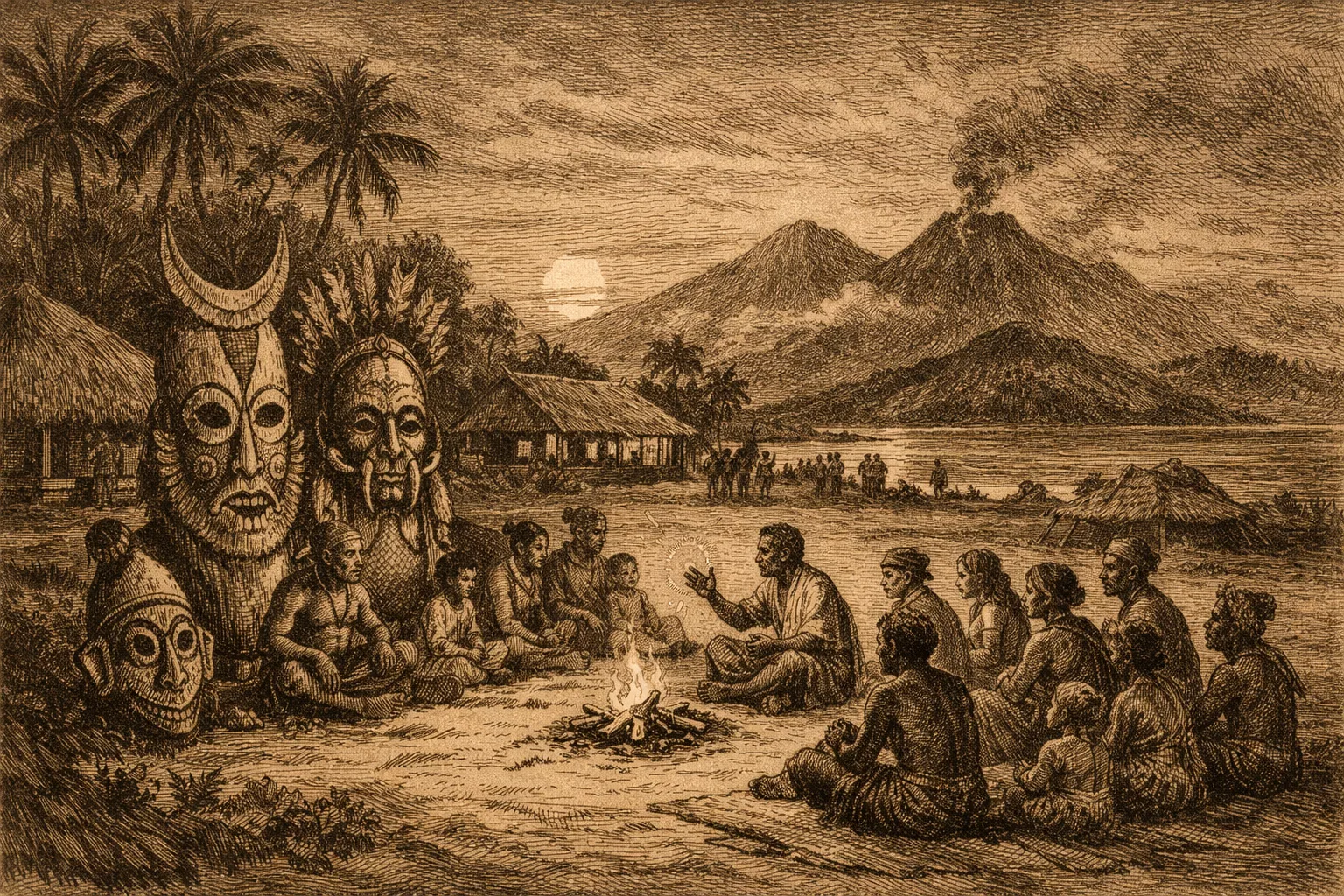
Chief Roi Mata is one of the strongest examples of Vanuatu oral tradition being recognised in formal heritage terms. UNESCO’s World Heritage listing describes Chief Roi Mata’s Domain as three early seventeenth-century sites on Efate, Lelepa and Artok associated with the life and death of the last paramount chief of central Vanuatu. The property includes his residence, the place of his death and a mass burial site, and UNESCO explicitly links the landscape to oral traditions surrounding the chief and the moral values associated with him.[UNESCO World Heritage Centre]whc.unesco.orgOpen source on unesco.org.
This is not folklore in the sense of a vague tale detached from place. It is a cultural landscape where memory, archaeology, chiefly authority, burial, prohibition and land all reinforce one another. UNESCO’s decision on the inscription states that the site’s authenticity lies in the continuing association of the landscape with Roi Mata oral traditions, the continuity of chiefly systems and the customary prohibitions attached to the remains of his life.[UNESCO World Heritage Centre]whc.unesco.orgWorld Heritage Centre DecisionWorld Heritage Centre Decision
For readers, Roi Mata is a useful caution against treating oral tradition as either “just myth” or straightforward written history. The story matters because people continue to organise respect, memory and place around it. It also matters because it shows how oral tradition can preserve political and moral ideas: the figure of a powerful chief remembered for social order, conflict resolution and lasting authority across central Vanuatu.[UNESCO World Heritage Centre]whc.unesco.orgOpen source on unesco.org.
Kuwae: a volcanic catastrophe remembered in story
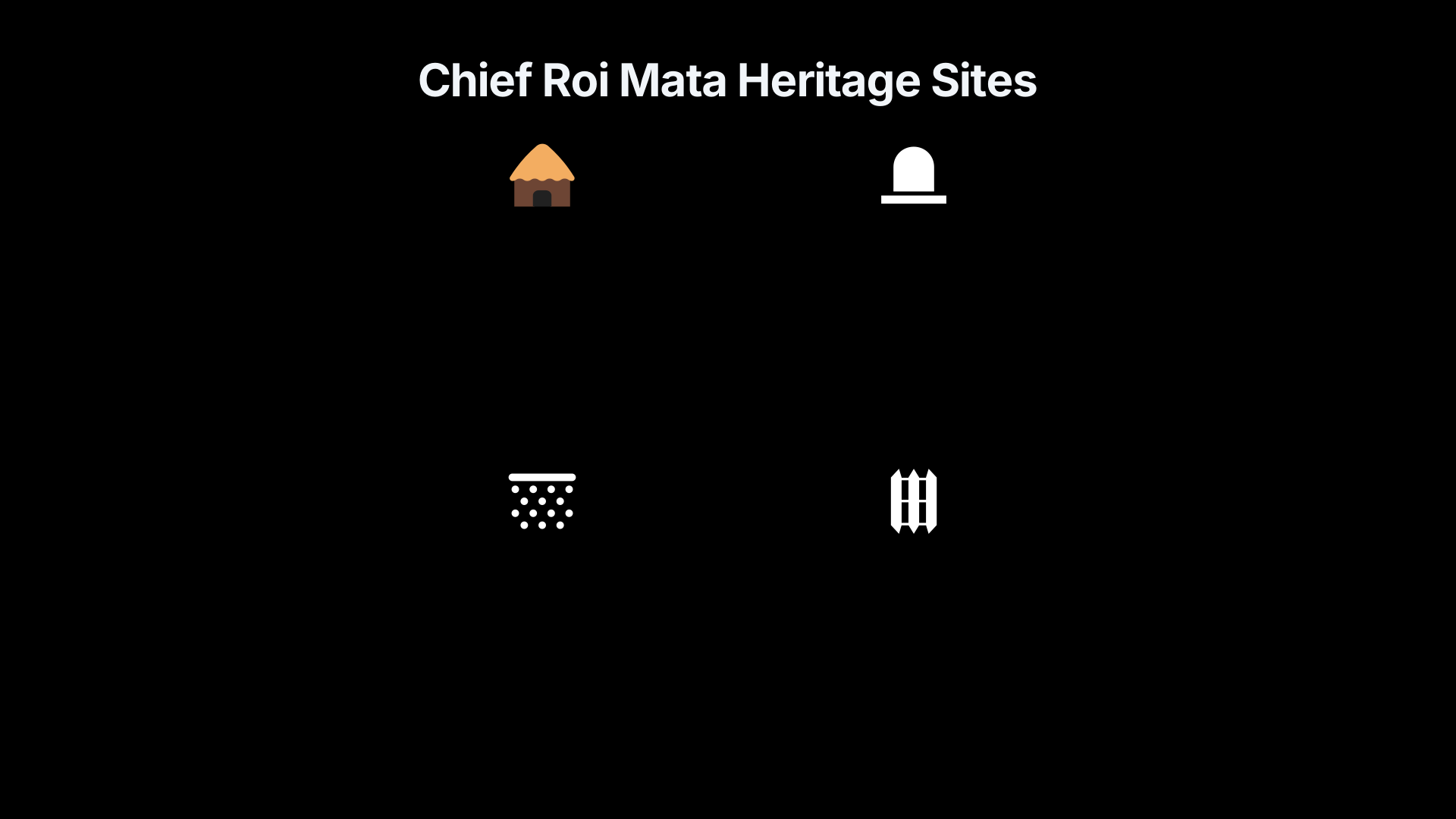
Vanuatu’s volcanic landscape has also shaped its folklore. The most striking case is Kuwae, a former landmass or volcanic area in central Vanuatu associated with traditions of catastrophic eruption, collapse, displacement and resettlement. Recent geological research on the mid-fifteenth-century Tombuk eruption notes that oral tradition was central to earlier archaeological work in the Shepherd Islands and that local narratives remain important in discussions of land and chiefly succession.[Springer]link.springer.comOpen source on springer.com.
This is a good example of folklore carrying environmental memory, but also of why careful wording matters. There is evidence for major volcanic activity and for oral traditions about destruction and resettlement, yet the exact relationship between the stories, the caldera, the eruption date and wider climate effects has been debated by volcanologists and historians. A Wired overview of the Kuwae debate notes that folklore describes earthquakes, tsunamis, collapse and flight, but also that dating and interpretation are difficult.[WIRED]wired.comkuwae eruption of the 1450s missing or mythical calderakuwae eruption of the 1450s missing or mythical caldera
For folklore readers, the value of the Kuwae material is not simply “a legend came true”. It is more interesting than that. It shows how island communities can encode disaster, migration, loss and renewed settlement in narrative form, while scientists and historians still have to test which parts of the story correspond to geological events, which parts belong to later social memory, and which parts cannot be neatly separated.
Land diving on Pentecost: a seasonal ritual with a story at its heart
Pentecost Island’s land diving is one of Vanuatu’s most famous public traditions. Men jump from tall wooden towers with vines tied to their ankles, and the practice is strongly associated with the yam harvest season. Sources commonly link a successful dive with fertility, health, strength and the hope of a good crop, while also noting that the ceremony has become a major cultural attraction for visitors.[Wikipedia]WikipediaLand divingLand diving
The origin story often told about land diving begins with a woman fleeing her husband. She climbs a tree, ties vines to her ankles and jumps safely; he follows without tying vines and falls to his death. In later versions, men take over the practice, and the ritual becomes linked with masculinity, seasonal renewal and agricultural success.[Wikipedia]WikipediaLand divingLand diving
What makes land diving important for a folklore page is the way story, season, body and landscape meet. The tradition is not merely a spectacle. It is a performed narrative about danger, gender, fertility, skill, timing and the relationship between people and yams. Its modern presentation to tourists can make it look like an “extreme sport”, but the older frame is ceremonial and agricultural rather than recreational.[Wikipedia]WikipediaLand divingLand diving
John Frum: modern myth, prophecy and colonial encounter
Not all Vanuatu folklore is ancient. The John Frum movement on Tanna is a modern religious and mythic tradition that developed in the context of colonial rule, missionary influence, local resistance, and the extraordinary arrival of American military goods and personnel during the Second World War. The Smithsonian describes John Frum Day on 15 February at Lamakara, where devotees honour a ghostly American messiah believed to bring cargo from America.[Smithsonian Magazine]smithsonianmag.comOpen source on smithsonianmag.com.
The phrase “cargo cult” is often used for John Frum, but it can be misleading if it makes followers sound naive or comic. More careful accounts treat such movements as responses to upheaval: colonial inequality, missionary pressure, sudden military abundance, and questions about who controls wealth, knowledge and modernity. A CNRS-linked summary describes John Frum as a supernatural figure whose prophecies gave rise to an indigenous social protest movement during the Second World War.[CNRS HAL]cnrs.hal.scienceCNRS HALstrangers as cargo cult leaders in Tanna (VanuatuCNRS HALstrangers as cargo cult leaders in Tanna (Vanuatu
John Frum belongs on a folklore page because it shows myth-making in recent history. The figure can be described as American, ancestral, prophetic, spiritual or political depending on the account. Ritual parades, flags, songs and expectations of return turn twentieth-century history into a living sacred narrative. That makes John Frum different from Qat or Roi Mata, but not outside folklore: it is a modern Vanuatu tradition about power, promise, outsiders and the unfinished meaning of colonial encounter.[Smithsonian Magazine]smithsonianmag.comOpen source on smithsonianmag.com.
Storytelling today: archives, language loss and living knowledge
Vanuatu’s folklore is still being recorded, retold and debated. The Vanuatu Cultural Centre’s fieldworker network is especially important because it is not simply an outside academic collecting project. Its research policy describes fieldworkers as community-based ni-Vanuatu volunteers who document and maintain kastom locally, and other descriptions of the network emphasise decades of indigenous collaborative cultural research across much of the archipelago.[Vanuatu Cultural Centre]vanuatuculturalcentre.gov.vuOpen source on vanuatuculturalcentre.gov.vu.
This matters because oral tradition changes. Lissant Bolton’s work on the Vanuatu Cultural Centre fieldworker programme stresses that documentation raises questions about how oral traditions transform to meet new circumstances. In other words, recording a story does not freeze it forever; it creates one version in a particular moment, told by a particular person for particular listeners.[Cambridge Repository]repository.cam.ac.ukOpen source on cam.ac.uk.
Recent reporting on traditional environmental knowledge in Vanuatu shows why this is urgent. In Tafea province, elders and specialists hold knowledge of weather, wind, plants and farming that is bound up with language and spiritual understanding, while researchers and communities are working to document endangered languages and ecological knowledge under pressure from schooling changes, environmental change and language loss.[The Guardian]theguardian.comOpen source on theguardian.com.
For a modern reader, that means Vanuatu folklore should not be imagined as a closed museum shelf of old stories. It is a living field of knowledge: some public, some restricted; some translated, some not; some performed for visitors, some kept within communities; some ancient in theme, some born from modern history.
What to read as “old tradition”, “retelling” and “tourist version”
Vanuatu folklore appears in several different forms online and in books, and they are not all the same kind of evidence. Older missionary and anthropological sources, such as Codrington, preserve valuable early records but also reflect the assumptions and limits of their time. Modern linguistic archives often give fuller attention to local language, storyteller and setting. UNESCO and museum sources help connect oral traditions to places and objects, but they may compress complex living traditions for public display.[anglicanhistory.org]anglicanhistory.orgOpen source on anglicanhistory.org.
Tourist accounts can be useful for showing what visitors encounter today, especially with land diving, Roi Mata tours or John Frum ceremonies, but they often simplify local meanings. A land dive may be advertised as a thrilling spectacle; in its local frame it is also seasonal, agricultural and ceremonial. A mask may be photographed as “tribal art”; in context it may belong to rights, grades, ancestors and prohibitions.[Wikipedia]WikipediaLand divingLand diving
The safest rule is to ask what kind of tradition is being described:
- A local oral story, such as Qat, Kpwet or a Motalava tale, is best read with attention to language, island and storyteller.
- A sacred landscape, such as Chief Roi Mata’s Domain, should be read through place, oral memory and continuing customary respect.
- A ritual performance, such as land diving or masked dance, needs season, authority and social context.
- A modern prophetic movement, such as John Frum, should be understood through colonial history, local agency and living belief rather than treated as a curiosity.
- An internet retelling may be entertaining, but it should not be treated as the oldest or most authoritative version unless it points back to a strong source.
Why Vanuatu folklore matters
Vanuatu folklore matters because it shows how stories can hold together landscape, language, ancestry, disaster memory, moral authority and modern identity. A tale about Qat is not only a creation story; it is part of a northern Vanuatu world of language, place and cultural explanation. Roi Mata is not only a legendary chief; he is tied to a recognised cultural landscape still meaningful to living communities. Kuwae is not only a volcano story; it is a case where oral memory and geological research meet, sometimes productively and sometimes uneasily.[anglicanhistory.org]anglicanhistory.orgOpen source on anglicanhistory.org.
The country’s folklore also challenges a common outside habit: looking for one official pantheon, one monster list or one national origin myth. Vanuatu’s tradition is more fragmented, more local and more interesting. Its stories belong to a country where languages, islands and histories sit close together but do not collapse into one another. That is why the most honest account of Vanuatu folklore is not a single mythology summary, but a map of living traditions: creator figures, ancestral spirits, sacred landscapes, seasonal rites, volcanic memories and modern prophetic stories, each rooted in a particular community’s way of remembering and explaining the world.
Amazon book picks
Further Reading
Books and field guides related to Why Vanuatu's Folklore Lives Island by Island. Use these as the next step if you want deeper reading beyond the article.
From the Holy Mountain
Offers a broader lens on living traditional cultures and memory.
eBay marketplace picks
Marketplace Samples
Live-tested eBay searches with available results related to this page.

Endnotes
1.
Source: whc.unesco.org
Link:https://whc.unesco.org/en/list/1280/
2.
Source: hal.science
Title: Bessis Fran%C3%A7ois 2025 Myths tales or history TeReo
Link:https://hal.science/hal-05479737/file/Bessis-Fran%25C3%25A7ois_2025_Myths-tales-or-history_TeReo.pdf
3.
Source: Wikipedia
Title: Qat (deity)
Link:https://en.wikipedia.org/wiki/Qat_%28deity%29
4.
Source: academia.edu
Title: (PDF) The traditional art forms of Vanuatu
Link:https://www.academia.edu/45639923/The_traditional_art_forms_of_Vanuatu
5.
Source: whc.unesco.org
Title: World Heritage Centre Decision
Link:https://whc.unesco.org/en/decisions/1488/
6.
Source: link.springer.com
Link:https://link.springer.com/article/10.1186/s13617-023-00138-1
7.
Source: wired.com
Title: kuwae eruption of the 1450s missing or mythical caldera
Link:https://www.wired.com/2012/05/kuwae-eruption-of-the-1450s-missing-or-mythical-caldera
8.
Source: Wikipedia
Title: Land diving
Link:https://en.wikipedia.org/wiki/Land_diving
9.
Source: cnrs.hal.science
Title: CNRS HALstrangers as cargo cult leaders in Tanna (Vanuatu)
Link:https://cnrs.hal.science/hal-03919264
10.
Source: Wikipedia
Link:https://en.wikipedia.org/wiki/Vanuatu
11.
Source: Wikipedia
Link:https://en.wikipedia.org/wiki/Tuvalu
12.
Source: Wikipedia
Title: Tuvaluan mythology
Link:https://en.wikipedia.org/wiki/Tuvaluan_mythology
13.
Source: Wikipedia
Title: Melanesian mythology
Link:https://en.wikipedia.org/wiki/Melanesian_mythology
14.
Source: Wikipedia
Link:https://en.wikipedia.org/wiki/Kuwae
15.
Source: Wikipedia
Title: John Frum
Link:https://en.wikipedia.org/wiki/John_Frum
16.
Source: Wikipedia
Title: Languages of Vanuatu
Link:https://en.wikipedia.org/wiki/Languages_of_Vanuatu
17.
Source: unesco.org
Title: document 1531
Link:https://www.unesco.org/archives/multimedia/document-1531
18.
Source: whc.unesco.org
Link:https://whc.unesco.org/en/list/1280/video
19.
Source: shs.hal.science
Link:https://shs.hal.science/halshs-00869690/file/AlexFrancois_2013Shadows-of-bygone-lives-The-histories-of-spiritual-words-in-northern-Vanuatu_1.pdf
20.
Source: shs.hal.science
Title: Francois et al 2015 Languages of Vanuatu SLIM
Link:https://shs.hal.science/halshs-01186004/file/Francois-et-al_2015_Languages-of-Vanuatu_SLIM.pdf
21.
Source: alex.francois.online.fr
Link:https://alex.francois.online.fr/data/AlexFrancois_2013_Shadows-of-bygone-lives-The-histories-of-spiritual-words-in-northern-Vanuatu.pdf
22.
Source: vanuatu.travel
Title: Tourism Office
Link:https://www.vanuatu.travel/en/?catid=2&id=157%3Awhat-is-kastom&option=com_content&view=article
23.
Source: vanuatu.travel
Title: Tourism Office
Link:https://www.vanuatu.travel/
24.
Source: pantheon.org
Link:https://pantheon.org/articles/q/qat.html
25.
Source: lacito.cnrs.fr
Link:https://lacito.cnrs.fr/en/alexandre-francois-araki-a-disappearing-language-of-vanuatu/
26.
Source: academia.edu
Link:https://www.academia.edu/26294987/Oral_Tradition_and_the_Creation_of_Late_Prehistory_in_Roviana_Lagoon_Solomon_Islands
27.
Source: academia.edu
Link:https://www.academia.edu/3653162/Chief_Roi_Matas_Domain_Challenges_facing_a_World_Heritage_nominated_property_in_Vanuatu
28.
Source: academia.edu
Link:https://www.academia.edu/41063013/Fairy_Elves_and_the_Enchanted_Otherworld
29.
Source: thecommonwealth.org
Title: Commonwealth Vanuatu
Link:https://thecommonwealth.org/our-member-countries/vanuatu
30.
Source: openresearch-repository.anu.edu.au
Link:https://openresearch-repository.anu.edu.au/items/d169c7da-6482-41cd-b00a-2d8f6be8133c
31.
Source: anglicanhistory.org
Link:https://anglicanhistory.org/oceania/codrington/melanesians1915.html
32.
Source: smithsonianmag.com
Link:https://www.smithsonianmag.com/history/in-john-they-trust-109294882/
33.
Source: nzlingsoc.org
Title: myths tales or history on two storytelling traditions in vanuatu
Link:https://nzlingsoc.org/journal_article/myths-tales-or-history-on-two-storytelling-traditions-in-vanuatu/
34.
Source: vanuatuculturalcentre.gov.vu
Link:https://vanuatuculturalcentre.gov.vu/
35.
Source: vanuatuculturalcentre.gov.vu
Link:https://vanuatuculturalcentre.gov.vu/index.php/research/research-permits/research-policy
36.
Source: marama.huma-num.fr
Title: Marama Alexandre Francois
Link:https://marama.huma-num.fr/AFtxt_mtp-gecko_e.htm
37.
Source: marama.huma-num.fr
Title: Marama Alexandre Francois
Link:https://marama.huma-num.fr/AFtxt_mtp-romanmangan_e.htm
38.
Source: marama.huma-num.fr
Title: Marama Alexandre Francois
Link:https://marama.huma-num.fr/AFtxt_msn-kpwet_e.htm
39.
Source: marama.huma-num.fr
Title: Marama Alexandre Francois
Link:https://marama.huma-num.fr/AFtxt_tea-tamate_e.htm
40.
Source: metmuseum.org
Title: The Metropolitan Museum of Art Helmet Mask (Temes Mbalmbal)
Link:https://www.metmuseum.org/art/collection/search/313546
41.
Source: scccp.net
Title: vanuatu cultural centres fieldworker network
Link:https://scccp.net/2018/08/24/vanuatu-cultural-centres-fieldworker-network/
42.
Source: repository.cam.ac.uk
Link:https://www.repository.cam.ac.uk/items/71b72baf-73dd-4b4e-90f1-985fcdbbf665
43.
Source: theguardian.com
Link:https://www.theguardian.com/world/article/2024/sep/07/weather-magic-and-wind-lore-the-push-to-preserve-ancient-knowledge-in-vanuatu
44.
Source: researchgate.net
Link:https://www.researchgate.net/publication/359352151_Vanuatu_Cultural_Centre_Fieldwork_Network
45.
Source: marama.huma-num.fr
Link:https://marama.huma-num.fr/AFtxt_select_e.htm
46.
Source: jstor.org
Title: the vanuatu cultural centre
Link:https://www.jstor.org/stable/40793554
47.
Source: proboscis.org.uk
Title: vanuatu cultural centre
Link:https://proboscis.org.uk/tag/vanuatu-cultural-centre/
48.
Source: books.openedition.org
Link:https://books.openedition.org/pacific/170?lang=en
49.
Source: GOV.UK
Link:https://www.gov.uk/foreign-travel-advice/vanuatu
50.
Source: ewalukaszyk.com
Title: VANUAT U
Link:https://www.ewalukaszyk.com/vanuatu.html
51.
Source: intrepidtravel.com
Link:https://www.intrepidtravel.com/uk/vanuatu
52.
Source: gov.vu
Link:https://www.gov.vu/index.php/about/about-vanuatu
Additional References
53.
Source: researchgate.net
Link:https://www.researchgate.net/publication/408276823_Living_with_fire_Volcanic_mythologies_in_Vanuatu
54.
Source: researchgate.net
Link:https://www.researchgate.net/publication/250277765_Oral_tradition_and_the_creation_of_Late_Prehistory_in_Roviana_Lagoon_Solomon_Islands_In_A_Pacific_Odyssey_Archaeology_and_Anthropology_in_the_Western_Pacific_Papers_in_Honour_of_Jim_Specht
55.
Source: facebook.com
Link:https://www.facebook.com/LivingInVanuatuNews/posts/a-cargo-cult-in-vanuatu-has-been-waiting-for-an-american-named-john-frum-since-t/1336087085387303/
56.
Source: mtp.travel
Link:https://mtp.travel/whss/1280-chief-roi-matas-domain
57.
Source: smarthistory.org
Link:https://smarthistory.org/chief-roi-mata-domain/
58.
Source: christravelblog.com
Link:https://www.christravelblog.com/vanuatu-chief-roi-matas-domain-tour-must-do-day-trip-from-port-vila/
59.
Source: worldheritagesites.net
Link:https://worldheritagesites.net/chief-roi-matas-domain/
60.
Source: arcus-atlantis.org.uk
Link:https://www.arcus-atlantis.org.uk/creation-stories/western-oceania.html
61.
Source: natlib.govt.nz
Link:https://natlib.govt.nz/records/20631300
62.
Source: instagram.com
Link:https://www.instagram.com/p/DUQ4iq1CIXg/
Topic Tree
Follow this branch
Related pages 192
- Afghan Folklore
- Albanian Folklore
- Algerian Folklore
- Australian Folklore
- Azerbaijan Folklore
- +187 more in sidebar