Unsettling Folklore of Sweden
Swedish folklore is best understood as a living map of relationships: between farm and forest, people and animals, water and music, Christian teaching and older popular belief, local memory and modern retelling.
Page outline Jump by section
Introduction
The strongest thread running through Swedish folklore is not a single national myth, but a pattern: every place has powers, and people survive by respecting boundaries. The farm spirit expects order. The forest spirit may reward or mislead. The water spirit plays beautiful music but can be deadly. The underground people are neighbourly until disturbed. Later artists, writers, museums, tourist boards and horror films have turned these traditions into national imagery, but the older material is often more practical, intimate and unsettling than the postcard version.[Isof]isof.seOpen source on isof.se.
What makes Swedish folklore distinctive?
Swedish folklore grew out of a rural country of forests, lakes, rivers, farms, mines, coastlines and long seasonal contrasts. That matters because many Swedish beings are tied to specific working environments. There are spirits of the farmyard, forest, water, mine, mountain and household. Rather than a neat pantheon, the tradition is full of local powers: some help, some punish, and many do both depending on how humans behave. The Institute for Language and Folklore describes this broad field as including older beings, modern beings, folk belief, legends and storytelling traditions rather than one fixed mythology.[Isof]isof.seVäsengallerietNäcken. Ett lurigt, musikaliskt och farligt väsen som kunde byta skepnad och höll till i vattendrag. Rymdvarelser. Rymd…
A useful distinction is between Norse mythology and later Swedish folk belief. Norse mythology belongs mainly to pre-Christian and medieval Scandinavian religious tradition, with gods, giants and cosmic stories; Sweden’s Historical Museum describes it as the mythic world of the Viking period before Christianity. Swedish folklore, by contrast, is often the later, local, everyday tradition of farm spirits, witches, water beings, forest beings, ghosts, charms and legends collected from oral sources. The two overlap, but they are not the same thing.[Historiska Museet]historiska.seMuseet Norse mythologyMuseet Norse mythology
The other key feature is moral ambiguity. A Swedish spirit is rarely “good” or “evil” in a simple modern fantasy sense. The farm spirit may protect animals but assault a lazy or disrespectful farmhand. The forest woman may bring hunting luck or lure a man astray. The underground people may live peacefully beneath the human world, but cause trouble if someone pours hot water, builds in the wrong place or blocks their route. These stories are not just monster tales; they encode rules about work, restraint, respect, naming, gifts and danger.[Isof]isof.seOpen source on isof.se.
The farm spirit: Sweden’s most familiar household being
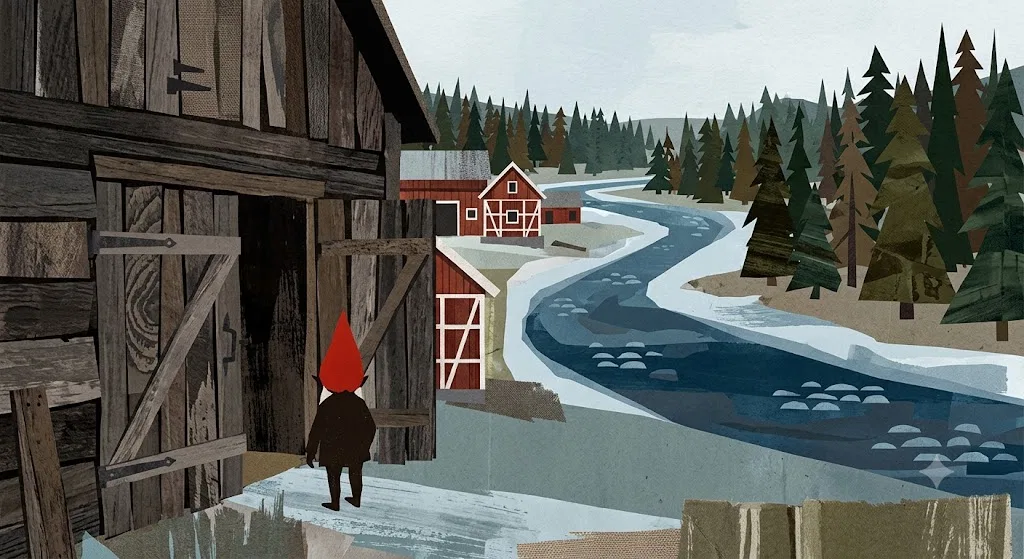
The Swedish farm spirit is one of the country’s most recognisable folklore figures, but the older being should not be confused with the modern Christmas gift-bringer. In older folk belief, he was a small, often elderly-looking male figure attached to a farm. He helped with work, guarded animals, kept order and could explain why one farm prospered while another failed. The Institute for Language and Folklore says its archives contain more than a thousand stories about this figure from different Swedish provinces, with roots attested at least as far back as medieval references associated with Saint Bridget.[Isof]isof.seOpen source on isof.se.
The old farm spirit was no cuddly decoration. He might be mostly invisible, small as a child or even smaller, dressed in rough work clothes and a cap, and fiercely attached to routines. He cared for horses and cattle, swept, carried straw, sifted flour and watched over the farm’s welfare. But if people mistreated animals, worked noisily at the wrong time, neglected the farm or mocked him, he could retaliate with blows, sabotage or worse. The point of the story was often moral: prosperity required disciplined labour and respect for the unseen order of the household.[Isof]isof.seOpen source on isof.se.
Food offerings were central. Porridge, often with butter, appears in many stories as the gift that keeps relations right. One widely told motif has the spirit becoming furious when he thinks the butter has been omitted, only to discover later that it had sunk to the bottom. Even gifts could be dangerous if they upset the balance: in some tales, new fine clothes make the spirit too proud to continue working. That detail is important because it shows how Swedish folklore often values moderation over generosity for its own sake.[Isof]isof.seOpen source on isof.se.
The modern Christmas figure blends several streams: the older farm spirit, imported Father Christmas imagery, Saint Nicholas traditions and the Christmas goat. The older farm spirit belongs to work, animals and the farmyard; the later Christmas figure belongs to gifts, children and national seasonal imagery. Treating them as identical flattens the tradition.[Isof]isof.seVäsengallerietNäcken. Ett lurigt, musikaliskt och farligt väsen som kunde byta skepnad och höll till i vattendrag. Rymdvarelser. Rymd…

Forests, desire and danger
The Swedish forest is one of the great engines of the country’s folklore. It is a place of livelihood, hunting, charcoal-burning, timber work, grazing and risk. In that setting, the forest woman — often described as a female ruling power of the woods — became one of Sweden’s most vivid legendary beings. She was thought to command the forest, its animals and those who entered it, and she could be either helpful or dangerous.[Isof]isof.seSkogsråFolktrons skogsrå tänktes råda över skogen, djuren och alla som vistades där. För människorna kunde hon vara både farlig och hjälpSkogsråFolktrons skogsrå tänktes råda över skogen, djuren och alla som vistades där. För människorna kunde hon vara både farlig och hjälp
In many later descriptions she appears as a beautiful woman seen from the front, but hollow like a rotten tree trunk from behind, sometimes with a tail. She is especially associated with southern and central Sweden, though northern stories may merge her traits with underground or hidden beings. The Institute for Language and Folklore notes that she had many local names and nicknames, which is a useful reminder that “Swedish folklore” was never one uniform script; it was a patchwork of regional speech, place memory and local narrative habits.[Isof]isof.seSkogsråFolktrons skogsrå tänktes råda över skogen, djuren och alla som vistades där. För människorna kunde hon vara både farlig och hjälpSkogsråFolktrons skogsrå tänktes råda över skogen, djuren och alla som vistades där. För människorna kunde hon vara både farlig och hjälp
The stories often turn on male vulnerability in the forest. Hunters, charcoal-burners and woodsmen meet a strange woman, are asked their names, are tempted, aided or led astray. Some tales reward politeness or offerings with hunting luck; others warn that revealing one’s true name gives the being power. In one recurring trickster motif, a man answers that his name is “Self” or “Nobody”, so that when the being is burned or driven off, the cry of blame becomes useless. The Swedish archive explicitly notes the resemblance between such name-trick motifs and classical story patterns, showing that local legend can share very old international narrative structures while remaining rooted in Swedish places and occupations.[Isof]isof.seSkogsråFolktrons skogsrå tänktes råda över skogen, djuren och alla som vistades där. För människorna kunde hon vara både farlig och hjälpSkogsråFolktrons skogsrå tänktes råda över skogen, djuren och alla som vistades där. För människorna kunde hon vara både farlig och hjälp
The forest woman also reveals how folklore changes with social history. The Institute for Language and Folklore discusses the possibility that her increasingly female form may be connected with male-dominated forest work in the nineteenth century, when men spent long periods alone in remote woods. Whether or not that explains every variant, it helps modern readers see the being not as a static “creature profile” but as a figure shaped by labour, gender, loneliness and danger.[Isof]isof.seSkogsråFolktrons skogsrå tänktes råda över skogen, djuren och alla som vistades där. För människorna kunde hon vara både farlig och hjälpSkogsråFolktrons skogsrå tänktes råda över skogen, djuren och alla som vistades där. För människorna kunde hon vara både farlig och hjälp
Water spirits and the power of music
Swedish water folklore often gathers around a dangerous, musical being associated with rivers, streams and waterfalls. The Institute for Language and Folklore summarises him as a cunning, musical and dangerous shape-shifter who lives in waterways. Tourist and cultural summaries usually present him as a beautiful or eerie musician whose playing can lure people towards drowning, but the older tradition is broader: water is attractive, useful and deadly, and music becomes the sign of that double power.[Isof]isof.seVäsengallerietNäcken. Ett lurigt, musikaliskt och farligt väsen som kunde byta skepnad och höll till i vattendrag. Rymdvarelser. Rymd…
This figure matters because Sweden’s landscape is full of lakes and running water. Stories of water beings gave narrative form to real hazards: children near streams, workers near mills, travellers crossing rivers, young people drawn to forbidden places. The being’s fiddle-playing is not a random decoration. It gives danger beauty. That makes the story more memorable than a simple warning not to go near the water.
Water beings also show how Swedish folk belief absorbed Christian moral framing without losing older landscape-centred patterns. Erotic temptation, the devil, music, drowning and untamed nature can become tangled in the same legend cluster. The Institute’s reading list includes Mikael Häll’s study of the forest spirit, the water spirit and the devil in seventeenth- and eighteenth-century Sweden, which points to a historical world where nature beings could be interpreted through demonology, sexuality and church teaching as well as through local experience.[Isof]isof.selastips folkminnenlastips folkminnen
Trolls are not only the big-nosed giants of picture books
Modern audiences often imagine Swedish trolls through the art of John Bauer: huge, mossy, melancholy beings with heavy noses, peering from the forest at children, princesses and glowing pools. Bauer’s influence is real. Sweden’s Nationalmuseum notes that it was Bauer who helped give many people the now-familiar image of trolls as ugly beings with prominent noses, while also pointing out that folklore trolls could look much more human and might even be beautiful, often betrayed by tails.[National Museum Collection]collection.nationalmuseum.seOpen source on nationalmuseum.se.
Older troll belief was wide and flexible. In Scandinavian tradition, “troll” could refer to several kinds of supernatural human-like beings, and in Swedish folk culture it sometimes overlapped with giants, hidden people, dangerous outsiders, mountain beings or fairy-tale monsters. The Institute for Language and Folklore’s creature gallery explicitly warns that folk-belief trolls differ from the trolls most people know today from fairy tales and artistic depictions.[Isof]isof.seVäsengallerietNäcken. Ett lurigt, musikaliskt och farligt väsen som kunde byta skepnad och höll till i vattendrag. Rymdvarelser. Rymd…
This difference matters because the “classic Swedish troll” is partly a modern artistic inheritance. Bauer’s pictures, especially for the annual fairy-tale anthology Among Gnomes and Trolls, reshaped how Swedish folklore looked in the twentieth century. Nationalmuseum’s Bauer works and related collection records show how a literary and visual tradition could take older oral motifs and give them a national style: deep forests, luminous children, hulking beings, silence, twilight and mystery.[Google Arts & Culture]artsandculture.google.comArts & Culture The Princess and the TrollsArts & Culture The Princess and the Trolls
So, when readers ask whether Swedish people “believed in trolls”, the careful answer is: many kinds of troll-related stories were told, but the familiar illustrated troll is a later cultural image built from older materials. The old stories lived in oral tradition, place legends and fairy tales; the modern troll lives also in books, museums, souvenirs, fantasy art and children’s culture.
Underground people, hidden neighbours and the etiquette of place
One of the most revealing Swedish belief patterns concerns beings imagined as living beneath or alongside human settlement. The Institute for Language and Folklore describes the underground people as often friendly but touchy beings who lived under the earth. They might be invisible, own cattle, borrow animals, punish disrespect or become dangerous when humans disturbed their homes and paths.[Isof]isof.seVäsengallerietNäcken. Ett lurigt, musikaliskt och farligt väsen som kunde byta skepnad och höll till i vattendrag. Rymdvarelser. Rymd…
These stories are especially useful for understanding folklore as social etiquette projected onto landscape. People were expected to announce themselves, avoid careless behaviour and respect unseen neighbours. In traditions connected with cattle and spring release, animals could be protected against harmful beings with bells, steel, smoke, crosses, charms or special food. Such practices were not abstract “magic” in the modern fantasy sense; they belonged to the working calendar of farms, grazing, animal health and anxiety over loss.[Isof]isof.seNotkreatur i SverigeNotkreatur i Sverige
The northern Swedish being often called vittra is particularly important because it appears in stories of hidden roads, underground cattle and places where building or disturbance brings misfortune. In a country where farms, forests and grazing lands were not just scenery but survival systems, such tales helped people talk about environmental limits, neighbourly conduct and unexplained bad luck. They also show why regional folklore cannot be reduced to a single national cast list. Northern, southern, coastal, forested and mining regions emphasised different dangers.

Ghosts, the returning dead and haunted Sweden
Swedish ghost tradition includes both older ideas of the returning dead and modern talk of “ghosts” in castles, manor houses, hotels, cities and former institutions. The Institute for Language and Folklore distinguishes between older returning-dead traditions and modern ghost belief, while placing both within a wider Swedish field of supernatural beings and legends.[Isof]isof.seVäsengallerietNäcken. Ett lurigt, musikaliskt och farligt väsen som kunde byta skepnad och höll till i vattendrag. Rymdvarelser. Rymd…
The older returning dead often had reasons: improper burial, unfinished business, guilt, murder, social tension or danger around death. Modern haunted-place storytelling usually shifts the emphasis to atmosphere, tourism and experience. A traveller may now encounter Swedish ghost lore through guides to haunted manor houses, castles or city walks rather than through a neighbour’s account of a dangerous dead person on a road. Visit Sweden, for example, presents haunted houses as part of cultural travel, while Gothenburg’s official visitor guide offers a haunted-places route through the city’s darker stories.[Visit Sweden]visitsweden.comOpen source on visitsweden.com.
That does not make the modern stories worthless. It shows how folklore changes medium. A legend once told beside a hearth can become a museum tour, a hotel marketing hook, a Halloween article, a podcast episode or a city walk. The risk is that tourism can detach a story from its social setting; the benefit is that it keeps local legends visible to new audiences.
Witches, Easter and the memory of fear
Sweden’s witch folklore has two very different public faces. One is dark: the witch trials of the seventeenth century, especially the great crisis of the 1660s and 1670s, when accusations, child testimony, fear of the devil and ideas of journeys to a witches’ meeting-place contributed to trials and executions. The Smithsonian Center for Folklife and Cultural Heritage discusses this “dark heritage” and the legendary destination associated with Swedish witch belief, while JSTOR Daily notes that the Easter witch tradition is linked to sixteenth- and seventeenth-century fears of witches as agents of Satan.[Smithsonian Folklife Center]folklife.si.eduswedish witch trials dark heritageswedish witch trials dark heritage
The other face is playful: children dressed as Easter witches, often with headscarves, painted cheeks and baskets, visiting houses in a custom that can look to outsiders like a spring cousin of Halloween. That modern child-centred practice does not erase the older fear. It domesticates and reverses it. A figure once imagined as a threat to children becomes a child’s costume.
This transformation is one of the clearest examples of how folklore can turn terror into festivity. National Geographic, drawing on folklorist Per-Anders Östling, connects the famous Swedish trials beginning in 1668 with rumours that children were taken to the witches’ meeting-place; later communities used bonfires and protective customs before Easter, while today the witch figure survives largely in secular seasonal play.[National Geographic]nationalgeographic.comeaster witches sweden traditioneaster witches sweden tradition
Midsummer: celebration, love magic and the strange power of light
Midsummer is one of Sweden’s most famous seasonal traditions, and it sits on the border between public celebration and folk belief. Today it is associated with the countryside, flower wreaths, dancing around a decorated pole, food, drink and gatherings with friends and family. Sweden’s official public information site says Midsummer’s Eve falls on a Friday between 19 and 25 June, and describes flower-picking, wreaths and the decorated pole as central parts of the celebration.[sweden.se]sweden.seswedish midsummerswedish midsummer
For folklore, the interesting part is not only the party but the night. Midsummer belongs to a charged point in the year, close to the summer solstice, when light, fertility, plants, dreams and future marriage become linked. Public Swedish cultural material notes the celebration’s roots in older seasonal tradition, while many popular accounts preserve the custom of placing flowers under the pillow in the hope of dreaming of a future partner.[sharingsweden.se]sharingsweden.seOpen source on sharingsweden.se.
The modern global image of Swedish Midsummer has also been complicated by horror cinema, especially films that borrow the setting while inventing much of the ritual drama. That distinction matters. Real Swedish Midsummer is not a secret survival of cinematic pagan horror. It is a national summer festival with older seasonal and romantic folk motifs layered into modern social life.[Vanity Fair]vanityfair.comVanity Fair Midsommar: What Inspired the Bizarre Folklore in the Film?In addition, Aster drew from British and German folklore, notably James George Frazer's "The Golden Bough" and the philosophy of Rudolf S…
How Sweden’s folklore was collected and preserved
A major reason Swedish folklore is so well documented is the country’s archive culture. The Institute for Language and Folklore is a public authority that researches, explains and spreads knowledge about language, dialects, folk life, names and intangible cultural heritage. Its Map of Nordic Legends makes a portion of Swedish archive material available geographically, in collaboration with Norwegian and Swedish-speaking Finnish partners.[Isof]isof.sethe map of nordic legendsThe Map of Nordic Legends14 Jun 2021 — The Map of Nordic Legends (in Swedish: 'Sägenkartan') is a collaboration between the Institute…
This matters because folklore is often local before it is national. A legend about a giant throwing stones, a witch road, a water spirit, a farm spirit, a werewolf or the Devil may belong to a particular parish, lake, boulder, farm or road. The Map of Nordic Legends is valuable because it lets readers see folklore as a landscape of stories rather than a list of creatures.[Isof]isof.sethe map of nordic legendsThe Map of Nordic Legends14 Jun 2021 — The Map of Nordic Legends (in Swedish: 'Sägenkartan') is a collaboration between the Institute…
The archive record also preserves variation. The same being may have different names, appearances and behaviours in different regions. The forest woman may overlap with northern hidden beings. Dragons may be giant snakes rather than winged fire-breathers. Werewolves in Swedish tradition need not follow the modern full-moon-and-silver rules familiar from film. The Institute’s creature gallery is especially useful because it includes both older folk-belief beings and modern figures such as internet-born monsters, showing folklore as an ongoing process rather than a closed museum cabinet.[Isof]isof.seVäsengallerietNäcken. Ett lurigt, musikaliskt och farligt väsen som kunde byta skepnad och höll till i vattendrag. Rymdvarelser. Rymd…
Literature and art turned local beings into national images
Swedish folklore changed dramatically when oral traditions entered children’s books, illustrated annuals, schools, museums and national romantic art. John Bauer is the most important visual example. His early twentieth-century illustrations for Among Gnomes and Trolls helped define how generations imagined trolls, princesses and enchanted forests. Nationalmuseum’s collection material shows both the power of that imagery and the gap between Bauer’s trolls and the more varied beings of older folk belief.[Google Arts & Culture]artsandculture.google.comArts & Culture The Princess and the TrollsArts & Culture The Princess and the Trolls
Selma Lagerlöf offers a literary example. The Wonderful Adventures of Nils sends a boy across Sweden after he is shrunk by a farm spirit-like being, mixing geography, animal fable, moral education and wonder. Although it is a literary work rather than a simple record of oral folklore, it shows how Swedish supernatural motifs could be woven into national education and landscape imagination.[Wikipedia]WikipediaSelma LagerlöfSelma Lagerlöf
This is why Swedish folklore today often feels both old and designed. The beings may come from oral tradition, but the images in people’s heads may come from Bauer, Lagerlöf, museums, schoolbooks, Christmas cards, tourist design and children’s publishing. A good reading of Swedish folklore keeps both layers in view: the local legend and the later national artwork.
Old tradition, modern invention and internet-era folklore
Not every “Swedish folklore creature” circulating online has the same historical weight. Some beings are strongly rooted in older rural belief and archive collections: farm spirits, forest rulers, water spirits, trolls, ghosts, underground people, dragons, werewolves and witch traditions. Others are modern imports, reinventions or internet-era figures. The Institute for Language and Folklore’s creature gallery deliberately includes modern beings such as alien figures, killer clowns, Slenderman and zombies alongside older Swedish folk-belief beings, making the point that folklore continues to form around new fears and media.[Isof]isof.seVäsengallerietNäcken. Ett lurigt, musikaliskt och farligt väsen som kunde byta skepnad och höll till i vattendrag. Rymdvarelser. Rymd…
The difference is not that old folklore is “real” and modern folklore is “fake”. The difference is evidence, setting and transmission. A nineteenth-century farm-spirit legend recorded from a rural informant, a seventeenth-century witch-trial belief, a John Bauer illustration, a tourist ghost story and an internet monster all belong to tradition in different ways. They should not be mixed together as if they came from the same period or social world.
For readers, the best test is to ask three questions: Where is the story attested? Who told or published it? What work was it doing? A farm-spirit story might explain prosperity and labour discipline. A water-spirit tale might warn about rivers. A witch story might express religious fear and social panic. A modern horror adaptation might use Swedish symbols for atmosphere while inventing rituals for dramatic effect. Swedish folklore is richest when these layers are separated rather than blurred.
Why Swedish folklore still matters
Swedish folklore survives because it gives memorable form to real human problems: how to live with nature, how to respect animals, how to explain misfortune, how to handle fear, how to mark the seasons, how to remember the dead and how to tell children that the world has boundaries. Its beings are not simply monsters. They are guardians of thresholds: barn doors, forest paths, riverbanks, mountain pastures, churchyards, midsummer nights, Easter fires and old houses.
It also matters because it complicates the modern image of Sweden as purely rational, secular and orderly. The archive record reveals a country thick with charms, warnings, gifts, omens, hidden neighbours and local legends. Modern Sweden may encounter these traditions through museums, tourism, literature, children’s culture and popular media, but the older stories still carry the texture of everyday life: porridge left for a farm helper, a hunter wary of the forest, cattle protected at spring release, a child warned away from water, a community lighting fires against witches, or a traveller hearing that a particular house is not quite empty.[isof.se]isof.seOpen source on isof.se.
The result is a folklore tradition that is both local and nationally recognisable. Sweden’s legends do not form one tidy mythology, and that is their strength. They are a web of stories about places, seasons and conduct — a reminder that, in folk imagination, the visible world was never the whole world.
Amazon book picks
Further Reading
Books and field guides related to What Makes Swedish Folklore So Unsettling?. Use these as the next step if you want deeper reading beyond the article.
The Fairy-Faith in Celtic Countries
Useful comparative reading on folk belief and supernatural beings.
Scandinavian Folklore: Folk Belief and Legend in Traditional...
Covers many of the beings and legends central to Swedish folklore.
eBay marketplace picks
Marketplace Samples
Live-tested eBay searches with available results related to this page.
Endnotes
1.
Source: isof.se
Link:https://www.isof.se/folkminnen/amnesomraden/folktro-och-forestallningsvarldar/lar-dig-mer-om-vasen-i-folktron/vasengalleriet
Source snippet
VäsengallerietNäcken. Ett lurigt, musikaliskt och farligt väsen som kunde byta skepnad och höll till i vattendrag. Rymdvarelser. Rymd...
2.
Source: isof.se
Title: the map of nordic legends
Link:https://www.isof.se/other-languages/english/the-map-of-nordic-legends
Source snippet
The Map of Nordic Legends14 Jun 2021 — The Map of Nordic Legends (in Swedish: 'Sägenkartan') is a collaboration between the Institute...
3.
Source: isof.se
Link:https://www.isof.se/folkminnen/amnesomraden/folktro-och-forestallningsvarldar/lar-dig-mer-om-vasen-i-folktron/vasengalleriet/tomtegubbe
4.
Source: isof.se
Link:https://www.isof.se/folkminnen/amnesomraden/folktro-och-forestallningsvarldar/lar-dig-mer-om-vasen-i-folktron/vasengalleriet/[skogsra
5.
Source: sweden.se
Title: swedish midsummer
Link:https://sweden.se/culture/celebrations/swedish-midsummer
6.
Source: historiska.se
Title: Museet Norse mythology
Link:https://historiska.se/en/explore-history/norse-mythology/
7.
Source: isof.se
Title: Notkreatur i Sverige
Link:https://www.isof.se/download/18.4d384471179f5c20b29a223/1623660699869/Notkreatur_i_%20Sverige.pdf
8.
Source: isof.se
Title: lastips folkminnen
Link:https://www.isof.se/folkminnen/lastips-folkminnen
9.
Source: collection.nationalmuseum.se
Link:https://collection.nationalmuseum.se/en/collection/item/24284/
10.
Source: Wikipedia
Title: Nordic folklore
Link:https://en.wikipedia.org/wiki/Nordic_folklore
11.
Source: artsandculture.google.com
Title: Arts & Culture The Princess and the Trolls
Link:https://artsandculture.google.com/asset/the-princess-and-the-trolls-john-bauer/3wHHQpiWp8BkMw?hl=en
12.
Source: daily.jstor.org
Title: the easter witches of sweden
Link:https://daily.jstor.org/the-easter-witches-of-sweden/
13.
Source: isof.se
Link:https://www.isof.se/download/18.3c8e66b81817fe07f8327092/1657635900833/Artikel-Easter-witches-Masks-and-Mumming-in-the-Nordic-Area-2007.pdf
14.
Source: sharingsweden.se
Link:https://sharingsweden.se/materials/midsummer-traditions/
15.
Source: Wikipedia
Link:https://en.wikipedia.org/wiki/Midsummer
16.
Source: isof.se
Link:https://www.isof.se/folkminnen/amnesomraden/folktro-och-forestallningsvarldar/lar-dig-mer-om-vasen-i-folktron/vasengalleriet/varulv
17.
Source: isof.se
Link:https://www.isof.se/folkminnen/amnesomraden/folktro-och-forestallningsvarldar/lar-dig-mer-om-vasen-i-folktron/vasengalleriet/drake
18.
Source: Wikipedia
Title: Selma Lagerlöf
Link:https://en.wikipedia.org/wiki/Selma_Lagerl%C3%B6f
19.
Source: youtube.com
Title: Swedish Folklore
Link:https://www.youtube.com/watch?v=hajobPJp04g
Source snippet
Scandinavian folklore - The Invisible people...
20.
Source: visitsweden.com
Title: Visit Sweden Spirits, trolls, elves and ‘näcken’ – discover Sweden’s
Link:https://visitsweden.com/what-to-do/culture-history-and-art/culture/mythological-creatures/
21.
Source: visitsweden.com
Link:https://visitsweden.com/where-to-stay/castles-and-manor-houses/haunted-houses/
22.
Source: folklife.si.edu
Title: swedish witch trials dark heritage
Link:https://folklife.si.edu/magazine/swedish-witch-trials-dark-heritage
23.
Source: nationalgeographic.com
Title: easter witches sweden tradition
Link:https://www.nationalgeographic.com/premium/article/easter-witches-sweden-tradition
24.
Source: vanityfair.com
Title: Vanity Fair Midsommar: What Inspired the Bizarre Folklore in the Film?
Link:https://www.vanityfair.com/hollywood/2019/07/midsommar-folklore-sweden
Source snippet
In addition, Aster drew from British and German folklore, notably James George Frazer's "The Golden Bough" and the philosophy of Rudolf S...
25.
Source: scholarsbank.uoregon.edu
Link:https://scholarsbank.uoregon.edu/bitstreams/b8d8e5a0-07be-4f8c-94d1-a2e4a47eebf9/download
Additional References
26.
Source: youtube.com
Title: Swedish Folklore’s Weirdest Creatures
Link:https://www.youtube.com/watch?v=PGoJ_auUj6M
Source snippet
How to understand. The Vittra/Vittror, the Unseen Ones in Swedish Folklore...
27.
Source: goteborg.com
Link:https://www.goteborg.com/en/guides/guide-haunted-places-in-gothenburg/
28.
Source: youtube.com
Title: The Swedish Creature They Feared
Link:https://www.youtube.com/watch?v=CIhu5faTSSk
Source snippet
Swedish Folklore's Weirdest Creatures...
29.
Source: youtube.com
Title: Scandinavian folklore
Link:https://www.youtube.com/watch?v=dNBkF20xzfg
30.
Source: diva-portal.org
Link:https://www.diva-portal.org/smash/record.jsf?pid=diva2%3A1760534
Topic Tree
Follow this branch
Related pages 192
- Afghan Folklore
- Albanian Folklore
- Algerian Folklore
- Australian Folklore
- Azerbaijan Folklore
- +187 more in sidebar