Where Stone Cities Still Carry Stories
Folklore in the Federated States of Micronesia is not a single national mythology. It is a living mosaic of island traditions from Yap, Chuuk, Pohnpei and Kosrae, spread across hundreds of islands in the western Pacific.
Page outline Jump by section
Introduction
For a curious reader, the key point is that Micronesian folklore is often tied to specific places and social relationships rather than to a neat cast of “gods and monsters”. A ruin, a grove, a reef passage, a canoe route, a sacred eel, a breadfruit harvest or a family dispute can all carry story. Some traditions are old and well documented by archaeology, missionary-era writing and modern scholarship; others survive mainly as local knowledge, family memory or contemporary cultural practice.[Micronesian Seminar]micsem.orgOpen source on micsem.org.
Why Micronesian folklore is local, not generic
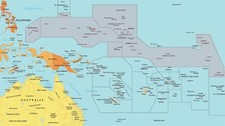
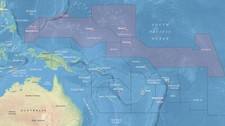
The Federated States of Micronesia is a federation of four states: Yap, Chuuk, Pohnpei and Kosrae. Each has its own languages, histories and cultural traditions, and even within a state there may be deep differences between high islands and outer atolls. A broad cultural-policy report on the FSM stresses that the country’s 607 islands are spread across a vast ocean area and that each state differs in physical formation, culture and language.[SPCCFP Store]spccfpstore1.blob.core.windows.netSPCCFP Store Into the Deep: Launch Ing cu Lture an D po LIcyEach state is different in terms of physical formation, structure, culture and language. Yap, Chuuk and…Read more…
That geography matters for folklore. In many places, tradition is attached to land, clan, chiefly rank, navigation routes and remembered relationships between islands. The result is not a single “Micronesian pantheon” in the way a newcomer might expect from Greek or Norse mythology. It is closer to a network of local story-worlds: Pohnpeian traditions around Nan Madol and the Saudeleur rulers; Kosraean traditions around Lelu, Menka and Sinlaku; Chuukese accounts of spirits, possession and family conflict; Yapese traditions of sacred groves, priesthoods, crop deities and oceanic exchange.[researchgate.net]researchgate.netResearch Gate The Old Religion of Yap: Traditional Religions in MicronesiaResearch Gate The Old Religion of Yap: Traditional Religions in Micronesia
This also explains why some stories appear in several versions. Oral tradition is not a defective form of written history; it is a way of preserving meaning through performance, memory, place and social authority. For example, Nan Madol’s history is illuminated both by archaeology and by Pohnpeian oral accounts, but the two do not always answer the same questions. Archaeology can date stone construction; oral tradition explains why the place matters, who is remembered there, and why some people still treat it with caution.[Smarthistory]smarthistory.orgnan madolnan madol
Nan Madol: the stone city where archaeology and legend meet
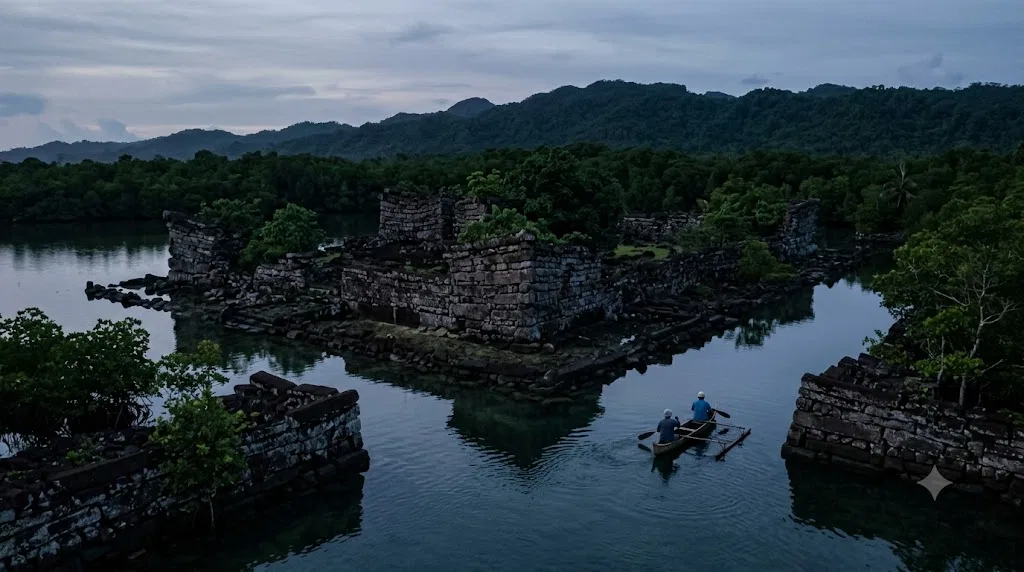
Nan Madol, off the south-east coast of Pohnpei, is the most internationally famous legendary landscape in the Federated States of Micronesia. UNESCO describes it as more than 100 artificial islets built with basalt and coral boulders, containing stone palaces, temples, tombs and residential domains from roughly 1200 to 1500 CE. It was the ceremonial centre of the Saudeleur dynasty and is now a World Heritage site.[UNESCO World Heritage Centre]whc.unesco.orgUNESCO World Heritage CentreNan Madol: Ceremonial Centre of Eastern MicronesiaNan Madol is a series of more than 100 islets off the south…
Pohnpeian oral history gives the place a more enchanted beginning. The United States National Park Service summarises a tradition in which two canoe-faring sorcerer brothers, Olisihpa and Olosohpa, arrived on Pohnpei, received power from the gods and used magic to build Nan Madol. Smarthistory notes related oral histories in which great birds, giants or the twin sorcerers move basalt rocks into place.[National Park Service]nps.govnan madolNational Park ServiceNan Madol6 Jan 2020 — According to Pohnpeian oral history, the first Saudeleur to arrive on Pohnpei were two brother…
The most useful way to read this is not as a crude choice between “true” and “false”. Nan Madol is a real archaeological site, and its massive stone architecture testifies to political, ritual and labour organisation in eastern Micronesia. At the same time, the flying-stone stories express the awe of a community faced with a place that still looks almost impossible: heavy basalt columns arranged into artificial islands, canals and tomb structures on a reef flat.[UNESCO World Heritage Centre]whc.unesco.orgUNESCO World Heritage CentreNan Madol: Ceremonial Centre of Eastern MicronesiaNan Madol is a series of more than 100 islets off the south…
The site is also a strong example of how oral tradition can preserve details that archaeologists later test. The Metropolitan Museum of Art notes that traditions refer to canals that allowed sacred eels to enter from the sea and to turtle sacrifices associated with them; excavations have found traces of small canals and sacrificial turtles. This does not mean every legendary detail can be verified, but it does show that story and material evidence can overlap in powerful ways.[The Metropolitan Museum of Art]metmuseum.orgnan madolnan madol
Isokelekel and the fall of the Saudeleur
One of Pohnpei’s central legendary-historical figures is Isokelekel, remembered as the culture hero who overthrew the Saudeleur rulers and helped inaugurate the later chiefly order. A study of the Saudeleur-to-Nahnmwarki transformation records a tradition in which the grown Isokelekel came to Pohnpei with 333 people and defeated the Saudeleur at Nan Madol.[micronesica.org]micronesica.orgThe Saudeleur to Nahnmwarki TransformationThe Saudeleur to Nahnmwarki Transformation
The story matters because it is not merely an adventure tale. It explains a political transformation: the end of a centralised and increasingly burdensome Saudeleur rule, and the emergence of the Nahnmwarki system associated with later Pohnpeian chiefly life. In many versions, divine offence and moral failure help bring the Saudeleur order down, so the legend becomes a story about power that has lost legitimacy.[micronesica.org]micronesica.orgThe Saudeleur to Nahnmwarki TransformationThe Saudeleur to Nahnmwarki Transformation
For readers interested in folklore, Isokelekel is especially revealing because he stands between myth and history. He is often treated as a semi-mythical hero rather than a purely fictional being. The story includes supernatural ancestry, divine politics and epic numbers, but it is also tied to real places, chiefly descent and remembered political change.[micronesica.org]micronesica.orgThe Saudeleur to Nahnmwarki TransformationThe Saudeleur to Nahnmwarki Transformation
This is a recurring feature of FSM folklore: important tales often explain why society is arranged as it is. A story may tell how a ruler fell, why a title matters, why a place is sacred, why a food practice is respected or why a family dispute is dangerous. The supernatural and the social are not separate boxes.
Sacred animals, offerings and the power of place
Nan Madol’s sacred eels and turtle sacrifices show how animals can become part of ritual memory. The Met’s account links oral references to eel canals and turtle offerings with archaeological traces, while a cultural heritage discussion of Nan Madol describes the turtle Liahnensokole as a sacrificial figure in a story connected to the Saudeleur eel.[The Metropolitan Museum of Art]metmuseum.orgnan madolnan madol
Such stories should not be flattened into “monster folklore”. The eel is not simply a scary creature. It is part of a sacred and political landscape: a being associated with offerings, ritual obligation and the Saudeleur order. The turtle story, in turn, can be read as a narrative about sacrifice, survival and the demands imposed on land and people.[csrmfoundation.org]csrmfoundation.orgthe sacred eels and turtles of nan madolthe sacred eels and turtles of nan madol
Sacred places in the FSM are also not always comfortable heritage attractions. In an interview published by Archaeology magazine, archaeologist Mark McCoy observed that many Pohnpeians know Nan Madol but are afraid of it, with some believing that disturbing the site can bring bad luck or even a wider curse. That belief does not need to be treated as literal fact to be culturally significant. It shapes behaviour, reinforces respect for the ruins and reminds visitors that heritage sites can be living places of caution, not just scenery.[Archaeology Magazine]archive.archaeology.orgMagazine ConversationMagazine Conversation
This pattern appears elsewhere. In Kosrae, the sacred site of Menka is linked to the goddess Sinlaku and continues to be discussed in terms of spiritual danger and avoidance. The strongest responsible reading is that these are culturally embedded beliefs about sacred landscape, not tourist-horror claims.[archaeologychannel.org]archaeologychannel.orgOpen source on archaeologychannel.org.
Kosrae: Sinlaku, breadfruit and the sacred valley
Kosrae’s folklore is closely tied to sacred landscapes, especially Lelu and Menka. Menka, in the island’s interior, is associated with Sinlaku, described in archaeological writing as the Breadfruit Goddess and Prophet Spirit, and as a leading figure in Kosrae’s traditional pantheon.[The University of La Verne]laverne.eduOpen source on laverne.edu.
The Menka tradition is especially memorable because it links divinity to food security. The Archaeology Channel summarises oral history in which a temple stood at Menke, where people worshipped Sinlaku, who could provide abundant breadfruit or bring typhoons that stripped trees and caused famine. That makes the story more than a mythic curiosity: it encodes anxiety about harvest, weather and survival on an island where breadfruit mattered deeply.[Archaeology Channel]archaeologychannel.orgOpen source on archaeologychannel.org.
Archaeological research does not simply “prove the goddess”; rather, it studies whether Menka’s temple remains match what oral tradition and historical accounts suggest. A paper on Menka’s temple architecture notes that information about Sinlaku is scarce and often preserved through histories and oral histories, which is a useful warning against overconfident retelling.[The University of La Verne]laverne.eduOpen source on laverne.edu.
Kosrae’s stone ruins at Lelu also belong in this wider eastern Micronesian world of sacred architecture and chiefly power. UNESCO’s Nan Madol nomination materials and related scholarship discuss connections and comparisons between Nan Madol on Pohnpei and Lelu on Kosrae, including debate over chronology and influence. The reader-facing takeaway is simple: Kosrae and Pohnpei preserve two of the region’s most important monumental landscapes, and both are wrapped in oral tradition as well as archaeology.[UNESCO World Heritage Centre]whc.unesco.orgOpen source on unesco.org.
Chuuk: spirits, possession and family tension
Chuuk’s supernatural traditions are unusually well documented in studies of spirit possession. Francis X. Hezel and Jay Dobbin’s research argues that possession-trance has a strong historical and contemporary record in Chuuk and has changed over time from more official, on-demand mediumship into more spontaneous, individualised episodes often linked to personal and family stress.[Micronesian Seminar]micsem.orgOpen source on micsem.org.
This matters because it moves the subject away from sensational ghost stories. In the Chuukese cases described by Hezel and Dobbin, spirits often appear in the setting of family conflict, land disputes, grief or social pressure. The supernatural episode may express a problem that ordinary speech cannot easily solve. In one reported case, a young woman’s possession was interpreted through the anger of dead relatives and eventually led to reconciliation over a family dispute.[Micronesian Seminar]micsem.orgOpen source on micsem.org.
Older sources recorded a more institutionalised form of Chuukese spirit mediumship, involving named status-bearers who were possessed by lineage ancestors and served the living lineage. The modern pattern described by Hezel and Dobbin is different: more likely to be spontaneous, more associated with girls and young women, and still socially meaningful within family and lineage life.[Micronesian Seminar]micsem.orgOpen source on micsem.org.
For folklore readers, Chuuk is therefore a reminder that “spirit belief” is not only about scary beings. It can be a language for kinship, land, grief, obligation and moral repair. The story sits not in an abandoned castle, but in a household, around food, illness, memory and unresolved conflict.
Yap: sacred groves, crop deities and old religious specialists
Yapese tradition adds another distinctive layer to FSM folklore. Scholarship on the old religion of Yap describes a world of gods, spirits, shrines and religious specialists, including crop or vegetation deities tied to specific shrines and served by priestly hierarchies.[ResearchGate]researchgate.netResearch Gate The Old Religion of Yap: Traditional Religions in MicronesiaResearch Gate The Old Religion of Yap: Traditional Religions in Micronesia
A broader Micronesian study of spirits notes that some important Yapese spirits had huts dedicated to them in groves they were thought to inhabit. It also describes rituals before cutting trees, in which a specialist prayed to the spirits of the tree to depart before it was felled. This is a vivid example of how old religious practice could shape everyday acts: farming, building, gathering wood and managing risk.[Micronesian Seminar]micsem.orgOpen source on micsem.org.
Yap is also culturally distinct within the FSM. A Catholic cultures study notes that “Yap proper” is culturally and linguistically distinct not only from much of Micronesia but also from Yap State’s outer islands. That helps explain why Yapese folklore should not be carelessly merged with the traditions of Chuuk, Pohnpei or Kosrae.[Catholics & Cultures]catholicsandcultures.orgmicronesia cultural traditions and catholicism guide life yapmicronesia cultural traditions and catholicism guide life yap
Yap’s famous stone money is not folklore in itself, but it shows the same principle that many readers find in island story: value is social, historical and remembered. The worth of a stone depends not only on size, but on history, difficulty of transport and recognised ownership. In a folklore context, this helps readers understand a culture in which material objects, memory and social consensus can be deeply intertwined.[Wikipedia]WikipediaFederated States of MicronesiaFederated States of Micronesia
Canoe lore and the ocean as a story archive
Some of the FSM’s most important intangible heritage is not a tale about a named monster or god, but a body of inherited ocean knowledge. UNESCO inscribed Carolinian wayfinding and canoe making on the List of Intangible Cultural Heritage in Need of Urgent Safeguarding in 2021. The practice involves building and navigating long-distance canoes using local materials, environmental cues and traditional apprenticeship rather than maps or instruments.[ICH UNESCO]ich.unesco.orgcarolinian wayfinding and canoe making 01735carolinian wayfinding and canoe making 01735
This belongs in a folklore page because oral tradition is part of how the knowledge survives. UNESCO describes master canoe carvers and navigators organised into guilds, while ICH documentation notes the passing on of methods, chants, songs and stories. The ocean is therefore not just a setting for legends; it is a remembered, taught and storied space.[UNESCO]unesco.orgdocument 5647document 5647
The tradition is especially associated with the Caroline Islands, including communities in the FSM. It also connects the FSM to wider Pacific cultural revival. The best-known modern figure is Mau Piailug of Satawal in Yap State, whose teaching helped revive non-instrument navigation in the Hawaiian voyaging movement.[Wikipedia]WikipediaMau PiailugMau Piailug
For a general reader, this is one of the most important corrections to make: folklore is not only “old stories”. In Micronesia, traditional knowledge may be practical, technical and sacred at once. A chant, a star path, a canoe design and a story about an island can all belong to the same inherited system.
Outer islands and Polynesian outliers
The FSM also includes Polynesian outlier communities, including Nukuoro and Kapingamarangi in Pohnpei State. These communities complicate any simple idea of “Micronesian folklore”, because their languages and cultural histories connect them with Polynesian as well as Micronesian worlds.[uog.edu]uog.eduA Nukuoro Origin StoryA Nukuoro Origin Story
A study of a Nukuoro origin story describes Nukuoro as having a vibrant oral tradition of chants, songs and narratives that centre culture and language, including knowledge about topography, direction systems, family organisation, origins, contact, material culture and spiritual cosmology. That list is a useful reminder that oral tradition is an archive of practical and social knowledge, not merely entertainment.[uog.edu]uog.eduA Nukuoro Origin StoryA Nukuoro Origin Story
Nukuoro is also known for wooden deity sculptures now held in museums and private collections, many collected during the German colonial period. These objects show how older religious and artistic traditions entered global museum systems, often far from the communities that made them.[Wikipedia]WikipediaOpen source on wikipedia.org.
For readers, the outer islands matter because they stop the article becoming too Pohnpei-centred. Nan Madol is famous for good reason, but the FSM’s folklore is also carried by smaller atolls, endangered languages, canoe routes, migration stories and family-held knowledge that may never become a World Heritage headline.
What changed with Christianity, colonial rule and modern life
Traditional religion and folklore in the FSM changed under the influence of European contact, missionisation, colonial rule and modern statehood. Older spirit cults, shrines and priestly roles declined in many places, but they did not simply disappear. Some practices were reinterpreted, some became family or community memory, and some continued in altered form. Hezel and Dobbin’s work on Chuukese possession is a good example: older mediumship did not remain unchanged, but spirit experience continued in a new social pattern.[Micronesian Seminar]micsem.orgOpen source on micsem.org.
Christianity is now deeply embedded in many parts of the FSM, but that does not erase older cultural logics. In Yap, for example, Catholic life exists alongside strong cultural traditions, and outside observers stress the continuing importance of local custom, respect and community structure.[Catholics & Cultures]catholicsandcultures.orgmicronesia cultural traditions and catholicism guide life yapmicronesia cultural traditions and catholicism guide life yap
Modern heritage institutions have also changed how folklore is presented. Nan Madol is now a UNESCO site, a conservation challenge and a tourism landmark, but it remains a place surrounded by oral history and local caution. Carolinian wayfinding is now internationally recognised as intangible heritage in need of urgent safeguarding, but its survival depends on communities, apprenticeships and living practice rather than inscription alone.[unesco.org]whc.unesco.orgUNESCO World Heritage CentreNan Madol: Ceremonial Centre of Eastern MicronesiaNan Madol is a series of more than 100 islets off the south…
The danger for modern readers is to romanticise everything as ancient and unchanged. The more accurate picture is richer: some traditions are centuries old; some were recorded by colonial-era observers; some survive as local practice; some are revived through cultural movements; some are reshaped for tourism, museums and the internet.
How to read FSM legends responsibly today
The best way to approach folklore from the Federated States of Micronesia is to keep three ideas in mind.
First, place matters. A story about Nan Madol, Menka, a Yapese grove or a Chuukese household is not detachable scenery. The location is part of the tradition.[archaeology.org]archive.archaeology.orgMagazine ConversationMagazine Conversation
Second, oral tradition and evidence can support each other without being identical. Nan Madol’s sacred eel traditions and archaeological traces show that stories may preserve concrete cultural memory, but they also carry symbolic and ritual meanings that archaeology alone cannot translate.[The Metropolitan Museum of Art]metmuseum.orgnan madolnan madol
Third, “supernatural” does not mean “unimportant”. A spirit-possession account may reveal family stress. A breadfruit goddess may express the fragility of food security. A flying-stone legend may preserve awe before monumental labour. A canoe chant may hold navigational knowledge. In the FSM, folklore is often a way of remembering how people live with land, sea, ancestors, authority and risk.
Conclusion
Folklore in the Federated States of Micronesia is best understood as a set of living island traditions rather than a single mythology. Pohnpei gives the country its most famous legendary landscape in Nan Madol, with stories of sorcerer-builders, sacred eels and Isokelekel’s overthrow of the Saudeleur. Kosrae preserves traditions of Sinlaku, breadfruit, sacred valleys and stone ruins. Chuuk offers powerful evidence for continuing spirit beliefs, especially possession traditions shaped by family and lineage life. Yap contributes sacred groves, crop deities, old priestly systems and canoe-linked ocean knowledge.
What makes these traditions compelling is not only their strangeness to outsiders, but their precision. They belong to named islands, ruins, foods, routes, families and social orders. Read carefully, they show how people in the FSM have explained power, danger, abundance, memory and belonging across one of the Pacific’s most widely scattered island nations.
Amazon book picks
Further Reading
Books and field guides related to Where Stone Cities Still Carry Stories. Use these as the next step if you want deeper reading beyond the article.
On the Road of the Winds
Provides broad context for Micronesian traditions and island cultures.
The Kon-Tiki Expedition
Introduces general readers to Pacific exploration and island cultures.
eBay marketplace picks
Marketplace Samples
Live-tested eBay searches with available results related to this page.
Endnotes
1.
Source: whc.unesco.org
Link:https://whc.unesco.org/en/list/1503/
Source snippet
UNESCO World Heritage CentreNan Madol: Ceremonial Centre of Eastern MicronesiaNan Madol is a series of more than 100 islets off the south...
2.
Source: ich.unesco.org
Title: carolinian wayfinding and canoe making 01735
Link:https://ich.unesco.org/en/USL/carolinian-wayfinding-and-canoe-making-01735
3.
Source: researchgate.net
Title: Research Gate The Old Religion of Yap: Traditional Religions in Micronesia
Link:https://www.researchgate.net/publication/310499476_The_Old_Religion_of_Yap_Traditional_Religions_in_Micronesia
4.
Source: smarthistory.org
Title: nan madol
Link:https://smarthistory.org/nan-madol/
5.
Source: archive.archaeology.org
Title: Magazine Conversation
Link:https://archive.archaeology.org/1005/etc/conversation.html
6.
Source: micronesica.org
Title: The Saudeleur to Nahnmwarki Transformation
Link:https://micronesica.org/sites/default/files/supp02-23ed.pdf
7.
Source: Wikipedia
Link:https://en.wikipedia.org/wiki/Isokelekel
8.
Source: csrmfoundation.org
Title: the sacred eels and turtles of nan madol
Link:https://www.csrmfoundation.org/new-blog/2018/12/14/the-sacred-eels-and-turtles-of-nan-madol
9.
Source: whc.unesco.org
Link:https://whc.unesco.org/uploads/nominations/1503.pdf
10.
Source: uog.edu
Link:https://www.uog.edu/_resources/files/schools-and-colleges/college-of-liberal-arts-and-social-sciences/pai/pai5-sellmann-book-review-dobbin.pdf
11.
Source: Wikipedia
Title: Federated States of Micronesia
Link:https://en.wikipedia.org/wiki/Federated_States_of_Micronesia
12.
Source: unesco.org
Title: document 5647
Link:https://www.unesco.org/archives/multimedia/document-5647
13.
Source: Wikipedia
Title: Mau Piailug
Link:https://en.wikipedia.org/wiki/Mau_Piailug
14.
Source: Wikipedia
Title: Polynesian navigation
Link:https://en.wikipedia.org/wiki/Polynesian_navigation
15.
Source: uog.edu
Title: A Nukuoro Origin Story
Link:https://www.uog.edu/_resources/files/schools-and-colleges/college-of-liberal-arts-and-social-sciences/pai/v10/10_pai10_drummond_rudolph_harrison.pdf
16.
Source: Wikipedia
Link:https://en.wikipedia.org/wiki/Nukuoro
17.
Source: Wikipedia
Link:https://en.wikipedia.org/wiki/Pohnpei
18.
Source: Wikipedia
Title: Nan Madol
Link:https://en.wikipedia.org/wiki/Nan_Madol
19.
Source: Wikipedia
Link:https://en.wikipedia.org/wiki/Micronesians
20.
Source: Wikipedia
Title: Pohnpei State
Link:https://en.wikipedia.org/wiki/Pohnpei_State
21.
Source: Wikipedia
Title: Micronesian mythology
Link:https://en.wikipedia.org/wiki/Micronesian_mythology
22.
Source: Wikipedia
Title: Lists of Intangible Cultural Heritage elements
Link:https://en.wikipedia.org/wiki/Lists_of_Intangible_Cultural_Heritage_elements
23.
Source: ich.unesco.org
Link:https://ich.unesco.org/en/lists
24.
Source: media.unesco.org
Link:https://media.unesco.org/sites/default/files/webform/r2e002/0352ccaec588da3f280d6fa888be7120548c7341.pdf
25.
Source: ich.unesco.org
Link:https://ich.unesco.org/doc/src/Signed%20periodic%20report%20-%20Periodic%20report-67321.pdf
26.
Source: ich.unesco.org
Link:https://ich.unesco.org/en/decisions/7.COM/8.2
27.
Source: ich.unesco.org
Title: oral traditions and expressions 00053
Link:https://ich.unesco.org/en/oral-traditions-and-expressions-00053?id=19028&include=film_inc.php
28.
Source: ich.unesco.org
Link:https://ich.unesco.org/en/USL/mapoyo-oral-tradition-and-its-symbolic-reference-points-within-their-ancestral-territory-00983
29.
Source: ich.unesco.org
Link:https://ich.unesco.org/en/video/59599
30.
Source: ich.unesco.org
Title: 8a urgent safeguarding list 01192
Link:https://ich.unesco.org/en/8a-urgent-safeguarding-list-01192?call=slideshow&id=01735&include=slideshow_inc.php&mode=scroll&width=620
31.
Source: ich.unesco.org
Link:https://ich.unesco.org/en/d%C3%A9cisions/16.COM/8.A.4
32.
Source: ich.unesco.org
Title: photo pop up 00973
Link:https://ich.unesco.org/en/photo-pop-up-00973?photoID=15132
33.
Source: ich.unesco.org
Title: carolinian wayfinding and canoe making 01735
Link:https://ich.unesco.org/en/USL/carolinian-wayfinding-and-canoe-making-01735?call=film&id=59599&include=film_inc.php&width=700
34.
Source: researchgate.net
Link:https://www.researchgate.net/publication/301729978_Federated_states_of_Micronesia
35.
Source: researchgate.net
Link:https://www.researchgate.net/publication/283711318_A_New_Archaeological_Field_Survey_of_the_Site_of_Nan_Madol_Pohnpei
36.
Source: researchgate.net
Link:https://www.researchgate.net/publication/351075567_Vegetation_cover_of_the_megalithic_site_of_Nan_Madol_Pohnpei_Federated_States_of_Micronesia_an_assessment_of_its_history
37.
Source: researchgate.net
Link:https://www.researchgate.net/publication/282734600_Archaeological_Remains_at_Angeir-Karian_Nan_Madol_Pohnpei_Federated_States_of_Micronesia
38.
Source: researchgate.net
Link:https://www.researchgate.net/publication/351762510_Micronesian_Archaeoastronomy_Expedition_Kosrae_and_Pohnpei_the_Federated_States_of_Micronesia
39.
Source: researchgate.net
Link:https://www.researchgate.net/figure/HISTORICAL-CHRONOLOGY-OF-KAPINGAMARANGI_tbl1_232956730
40.
Source: researchgate.net
Title: 337532627 The underwater cultural heritage of the Federated States of Micronesia
Link:https://www.researchgate.net/publication/337532627_The_underwater_cultural_heritage_of_the_Federated_States_of_Micronesia
41.
Source: 1997-2001.state.gov
Title: micronesia 0696 bgn
Link:https://1997-2001.state.gov/background_notes/micronesia_0696_bgn.html
42.
Source: openresearch-repository.anu.edu.au
Link:https://openresearch-repository.anu.edu.au/server/api/core/bitstreams/786edddc-9190-4ee4-bcda-05d7a3e4bef5/content
43.
Source: openresearch-repository.anu.edu.au
Title: anu.edu.au Federated States of Micronesia
Link:https://openresearch-repository.anu.edu.au/items/f30c01e2-2cc2-4455-9ea6-5c9a45e90898
44.
Source: spccfpstore1.blob.core.windows.net
Title: SPCCFP Store Into the Deep: Launch Ing cu Lture an D po LIcy
Link:https://spccfpstore1.blob.core.windows.net/digitallibrary-docs/files/31/31cafed8860b54c3a54a87b4983f6cb3.pdf?rscc=public%2C+max-age%3D864000%2C+max-stale%3D86400&rscd=inline%3B+filename%3D%22Into_the_Deep_Launching_Culture_and_Policy_in_the_Federated_States_of_Micronesia.pdf%22&rsct=application%2Fpdf&se=2026-06-30T05%3A02%3A56Z&sig=wvuhiA8ed4bkbWFHwwQbf0z3MCixuiYUrE0ufuIn0ZM%3D&sp=r&sr=b&sv=2015
Source snippet
Each state is different in terms of physical formation, structure, culture and language. Yap, Chuuk and...Read more...
45.
Source: nps.gov
Title: nan madol
Link:https://www.nps.gov/places/nan-madol.htm
Source snippet
National Park ServiceNan Madol6 Jan 2020 — According to Pohnpeian oral history, the first Saudeleur to arrive on Pohnpei were two brother...
46.
Source: micsem.org
Link:https://micsem.org/article/distribution-of-spirit-possession-and-trance-in-micronesia/
47.
Source: micsem.org
Link:https://micsem.org/article/congeries-of-spirits/
48.
Source: laverne.edu
Link:https://www.laverne.edu/academy/wp-content/uploads/sites/7/2019/02/beardsley-temple-architecture-of-menka.pdf
49.
Source: metmuseum.org
Title: nan madol
Link:https://www.metmuseum.org/essays/nan-madol
50.
Source: archaeologychannel.org
Link:https://www.archaeologychannel.org/video-guide-summary/2341-menke
51.
Source: micsem.org
Title: possession and trance in chuuk
Link:https://micsem.org/article/possession-and-trance-in-chuuk/
52.
Source: catholicsandcultures.org
Title: micronesia cultural traditions and catholicism guide life yap
Link:https://www.catholicsandcultures.org/micronesia-cultural-traditions-and-catholicism-guide-life-yap
53.
Source: micsem.org
Link:https://www.micsem.org/pubs/books/Summoning-the-Powers-Beyond.pdf
54.
Source: micsem.org
Link:https://micsem.org/category/social-issues/?type=article
55.
Source: micsem.org
Link:https://micsem.org/category/
56.
Source: micsem.org
Link:https://micsem.org/pubs/articles.htm
57.
Source: micsem.org
Title: 2001 publications list
Link:https://micsem.org/publication-list/2001-publications-list/
58.
Source: micsem.org
Link:https://micsem.org/category/social-issues/
59.
Source: micsem.org
Link:https://micsem.org/wp-content/uploads/2019/04/German-Rule-in-Micronesia.pdf
60.
Source: micsem.org
Link:https://micsem.org/micronesian-counselo/micronesian-migration-since-world-war-ii/
61.
Source: micsem.org
Link:https://micsem.org/articles-categories/social-issues/
62.
Source: micsem.org
Link:https://micsem.org/publications/articles/
63.
Source: micsem.org
Link:https://micsem.org/micronesian-counselo/the-myth-of-education-a-second-look/
64.
Source: micsem.org
Link:https://www.micsem.org/pubs/counselor_subj.htm
65.
Source: micsem.org
Link:https://micsem.org/print/?id=2129
66.
Source: micsem.org
Link:https://micsem.org/talk/myths-of-economic-development/
67.
Source: facebook.com
Link:https://www.facebook.com/groups/fsmforum/posts/3096846607270168/
68.
Source: openfactbook.org
Title: Federated States of Micronesia
Link:https://openfactbook.org/countries/federated-states-of-micronesia/
69.
Source: nach.gov.fm
Link:https://nach.gov.fm/wp-content/uploads/2019/01/earliest_direct_evidence_of_monument_building_at_the_archaeological_site_of_nan_madol_pohnpei_micronesia_identified_using_230thu_coral_dating_an.pdf
70.
Source: nach.gov.fm
Link:https://nach.gov.fm/nan-madol-east-site-of-temwen-island-temwen-island/
71.
Source: gov.fm
Link:https://gov.fm/federated-states-of-micronesia-calls-for-stronger-protection-of-traditional-knowledge-and-cultural-expressions-at-wipo-igc-52/
72.
Source: nach.gov.fm
Link:https://nach.gov.fm/nan-madol/
73.
Source: ebsco.com
Link:https://www.ebsco.com/research-starters/social-sciences-and-humanities/federated-states-micronesia
74.
Source: pohnpei-adventure.com
Title: unesco world heritage nomination
Link:https://www.pohnpei-adventure.com/tag/unesco-world-heritage-nomination/
75.
Source: ehrafworldcultures.yale.edu
Link:https://ehrafworldcultures.yale.edu/cultures/or19/summary
76.
Source: ehrafworldcultures.yale.edu
Link:https://ehrafworldcultures.yale.edu/cultures/or22/summary
77.
Source: cove.army.gov.au
Title: army.gov.au Federated States of Micronesia
Link:https://cove.army.gov.au/kyr/micronesia
78.
Source: micronesiatour.com
Link:https://www.micronesiatour.com/destinations/pohnpei
79.
Source: habeleinstitute.org
Link:https://habeleinstitute.org/wiki/Nukuoro
80.
Source: habeleinstitute.org
Link:https://habeleinstitute.org/wiki/Lelu
81.
Source: archive.unesco-ichcap.org
Link:https://archive.unesco-ichcap.org/eng/ek/sub1/pdf_file/pacific/Micronesia_2013_03_Intangible_Cultural_Heritage_Inventory.pdf
82.
Source: archive.unesco-ichcap.org
Title: Micronesia pdf
Link:https://archive.unesco-ichcap.org/kor/ek/sub1/pdf_file/pacific/Micronesia_pdf.pdf
Additional References
83.
Source: academia.edu
Link:https://www.academia.edu/99735947/Micronesia_Guam_Commonwealth_of_the_Northern_Mariana_Islands_the_Fed_States_of_Micronesia_Yap_Chuuk_Pohnpei_Kosrae_Palau_Marshals
84.
Source: worldtravelguide.net
Link:https://www.worldtravelguide.net/guides/oceania/pacific-islands-of-micronesia/federated-states-of-micronesia/food-and-drink/
85.
Source: welcometoguam.co.kr
Link:https://www.welcometoguam.co.kr/about-guam/about-micronesia/pohnpei/
86.
Source: lddjournal.org
Link:https://www.lddjournal.org/article/1260/galley/2503/download/
87.
Source: visitchuuk.com
Link:https://visitchuuk.com/things-do/experience-chuukese-culture
88.
Source: fsmemb.or.jp
Link:https://fsmemb.or.jp/wp-content/uploads/2025/02/FSM_guide_E_expo_2025-0206_S.pdf
89.
Source: facebook.com
Link:https://www.facebook.com/iamperezphotography/posts/federated-states-of-micronesialelu-ruinskosrae-state/595355622031854/
90.
Source: pacificrisa.org
Link:https://www.pacificrisa.org/places/federated-states-of-micronesia/
91.
Source: astho.org
Link:https://www.astho.org/topic/territories-freely-associated-states/island-areas-101/fsm/
92.
Source: everyculture.com
Link:https://www.everyculture.com/Ma-Ni/Federated-States-of-Micronesia.html
Topic Tree
Follow this branch
Related pages 192
- Afghan Folklore
- Albanian Folklore
- Algerian Folklore
- Australian Folklore
- Azerbaijan Folklore
- +187 more in sidebar