Where Sudan's Stories Still Speak
Sudan’s folklore is best understood as a living mix of spoken tales, saint legends, spirit-healing rites, women’s praise poetry, river and desert symbolism, wedding protection rituals, and modern efforts to keep family stories alive through archives and audio. It is not a single “mythology” with one fixed pantheon.
Page outline Jump by section
What counts as Sudanese folklore?
Sudanese folklore is broader than fairy tales. It includes oral stories told at home, animal tales, legends of holy people, sung poetry, healing rituals, seasonal and life-cycle customs, protective objects, praise and ridicule songs, and place-based memories attached to the Nile, tombs, shrines, villages, and old kingdoms. Scholars of Sudanese literature often stress that, before modern written fiction became prominent, Sudanese literary culture lived strongly in oral stories and narrative poems, many of them passed between generations through performance rather than books.[Wikipedia]WikipediaSudanese literatureSudanese literature
This performance element is crucial. A Sudanese tale is not only its plot. In northern Sudanese storytelling, the audience can be part of the event: listeners respond, anticipate, interrupt, laugh, judge, and help give the story its social force. Eiman Abbas El-Nour’s work on northern Sudanese folktales also argues that women have often been central both as storytellers and as active figures inside the tales themselves, not simply passive beauties waiting to be rescued.[SciELO]scielo.org.zaOpen source on scielo.org.za.
Because Sudan is culturally and linguistically diverse, it is misleading to present one neat national folklore canon. Traditions differ across regions and communities, and many have been only partly documented. A 2015 study on a Sudanese folktale notes that many stories have circulated orally from generation to generation and that documentation is uneven, especially beyond better-studied northern and Arabic-speaking contexts.[AIJCR]aijcr.thebrpi.orgAIJCRInterpretations of a Sudanese FolktaleAIJCRInterpretations of a Sudanese Folktale
The tale tradition: cleverness, danger, and moral testing
One of the most accessible doors into Sudanese folklore is the folktale. In Arabic-speaking Sudanese settings, a shared body of folk stories is often discussed under the local category of traditional tales, with plots that may involve rulers, poor families, magical beings, animal trickery, moral tests, and happy endings. These stories are not merely entertainment. Researchers describe them as ways of passing on social values indirectly: courage, patience, generosity, cleverness, restraint, and the ability to read people’s motives.[AIJCR]aijcr.thebrpi.orgAIJCRInterpretations of a Sudanese FolktaleAIJCRInterpretations of a Sudanese Folktale
Many Sudanese tales work by placing an ordinary person in a strange or heightened situation. A young woman may have to outwit danger; a poor person may face a proud ruler; an animal may expose human foolishness; a supernatural being may test greed, loyalty, or bravery. The moral lesson is usually embedded in the drama rather than announced like a classroom rule. This is part of why folktales remain memorable: the listener remembers the choice, the danger, the trick, and the reversal.
Collections and translations have shaped how outsiders encounter this tradition. The Sudanese scholar Abdallah al-Tayyib, known for his work on Arabic language and literature, helped bring Sudanese and wider African folk stories into English-language publication, including collections associated with northern Sudanese tales and stories from African oral tradition. That matters because much of Sudanese folklore has not been preserved in large, standardised printed collections; what survives in print is only a narrow window onto a much wider spoken world.[Wikipedia]WikipediaSudanese literatureSudanese literature
Modern projects are changing that. The podcast Folktales from Sudan, created by Sudanese-American journalist Hana Baba, presents Sudanese stories for children and families with music, sound design, and family memory as part of the format. Its emergence during the current era of war and diaspora gives it more than nostalgic value: it is a way of turning household oral tradition into a portable cultural archive for children who may live far from Sudan.[andariya.com]andariya.comFolktales from Sudan: Keeping Children's Stories AliveFolktales from Sudan: Keeping Children's Stories Alive

Women as keepers and shapers of oral memory
A striking feature of Sudanese folklore is the authority of women in oral performance. In northern folktale settings, El-Nour’s research challenges the simple idea that women in traditional stories are only decorative figures. Female characters often act, decide, endure, trick, travel, and rescue themselves or others. Women also appear as transmitters of the tales, shaping how stories are remembered inside families and communities.[ResearchGate]researchgate.netOpen source on researchgate.net.
In western Sudan, the role of women poets and singers can be even more public and politically charged. The women often known as hakamat are associated especially with parts of Darfur and Kordofan. They are not “witches” or supernatural beings; they are human poets, singers, commentators, and guardians of communal memory. Their songs can praise courage, shame cowardice, preserve lineages, comment on disputes, and influence public feeling.[Safeguarding Sudan's Living Heritage]sslh.infoSafeguarding Sudan's Living Heritage The language that singsSafeguarding Sudan's Living Heritage The language that sings
That influence can be double-edged. Reports and peacebuilding studies have described how some of these women’s martial songs were believed to stir men towards fighting in inter-communal conflict, while later programmes tried to redirect their authority towards peace songs and reconciliation. This is folklore in a very practical sense: oral poetry is not treated as a harmless relic, but as speech with social power.[iwpr.net]iwpr.netfemale singers stir blood darfurfemale singers stir blood darfur
For a reader used to thinking of folklore as old stories in books, the western Sudanese singer-poet tradition changes the picture. Here, tradition is not only about the distant past. It can be immediate, responsive, risky, and public. A song can praise a warrior, shame a negotiator, heal a quarrel, or harden it.
Spirits, healing, and the “red wind”
Sudan’s supernatural folklore includes a major spirit-possession and healing complex often called zār. It is found in different forms across Sudan and neighbouring regions, but Sudanese examples are especially important in scholarship because they show how spirit belief, gender, illness, history, slavery, and social identity can intersect. Janice Boddy’s influential work on a northern Sudanese village describes a healing cult in which many adherents were women dealing with marital, fertility, or bodily troubles, and where spirits mirrored figures from the wider historical and social world.[JSTOR]jstor.orgOpen source on jstor.org.
In central Sudan, Susan Kenyon’s work on Sennar connects spirit possession to local histories of slavery, memory, and social marginality. Gerasimos Makris’s work on the Sudanese tumbura form likewise treats it not as a simple “exorcism” but as a historically sensitive ritual tradition associated with descendants of enslaved Africans and other subordinate groups, especially around greater Khartoum.[academia.edu]academia.eduPDF) Spirits and Slaves in Central SudanPDF) Spirits and Slaves in Central Sudan
The folklore here is not a monster story in the modern horror sense. Spirits may be feared, negotiated with, named, entertained, placated, or treated as demanding presences with tastes, colours, music, and personalities. A British Museum object makes this material culture visible: a Sudanese lyre in its collection is identified as an instrument used in zār ceremonies in Nubia in Sudan, where trance could be induced as part of the attempt to drive out or manage evil spirits.[British Museum]britishmuseum.orgOpen source on britishmuseum.org.
For modern readers, the important distinction is this: Sudanese spirit traditions should not be reduced either to “superstition” or to horror entertainment. They are better understood as ritual languages for distress, gendered constraint, social memory, and healing. Believers may describe spirits as real agents; scholars often analyse the ceremonies as social and symbolic systems; both perspectives help explain why the tradition has lasted.[jstor.org]jstor.orgOpen source on jstor.org.
Saints, shrines, and miracle stories
Another major strand of Sudanese legendary culture comes from Islam, especially Sufi devotional life. Sudanese religious folklore includes stories of holy people, blessings, miracles, tombs, healing, processions, praise poetry, and public rituals of remembrance. A study of Muslim saints’ legends in Sudan notes that saints occupy a significant place in Sudanese systems of belief and practice, with legends often centred on miraculous deeds.[AfricaBib]africabib.orgOpen source on africabib.org.
This tradition is visible in places as well as stories. Sudan Memory includes images and material related to Sufi traditions and tombs of Sufi saints, while accounts of Khartoum and Omdurman describe Friday gatherings at the tomb of Sheikh Hamed al-Nil, where worshippers perform remembrance through repeated divine names, movement, drums, and communal devotion.[Sudan Memory]sudanmemory.orgOpen source on sudanmemory.org.
The annual celebration of the Prophet’s birthday in Sudan, locally marked through processions and public gatherings, has also gained formal heritage recognition. UNESCO describes Sudan’s celebration as beginning twelve days before the birthday, with processions and communal practices that bring together religious devotion, public space, music, food, and social gathering.[UNESCO Intangible Cultural Heritage]ich.unesco.orgOpen source on unesco.org.
Saint legends and Sufi gatherings blur the line between religion, folklore, and public culture. To believers, they are not “myths” in the dismissive sense; they are part of devotional life. To a folklore reader, they show how stories of blessing, danger, healing, and moral charisma become attached to named people and places.
The Nile, Nubia, and sacred landscapes
Sudanese folklore is deeply shaped by landscape. The Nile is not just a river in Sudanese cultural memory; it is a route of settlement, agriculture, poetry, ritual, danger, and blessing. Recent Sudanese cultural writing describes the Nile as memory and myth as well as a source of life, while older and local accounts attach river spirits, crocodiles, fertility, and protection to Nile-side custom.[Women's literacy in Sudan]womensliteracysudan.blogWomen's literacy in Sudan Angels of The NileWomen's literacy in Sudan Angels of The Nile
Nubian cultural memory is especially important here, although it is shared across the modern Sudan-Egypt border. Crocodiles, for example, appear in Nubian domestic and protective symbolism. Travel and heritage accounts describe preserved crocodiles displayed in Nubian homes as protective signs against the evil eye, while wider Nubian tradition connects the animal to the power and danger of the Nile. These accounts need careful handling: some are modern tourist or community retellings, not ancient texts, but they show how river creatures can become household symbols.[Roaming Jewel]roaming-jewel.comnubians crocsnubians crocs
Ancient and medieval monuments also feed modern folklore. Some Sudanese oral traditions have attributed old ruins to vanished or mythical peoples. Research on Sudan’s medieval Christian heritage notes traditions about extinct, mythical, white-skinned builders associated in folklore with ancient and medieval monuments. Such stories are not reliable archaeology, but they are important folklore: they show how later communities explained impressive ruins when written historical continuity had been broken or forgotten.[Biblioteka Nauki]bibliotekanauki.plOpen source on bibliotekanauki.pl.
Jebel Barkal, Meroe, Soba, Sennar, Omdurman, and Nile villages all sit at different points on this cultural map. Some are archaeological or religious sites; some are centres of oral memory; some are both. The folklore of place often begins with a simple question: who built this, who blessed this, who is buried here, what danger lives in this water, and why do people still come?

Protection, fertility, and wedding ritual
Sudanese folklore is not confined to stories told at night. It also appears in life-cycle rituals, especially around marriage, fertility, pregnancy, birth, and protection from envy or harm. One of the clearest examples is the Sudanese ritual complex known as Al-Jertiq, inscribed by UNESCO in 2025 as practices, rituals, and expressions for preservation, protection, abundance, and fertility in Sudan. UNESCO describes its tools and acts as carrying distinct purposes, such as protection from the evil eye, good fortune, and fertility.[UNESCO Intangible Cultural Heritage]ich.unesco.orgOpen source on unesco.org.
In public-facing descriptions, the ritual is associated with wedding moments and other transitions, with symbolic adornment, red colour, beads, incense, song, blessings, and protective objects. Some accounts link its older layers to ideas of kingship, sacred protection, and Nile-side custom, though such deep historical claims should be treated cautiously unless supported by specialist archaeological evidence. What is well attested is the ritual’s continuing cultural importance as a Sudanese marker of protection, prosperity, and social continuity.[wikipedia.org]WikipediaOpen source on wikipedia.org.
The folklore logic is easy to understand even for readers outside Sudan. Weddings and births are moments of joy, but also vulnerability. Many cultures surround them with charms, colours, songs, blessings, taboo times, and protective speech. In Sudan, Al-Jertiq makes that protective imagination visible: the body is adorned, the couple is blessed, fertility is invoked, and danger is symbolically kept away.
Archives, museums, and what has been saved
Sudan’s folklore survives because people perform it, but also because collectors, archivists, museums, scholars, and community projects have tried to record parts of it. UNESCO reported a project to digitise Sudan’s Folklore and Traditional Music Archives, describing a collection of more than 3,000 audio recordings and photographs of traditional Sudanese music gathered through research initiatives since 1963.[unesco.org]ich.unesco.orgOpen source on unesco.org.
Sudan Memory is another important digital heritage project, presenting Sudanese history and culture through materials from public and private archives. Its scope is broader than folklore alone, but this matters because folklore often depends on fragile media: photographs, field recordings, notebooks, manuscripts, radio material, and family collections.[Sudan Memory]sudanmemory.orgOpen source on sudanmemory.org.
The current war has made this preservation work urgent. Reports on Sudanese cultural heritage during the 2023–2025 war describe museums, archives, archaeological sites, and cultural institutions being damaged, looted, or placed at risk. The Guardian reported in 2024 that tens of thousands of artefacts had been looted from the National Museum in Khartoum, while later heritage reporting and academic work documented the vulnerability of museums and sites across the country.[theguardian.com]theguardian.comOpen source on theguardian.com.
For folklore, the danger is not only the loss of ancient objects. War displaces storytellers, breaks neighbourhood gatherings, scatters families, interrupts rituals, and makes oral transmission harder. At the same time, diaspora projects, podcasts, digital archives, and community memory work can give old stories new routes of survival.
Old tradition, modern retelling, and internet-era Sudanese folklore
Sudanese folklore today exists in several layers. Some traditions are old oral practices; some are scholarly reconstructions; some are family memories; some are religious observances; some are staged heritage performances; some are diaspora retellings for children; and some are internet-era summaries that may simplify or romanticise the past. A good reader should ask: who is telling this version, where did it come from, and what kind of evidence supports it?
The clearest old traditions are those embedded in repeated social practice: oral folktales, women’s praise poetry, Sufi devotional gatherings, healing rituals, wedding protections, and seasonal religious celebrations. These are not frozen survivals from antiquity; they have changed through Islamisation, colonialism, urbanisation, migration, war, education, radio, archives, and digital media.[wikipedia.org]WikipediaSudanese literatureSudanese literature
Modern retellings can still be valuable. A children’s podcast, a diaspora family recording, or a museum blog may not be the same as a village performance, but each can preserve names, plots, songs, and emotional textures that might otherwise fade. The risk is flattening Sudan’s diversity into a single national “mythology” or turning spirit and saint traditions into spooky content detached from their religious and social meaning.[andariya.com]andariya.comFolktales from Sudan: Keeping Children's Stories AliveFolktales from Sudan: Keeping Children's Stories Alive
The best way to approach Sudanese folklore is therefore with both curiosity and caution. Sudan offers genies and ogres, heroines and tricksters, saints and spirits, river dangers and protective beads, praise singers and healing ceremonies. But its folklore is most powerful when seen not as a list of creatures, but as a living cultural system: a way of teaching children, remembering ancestors, negotiating illness, blessing marriage, explaining ruins, praising courage, restraining violence, and carrying Sudanese identity through upheaval.
Amazon book picks
Further Reading
Books and field guides related to Where Sudan's Stories Still Speak. Use these as the next step if you want deeper reading beyond the article.
A History of Modern Sudan
Provides cultural and historical background for folklore traditions.
African Folktales
Places Sudanese traditions within continental storytelling patterns.
The Palm-Wine Drinkard
Appeals to readers exploring African oral traditions and mythic narratives.
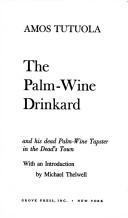
The palm-wine drinkard and his dead palm-wine tapster in the...
First published 1952. Subjects: Fiction, Yoruba (African people), Folklore, Wine and wine making, Nigeria, fiction.
eBay marketplace picks
Marketplace Samples
Live-tested eBay searches with available results related to this page.
Endnotes
1.
Source: cscanada.net
Link:https://www.cscanada.net/index.php/sll/article/view/j.sll.1923156320110202.014
2.
Source: ich.unesco.org
Link:https://ich.unesco.org/en/news/digitization-of-sudan-folklore-and-traditional-music-archives-00046
3.
Source: cambridge.org
Link:https://www.cambridge.org/core/journals/antiquity/article/archaeology-and-cultural-heritage-in-wartime-sudan-20232025/DF3E9D9EC1C8D76146648B96D49DE131
4.
Source: Wikipedia
Title: Sudanese literature
Link:https://en.wikipedia.org/wiki/Sudanese_literature
5.
Source: aijcr.thebrpi.org
Title: AIJCRInterpretations of a Sudanese Folktale
Link:https://aijcr.thebrpi.org/journals/Vol_5_No_5_October_2015/20.pdf
6.
Source: Wikipedia
Title: Abdullah El Tayib
Link:https://en.wikipedia.org/wiki/Abdullah_El_Tayib
7.
Source: andariya.com
Title: Folktales from Sudan: Keeping Children’s Stories Alive
Link:https://andariya.com/post/folktales-from-sudan-keeping-children-s-stories-alive-1
8.
Source: podcasts.apple.com
Title: Podcasts Folktales from Sudan
Link:https://podcasts.apple.com/us/podcast/folktales-from-sudan/id1801412689
9.
Source: researchgate.net
Link:https://www.researchgate.net/publication/262612415_Not_just_a_pretty_face_Women_as_storytellers_and_subjects_in_the_folktales_of_Northern_Sudan
10.
Source: journals.openedition.org
Link:https://journals.openedition.org/ema/pdf/3595
11.
Source: journals.openedition.org
Link:https://journals.openedition.org/ema/3595
12.
Source: jstor.org
Link:https://www.jstor.org/stable/jj.36105910
13.
Source: jstor.org
Link:https://www.jstor.org/stable/645483
14.
Source: academia.edu
Title: (PDF) Spirits and Slaves in Central Sudan
Link:https://www.academia.edu/82606803/Spirits_and_Slaves_in_Central_Sudan
15.
Source: routledge.com
Link:https://www.routledge.com/The-Sudanese-Zar-Tumbura-Cult-Slaves-Armies-Spirits-and-History/Makris/p/book/9781032411897
16.
Source: africabib.org
Link:https://www.africabib.org/rec.php?RID=191532428
17.
Source: ich.unesco.org
Link:https://ich.unesco.org/en/RL/procession-and-celebrations-of-prophet-mohammed-s-birthday-in-sudan-01896
18.
Source: ich.unesco.org
Link:https://ich.unesco.org/en/decisions/18.COM/8.B.7
19.
Source: andariya.com
Title: the nile river in sudanese culture history rituals poetry and national identity
Link:https://andariya.com/post/the-nile-river-in-sudanese-culture-history-rituals-poetry-and-national-identity
20.
Source: roaming-jewel.com
Title: nubians crocs
Link:https://roaming-jewel.com/2019/05/28/nubians-crocs/
21.
Source: ich.unesco.org
Link:https://ich.unesco.org/en/RL/al-jertiq-practices-rituals-and-expressions-for-preservation-protection-abundance-and-fertility-in-sudan-02275
22.
Source: ich.unesco.org
Link:https://ich.unesco.org/en/Decisions/20.COM/7.b.41
23.
Source: Wikipedia
Link:https://en.wikipedia.org/wiki/Jirtig
24.
Source: unesco.org
Link:https://www.unesco.org/en/articles/digitization-sudan-folklore-and-traditional-music-archives
25.
Source: unesco.org
Link:https://www.unesco.org/en/articles/fighting-against-illicit-trafficking-sudanese-cultural-property-and-strengthening-institutional
26.
Source: ich.unesco.org
Title: sudan SD
Link:https://ich.unesco.org/en/state/sudan-SD
27.
Source: ich.unesco.org
Title: digital preservation of folklore and traditional music archives phase i 00488
Link:https://ich.unesco.org/en/assistances/digital-preservation-of-folklore-and-traditional-music-archives-phase-i-00488
28.
Source: unesco.org
Title: Traditional Music Sound Archives
Link:https://www.unesco.org/en/memory-world/traditional-music-sound-archives
29.
Source: ich.unesco.org
Title: sudan SD
Link:https://ich.unesco.org/en/state/sudan-SD?info=projects
30.
Source: ich.unesco.org
Title: 8b representative list 01325
Link:https://ich.unesco.org/en/8b-representative-list-01325?call=slideshow&id=01896&include=slideshow_inc.php&mode=scroll&width=620
31.
Source: ich.unesco.org
Link:https://ich.unesco.org/en/video/75741
32.
Source: ich.unesco.org
Title: sudan SD
Link:https://ich.unesco.org/en/state/sudan-SD?call=film&id=66616&include=film_inc.php&width=700
33.
Source: ich.unesco.org
Title: sudan SD
Link:https://ich.unesco.org/en/state/sudan-SD?call=film&id=81381&include=film_inc.php&width=700
34.
Source: ich.unesco.org
Title: procession and celebrations of prophet mohammed s birthday in sudan 01896
Link:https://ich.unesco.org/en/RL/procession-and-celebrations-of-prophet-mohammed-s-birthday-in-sudan-01896?call=film&id=66616&include=film_inc.php&width=700
35.
Source: ich.unesco.org
Title: 7b representative list 01412
Link:https://ich.unesco.org/en/7b-representative-list-01412?call=slideshow&id=02275&include=slideshow_inc.php&mode=scroll&width=620
36.
Source: ich.unesco.org
Link:https://ich.unesco.org/en/video/66616
37.
Source: unesco.org
Title: paving roadmap protection cultural heritage
Link:https://www.unesco.org/en/articles/paving-roadmap-protection-cultural-heritage
38.
Source: Wikipedia
Title: Shilluk Kingdom
Link:https://en.wikipedia.org/wiki/Shilluk_Kingdom
39.
Source: Wikipedia
Link:https://en.wikipedia.org/wiki/Z%C4%81r
40.
Source: Wikipedia
Title: List of Intangible Cultural Heritage elements in Sudan
Link:https://en.wikipedia.org/wiki/List_of_Intangible_Cultural_Heritage_elements_in_Sudan
41.
Source: Wikipedia
Title: Sudan Memory
Link:https://en.wikipedia.org/wiki/Sudan_Memory
42.
Source: Wikipedia
Title: Destruction of cultural heritage during the Sudanese civil war (2023–present)
Link:https://en.wikipedia.org/wiki/Destruction_of_cultural_heritage_during_the_Sudanese_civil_war_%282023%E2%80%93present%29
43.
Source: Wikipedia
Title: Music of Sudan
Link:https://en.wikipedia.org/wiki/Music_of_Sudan
44.
Source: cambridge.org
Title: archaeology and cultural heritage in wartime sudan 20232025
Link:https://www.cambridge.org/core/services/aop-cambridge-core/content/view/DF3E9D9EC1C8D76146648B96D49DE131/S0003598X25101749a.pdf/archaeology_and_cultural_heritage_in_wartime_sudan_20232025.pdf
45.
Source: researchgate.net
Title: 307575977 A Cultural Herpetology of Nile Crocodiles in Africa
Link:https://www.researchgate.net/publication/307575977_A_Cultural_Herpetology_of_Nile_Crocodiles_in_Africa
46.
Source: researchgate.net
Link:https://www.researchgate.net/publication/324328396_Changing_Masters_Spirit_Possession_and_Identity_Construction_among_Slave_Descendants_and_Other_Subordinates_in_the_Sudan
47.
Source: researchgate.net
Link:https://www.researchgate.net/publication/296334757_Some_thoughts_on_the_magical_practice_of_the_Zar_along_the_Red_Sea_in_the_Sudan
48.
Source: researchgate.net
Title: 396273982 Archaeology and cultural heritage in wartime Sudan 2023 2025
Link:https://www.researchgate.net/publication/396273982_Archaeology_and_cultural_heritage_in_wartime_Sudan
49.
Source: researchgate.net
Title: 316456503 Hakamat and Peacebuilding 2004 2012
Link:https://www.researchgate.net/publication/316456503_Hakamat_and_Peacebuilding
50.
Source: archive.org
Link:https://archive.org/details/sudansbloodmemor0000besw
51.
Source: ia601402.us.archive.org
Title: 2015.532459.history of text
Link:https://ia601402.us.archive.org/28/items/in.ernet.dli.2015.532459/2015.532459.history-of_text.pdf
52.
Source: jstor.org
Link:https://www.jstor.org/stable/1214011
53.
Source: andariya.com
Title: from ruin to resilience sudan s archival restoration
Link:https://andariya.com/post/from-ruin-to-resilience-sudan-s-archival-restoration
54.
Source: academia.edu
Link:https://www.academia.edu/104621001/The_symbolization_of_a_snake_and_tree_among_the_devotees_of_the_zar_spirit_in_Sudan
55.
Source: academia.edu
Link:https://www.academia.edu/14829619/_Moveable_feast_of_Signs_gender_in_zar_in_Central_Sudan
56.
Source: academia.edu
Link:https://www.academia.edu/25315632/Book_Review_Wombs_and_Alien_Spirits
57.
Source: sudanese.kitchen
Link:https://www.sudanese.kitchen/culture
58.
Source: scielo.org.za
Link:https://scielo.org.za/scielo.php?pid=S0041-476X2011000200011&script=sci_abstract
59.
Source: sslh.online
Title: Online Folktales in Sudan: A Cultural Treasure
Link:https://www.sslh.online/en/posts/folktales-in-sudan-a-cultural-treasure
60.
Source: folktalesfromsudan.org
Link:https://www.folktalesfromsudan.org/
61.
Source: sslh.info
Title: Safeguarding Sudan’s Living Heritage The language that sings
Link:https://www.sslh.info/en/posts/the-language-that-sings-al-hakamat-as-custodians-of-heritage
62.
Source: sslh.info
Title: Safeguarding Sudan’s Living Heritage Reflecting on the social impact of Hakamat
Link:https://www.sslh.info/en/posts/reflecting-on-the-social-impact-of-hakamat
63.
Source: iwpr.net
Title: female singers stir blood darfur
Link:https://iwpr.net/global-voices/female-singers-stir-blood-darfur
64.
Source: britishmuseum.org
Link:https://www.britishmuseum.org/collection/object/E_Af1917
65.
Source: wrldrels.org
Title: zar spirit possession in central sudan
Link:https://wrldrels.org/2019/11/20/zar-spirit-possession-in-central-sudan/
66.
Source: sslh.online
Title: Online Otherworldly conversations
Link:https://www.sslh.online/en/posts/otherworldly-conversations
67.
Source: sudanmemory.org
Link:https://www.sudanmemory.org/fullscreen/FCF-0000275/1/
68.
Source: sudanmemory.org
Link:https://www.sudanmemory.org/cms/58/
69.
Source: womensliteracysudan.blog
Title: Women’s literacy in Sudan The Eternal Dance – Updated
Link:https://womensliteracysudan.blog/2018/09/01/sufism-in-sudan/
70.
Source: womensliteracysudan.blog
Title: Women’s literacy in Sudan Angels of The Nile
Link:https://womensliteracysudan.blog/2022/01/26/angels-of-the-nile/
71.
Source: bibliotekanauki.pl
Link:https://bibliotekanauki.pl/articles/2034055.pdf
72.
Source: sslh.info
Title: Safeguarding Sudan’s Living Heritage Adorned Bodies, Protected Souls
Link:https://www.sslh.info/en/posts/adorned-bodies-protected-souls
73.
Source: sudanmemory.org
Link:https://www.sudanmemory.org/
74.
Source: theguardian.com
Link:https://www.theguardian.com/world/article/2024/sep/09/sudan-national-museum-khartoum-artefacts-looted
75.
Source: sslh.online
Title: The Sudanese House Built on Sufism
Link:https://www.sslh.online/en/posts/the-sudanese-house-built-on-sufism
76.
Source: facebook.com
Link:https://www.facebook.com/groups/253231708125967/posts/427716424010827/
77.
Source: britishmuseum.org
Link:https://www.britishmuseum.org/collection/term/BIOG195997
78.
Source: britishmuseum.org
Link:https://www.britishmuseum.org/collection/galleries/living-and-dying/sudan-conflict-community-care
79.
Source: womensliteracysudan.blog
Title: Anointing in Robes of Red and Gold
Link:https://womensliteracysudan.blog/2019/05/22/anointing-in-red-and-gold/
80.
Source: womensliteracysudan.blog
Title: her words slayed dragons
Link:https://womensliteracysudan.blog/2021/05/18/her-words-slayed-dragons/
81.
Source: folkways.si.edu
Link:https://folkways.si.edu/unesco
82.
Source: folklife.si.edu
Title: unesco collection of traditional music of the world records
Link:https://folklife.si.edu/archives-and-resources/unesco-collection-of-traditional-music-of-the-world-records
83.
Source: thesudanist.com
Link:https://thesudanist.com/folktales-from-sudan-launches-second-season-continuing-to-celebrate-sudanese-folk-tradition/
84.
Source: thesudanist.com
Title: folktales from sudan audio stories from sudanese folklore coming on 1 april
Link:https://thesudanist.com/folktales-from-sudan-audio-stories-from-sudanese-folklore-coming-on-1-april/
85.
Source: encyclopedia.com
Link:https://www.encyclopedia.com/places/africa/sudan-political-geography/sudanese
86.
Source: public.ukp.informatik.tu-darmstadt.de
Title: wikipedia doc frequencies.txt
Link:https://public.ukp.informatik.tu-darmstadt.de/reimers/embeddings/wikipedia_doc_frequencies.txt
87.
Source: sudanmemory.org
Link:https://www.sudanmemory.org/search/-/-/2/RELEVANCE/MD2_SUDANMEMORY_TOPIC%3Afolktalesfablesmythsandlegends%3B%3B/
88.
Source: sudanmemory.org
Link:https://www.sudanmemory.org/about/
89.
Source: utpteachingculture.com
Title: Janice Boddy
Link:https://www.utpteachingculture.com/wp-content/uploads/2013/04/HAT3e_Speaking_About_Theory_Boddy.pdf
90.
Source: sudansurvey.gwi.uni-muenchen.de
Title: intangible cultural heritage
Link:https://www.sudansurvey.gwi.uni-muenchen.de/index.php/tag/intangible-cultural-heritage/
91.
Source: theguardian.com
Title: egypts tamed crocodiles in pictures
Link:https://www.theguardian.com/artanddesign/gallery/2020/mar/06/egypts-tamed-crocodiles-in-pictures
Additional References
92.
Source: facebook.com
Link:https://www.facebook.com/XinhuaNewsAgency/posts/a-nubian-village-in-southern-egypt-prides-itself-as-a-place-specializing-in-rais/841301194699083/
93.
Source: facebook.com
Link:https://www.facebook.com/localesd/posts/after-memory-is-a-bilingual-publication-about-the-sudanese-archive-it-includes-1/3293787270941921/
94.
Source: instagram.com
Link:https://www.instagram.com/reel/DYmzZ1IKKP0/
95.
Source: facebook.com
Link:https://www.facebook.com/RFI.English/posts/as-sudans-war-ravages-museums-and-historic-sites-urgent-efforts-are-under-way-to/1310569564432419/
96.
Source: bibliovault.org
Link:https://www.bibliovault.org/BV.titles.epl?tquery=Sudan
97.
Source: facebook.com
Link:https://www.facebook.com/cgtnafrica/posts/egypts-nubian-community-preserve-nile-crocodile-species/1230321835800865/
98.
Source: rahs-open-lid.com
Link:https://www.rahs-open-lid.com/wp-content/uploads/2024/02/FIRST-JIHAD_-Khartoum-and-the-Dawn-of-Militant-Islam-PDFDrive-.pdf
99.
Source: nubianfoundation.org
Link:https://nubianfoundation.org/folktales/
100.
Source: facebook.com
Link:https://www.facebook.com/rawipublishing/posts/in-the-zar-ritual-spirits-known-as-the-asyad-ar-masters-are-believed-to-manifest/1336606108506219/
101.
Source: archiqoo.com
Link:https://archiqoo.com/unesco/intangible_heritage_countries/intangible_list_sudan.php
Topic Tree
Follow this branch
Related pages 192
- Afghan Folklore
- Albanian Folklore
- Algerian Folklore
- Australian Folklore
- Azerbaijan Folklore
- +187 more in sidebar