Where Russian Folklore Turns Strange
Russian folklore is not a single neat mythology, but a large, layered story-world shaped by village life, forests, rivers, Orthodox Christianity, pre-Christian ritual, imperial collecting, Soviet-era scholarship and modern popular culture.
Page outline Jump by section
Introduction
The most useful way to approach Russia’s folklore is to see it as a meeting place between oral tradition and later reshaping. Some beings belonged mainly to everyday belief and local legend; others were made famous by fairy-tale books, theatre, opera, illustration, children’s publishing and film. Russia’s size also matters: beyond ethnic Russian traditions, the country includes Siberian, Turkic, Finno-Ugric, North Caucasian and many other storytelling cultures, including the Sakha epic tradition recognised by UNESCO as intangible cultural heritage.[Intangible Cultural Heritage]ich.unesco.orgOpen source on unesco.org.
What makes Russian folklore distinctive?
Russian folklore is especially vivid because it keeps moving between the homely and the uncanny. A tale may begin with a poor family, a missing bride, a forbidden room or a simple household task, then lead the hero or heroine into a forest where the rules of ordinary life no longer apply. The supernatural is rarely just decorative. It tests courage, politeness, endurance, cunning and the ability to recognise when a frightening figure is also a source of help.
This is why Baba Yaga is such a strong emblem of Russian tradition. She is not simply “a witch” in the modern Halloween sense. In different tales she can be a cannibal threat, a guardian at the edge of another world, a tester of young people, or a giver of magical aid. Scholars have long noted her ambiguity, and that ambiguity is part of her power: she is terrifying because she may eat the visitor, but important because the visitor may need her knowledge.[Wikipedia]WikipediaBaba YagaBaba Yaga
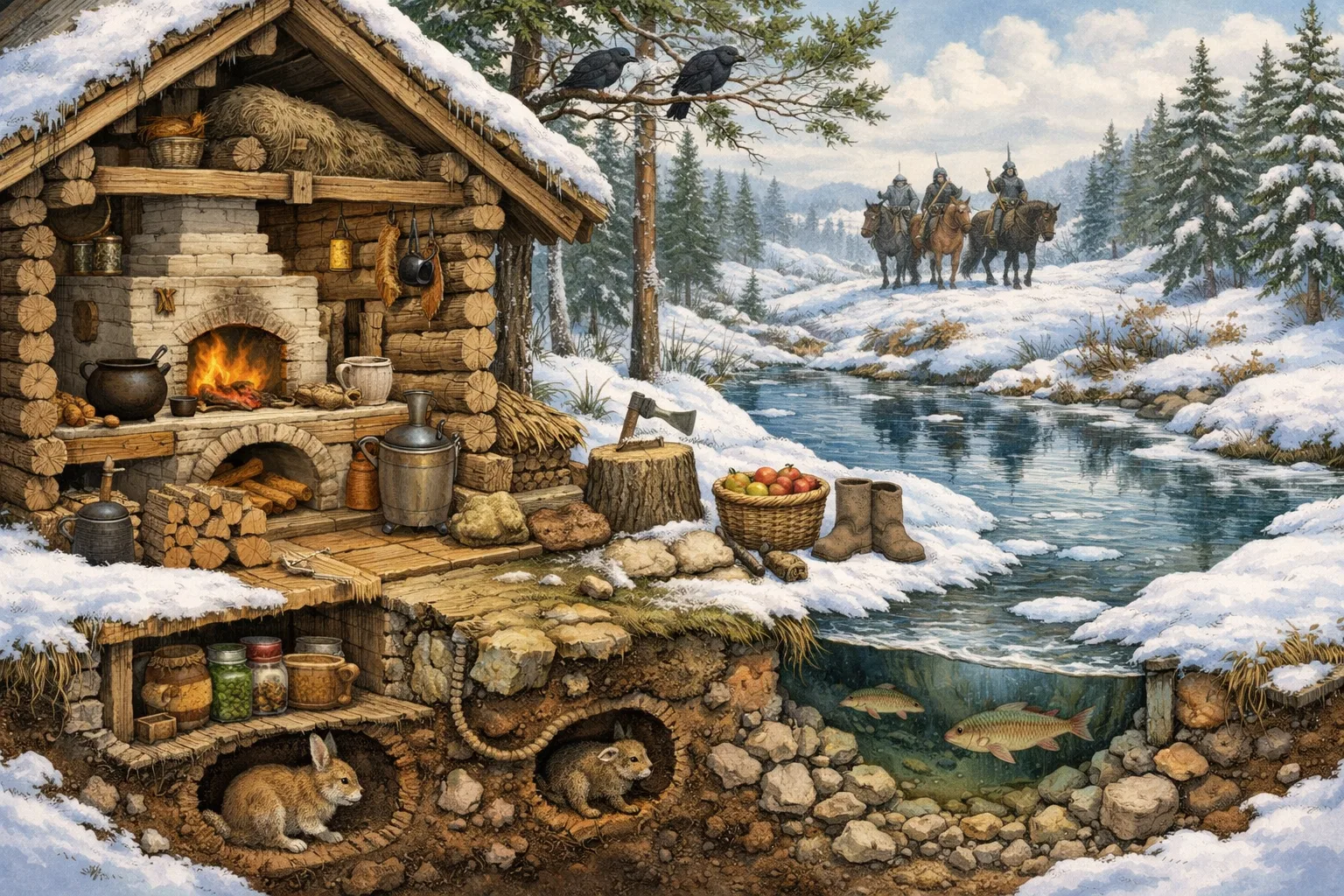
Russian folklore also has a strong sense of place. The house, bathhouse, barn, field, river and forest could each be imagined as watched by spirits. These beliefs made the landscape morally and socially alive: a careless household, a neglected animal, a dangerous riverbank or an unfamiliar forest was not just physically risky, but spiritually charged. Accounts of Russian place spirits include house, courtyard, barn, bathhouse, forest, field and water beings, and modern retellings often keep these figures recognisable even when the old rural setting has changed.[Russian Life]russianlife.comspirits of the home and forestspirits of the home and forest
The tale collectors who shaped what readers know
Many famous Russian fairy tales reached print through nineteenth-century collecting. Afanasyev is central here: his compilations were published in the mid-nineteenth century and became one of the great reservoirs of Russian and East Slavic tale material, including stories that later English translations made widely accessible. The Library of Congress description of a modern edition notes that his collected material included hundreds of tales and “characteristically Russian” figures and plots.[Cat Directory]catdir.loc.govCat DirectoryPublisher description for Russian folktales from the collection of…Afanasyev recorded hundreds of folktales, the first co…
That printed archive matters because it changed the tradition it preserved. A story that once lived in performance, dialect, gesture and local memory became a text that could be translated, illustrated, taught, staged and adapted. The Internet Archive copy of a 1916 English edition of Afanasyev’s tales shows how early twentieth-century readers were already encountering these stories as “Russian folk-tales” in book form, detached from the original village setting but newly available to international audiences.[Internet Archive]archive.orgOpen source on archive.org.
Vladimir Propp later transformed the study of Russian wonder tales by examining their structure. His famous work on tale “morphology” analysed Russian fairy tales not mainly by their characters’ names, but by what those characters do in the story: departure, testing, magical help, struggle, return and recognition. Later summaries and scholarship note that Propp worked from Afanasyev’s corpus and identified recurring narrative functions, which helped make Russian fairy tales important far beyond Slavic studies.[DROPS]drops.dagstuhl.deDROPSPropp's Morphology of the Folk Tale as a GrammarDROPSPropp's Morphology of the Folk Tale as a Grammar
The important caution is that a printed “Russian fairy tale” is not the same thing as a transcript of timeless pagan belief. Some figures come from folk belief; some belong chiefly to fairy-tale narrative; some were reshaped by editors, translators and artists. A public-facing page on Russian folklore should therefore avoid treating every famous character as a direct survival from ancient religion. The evidence is richer, and more interesting, when old oral motifs, nineteenth-century collection and later literary reinvention are kept distinct.
Baba Yaga, the forest and the dangerous helper
Baba Yaga is the figure many readers meet first, and she deserves that place. She often lives deep in the forest, in a strange hut associated with animal or bird imagery, and she tests those who come to her. The first clear written attestation often cited for her name is in the eighteenth century, while her later fame comes largely from fairy-tale collections and artistic retellings.[Wikipedia]WikipediaBaba YagaBaba Yaga
In tales such as “Vasilisa the Beautiful”, the heroine’s encounter with Baba Yaga is not merely a scary episode. Vasilisa is sent to fetch light, enters the witch’s domain, performs exhausting tasks and survives through obedience, courage and hidden help. The story turns domestic suffering into a journey through supernatural danger, and it makes labour, endurance and moral testing central to the heroine’s victory.[BROM BONES BOOKS]brombonesbooks.comvasilisa baba yaga and a whole lot of workvasilisa baba yaga and a whole lot of work
Baba Yaga’s lasting appeal comes from the fact that she refuses to settle into one moral category. She is not the fairy godmother, but she is not always only the villain. She may threaten, feed, interrogate, instruct or equip the traveller. That makes her one of the best examples of Russian folklore’s deeper logic: the unknown world is dangerous, but it may also contain the knowledge needed to survive.
The forest around her is equally important. In many Russian tales, the forest is the borderland where ordinary social order breaks down. It is where children are abandoned, heroes lose their way, brides vanish, animals speak and the dead or not-quite-human may be encountered. For a country whose cultural imagination has long been shaped by vast woodland, the forest is not just scenery; it is a narrative machine that moves people from the known world into trial.
Household spirits and the supernatural at home
Not all Russian supernatural tradition lives in the wild. One of the most revealing figures is the household spirit, often imagined as a domestic guardian who protects the family, animals and home if properly respected. Folklore accounts describe him as linked to kinship, housekeeping and the moral order of the household; he can warn, punish, make noise, trouble animals or show displeasure when domestic duties are neglected.[Wikipedia]WikipediaOpen source on wikipedia.org.
This figure matters because it shows how folklore regulated ordinary life. Keeping the house clean, feeding animals properly, behaving respectfully and maintaining family harmony could be expressed not only as practical duties but as relations with an unseen domestic presence. The belief gave moral force to everyday habits.
Modern anecdotes show how adaptable this tradition is. Accounts collected and discussed by folklorists include stories of household spirits in rural homes, urban flats and even joking references in university classrooms. That does not mean every speaker literally believes in the being; folklore often survives as half-belief, family story, joke, warning and cultural shorthand at the same time.[Russian Life]russianlife.comspirits of the home and forestspirits of the home and forest
The same domestic map extends outward. Bathhouse, barn, courtyard, field, water and forest spirits all suggest a world in which each place has rules. The point is not that Russians once had a single fixed “pantheon” neatly organised like a handbook. It is that local life could be imagined through relationships with powers attached to particular spaces.
Water, forest and field beings
Russian folk belief includes many beings tied to the natural world. Forest spirits, water beings and female figures associated with rivers or lakes appear in legends, seasonal traditions and later literature. They are often described across wider Slavic tradition as well as specifically Russian material, so care is needed: a being may be shared across East Slavic or Slavic cultures but take local forms in Russian storytelling.
Water beings are especially revealing because rivers, lakes and bathhouses were places of cleansing, danger and transition. Folklore about dangerous water spirits warned against risky places and times, especially for children and young people. Female water figures in songs and legends could be mournful, seductive, frightening or linked with the restless dead, depending on region and genre.[Russian Life]russianlife.comspirits of the home and forestspirits of the home and forest
Forest beings work differently. They express the fear and necessity of entering woodland: hunting, gathering, travelling and woodcutting all required knowledge of a space beyond the village’s full control. A forest spirit may mislead travellers, imitate sounds, guard animals or punish disrespect. These stories turn ecological caution into memorable narrative.
Field and barn spirits reflect the agricultural world. Harvest, storage, fire, animals and weather were all fragile parts of rural survival. A spirit in a barn or field gave narrative form to the anxieties of livelihood: a bad harvest, a careless fire, a sick horse or a spoiled store of grain could be imagined as more than accident.
Heroes, villains and the Russian wonder tale
Russian wonder tales are full of quests, impossible tasks, magical helpers and death-defying enemies. Famous figures include deathless antagonists, dragon-like opponents, radiant birds, enchanted brides, wise maidens and apparently foolish youngest sons. The stories often begin with loss or lack: a missing princess, stolen treasure, a dying father’s command, an impossible demand from a ruler, or a forbidden journey.
The Firebird is one of the clearest examples. A glowing bird, or even one of its feathers, can set an entire plot in motion. The hero’s pursuit becomes a chain of tests, mistakes and magical assistance. In modern culture, the Firebird is often remembered through ballet, illustration and children’s books as much as through oral tradition, which shows how folklore can become a national and international artistic symbol.
Russian tales also love the underestimated hero. The youngest son, the apparently simple peasant or the socially marginal figure may succeed because he listens, shares food, treats animals kindly or follows instructions when cleverer rivals fail. Propp’s structural work helps explain why these tales feel both varied and familiar: the names and settings change, but the movement through testing, aid, struggle and return often follows recognisable patterns.[DROPS]drops.dagstuhl.deDROPSPropp's Morphology of the Folk Tale as a GrammarDROPSPropp's Morphology of the Folk Tale as a Grammar
This pattern should not make the tales feel mechanical. Their emotional charge lies in concrete scenes: the lonely road, the forbidden chamber, the old woman by the stove, the impossible task before dawn, the animal who repays kindness, or the blazing feather that proves the marvellous world is real inside the story.
Seasonal customs and folk religion
Russian folklore is not only a matter of stories. It also lives in calendar customs, songs, foodways, divination, masking, bonfires and rituals of seasonal transition. Maslenitsa, the week before Orthodox Lent, is one of the best-known examples. Modern descriptions present it as a spring-facing festival with feasting, pancakes, games and the symbolic farewell to winter, while also noting its layered relationship with older Slavic custom and the Christian calendar.[blog.bham.ac.uk]blog.bham.ac.ukMaslenitsa 11-17 MarchMaslenitsa 11-17 March
Midsummer customs associated with Ivan Kupala show a similar blending. Contemporary explanations commonly describe the holiday as a mixture of older seasonal rites and Christian reinterpretation, with water, fire, songs and night-time celebration at its centre. The details vary, and some modern performances are revived, staged or reinvented, but the broader pattern is clear: seasonal folklore often survives by being reinterpreted rather than simply preserved unchanged.[Russian Life]russianlife.commy first ivan kupalamy first ivan kupala
This is where the phrase “folk religion” becomes useful. It does not mean a separate formal religion with a single doctrine. It means the lived mixture of church calendar, local custom, household practice, charms, omens, saints, ancestors and older supernatural ideas. Russian tradition, like many European traditions, often worked through overlap rather than clean replacement.
The danger for modern readers is to assume every colourful custom is ancient in its present form. Some customs have old roots; some were standardised through schools, festivals, tourism and media; some were revived after periods of suppression or neglect. The strongest interpretation treats calendar folklore as a living tradition that continually negotiates between memory, performance and identity.
Sacred landscapes, haunted places and material culture
Russia’s folklore is attached not only to tales and festivals but to landscapes and objects. Churches, rivers, forests, pilgrimage routes, village houses, graveyards and remote islands can all become story-bearing places. Kizhi Pogost in Karelia, for example, is internationally recognised by UNESCO as a masterpiece of Russian wooden architecture set in a striking landscape; while UNESCO’s listing is architectural rather than folkloric, the site shows how sacred building, local environment and regional identity can become inseparable in the public imagination.[UNESCO World Heritage Centre]whc.unesco.orgOpen source on unesco.org.
Museums also matter because they preserve the material world in which many traditions made sense. The Russian Museum of Ethnography states that its Russian collections include tens of thousands of objects from traditional culture, especially from the late eighteenth to twentieth centuries, covering economic, everyday and spiritual life. Such collections help readers understand that folklore was not only “stories”, but also costume, tools, ritual objects, domestic interiors and seasonal practice.[Ethnographic Museum]ethnomuseum.ruOpen source on ethnomuseum.ru.
Material culture can correct a common misunderstanding. Fairy-tale Russia is often imagined as an abstract world of huts, forests and palaces, but real folk tradition belonged to specific households, climates, crafts, regions and social conditions. A spinning tool, stove, wedding garment, painted chest or wooden church may be as important to understanding folklore as a monster or magical bird.
Haunted or sacred landscapes should be handled carefully. Local legends can be meaningful without being treated as verified supernatural reports. A responsible account asks what story is attached to a place, who tells it, how old the evidence is, whether it is a tourist retelling or a documented local tradition, and what cultural work the story performs.
Literature, music and the reinvention of folklore
Russian folklore became world-famous partly because writers, composers and artists transformed it. Pushkin’s early poem “Ruslan and Lyudmila”, published in 1820, drew on fairy-tale material and helped establish a literary mode in which folk motifs could become high art. Later composers, illustrators and stage designers continued this process, giving folk figures a visual and musical life far beyond their original settings.[Wikipedia]WikipediaRuslan and LudmilaRuslan and Ludmila
This literary reshaping can be both beautiful and misleading. A reader may meet a folk figure first through an opera, ballet, Soviet cartoon, fantasy novel or video game, then assume that version is the “original”. In reality, modern culture often compresses several traditions into one recognisable image. Baba Yaga becomes a witch-icon; the Firebird becomes a symbol of dazzling otherworldly beauty; the household spirit becomes a cute domestic creature or comic nuisance.
The best-known artists of Russian folklore did not merely copy oral tradition. They selected, polished, illustrated, moralised and sometimes nationalised it. That is why folklore became central to ideas of Russian cultural identity: it seemed to offer access to the people’s voice, the village past and a distinctive national imagination, even when mediated through educated collectors and elite art.
Soviet culture added another layer. Folktales were adapted for children, animation, theatre and film, often with religious elements softened and moral lessons reframed. This kept many stories alive for mass audiences while also changing their tone. A frightening or morally ambiguous tale could become comic, educational or patriotic.
Russia is not only ethnic Russian folklore
A country-level page on Russia should not imply that all folklore within Russia is ethnic Russian or Slavic. The Russian Federation covers many peoples, languages and religious histories. Siberian, Turkic, Mongolic, Finno-Ugric, Caucasian and Arctic traditions all fall within the country’s cultural geography, even though they are not interchangeable with Russian fairy tales.
The Sakha epic tradition known as Olonkho is a strong example. UNESCO describes it as one of the oldest epic arts of the Turkic peoples and identifies it with the Sakha Republic in the far east of the Russian Federation. It includes heroic narrative, song, mythic geography and highly skilled performance, and it has been the subject of modern revitalisation as well as scholarly study.[Intangible Cultural Heritage]ich.unesco.orgOpen source on unesco.org.
Karelia offers another useful case, because oral poetry from Karelian and neighbouring Finnic traditions contributed to the material later shaped into the Kalevala, the Finnish national epic. Modern explainers stress that the Kalevala is both based on oral tradition and a literary construction, with much material collected from Karelia. This makes the Russian borderlands important to more than one national folklore story.[thisisFINLAND]finland.fithisis FINLAND8 questions on the Kalevala, the epic that shaped Finland'sthisis FINLAND8 questions on the Kalevala, the epic that shaped Finland's
These examples do not dilute the Russian folklore page; they make it more accurate. Russia’s folklore landscape includes a dominant Russian-language fairy-tale tradition, but also regional and Indigenous traditions with their own histories, genres and sacred geographies. A serious reader should leave with that plural picture.

What is old, what is collected, and what is modern?
The most common confusion about Russian folklore is the assumption that famous equals ancient. Some motifs may be very old, but the evidence for particular characters, names and story forms often comes from much later written sources. Baba Yaga, for example, is now treated as an archaic figure by many readers, but her documented textual history and her fairy-tale roles need to be distinguished from speculation about ancient goddess worship or prehistoric ritual.[Wikipedia]WikipediaBaba YagaBaba Yaga
A second confusion is the belief that folklore vanished with modernity. In practice, folklore changes medium. Village memorates become family anecdotes; household spirits become jokes, half-beliefs or internet posts; fairy tales become cartoons and games; seasonal festivals become municipal events, school performances or heritage tourism. The tradition survives, but not always in the same social form.
A third confusion is the blending of Russian, Slavic and East European material into one generic “Slavic mythology”. There are genuine shared patterns across Slavic cultures, but local evidence matters. A creature known in Russian tradition may have cousins in Ukrainian, Belarusian, Polish, Czech or South Slavic traditions, yet the details, names, ritual contexts and literary afterlives can differ. For a Russia-focused page, comparison is useful only when it clarifies the Russian material rather than replacing it.
A practical rule helps: ask where a claim comes from. Is it from an oral tale collection, a church polemic against older practices, an ethnographic record, a museum object, a literary poem, a Soviet film, a tourist website, a modern fantasy novel or an internet meme? Each can be culturally important, but each proves a different kind of thing.
Why Russian folklore still matters
Russian folklore remains powerful because it gives memorable forms to basic human questions: how to leave home, how to survive danger, how to treat strangers, how to respect the house, how to cross into the unknown, how to endure unjust labour, how to recognise help when it appears in frightening form, and how to live in a world where nature is not inert scenery.
It also matters because it is one of the great routes through which Russian culture has explained itself to the world. Afanasyev’s tale collections, Propp’s theory, Pushkin’s literary transformations, Kizhi’s sacred wooden architecture, ethnographic museum collections and modern retellings all show different ways folklore becomes heritage.[loc.gov]catdir.loc.govCat DirectoryPublisher description for Russian folktales from the collection of…Afanasyev recorded hundreds of folktales, the first co…
For modern readers, the richest approach is neither sceptical dismissal nor romantic overbelief. Russian folklore is best read as a living archive of stories, customs, fears, jokes, rituals and artistic reinventions. Baba Yaga’s hut, the watchful household spirit, the midsummer fire, the shining bird and the epic singer of Siberia all belong to that archive, but they belong in different ways.
The result is a tradition that feels both intimate and vast. It begins at the stove, the threshold and the family table; it moves outward through the bathhouse, barn, field and forest; it reaches into sacred islands, imperial museums and epic performance; and it continues today in books, festivals, animation, games, tourism and family memory.
Amazon book picks
Further Reading
Books and field guides related to Where Russian Folklore Turns Strange. Use these as the next step if you want deeper reading beyond the article.
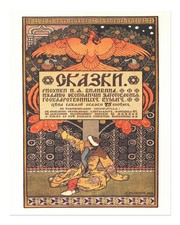
Russian Fairy Tales (Illustrated by Ivan Bilibin)
Directly matches the page’s focus on Afanasyev, wonder tales, forest witches and uncanny Russian folklore.
Baba Yaga
Directly supports the page’s forest-witch and strange-household folklore themes.
The Bear and the Nightingale
A commercially strong modern retelling lane for readers attracted to Russian spirits and fairy-tale atmosphere.
Morphology of the Folktale
Explains the structure behind many Russian wonder tales and their international influence.
eBay marketplace picks
Marketplace Samples
Live-tested eBay searches with available results related to this page.
Endnotes
1.
Source: archive.org
Link:https://archive.org/details/russianfolktales00afanuoft
2.
Source: ich.unesco.org
Link:https://ich.unesco.org/en/RL/olonkho-yakut-heroic-epos-00145
3.
Source: Wikipedia
Title: Baba Yaga
Link:https://en.wikipedia.org/wiki/Baba_Yaga
4.
Source: drops.dagstuhl.de
Title: DROPSPropp’s Morphology of the Folk Tale as a Grammar
Link:https://drops.dagstuhl.de/storage/01oasics/oasics-vol032-cmn2013/OASIcs.CMN.2013.106/OASIcs.CMN.2013.106.pdf
5.
Source: brombonesbooks.com
Title: vasilisa baba yaga and a whole lot of work
Link:https://brombonesbooks.com/2023/04/09/vasilisa-baba-yaga-and-a-whole-lot-of-work/
6.
Source: Wikipedia
Link:https://en.wikipedia.org/wiki/Domovoy
7.
Source: blog.bham.ac.uk
Title: Maslenitsa 11-17 March
Link:https://blog.bham.ac.uk/culturalcalendar/2024/03/11/maslenitsa-11-17-march/
8.
Source: whc.unesco.org
Link:https://whc.unesco.org/en/list/544/
9.
Source: Wikipedia
Title: Ruslan and Ludmila
Link:https://en.wikipedia.org/wiki/Ruslan_and_Ludmila
10.
Source: unesco.org
Title: document 1754
Link:https://www.unesco.org/archives/multimedia/document-1754
11.
Source: Wikipedia
Link:https://en.wikipedia.org/wiki/Russia
12.
Source: Wikipedia
Link:https://en.wikipedia.org/wiki/Encyclopedia
13.
Source: Wikipedia
Title: Russian language
Link:https://en.wikipedia.org/wiki/Russian_language
14.
Source: Wikipedia
Title: Encyclopædia Britannica
Link:https://en.wikipedia.org/wiki/Encyclop%C3%A6dia_Britannica
15.
Source: Wikipedia
Title: Russian Fairy Tales
Link:https://en.wikipedia.org/wiki/Russian_Fairy_Tales
16.
Source: Wikipedia
Title: Vladimir Propp
Link:https://en.wikipedia.org/wiki/Vladimir_Propp
17.
Source: Wikipedia
Title: Slavic paganism
Link:https://en.wikipedia.org/wiki/Slavic_paganism
18.
Source: Wikipedia
Link:https://en.wikipedia.org/wiki/Kalevala
19.
Source: Wikipedia
Link:https://en.wikipedia.org/wiki/Olonkho
20.
Source: Wikipedia
Link:https://dag.wikipedia.org/wiki/Olonkho
21.
Source: unesdoc.unesco.org
Link:https://unesdoc.unesco.org/ark%3A/48223/pf0000063466
22.
Source: ich.unesco.org
Title: what is intangibleheritage 00003;
Link:https://ich.unesco.org/en/what-is-intangibleheritage-00003%3B?call=film&id=41749&include=film_inc.php&width=700
23.
Source: unesdoc.unesco.org
Link:https://unesdoc.unesco.org/ark%3A/48223/pf0000210785
24.
Source: archive.org
Link:https://archive.org/details/russianfairytale00afan
25.
Source: archive.org
Link:https://archive.org/stream/Henderson-Nichol1981/Henderson-Nichol1981_djvu.txt
26.
Source: archive.org
Link:https://archive.org/stream/BarItzhakEncyclopediaOfJewishFolkloreTraditions/Myth%2B%26%2BFolktales/Encyclopedia%2Bof%2BMythology%2Band%2BFolklore.pdf_djvu.txt
27.
Source: archive.org
Link:https://archive.org/download/The_Facts_on_File_Encyclopedia_of_World_Mythology_and_Legend_2_Volume_Set_by_Jam/The_Facts_on_File_Encyclopedia_of_World_Mythology_and_Legend_2_Volume_Set_by_James_R._Dow.pdf
28.
Source: ia600801.us.archive.org
Title: Monika Kropej Supernatural Beings from Slovenian Myth and Folktales (2012)
Link:https://ia600801.us.archive.org/34/items/monika-kropej-supernatural-beings-from-slovenian-myth-and-folktales-2012/Monika%20Kropej%20-%20Supernatural%20Beings%20from%20Slovenian%20Myth%20and%20Folktales%20%282012%29.pdf
29.
Source: archive.org
Link:https://archive.org/download/ukrainianliterat62tarn/ukrainianliterat62tarn_djvu.txt
30.
Source: ia801300.us.archive.org
Link:https://ia801300.us.archive.org/13/items/cu31924028378358/cu31924028378358.pdf
31.
Source: archive.org
Title: The Encyclopedia of World Mythology and Legend 3e djvu.txt
Link:https://archive.org/stream/the-encyclopedia-of-world-mythology-and-legend-3e/The_Encyclopedia_of_World_Mythology_and_Legend_3e_djvu.txt
32.
Source: archive.org
Title: Full text of “Wonders In The Sky
Link:https://archive.org/stream/JacquesValleeChrisAubeckWondersInTheSkyUnexplainedAerialObjectsFromAntiquityToModernTimes/Jacques%2BVallee%2C%2BChris%2BAubeck%2BWonders%2Bin%2Bthe%2BSky%2B%2BUnexplained%2BAerial%2BObjects%2Bfrom%2BAntiquity%2Bto%2BModern%2BTimes_djvu.txt
33.
Source: rusfao.mid.ru
Link:https://rusfao.mid.ru/en/russia_and_the_un_agencies_in_rome/food_and_agriculture_organization_of_the_united_nations/russia_and_fao_museum/
34.
Source: catdir.loc.gov
Link:https://catdir.loc.gov/catdir/enhancements/fy1403/2013038810-d.html
Source snippet
Cat DirectoryPublisher description for Russian folktales from the collection of...Afanasyev recorded hundreds of folktales, the first co...
35.
Source: ethnomuseum.ru
Link:https://ethnomuseum.ru/en/resources/depositories/collections-russian/
36.
Source: russianlife.com
Title: spirits of the home and forest
Link:https://www.russianlife.com/magazine/nov-dec-2012/spirits-of-the-home-and-forest/
37.
Source: s3.amazonaws.com
Link:https://s3.amazonaws.com/arena-attachments/1695380/096074951694644162a8485fe311fa2c.pdf?1517692459=
38.
Source: russianlife.com
Title: my first ivan kupala
Link:https://russianlife.com/the-russia-file/my-first-ivan-kupala/
39.
Source: folkways.today
Link:https://folkways.today/kupala/
40.
Source: finland.fi
Title: thisis FINLAND8 questions on the Kalevala, the epic that shaped Finland’s
Link:https://finland.fi/arts-culture/8-questions-on-the-kalevala-the-epic-that-shaped-finlands-identity/
41.
Source: youtube.com
Link:https://www.youtube.com/watch?v=kBzEEooV02c
42.
Source: youtube.com
Link:https://www.youtube.com/watch?v=JZFDH5bTMZ4
43.
Source: buffaloah.com
Link:https://buffaloah.com/a/virtual/russ/kizhi/pogost/pogost.html
44.
Source: russiapedia.rt.com
Link:https://russiapedia.rt.com/of-russian-origin/maslenitsa/
Additional References
45.
Source: youtube.com
Title: Who BABA YAGA Really Is? Dark Truth Behind Russian Fairy Tales
Link:https://www.youtube.com/watch?v=4AkmzLxWVi8
Source snippet
Baba Yaga: The Ancient Origins of the Famous 'Witch' | Monstrum...
46.
Source: youtube.com
Title: Baba Yaga: The Ancient Origins of the Famous ‘Witch’ | Monstrum
Link:https://www.youtube.com/watch?v=aS4VCxMeWQM
Source snippet
Baba Yaga Had A Point: Folklore Deep Dive...
47.
Source: youtube.com
Title: The Ultimate Guide to Slavic Mythology and Folklore
Link:https://www.youtube.com/watch?v=nPov448XX0o
Source snippet
Buyan The Slavic Island of Mystery, Magic, and Immortality...
48.
Source: researchgate.net
Link:https://www.researchgate.net/publication/289890098_Propp%27s_morphology_of_the_folk_tale_as_a_grammar_for_generation
49.
Source: academia.edu
Link:https://www.academia.edu/6976141/Russian_Folk_Calendar_The_Invented_Tradition_in_the_Popular_Culture_essay_in_English_
50.
Source: researchgate.net
Link:https://www.researchgate.net/publication/373041083_Baba_Yaga_The_Mysterious_Wise_Woman_in_Slavic_Folklore
51.
Source: scribd.com
Link:https://www.scribd.com/document/971793876/AFANASIEV-The-Witch-Baba-Yaga
52.
Source: facebook.com
Link:https://www.facebook.com/IndySymphony/posts/baba-yaga-a-prominent-character-in-russian-folklore-and-inspiration-of-many-musi/596757092490998/
53.
Source: facebook.com
Link:https://www.facebook.com/100064616625506/posts/a-glimpse-into-a-traditional-russian-festival-called-maslenitsa-by-he-consul-gen/1070256375138240/
54.
Source: facebook.com
Link:https://www.facebook.com/groups/281886105961506/posts/2174848859998545/
Topic Tree
Follow this branch
Related pages 192
- Afghan Folklore
- Albanian Folklore
- Algerian Folklore
- Australian Folklore
- Azerbaijan Folklore
- +187 more in sidebar