Within Equatorial Guinea Folklore
Is Bioko a Sacred Spirit Landscape?
Bubi tradition ties spirits, ancestors and protective power to Bioko's mountains, caves, rivers, stones and trees.
On this page
- Mountains, caves and rivers
- Ancestors, spirits and sacred objects
- Protection at the village edge
Page outline Jump by section
Introduction
Yes, many Bubi traditions have treated Bioko not simply as an island where stories happen, but as a sacred spirit landscape in which mountains, caves, rivers, forests, stones and village boundaries are woven into relationships between the living, the dead and unseen spiritual forces. In older Bubi belief, the physical world and the spirit world were understood as overlapping rather than separate. Certain places carried particular power, and people approached them with ritual care, respect and protective practices.[101lasttribes.com]101lasttribes.com101 Last TribesBubi peopleBubi Traditional Ancestral/Spiritual religion. The Bubi religion, the beginning is Rupe (called Eri on southern…
For readers interested in the folklore of Equatorial Guinea, this landscape-centred worldview is one of the most distinctive features of Bubi tradition. Rather than focusing on a large pantheon of named gods or monsters, many accounts emphasise sacred places, ancestral presence and the spiritual significance of natural features on Bioko. Although Christianity transformed religious life from the colonial era onward, elements of this sacred geography remain important in cultural memory and in discussions of Bubi identity.[uned.es]e-spacio.uned.esBubi Government at the End of the 19th CenturyFebruary 6, 2014 — This text recounts the transition that Bioko political structure underwent upon entering into contact, first, with dif…
Mountains, Caves and Rivers
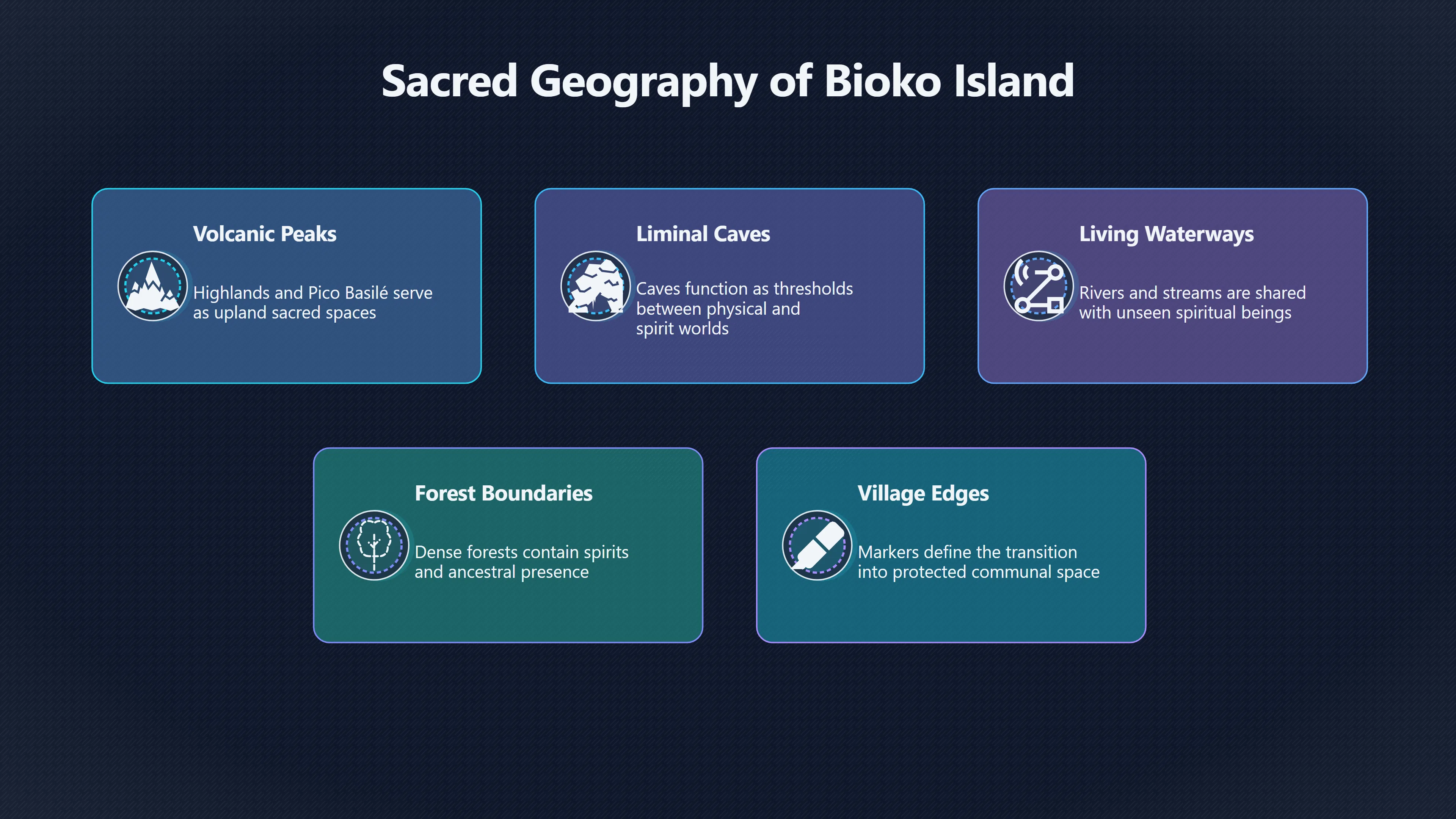
Bioko is a volcanic island dominated by dramatic mountains, dense forests, ravines and streams. In traditional Bubi belief, these were not merely geographical features. Ethnographic descriptions repeatedly note that natural landmarks were associated with spiritual forces and that particular locations possessed distinctive sacred qualities. Mountains, rivers and other striking features could become places where people sensed the presence of spirits, sought protection or performed rituals.[wikipedia.org]WikipediaBubi peopleBubi people
The island’s highest mountain, the volcanic peak now known as Pico Basilé, occupies a special place in the cultural imagination of Bioko. While modern visitors often encounter it as a natural landmark and biodiversity hotspot, older traditions linked the highlands to powers beyond ordinary human life. The mountain’s visibility across much of the island, its cloud-covered slopes and its isolation helped make upland landscapes natural candidates for sacred association.[Wikipedia]WikipediaPico BasiléPico Basilé
Caves also appear in discussions of sacred places on Bioko. Across many African traditions, caves function as liminal locations between worlds, and Bubi sacred geography similarly connected particular natural sites with spiritual presence and ancestral memory. Although detailed accounts of individual sacred caves are less widely published in English than other African sacred-site traditions, anthropological descriptions consistently place caves among the natural locations that carried ritual significance.[Art of the Motherland]artofthemotherland.comArt of the Motherland Spirits of the Forest, Guardians of the IslandArt of the MotherlandSpirits of the Forest, Guardians of the IslandMay 31, 2025 — * Spiritual Beliefs and Sacred Sites: Bubi traditional…
Rivers and water sources occupied a comparable role. Traditional accounts describe a landscape in which specific natural features possessed their own spiritual character. Waterways were not merely practical resources but part of a living environment shared with unseen beings. Respect for these places formed part of a broader understanding that human communities existed within a spiritually populated island rather than apart from it.[Wikipedia]WikipediaBubi peopleBubi people
Ancestors, Spirits and Sacred Objects
At the centre of many descriptions of Bubi religion stands a creator figure known as Rupe, called Eri in some parts of the island. Beneath this supreme being lay a complex spiritual world inhabited by ancestors, benevolent powers and harmful spirits. Older accounts describe multiple spiritual realms while also stressing that supernatural forces remained active within everyday life on Bioko itself.[101lasttribes.com]101lasttribes.com101 Last TribesBubi peopleBubi Traditional Ancestral/Spiritual religion. The Bubi religion, the beginning is Rupe (called Eri on southern…
A key idea was that the spirit world and the material world overlapped. Spirits were believed to share the island with human communities. Illness, accidents and misfortune could be interpreted as the work of malevolent beings, while protection, fertility and well-being were linked to maintaining proper relations with spiritual powers and ancestors.[Wikipedia]WikipediaBubi peopleBubi people
This helps explain why sacred places mattered so much. A mountain, grove, stream or unusual stone was not necessarily sacred because of a dramatic legend attached to it. Instead, the location itself could be understood as a point where spiritual presence was especially strong. Folklore, ritual practice and local memory therefore became tied to landscape features rather than being separated from them.[Art of the Motherland]artofthemotherland.comArt of the Motherland Spirits of the Forest, Guardians of the IslandArt of the MotherlandSpirits of the Forest, Guardians of the IslandMay 31, 2025 — * Spiritual Beliefs and Sacred Sites: Bubi traditional…
Objects associated with protection also formed part of this sacred geography. Animal remains, shells, feathers, horns and other materials could be assembled into ritual items intended to guard communities against harmful forces. Such objects worked symbolically as reminders of ancestral protection and as visible markers of a spiritually defended space.[101 Last Tribes]101lasttribes.com101 Last TribesBubi peopleBubi Traditional Ancestral/Spiritual religion. The Bubi religion, the beginning is Rupe (called Eri on southern…
Protection at the Village Edge
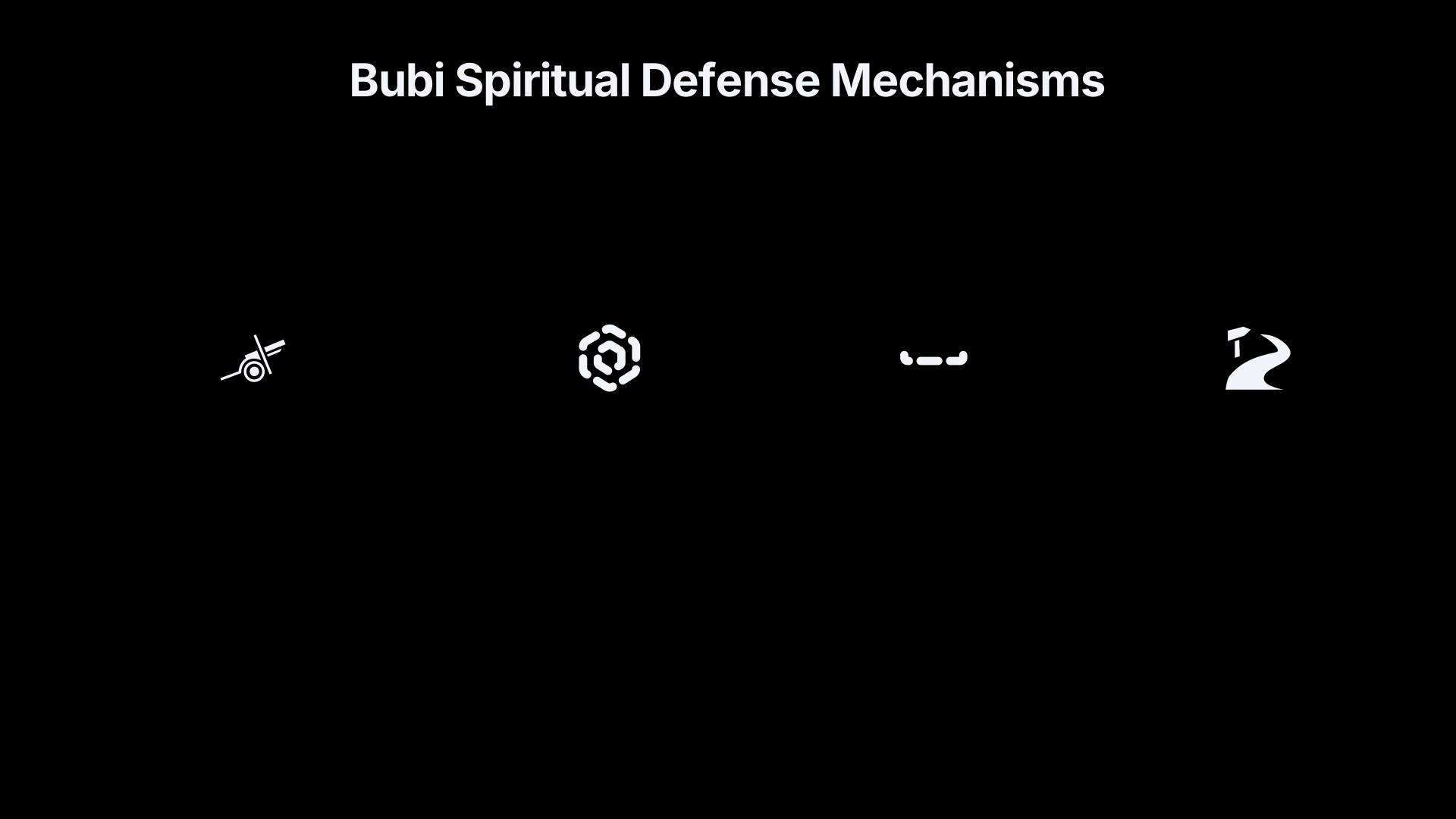
One of the most vivid descriptions preserved from older Bubi practice concerns the approaches to villages. Historical accounts recorded by missionaries and later reproduced in cultural histories describe protective structures erected before reaching a settlement. Travellers might encounter arches or boundary markers decorated with amulets, animal bones, feathers, shells and other ritual objects.[101 Last Tribes]101lasttribes.com101 Last TribesBubi peopleBubi Traditional Ancestral/Spiritual religion. The Bubi religion, the beginning is Rupe (called Eri on southern…
These were more than decorations. They marked a transition from the wider landscape into protected communal space. The boundary between forest and village was also a boundary between different spiritual conditions. The amulets were believed to help ward off harmful influences while invoking the support of ancestors associated with the community’s dead.[101 Last Tribes]101lasttribes.com101 Last TribesBubi peopleBubi Traditional Ancestral/Spiritual religion. The Bubi religion, the beginning is Rupe (called Eri on southern…
In folklore terms, such village-edge protections reveal how the Bubi sacred landscape functioned. Protection did not depend solely on temples or shrines. Instead, spiritual security was built into roads, entrances, clearings and natural surroundings. The landscape itself became part of a network of ritual defence.[101 Last Tribes]101lasttribes.com101 Last TribesBubi peopleBubi Traditional Ancestral/Spiritual religion. The Bubi religion, the beginning is Rupe (called Eri on southern…
How Colonialism and Christianity Changed the Spirit Landscape
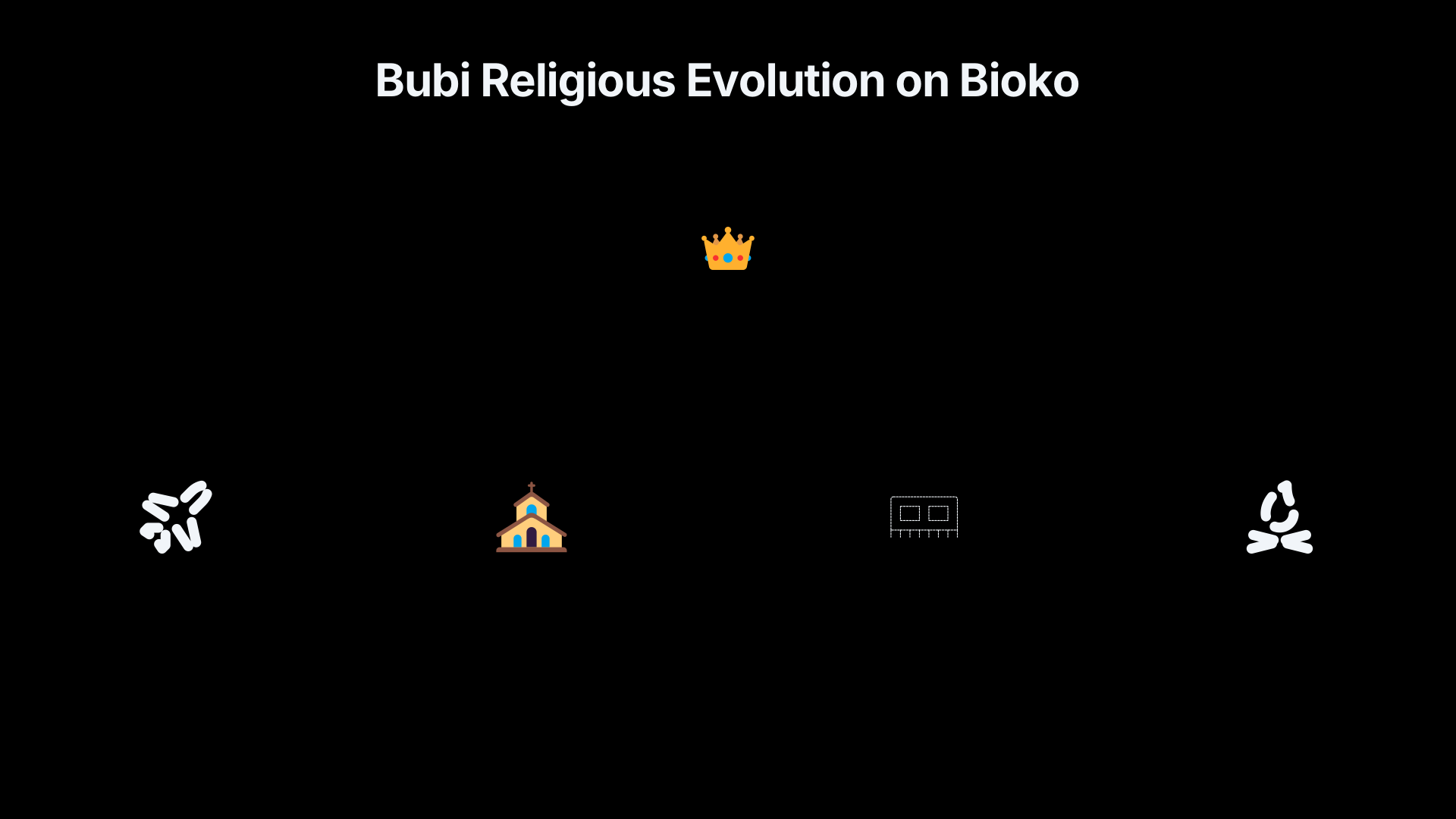
Spanish colonial rule and Christian missionary activity transformed religious life on Bioko from the nineteenth century onward. Many traditional practices declined, while churches became central institutions in Bubi communities. Nevertheless, historical studies of colonial-era Bioko show that traditional beliefs did not disappear immediately and often persisted alongside Christian practice.[e-spacio.uned.es]e-spacio.uned.esBubi Government at the End of the 19th CenturyFebruary 6, 2014 — This text recounts the transition that Bioko political structure underwent upon entering into contact, first, with dif…
This blending is important for understanding modern folklore. Sacred mountains, ancestral places and stories about spiritually charged locations often survived as cultural memory even when older rituals were abandoned or reinterpreted. In some cases, traditional beliefs were incorporated into new religious frameworks; in others, they remained markers of Bubi heritage rather than active religious practice.[e-spacio.uned.es]e-spacio.uned.esBubi Government at the End of the 19th CenturyFebruary 6, 2014 — This text recounts the transition that Bioko political structure underwent upon entering into contact, first, with dif…
As a result, contemporary discussions of Bubi culture frequently treat sacred places as part of the island’s historical identity. They are remembered not only as religious sites but also as evidence of a worldview in which nature, ancestry and community were inseparable.[Minority Rights Group]minorityrights.orgMinority Rights GroupBubi in Equatorial GuineaBubi people, numbering perhaps 40,000, are indigenous to the island of Bioko, where they we…
Why Bioko’s Sacred Geography Matters in Equatorial Guinean Folklore
Many countries are known for legendary heroes, famous monsters or epic cycles of stories. The distinctive contribution of Bubi tradition is different. Its folklore often centres on the idea that landscape itself carries memory and spiritual meaning. Mountains are not merely mountains, rivers are not merely rivers, and village boundaries are not merely practical markers. They form part of a map of relationships between people, ancestors and unseen forces.[wikipedia.org]WikipediaBubi peopleBubi people
This perspective helps explain why sacred geography remains one of the most important themes in the folklore of Equatorial Guinea. Even where specific rituals have faded, the image of Bioko as a spiritually inhabited island continues to shape how Bubi heritage is described and remembered. The island’s peaks, forests, caves and waterways remain powerful symbols of a tradition in which the land itself was an active participant in human and spiritual life.[minorityrights.org]minorityrights.orgMinority Rights GroupBubi in Equatorial GuineaBubi people, numbering perhaps 40,000, are indigenous to the island of Bioko, where they we…
Amazon book picks
Further Reading
Books and field guides related to Is Bioko a Sacred Spirit Landscape?. Use these as the next step if you want deeper reading beyond the article.
African Religions and Philosophy
Strong match for sacred geography, ancestors and spirits.
eBay marketplace picks
Marketplace Samples
Live-tested eBay searches with available results related to this page.
Endnotes
1.
Source: 101lasttribes.com
Link:https://www.101lasttribes.com/tribes/bubi.html
Source snippet
101 Last TribesBubi peopleBubi Traditional Ancestral/Spiritual religion. The Bubi religion, the beginning is Rupe (called Eri on southern...
2.
Source: thebubis.com
Title: Bioko’s indigenous Bubi tribe
Link:https://www.thebubis.com/Overview.html
Source snippet
The Bubis on Fernando PoThe Bubi were, and are today, people living in harsh beauty where they raise families, try to make a living, sing...
3.
Source: Wikipedia
Title: Bubi people
Link:https://en.wikipedia.org/wiki/Bubi_people
4.
Source: e-spacio.uned.es
Title: Bubi Government at the End of the 19th Century
Link:https://e-spacio.uned.es/bitstreams/4914a93d-9c15-4306-877f-df0fc9338dc4/download
Source snippet
February 6, 2014 — This text recounts the transition that Bioko political structure underwent upon entering into contact, first, with dif...
Published: February 6, 2014
5.
Source: Wikipedia
Title: Pico Basilé
Link:https://en.wikipedia.org/wiki/Pico_Basil%C3%A9
6.
Source: minorityrights.org
Link:https://minorityrights.org/communities/bubi/
Source snippet
Minority Rights GroupBubi in Equatorial GuineaBubi people, numbering perhaps 40,000, are indigenous to the island of Bioko, where they we...
7.
Source: artofthemotherland.com
Title: Art of the Motherland Spirits of the Forest, Guardians of the Island
Link:https://artofthemotherland.com/spirits-of-the-forest-guardians-of-the-island/
Source snippet
Art of the MotherlandSpirits of the Forest, Guardians of the IslandMay 31, 2025 — * Spiritual Beliefs and Sacred Sites: Bubi traditional...
Published: May 31, 2025
8.
Source: virtualyoutuber.fandom.com
Link:https://virtualyoutuber.fandom.com/wiki/Bubi
Source snippet
Virtual YouTuber Wiki - FandomBubi is an archdemon, has three eyes and can switch between a mascot and humanoid form. In his humanoid f...
Additional References
9.
Source: vtubie.com
Link:https://vtubie.com/bubi/
10.
Source: tribeguess.com
Link:https://www.tribeguess.com/learn/bubi
Source snippet
Bubi Tribe: Culture, Names, History & TraditionsBubi Traditional Religion. Supreme Deity: Rupé (supreme being). Traditional Bubi religion...
11.
Source: facebook.com
Link:https://www.facebook.com/eriatv/posts/the-bubi-people-of-bioko-island-equatorial-guinea-hold-a-rich-cultural-heritage-/1138175268328790/
Source snippet
The Bubi people of Bioko Island, Equatorial Guinea, hold a...May 31, 2025 — For the Bwiti, it is a sacrament, medicine and teacher...
Published: May 31, 2025
12.
Source: terralingua.org
Link:https://terralingua.org/wp-content/uploads/2022/12/Langscape-Magazine-2.11_WEB.pdf
Source snippet
Greece the church has long since pervaded the traditional spiritual domain of nature spirits inhabiting trees and groves that are now pro...
13.
Source: joshuaproject.net
Link:https://joshuaproject.net/people_groups/10977
Source snippet
Bube, Fernandian in Equatorial Guinea people group profileTheir traditional homeland is the island of Bioko including Malabo, the capital...
14.
Source: academia.edu
Link:https://www.academia.edu/5969979/Sacred_Natural_Sites_Sources_of_Biocultural_Diversity
Source snippet
(PDF) Sacred Natural Sites: Sources of Biocultural DiversityGroup and individual semi- The sacred groves consisted of burial...
15.
Source: researchgate.net
Title: (PDF) What is sacred in sacred natural sites?
Link:https://www.researchgate.net/publication/367485194_What_is_sacred_in_sacred_natural_sites_A_literature_review_from_a_conservation_lens
Source snippet
A literature...4 Mar 2026 — Sacred natural sites (SNS) are valuable biocultural hotspots and important areas for nature conservation. Th...
16.
Source: instagram.com
Link:https://www.instagram.com/reel/DEnDpeAP8vE/?hl=en
Source snippet
ijou tree (Euphorbia splendens) holds religious significance. It...
17.
Source: x.com
Title: Bubi (@Bubi VT) / Posts / XBubi (@Bubi VT)
Link:https://x.com/BubiVT
Source snippet
Bubi (@BubiVT) / Posts / XBubi (@BubiVT) - Posts - Your king. #bubiart #bubilust Follow Already: twitch.tv/bubivt | X (formerly Twitter)...
18.
Source: folktales.africa
Title: the healer of the sacred highlands
Link:https://folktales.africa/the-healer-of-the-sacred-highlands/
Source snippet
Africa.com15 Jun 2026 — Long ago, in the mist-covered highlands of Bioko Island, the Bubi people lived among fertile valleys, ru...
Topic Tree