Where Norway's Wild Places Became Stories
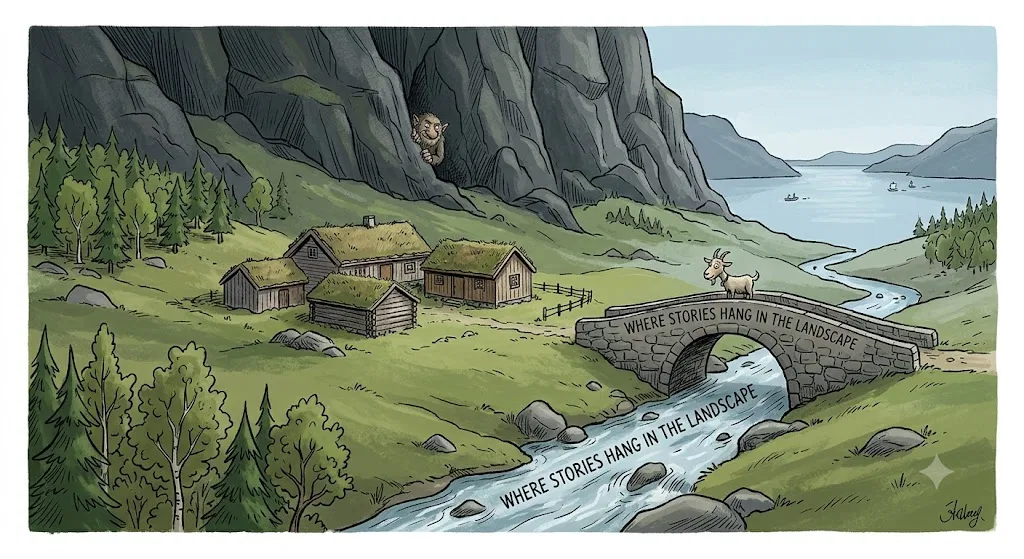
Norwegian folklore is best understood as a landscape tradition: stories cling to mountains, forests, farms, waterfalls, lakes, sea lanes and winter roads. Its best-known figures — trolls, the hidden folk, the farm spirit, the water spirit and the sea ghost — are not just fantasy creatures.
Page outline Jump by section
Introduction
The tradition is not a single ancient “mythology” preserved unchanged. It is a layered body of oral storytelling, Christian folk belief, rural custom, Sámi tradition, ballad culture, antiquarian collecting, national romantic art and modern reinvention. Some stories have medieval or pre-Christian roots; others are best known through nineteenth-century printed versions; still others survive today as tourist imagery, horror cinema, children’s books or local heritage.[snl.no]snl.noOpen source on snl.no.
Why Norway’s folklore feels tied to place
A striking feature of Norwegian folklore is how often the supernatural appears at the edge of ordinary life. The farm, the mountain pasture, the boat house, the bridge, the waterfall and the forest path all become places where human order meets something older, dangerous or only partly understood. That fits Norway’s geography: long coasts, deep fjords, high mountains, scattered farms and inland valleys gave stories plenty of natural thresholds.
The Norwegian Folklore Archives at the University of Oslo preserve texts, letters, photographs and other source materials from around 500 collectors across the country, and their associated Map of Nordic Legends includes thousands of Norwegian and Swedish legend records. This matters because the folklore is not simply a handful of famous fairy tales. It is also a mass of local legends: a particular rock thrown by a giant, a water spirit in a named lake, a haunted road, a farm spirit attached to one household, or a story about someone who met the hidden folk in a familiar pasture.[University of Oslo]hf.uio.noUniversity of Oslo The Norwegian Folklore ArchivesUniversity of Oslo The Norwegian Folklore Archives
This local quality also explains why Norwegian folklore often resists neat categories. A troll can be a giant, a mountain-dwelling family, a dim-witted opponent in a comic tale, or almost part of the landscape itself. A ghost can be a general revenant, a drowned sailor, a restless boundary-marker or an unbaptised child. The same broad belief world shifts shape depending on region, occupation and storyteller.[Store norske leksikon]snl.noOpen source on snl.no.
The collectors who made folk tales national
The best-known gateway into Norwegian folklore is the nineteenth-century tale collection associated with Peter Christen Asbjørnsen and Jørgen Moe. They began collecting oral tales in the 1830s and published the first instalments of their major collection in 1841. Their work includes some of the stories now most strongly associated with Norway, including “The Three Billy Goats Gruff”, “East of the Sun and West of the Moon”, “The Pancake” and tales of the clever underdog hero often known in English as the Ash Lad.[Lille norske leksikon]lille.snl.noLille norske leksikon Asbjørnsen og MoeLille norske leksikon Asbjørnsen og Moe
Their work was not neutral transcription in the modern archival sense. Store norske leksikon notes that Asbjørnsen and Moe wrote down tales they heard but also added text themselves, and their language choices became part of a larger national romantic project. At the time, Norway was building a stronger sense of cultural identity after centuries of Danish political and literary influence. Folktales set in recognisably Norwegian landscapes, full of trolls, farmers, goats, forests and mountain halls, offered a powerful image of a distinct national imagination.[Lille norske leksikon]lille.snl.noLille norske leksikon Asbjørnsen og MoeLille norske leksikon Asbjørnsen og Moe
That printed tradition also changed how people pictured the oral tradition. Once stories entered books, schoolrooms and illustrated editions, they became “classic” versions. Later artists such as Erik Werenskiold and Theodor Kittelsen gave these tales visual form, helping to fix the look of Norwegian trolls, forests and fairy-tale heroes for generations of readers.[Nasjonalmuseet]nasjonalmuseet.noOpen source on nasjonalmuseet.no.
Trolls: comic monsters, mountain neighbours and national icons
Trolls are the most internationally recognisable beings in Norwegian folklore, but the tradition is richer than the souvenir-shop image suggests. In Norwegian folk tales and legends, trolls may be enormous, ugly, frightening, many-headed, stupid, nocturnal, wealthy, hostile to Christianity, or closely connected with mountains and forests. They are often dangerous, but they are also beatable: quick thinking, courage, trickery or plain common sense can defeat them.[Store norske leksikon]snl.noOpen source on snl.no.
Two famous tales show the range. In “The Three Billy Goats Gruff”, the troll under the bridge is a threatening obstacle, but also a comic creature who can be outmanoeuvred. In “The Ash Lad Who Had an Eating Match with the Troll”, the human hero wins not by strength but by cunning. These stories make trolls frightening enough to matter, but foolish enough to be defeated by the small, poor or underestimated.[Lille norske leksikon]lille.snl.noLille norske leksikon Asbjørnsen og MoeLille norske leksikon Asbjørnsen og Moe
Trolls also belong to a broader Nordic and older mythic background, but Norwegian popular tradition turned them into something especially landscape-based. They inhabit remote places, come out at night and can be imagined as part of the mountain or forest itself. This is why tourist routes, place names and scenic landscapes so easily absorb troll imagery today: the figure already belonged to cliffs, boulders, ravines and shadowed woodland before modern branding found it useful.[Store norske leksikon]snl.noOpen source on snl.no.
Modern Norway has repeatedly reinvented the troll. The tourist board’s own material links troll imagery to places, fairy tales and modern films, and notes that the 2010 film “Troll Hunter” drew on Norwegian folklore and on Kittelsen’s drawings for its creature designs. That does not make the film “old folklore”; it is a modern mock-documentary fantasy. But it works because it recognises a very Norwegian idea: that official modern life and ancient landscape monsters might somehow occupy the same map.[Visit Norway]visitnorway.comOpen source on visitnorway.com.
The hidden folk and the dangers of enchantment
Norwegian tradition also has a rich body of stories about hidden or underground beings, often centred on the female figure commonly called the huldra. She is usually imagined as beautiful and seductive from the front, but marked by a cow’s tail or hollow back. In legends she may lure people into the mountains, appear and vanish suddenly, sing with irresistible beauty, or belong to a wider hidden people living close to nature.[Store norske leksikon]snl.noOpen source on snl.no.
These stories grew out of the premodern farming and fishing world and were passed down orally before being written down in the nineteenth and twentieth centuries. Store norske leksikon notes that large numbers of legends and personal-experience stories about the huldra and hidden folk survive in Norwegian folklore collections, with Asbjørnsen and Moe’s collection of hidden-folk tales and legends among the best known printed sources.[Store norske leksikon]snl.noOpen source on snl.no.
The huldra is not just a “forest fairy”. She expresses anxieties about desire, marriage, social boundaries and the risks of leaving safe human space. Stories of hidden people can warn against arrogance, greed, sexual danger, disrespecting the unseen owners of land, or failing to observe proper behaviour in pasture and mountain country. They also preserve the feeling that the natural world is inhabited, not empty.
There are several possible roots for these beliefs, but the evidence is mixed. Scholars and reference works compare the hidden folk with older Norse ideas of land spirits and beings in mounds or mountains, while also noting possible links to ancestor belief. The important point for readers is that Norwegian tradition does not preserve a single clean origin story. It preserves a family of related beliefs that were repeatedly reinterpreted under changing religious, social and literary conditions.[Store norske leksikon]snl.noOpen source on snl.no.
Water, weather and the supernatural
Norway’s folklore is especially strong around water. Lakes, rivers, waterfalls and the sea were sources of food, travel and work, but also obvious places of death. Unsurprisingly, water spirits and sea ghosts carry some of the tradition’s sharpest warnings.
The water spirit known as the nøkk belongs to rivers, lakes, wells and tarns. Norwegian belief described him as a shape-shifter who could appear as a horse, a beautiful man, a log, a boat, a bird, jewellery, an ox or a woman, and who lured people to drown. One protective act was to name him, which robbed him of power. Store norske leksikon also notes that the figure became a warning used to keep children away from dangerous water after sunset or away from strange horses near lakes and rivers.[Store norske leksikon]snl.noOpen source on snl.no.
The draug is darker and more coastal. In older usage the word could mean a revenant or dead person who returned, but later Norwegian folk belief narrowed the figure into the ghost of someone drowned at sea and not buried in consecrated ground. He could be heard or seen as a death omen, imagined as a man in sea clothing with seaweed for a head, sometimes travelling in half a boat. Fishermen were wary of seaweed-covered stones because such objects could be associated with the draug.[Store norske leksikon]snl.noOpen source on snl.no.
These beings were not merely entertainment. They gave story-shape to real hazards: children falling into water, sailors lost at sea, sudden storms, bodies never recovered, and the psychological burden of working in landscapes where death could arrive quickly. The supernatural explanation does not need to be treated as fact to see its cultural function. It made danger memorable.
Ghosts, restless dead and moral geography
Norwegian ghost belief was broad and practical. In the older farming and fishing society, ghosts were often imagined as people who had died in abnormal or socially troubling circumstances: those lost at sea or in the mountains, people who died by suicide, unbaptised infants, women who died in childbirth, the betrothed who died before marriage, or those with unresolved conflicts. Such ghosts could cause illness, fear or death, and traditions developed ways to prevent the dead from returning.[Store norske leksikon]snl.noOpen source on snl.no.
Some ghost types carried a clear moral message. A boundary ghost was the restless spirit of someone who had moved or tampered with boundary stones. In a society where land, inheritance and farm borders mattered deeply, the idea that a dishonest boundary-marker would wander after death turned property ethics into haunting.[Store norske leksikon]snl.noOpen source on snl.no.
The ghost of an exposed infant, sometimes imagined as crying out for baptism and burial, points to harsher social realities. Folklore here preserves fear, guilt and religious anxiety around poverty, illegitimacy and the fate of children outside accepted family structures. Such stories are uncomfortable, but they show why folklore should not be reduced to cosy tales of trolls and fireside magic. It often records a society’s wounds.

Sámi traditions within Norway’s folklore landscape
Any country-level account of Norwegian folklore is incomplete without the Sámi dimension. The Sámi are the Indigenous people of northern Fennoscandia, including northern Norway, and their traditions are not simply a regional variant of Norwegian folk belief. They belong to Sápmi, a cultural region crossing modern state borders, with its own languages, histories, religious traditions, storytelling forms and modern cultural revival.[Visit Norway]visitnorway.comOpen source on visitnorway.com.
Sámi storytelling includes beings and figures shaped by Arctic and sub-Arctic landscapes, reindeer herding, hunting, weather, sacred places and moral lessons. One major figure is Stállu, described in traditional stories as a dangerous but easily deceived giant who hunts reindeer and Sámi people. As with trolls in Norwegian tales, the frightening giant may be defeated through intelligence rather than strength.[levandekulturarv.se]levandekulturarv.sethe tradition of stalluthe tradition of stallu
Sacred landscape is also central. Sámi offering sites known as sieidi were often natural stones or wooden objects, not necessarily shaped by human hands. Offerings could be connected with hunting, fishing, reindeer success and wider relations between people, animals and place. Recent heritage work, including the Varanger Sámi Museum’s online exhibition on places in Nesseby, shows how Sámi religion, mythology and Christianity are tied to named landscapes and protected cultural sites.[DELOS Initiative]delos-initiative.med-ina.orgOpen source on med-ina.org.
Modern readers should be careful here. Older sources about Sámi religion were often written by missionaries, officials or outsiders, and many sacred objects were taken during Christianisation campaigns. UNESCO reported in 2024 on the repatriation of a sacred Sámi drum to Norway’s South Sámi region, 300 years after it had been taken by force during conversion efforts. That history matters because folklore is not just charming story material; it is also cultural heritage shaped by power, loss and recovery.[UNESCO]unesco.orghistoric repatriation german museum returns sacred drum norways sami peoplehistoric repatriation german museum returns sacred drum norways sami people
Witches, folk magic and the memory of persecution
Norwegian witchcraft belief sits at the hard edge between folklore, law, religion and violence. Early modern witch trials were not just stories about magic; they were legal prosecutions in which accusations, fear, torture, confession and execution destroyed real lives. The most infamous Norwegian case is associated with Vardø and Finnmark in the seventeenth century.
The Steilneset Memorial in Vardø commemorates 91 victims of the Finnmark witch trials. It opened in 2011 and is associated with works by Louise Bourgeois and architect Peter Zumthor. Northern Norway’s tourism and heritage material presents the memorial as a place of remembrance for those executed during this period, while recent historical writing stresses the role of storms, demonological ideas and coerced confession in the accusations.[nordnorge.com]nordnorge.comthe witch monument in vardo is in memory of the 91 witch trial victimsthe witch monument in vardo is in memory of the 91 witch trial victims
The Vardø cases show how local fear could combine with imported learned demonology. A devastating storm in 1617 drowned many men, and later accusations claimed that witches had raised the storm through ritual magic. The Guardian’s account of the trials notes that confessions included motifs such as devils in animal form and weather magic involving a fishing rope, but also makes clear that torture and interrogation shaped what the accused said.[The Guardian]theguardian.comnorways witch trials the woman killed for a fatal stormnorways witch trials the woman killed for a fatal storm
For a folklore reader, the lesson is to distinguish belief from proof. Weather magic, animal familiars and devil pacts were part of the story-world through which authorities interpreted misfortune. The executions were historical facts; the supernatural charges were accusations embedded in a legal and religious culture that made such claims deadly.
Seasonal customs and the living calendar
Norwegian folklore is not limited to beings and legends. Seasonal customs also carry older belief patterns into modern life, especially around Christmas and midwinter. The household spirit known as the nisse is one of the clearest examples: once understood as a farm guardian connected with the welfare of animals and property, he is now often softened into a Christmas figure. Scandinavian accounts still preserve the older idea that this spirit could be helpful but temperamental, requiring respect rather than mere festive cheer.[Arctic Portal]arcticportal.orgOpen source on arcticportal.org.
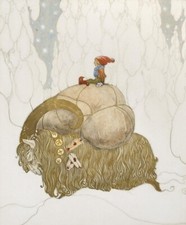
The Christmas goat tradition is another example of older custom surviving in changed form. Norwegian-American museum material describes “julebukk” as a tradition in which people dressed in furry robes, carried carved goat heads and made noise to keep bad spirits away. Today, goat figures may appear as straw ornaments or festive symbols, but the custom’s older forms were more unruly and protective.[Vesterheim]vesterheim.orgNorwegian Christmas TraditionsNorwegian Christmas Traditions
Norway’s ballad tradition also links the supernatural to the ritual year. “The Dream Poem” is a visionary ballad in which Olav Åsteson sleeps from Christmas Eve through the twelve days of Christmas, then wakes and tells of a journey through the afterlife. Vest Telemark Museum describes it as one of Norway’s distinctive contributions to European music, literature and cultural history, preserved for centuries in oral tradition in a limited mountain region of south-western Norway.[Visit Telemark]visittelemark.comVisit Telemark The Dream PoemVisit Telemark The Dream Poem
These traditions show how folklore persists by changing function. A household spirit becomes a Christmas icon. A protective masquerade becomes seasonal play. A visionary religious ballad becomes concert repertoire and cultural heritage. The continuity is real, but it is not static.
Art, literature and the look of Norwegian folklore
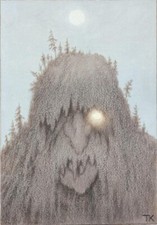
Much of what people now picture as “Norwegian folklore” was filtered through nineteenth- and early twentieth-century art. Theodor Kittelsen is especially important. His trolls, water spirits, plague figures and strange landscapes helped make the supernatural feel native to Norway’s forests and mountains. The National Museum notes that Kittelsen and Erik Werenskiold hold a special place in the fairy-tale tradition and in Norwegian illustration.[Nasjonalmuseet]nasjonalmuseet.noOpen source on nasjonalmuseet.no.
Kittelsen did not invent Norwegian trolls, but he strongly shaped their modern visual identity. Visit Norway’s troll material explicitly connects modern troll imagery and the film “Troll Hunter” to Kittelsen’s drawings. His work made trolls seem ancient, earthy, melancholy and half-geological — beings that look as if they have grown out of moss, stone and darkness.[Visit Norway]visitnorway.comOpen source on visitnorway.com.
Literature also reshaped folklore. Henrik Ibsen’s “Peer Gynt”, Edvard Grieg’s music for it, fairy-tale editions, children’s books and later cinema all turned oral motifs into national and international cultural products. This is why a modern reader may meet Norwegian folklore first through concert music, illustrated books, tourist signs, fantasy films or internet images rather than through local oral storytelling.
That is not necessarily a loss, but it does change the tradition. Oral tales vary with every teller; printed and illustrated versions freeze memorable forms. Modern media then remixes those forms for horror, comedy, fantasy or heritage tourism. Norwegian folklore today is therefore both archive and performance: old records, local memories, museum displays, children’s culture and commercial myth-making all at once.
What is old tradition, and what is modern invention?
A useful way to read Norwegian folklore is to ask what layer of tradition you are looking at.
Old oral tradition includes legends, fairy tales, ballads, memorates and beliefs passed through speech before they were written down. These may contain medieval, Christian, pre-Christian or everyday rural elements, but their exact age is often hard to prove.
Nineteenth-century collection gave many tales their familiar forms. Asbjørnsen and Moe preserved important material, but they also shaped, edited and published it for a reading public during a period of national romantic identity-building.[Lille norske leksikon]lille.snl.noLille norske leksikon Asbjørnsen og MoeLille norske leksikon Asbjørnsen og Moe
Visual national romanticism gave the tradition its iconic look. Kittelsen and Werenskiold helped turn oral beings into images that still dominate Norwegian fairy-tale imagination.[Nasjonalmuseet]nasjonalmuseet.noOpen source on nasjonalmuseet.no.
Tourist and popular culture retellings often simplify the material. Trolls become charming mascots, the hidden folk become fantasy beings, and witch history may be folded into dark tourism. These forms can be engaging, but they should not be confused with the older, more varied record.[Visit Norway]visitnorway.comOpen source on visitnorway.com.
Modern folklore and revival continue the process. Films, online storytelling, museum exhibitions, local festivals and Sámi cultural revitalisation all create new contexts in which old motifs are reinterpreted. Folklore is not only something Norway “had”; it is something Norwegians, Sámi communities, artists, museums and visitors continue to negotiate.
How to understand Norwegian folklore today
Norwegian folklore matters because it turns landscape into memory. A bridge is not only a bridge; it may have a troll beneath it. A lake is not only water; it may hold a shape-shifting spirit. A farm is not only property; it may depend on an unseen guardian. A coastal storm is not only weather; in early modern fear it could become an accusation of witchcraft. A mountain is not only stone; it may be home, grave, boundary or sacred presence.
For modern readers, the most honest approach is neither belief nor dismissal. These traditions should be read as cultural narratives: ways people explained danger, enforced norms, remembered injustice, entertained children, mapped sacred places and imagined the unseen. Some are well documented in archives and classic collections; some survive as local legend; some are now most visible through art, tourism and film.
The result is a folklore culture with unusual depth. Norway’s legends are not just about monsters. They are about how people lived with isolation, weather, sea travel, animals, death, desire, Christianisation, Indigenous survival, national identity and the pull of the wild just beyond the door.
Amazon book picks
Further Reading
Books and field guides related to Where Norway's Wild Places Became Stories. Use these as the next step if you want deeper reading beyond the article.
Norwegian Folk Tales
Foundational source for Norwegian legends, trolls, and folk beings.
eBay marketplace picks
Marketplace Samples
Live-tested eBay searches with available results related to this page.
Endnotes
1.
Source: nasjonalmuseet.no
Link:https://www.nasjonalmuseet.no/en/collection/articles/fairytale/
2.
Source: levandekulturarv.se
Title: the tradition of stallu
Link:https://levandekulturarv.se/in-english/the-inventory/submissions/the-tradition-of-stallu
3.
Source: unesco.org
Title: historic repatriation german museum returns sacred drum norways sami people
Link:https://www.unesco.org/en/articles/historic-repatriation-german-museum-returns-sacred-drum-norways-sami-people
4.
Source: vesterheim.org
Title: Norwegian Christmas Traditions
Link:https://vesterheim.org/norwegian-christmas-traditions/
5.
Source: archive.org
Title: norwegianfolktal0000asbj y2e5
Link:https://archive.org/details/norwegianfolktal0000asbj_y2e5
6.
Source: folklore.ee
Link:https://folklore.ee/folklore/sites/default/files/2026-04/Folklore98_web.pdf
7.
Source: nasjonalmuseet.no
Link:https://www.nasjonalmuseet.no/en/stories/explore-the-collection/the-damned-the-possessed-and-the-beloved-about-art-architecture-and-witchcraft/
8.
Source: lille.snl.no
Title: Lille norske leksikon Asbjørnsen og Moe
Link:https://lille.snl.no/Asbj%C3%B8rnsen_og_Moe
9.
Source: snl.no
Link:https://snl.no/folkediktning
10.
Source: hf.uio.no
Title: University of Oslo The Norwegian Folklore Archives
Link:https://www.hf.uio.no/ikos/english/services/knowledge/norwegian-folklore/
11.
Source: snl.no
Link:https://snl.no/sp%C3%B8kelse
12.
Source: snl.no
Link:https://snl.no/troll
13.
Source: norla.no
Title: Norwegian Folk Tales
Link:https://norla.no/en/books/625-norwegian-folk-tales
14.
Source: visitnorway.com
Link:https://www.visitnorway.com/things-to-do/art-culture/the-mythical-norwegian-trolls/
15.
Source: snl.no
Link:https://snl.no/hulder
16.
Source: snl.no
Link:https://snl.no/n%C3%B8kken
17.
Source: snl.no
Link:https://snl.no/draug
18.
Source: visitnorway.com
Link:https://www.visitnorway.com/typically-norwegian/sami-people/
19.
Source: nordnorge.com
Link:https://nordnorge.com/en/artikkel/varanger-sami-museum-tells-the-story-of-10000-years-of-human-history/
20.
Source: delos-initiative.med-ina.org
Link:https://delos-initiative.med-ina.org/casestudy/sacred-places-sami-culture/
21.
Source: nordnorge.com
Title: the witch monument in vardo is in memory of the 91 witch trial victims
Link:https://nordnorge.com/en/artikkel/the-witch-monument-in-vardo-is-in-memory-of-the-91-witch-trial-victims/
22.
Source: theguardian.com
Title: norways witch trials the woman killed for a fatal storm
Link:https://www.theguardian.com/news/2021/apr/27/norways-witch-trials-the-woman-killed-for-a-fatal-storm
23.
Source: arcticportal.org
Link:https://arcticportal.org/ap-library/news/3635-scandinavian-christmas-traditions-the-nisse-and-its-role-as-farm-guardian-and-christmas-helper
24.
Source: visittelemark.com
Title: Visit Telemark The Dream Poem
Link:https://www.visittelemark.com/vest-telemark-museum/our-heritage/the-dream-poem
25.
Source: Wikipedia
Link:https://en.wikipedia.org/wiki/Troll
26.
Source: Wikipedia
Link:https://en.wikipedia.org/wiki/Hulder
27.
Source: Wikipedia
Title: Steilneset Memorial
Link:https://en.wikipedia.org/wiki/Steilneset_Memorial
28.
Source: Wikipedia
Title: Theodor Kittelsen
Link:https://en.wikipedia.org/wiki/Theodor_Kittelsen
29.
Source: snl.no
Link:https://snl.no/eventyr
30.
Source: snl.no
Title: Østenfor sol og vestenfor måne
Link:https://snl.no/%C3%98stenfor_sol_og_vestenfor_m%C3%A5ne
31.
Source: visitnorway.com
Link:https://www.visitnorway.com/typically-norwegian/mythical-norway/
32.
Source: visitnorway.com
Link:https://www.visitnorway.com/typically-norwegian/sami-people/rebirth-of-the-joik/
33.
Source: visitnorway.de
Link:https://www.visitnorway.de/listings/sami-culture-past-and-present/502890/
34.
Source: hf.uio.no
Title: no Folktales and legends
Link:https://www.hf.uio.no/ikos/english/services/knowledge/norwegian-folklore/collections/folktales-and-legends/
35.
Source: jus.uio.no
Title: sacred natural sites in sapmi
Link:https://www.jus.uio.no/smr/english/research/front-page-articles-/sacred-natural-sites-in-sapmi.html
36.
Source: bostonpl.bibliocommons.com
Link:https://bostonpl.bibliocommons.com/item/show/7321265075
37.
Source: visitnorway.no
Link:https://www.visitnorway.no/aktiviteter-og-attraksjoner/kunst-kultur/troll/
38.
Source: traditionarchives.org
Link:https://www.traditionarchives.org/archives/norway
39.
Source: folklorethursday.com
Link:https://folklorethursday.com/folktales/6576/
40.
Source: dhnb.eu
Title: norwegian folklore archives
Link:https://dhnb.eu/projects/norwegian-folklore-archives/
41.
Source: livinganordiclife.com
Link:https://www.livinganordiclife.com/post/julebukk
42.
Source: alliance.aboutweb.com
Title: In Norwegian Folklore
Link:https://alliance.aboutweb.com/file-library/jbbpuJ/3VgD3v/In-Norwegian-Folklore.pdf
Additional References
43.
Source: researchgate.net
Link:https://www.researchgate.net/publication/271068683_Liminality_rock_art_and_the_Sami_sacred_landscape
44.
Source: researchgate.net
Link:https://www.researchgate.net/publication/270451326_Revoicing_Sami_Narratives_North_Sami_storytelling_at_the_turn_of_the_20th_century
45.
Source: lifeinnorway.net
Link:https://www.lifeinnorway.net/norwegian-fairytale-creatures/
46.
Source: researchgate.net
Link:https://www.researchgate.net/publication/317542079_The_Cult_of_the_Balts_Mythological_Impulses_and_Neo-Pagan_Practices_in_the_Touristic_Clubs_of_the_Lithuanian_SSR_of_the_1960s_and_1970s
47.
Source: facebook.com
Link:https://www.facebook.com/MetalTitansOfficial/posts/a-gorgeously-illustrated-book-in-english-about-the-scandinavian-folklore-a-defin/2623915540969316/
48.
Source: reddit.com
Link:https://www.reddit.com/r/Nordiccountries/comments/1egkpxd/a_question_about_nordicscandinavian_legend_of/
49.
Source: academia.edu
Link:https://www.academia.edu/925719/Collectivity_by_Culture_Squared_Cultural_Heritage_in_Nordic_Spaces
50.
Source: facebook.com
Link:https://www.facebook.com/groups/394277038741727/posts/1038795194289905/
51.
Source: instagram.com
Link:https://www.instagram.com/p/DSSFSknjkd3/
52.
Source: scribd.com
Link:https://www.scribd.com/document/174642979/draumkvedet
Topic Tree
Follow this branch
Related pages 192
- Afghan Folklore
- Albanian Folklore
- Algerian Folklore
- Australian Folklore
- Azerbaijan Folklore
- +187 more in sidebar